

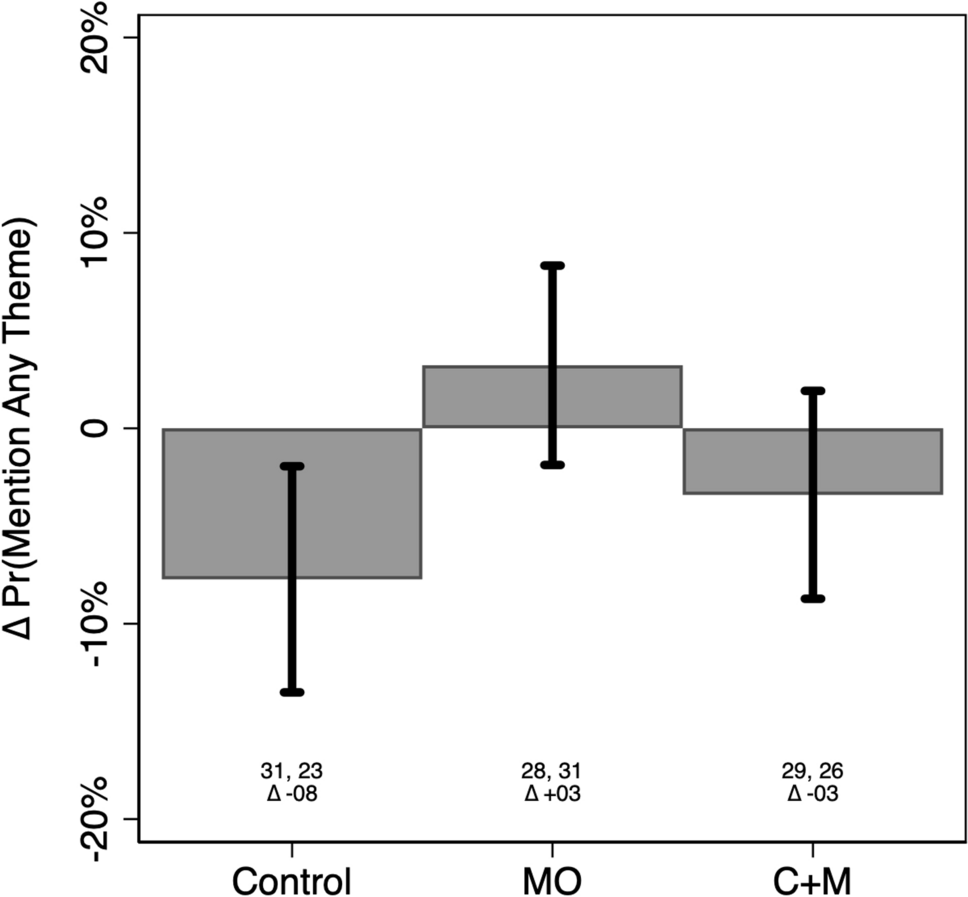
A substantial body of social scientific research considers the negative mental health consequences of social media use on TikTok. Fewer, however, consider the potentially positive impact that mental health content creators (“influencers”) on TikTok can have to improve health outcomes; including the degree to which the platform exposes users to evidence-based mental health communication. Our novel, influencer-led approach remedies this shortcoming by attempting to change TikTok creator content-producing behavior via a large, within-subject field experiment (N = 105 creators with a reach of over 16.9 million viewers; N = 3465 unique videos). Our randomly-assigned field intervention exposed influencers on the platform to either (a) asynchronous digital (.pdf) toolkits, or (b) both toolkits and synchronous virtual training sessions that aimed to promote effective evidence-based mental health communication (relative to a control condition, exposed to neither intervention). We find that creators treated with our asynchronous toolkits—and, in some cases, those also attending synchronous training sessions—were significantly more likely to (i) feature evidence-based mental health content in their videos and (ii) generate video content related to mental health issues. Moderation analyses further reveal that these effects are not limited to only those creators with followings under 2 million users. Importantly, we also document large system-level effects of exposure to our interventions; such that TikTok videos featuring evidence-based content received over half a million additional views in the post-intervention period in the study’s treatment groups, while treatment group mental health content (in general) received over three million additional views. We conclude by discussing how simple, cost-effective, and influencer-led interventions like ours can be deployed at scale to influence mental health content on TikTok.
Do social media experiments prove a link with mental health: A methodological and meta-analytic review.
Following news on social media boosts knowledge, belief accuracy and trust
Many worry that news on social media leaves people uninformed or even misinformed. Here we conducted a preregistered two-wave online field experiment in France and Germany (N = 3,395) to estimate the effect of following the news on Instagram and WhatsApp. Participants were asked to follow two accounts for 2 weeks and activate the notifications. In the treatment condition, the accounts were those of news organizations, while in the control condition they covered cooking, cinema or art. The treatment enhanced current affairs knowledge, participants’ ability to discern true from false news stories and awareness of true news stories, as well as trust in the news. The treatment had no significant effects on feelings of being informed, political efficacy, affective polarization and interest in news or politics. These results suggest that, while some forms of social media use are harmful, others are beneficial and can be leveraged to foster a well-informed society.

Consequences of Information Feed Integration on User Engagement and Contribution: A Natural Experiment in an Online Knowledge-Sharing Community
Many online communities that rely on effortful, voluntary content contributions offer additional content curation tools to facilitate social interactions and encourage user contributions. Any platform that offers two or more heterogeneous content types (e.g., expert knowledge and social posts) faces a choice about the presentation format: whether to display the content types separately or in an integrated information feed. We leverage a natural experiment on Zhihu, a Q&A platform that offers a social-interaction-oriented functionality called Ideas. Zhihu initially presented answers (expert knowledge content) and ideas (social posts) in two different information feeds, but the platform integrated ideas into the same information feed as answers in June 2019. We find that information feed integration significantly decreased user engagement with and contribution of both ideas and answers. We hypothesize that users decreased their engagement because the juxtaposition of incongruous types of content increased mindset switching and cognitive strain. This hypothesis is supported by an additional laboratory experiment. We also present evidence showing that contributions decreased both because of the decrease in engagement (weaker social recognition incentives) and because integration heightened concerns that posting ideas would dilute the contributor’s professional image. Our findings have important theoretical and practical implications for any platform that hosts heterogeneous content. History: Xiaoquan (Michael) Zhang served as the senior editor and Yili (Kevin) Hong served as associate editor for this article. Funding: Z. Cao acknowledges this research was funded by National Natural Science Foundation of China [Grants 72201238, 72192823]. G. Li acknowledges this research was funded by National Natural Science Foundation of China [Grant 72102047] and Shanghai Pujiang Program [Grant 21PJC006]. Supplemental Material: The e-companion is available at https://doi.org/10.1287/isre.2022.0043.
Meta and TikTok let harmful content rise after evidence outrage drove engagement - whistleblowers
Companies allowed more harmful content on user’s feeds, knowing their algorithms ran on outrage, BBC hears.

Investigating Affective Use and Emotional Well-being on ChatGPT
As AI chatbots see increased adoption and integration into everyday life, questions have been raised about the potential impact of human-like or anthropomorphic AI on users. In this work, we investigate the extent to which interactions with ChatGPT (with a focus on Advanced Voice Mode) may impact users' emotional well-being, behaviors and experiences through two parallel studies. To study the affective use of AI chatbots, we perform large-scale automated analysis of ChatGPT platform usage in a privacy-preserving manner, analyzing over 3 million conversations for affective cues and surveying over 4,000 users on their perceptions of ChatGPT. To investigate whether there is a relationship between model usage and emotional well-being, we conduct an Institutional Review Board (IRB)-approved randomized controlled trial (RCT) on close to 1,000 participants over 28 days, examining changes in their emotional well-being as they interact with ChatGPT under different experimental settings. In both on-platform data analysis and the RCT, we observe that very high usage correlates with increased self-reported indicators of dependence. From our RCT, we find that the impact of voice-based interactions on emotional well-being to be highly nuanced, and influenced by factors such as the user's initial emotional state and total usage duration. Overall, our analysis reveals that a small number of users are responsible for a disproportionate share of the most affective cues.

Can We Fix Social Media? Testing Prosocial Interventions using Generative Social Simulation
Social media platforms have been widely linked to societal harms, including rising polarization and the erosion of constructive debate. Can these problems be mitigated through prosocial interventions? We address this question using a novel method - generative social simulation - that embeds Large Language Models within Agent-Based Models to create socially rich synthetic platforms. We create a minimal platform where agents can post, repost, and follow others. We find that the resulting following-networks reproduce three well-documented dysfunctions: (1) partisan echo chambers; (2) concentrated influence among a small elite; and (3) the amplification of polarized voices - creating a 'social media prism' that distorts political discourse. We test six proposed interventions, from chronological feeds to bridging algorithms, finding only modest improvements - and in some cases, worsened outcomes. These results suggest that core dysfunctions may be rooted in the feedback between reactive engagement and network growth, raising the possibility that meaningful reform will require rethinking the foundational dynamics of platform architecture.
Can We Fix Social Media? Testing Prosocial Interventions using Generative Social Simulation
Social media platforms have been widely linked to societal harms, including rising polarization and the erosion of constructive debate. Can these problems be mitigated through prosocial interventions? We address this question using a novel method - generative social simulation - that embeds Large Language Models within Agent-Based Models to create socially rich synthetic platforms. We create a minimal platform where agents can post, repost, and follow others. We find that the resulting following-networks reproduce three well-documented dysfunctions: (1) partisan echo chambers; (2) concentrated influence among a small elite; and (3) the amplification of polarized voices - creating a 'social media prism' that distorts political discourse. We test six proposed interventions, from chronological feeds to bridging algorithms, finding only modest improvements - and in some cases, worsened outcomes. These results suggest that core dysfunctions may be rooted in the feedback between reactive engagement and network growth, raising the possibility that meaningful reform will require rethinking the foundational dynamics of platform architecture.
Tracing LLM Social Reasoning to Pretraining Data: A Provenance Audit for Social Simulation
LLM-based social simulations depend on social-reasoning capabilities whose pretraining evidence is usually opaque. We treat training-data attribution as a provenance audit: for an open model and corpus, which training regions are associated with social reasoning, how do those profiles differ from adjacent capabilities, and does intervention confirm that influential data is load-bearing? We compute gradient-based attribution (TrackStar via Bergson) over a working set from the de-duplicated Dolma3 mix, aggregate influence across WebOrganizer’s 24-format ×24-topic taxonomy (576 bins), and contrast SocialIQA and MMLU Social Sciences against ARC-Challenge and MMLU STEM. In OLMo3-7B, SocialIQA is the profile outlier: its positive attribution is more diffuse and shifted toward interpersonal and narrative regions rather than documentation-heavy ones. Influence-targeted unlearning validates this association most clearly for SocialIQA, while the comparison tasks show weaker, null, or reversed effects. A held-out social-probe suite tests the breadth and limits of the pattern without claiming population-level simulation fidelity.
Bonsai: Intentional and Personalized Social Media Feeds
Social media feeds use predictive models to maximize engagement, often misaligning how people consume content with how they wish to. We introduce Bonsai, a system that enables people to build personalized and intentional feeds. Bonsai implements a platform-agnostic framework comprising Planning, Sourcing, Curating, and Ranking modules. This framework allows users to express their intent in natural language and exert fine-grained control over a procedurally transparent feed creation process. We evaluated the system with 15 Bluesky users in a two-phase, multi-week study. We find that participants successfully used our system to discover new content, filter out irrelevant or toxic posts, and disentangle engagement from intent, but curating intentional feeds required more effort than they are used to. Simultaneously, users sought system transparency mechanisms to effectively use (and trust) intentional, personalized feeds. Overall, our work highlights intentional feedbuilding as a viable path beyond engagement-based optimization.
IO Factory: Simulating AI-Enabled Influence Campaigns at Scale
We introduce IO Factory, an AI-driven framework for simulating information and influence campaigns as fully integrated, traceable processes. The threat of digital manipulation now extends beyond persuasive text from individual language models to AI swarms, i.e., persistent groups of coordinated agents that adapt to platform feedback and disguise organized campaigns as ordinary social interaction. Because such campaigns cannot be identified from isolated messages alone, they must be analyzed across a continuous spectrum of planning, platform action, exposure, interpretation, measurement, and adaptation. IO Factory represents this process inside a controlled simulated platform, linking actor roles, platform actions, exposure records, structured model-based evaluations, and configured changes in the simulated population. We implement the architecture and evaluate it across configurations of up to 100,000 agents. The results show that IO Factory executes campaign timelines at scale and produces inspectable evidence of exposure and measured movement in configured belief variables. By recording the actors, objectives, action constraints, exposure paths, and measurement rules used in each run, IO Factory supports reproducible research and red-team analysis of coordinated influence.
Individual-level interventions against sycophantic AI reduce its appeal but not its persuasiveness
AI chatbots can be "sycophantic," or overly agreeable and flattering toward users. Sycophantic AI has been shown to entrench attitudes, yet users frequently fail to recognize it (a phenomenon we call "sycophancy blindness"). We tested whether increasing users' awareness of sycophancy protects them from its harmful effects in two preregistered experiments (n = 1,590). In the first, participants received a brief written warning about sycophancy before conversing with a sycophantic chatbot. In the second, participants watched a video of a sycophantic AI validating several other users, including users on opposite sides of the same conflict, before interacting with it themselves. Both interventions changed how participants evaluated the AI. The warning reduced the AI's perceived objectivity, and the video reduced enjoyment of the AI --- an effect mediated by the reduced belief that its validation was uniquely earned. We then pooled our experiments with two prior studies of sycophancy awareness interventions (six interventions total, n = 3,982). The pattern across experiments was consistent: while the interventions made the sycophantic AI appear less objective and trustworthy, none reduced its persuasiveness. These results suggest that individual-level interventions, such as warning labels or AI literacy, may not be enough to protect users from AI harms.
Computer-Mediated Communication, Social Media, and Mental Health: A Conceptual and Empirical Meta-Review
Computer-mediated communication (CMC), and specifically social media, may affect the mental health (MH) and well-being of its users, for better or worse. Research on this topic has accumulated rapidly, accompanied by controversial public debate and numerous systematic reviews and meta-analyses. Yet, a higher-level integration of the multiple disparate conceptual and operational approaches to CMC and MH and individual review findings is desperately needed. To this end, we first develop two organizing frameworks that systematize conceptual and operational approaches to CMC and MH. Based on these frameworks, we integrate the literature through a meta-review of 34 reviews and a content analysis of 594 publications. Meta-analytic evidence, overall, suggests a small negative association between social media use and MH. However, effects are complex and depend on the CMC and MH indicators investigated. Based on our conceptual review and the evidence synthesis, we devise an agenda for future research in this interdisciplinary field.

Scientists no Longer Find Twitter Professionally Useful, and have Switched to Bluesky
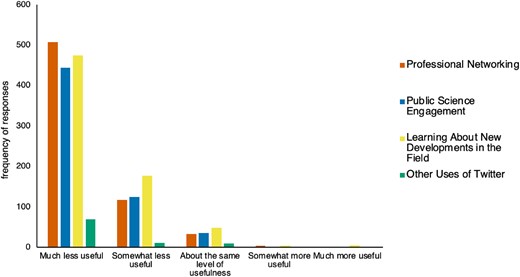
Synopsis Social media has become widely used by the scientific community for a variety of professional uses, including networking and public outreach. For the past decade, Twitter has been a primary home of scientists on social media. In recent years, new leadership at Twitter has made substantive changes that have resulted in increases in the prevalence of pseudoscience, conspiracy theory, and harassment on the platform, causing many scientists to seek alternatives. Bluesky has been suggested as a good alternative to Twitter, but the phenomenon of academics switching social media platforms has not previously been studied. Here we report on the results of a survey distributed to scientists on Twitter and Bluesky (n = 813). Results overwhelmingly confirm that changes to Twitter have made the social media platform no longer professionally useful or pleasant, and that many scientists have abandoned it in favor of Bluesky. Results show that for every reported professional benefit that scientists once gained from Twitter, scientists can now gain that benefit more effectively on Bluesky than on Twitter.
How to Stop AI from Killing Your Critical Thinking | Advait Sarkar | TED
Training language models to be warm can reduce accuracy and increase sycophancy
Artificial intelligence developers are increasingly building language models with warm and friendly personas that millions of people now use for advice, therapy and companionship1. Here we show how this can create a significant trade-off: optimizing language models for warmth can undermine their performance, especially when users express vulnerability. We conducted controlled experiments on five different language models, training them to produce warmer responses, then evaluating them on consequential tasks. Warm models showed substantially higher error rates (+10 to +30 percentage points) than their original counterparts, promoting conspiracy theories, providing inaccurate factual information and offering incorrect medical advice. They were also significantly more likely to validate incorrect user beliefs, particularly when user messages expressed feelings of sadness. Importantly, these effects were consistent across different model architectures, and occurred despite preserved performance on standard tests, revealing systematic risks that standard testing practices may fail to detect. Our findings suggest that training artificial intelligence systems to be warm may come at a cost to accuracy, and that warmth and accuracy may not be independent by default. As these systems are deployed at an unprecedented scale and take on intimate roles in people’s lives, this trade-off warrants attention from developers, policymakers and users alike.

Scrolling Past Public Health Campaigns: Information Context Collapse on Social Media and Its Effects on Tobacco Information Recall
Although traditional media usually present content separated by topic, social media feeds are usually unsorted, shifting topics from post to post, a feature called “information context collapse.” Public health groups have often failed to consider how the presentation context of their campaigns may influence message reception. This study uses a mock social media feed that presents content across six topics in a sorted or unsorted fashion to see how presentation order of content influences recall of information about a novel tobacco product. The moderating impact of topic relevance and source congruency are also tested. Results show that for some measures of recall unsorted presentation reduced recall. Impacts of source congruency and topic relevance are reduced when the content is unsorted. The application of these findings for both scholarship and digital health campaigns is discussed.