Per- and polyfluoroalkyl substances (PFASs), such as the legacy C8 compound perfluorooctanoic acid (PFOA), pose significant environmental and health risks due to their persistence and widespread use. , Per- and polyfluoroalkyl substances (PFASs), such as the legacy C8 compound perfluorooctanoic acid (PFOA), pose significant environmental and health risks due to their persistence and widespread use. While surface-enhanced Raman spectroscopy (SERS) has shown promise for PFAS detection, challenges remain in achieving high sensitivity and understanding the underlying molecular interactions. This study combines fluorinated thiol-modified SERS substrates with machine learning techniques to enhance PFOA detection and elucidate fluorophilic interactions. Three different fluorinated thiols were used to modify SERS substrates, and their performance in PFOA detection was compared to bare substrates. Surface modification improved SERS signal enhancement and lowered detection limits compared to unmodified surfaces. Machine learning algorithms, including partial least squares-discriminant analysis (PLS-DA), partial least squares regression (PLSR), and support vector machine (SVM) regression, were employed to classify and quantify PFOA based on Raman spectral features. The PLS-DA model successfully distinguished ligand-specific interaction patterns, demonstrating strong robustness and predictive performance, while SVM regression achieved a limit of detection of 3.61 ppb. We further validated the proposed machine learning-guided SERS approach for PFOA detection directly in water, demonstrating ligand-specific Raman responses arising from fluorophilic ligand–PFOA interactions. A linear and sensitive response was observed at environmentally relevant concentrations, confirming the practical applicability of the approach for aqueous PFAS monitoring. This approach offers a novel SERS-based strategy for detecting PFOA, with results anticipated to inform future developments in applying this strategy to a broader range of PFAS compounds and more complex environmental matrices.
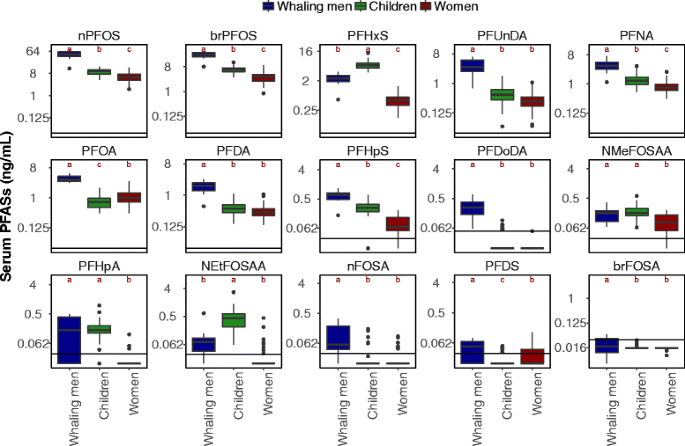
Can profiles of poly- and Perfluoroalkyl substances (PFASs) in human serum provide information on major exposure sources?
Humans are exposed to poly- and perfluoroalkyl substances (PFASs) from diverse sources and this has been associated with negative health impacts. Advances in analytical methods have enabled routine detection of more than 15 PFASs in human sera, allowing better profiling of PFAS exposures. The composition of PFASs in human sera reflects the complexity of exposure sources but source identification can be confounded by differences in toxicokinetics affecting uptake, distribution, and elimination. Common PFASs, such as perfluorooctanoic acid (PFOA), perfluorooctane sulfonic acid (PFOS) and their precursors are ubiquitous in multiple exposure sources. However, their composition varies among sources, which may impact associated adverse health effects.
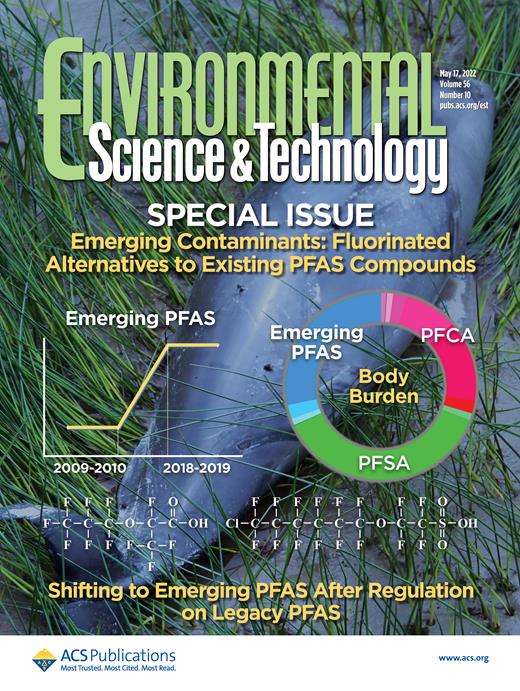
Addressing Urgent Questions for PFAS in the 21st Century
Abstract. Despite decades of research on per- and polyfluoroalkyl substances (PFAS), fundamental obstacles remain to addressing worldwide contamination by

Stability of Per- and Polyfluoroalkyl Substances in Solvents Relevant to Environmental and Toxicological Analysis
Abstract. Per- and polyfluoroalkyl substances (PFASs) are widely used anthropogenic chemicals. For environmental and toxicological analysis, it is importan
How Do We Measure Poly- and Perfluoroalkyl Substances (PFASs) at the Surface of Consumer Products?
Abstract. Exposures to poly- and perfluoroalkyl substances (PFASs) have been linked to metabolic disruption, immunotoxicity, and cancer in humans. PFASs ar

Scientific Basis for Managing PFAS as a Chemical Class
Abstract This commentary presents a scientific basis for managing as one chemical class the thousands of chemicals known as PFAS (per- and polyfluoroalkyl substances). The class includes perfluoroalkyl acids, perfluoroalkylether acids, and their precursors; fluoropolymers and perfluoropolyethers; and other PFAS. The basis for the class approach is presented in relation to their physicochemical, environmental, and toxicological properties. Specifically, the high persistence, accumulation potential, and/or hazards (known and potential) of PFAS studied to date warrant treating all PFAS as a single class. Examples are provided of how some PFAS are being regulated and how some businesses are avoiding all PFAS in their products and purchasing decisions. We conclude with options for how governments and industry can apply the class-based approach, emphasizing the importance of eliminating non-essential uses of PFAS, and further developing safer alternatives and methods to remove existing PFAS from the environment.
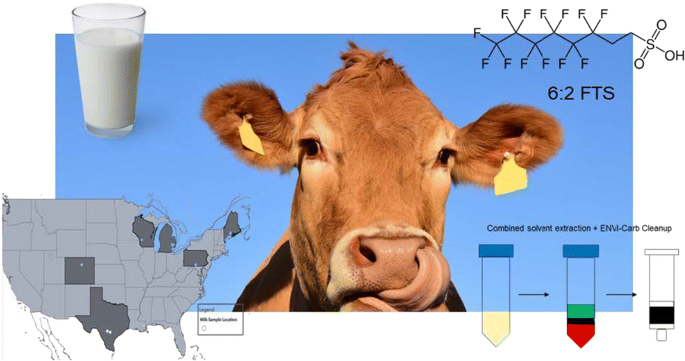
A sensitive method for the detection of legacy and emerging per- and polyfluorinated alkyl substances (PFAS) in dairy milk
There is widespread contamination by per- and polyfluoroalkyl substances (PFAS) across the globe, with adverse effects on human and environmental health. For human exposure, drinking water and dietary exposure have been recognized as important PFAS exposure pathway for the general population. Several documented cases of dairy milk contamination by PFAS have raised concerns over this exposure pathway in general. A sensitive method for determination of 27 PFAS in milk was hence modified and applied on raw and processed milk samples from 13 farms across the United States (U.S.). A combination of acid and basic extraction method and ENVI-Carb clean-up achieved recoveries of targeted PFAS between 70 and 141%. The method detection limits (MDL) ranged from 0.8 to 22 ng/L (for 26 PFAS) and 144 ng/L for perfluorobutanoic acid (PFBA). The uniqueness of this method is considered in the targeted screening of a broad range of legacy PFAS, as well as perfluorinated sulfonamide species and fluorotelomer sulfonates. No legacy PFAS were detected in 13 milk samples from regions of concern given local use of biosolids or proximity to fire training areas. Overall, then, the uptake of perfluoroalkyl acids (PFAA) from dairy milk in the U.S. is considered low.
Field‐testing polyethylene passive samplers for the detection of neutral polyfluorinated alkyl substances in air and water
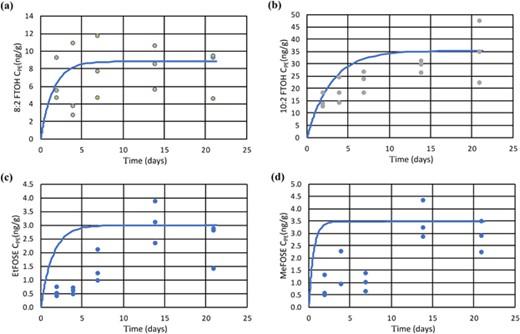
Abstract . Fluorotelomer alcohols (FTOHs), perfluorooctane‐sulfonamidoethanols (FOSEs), perfluorooctane‐sulfonamides (FOSAs), and other poly‐ and perfluori
Binding of Per- and Polyfluoroalkyl Substances (PFAS) to Serum Proteins: Implications for Toxicokinetics in Humans
Abstract. Per- and polyfluoroalkyl substances (PFAS) are a diverse class of highly persistent anthropogenic chemicals that are detectable in the serum of m

Are Fluoropolymers Really of Low Concern for Human and Environmental Health and Separate from Other PFAS?
Abstract. Fluoropolymers are a group of polymers within the class of per- and polyfluoroalkyl substances (PFAS). The objective of this analysis is to evalu
Liver and Intestinal Fatty Acid Binding Proteins Are Not Critical for Perfluorooctanesulfonate (PFOS) Tissue Distribution and Elimination in Mice
Abstract. Perfluorooctanesulfonate (PFOS) is a persistent environmental pollutant in the per- and polyfluoroalkyl substances (PFAS) class, known to accumul
Differential scanning fluorimetry to assess PFAS binding to bovine serum albumin protein
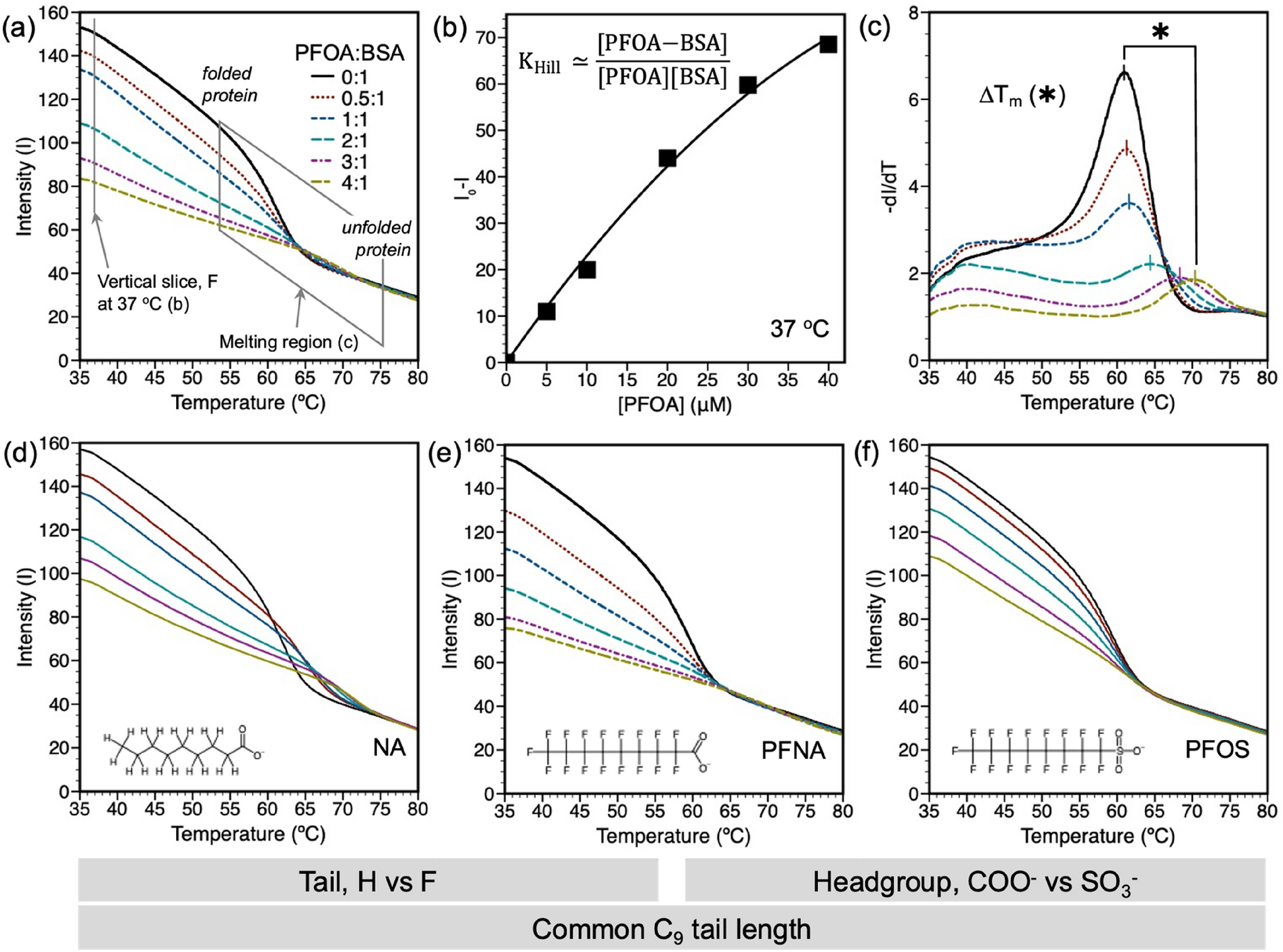
The rapid screening of protein binding affinity for poly- and perfluoroalkyl substances (PFAS) benefits risk assessment and fate and transport modelling. PFAS are known to bioaccumulate in livestock through contaminated food and water. One excretion pathway is through milk, which may be facilitated by binding to milk proteins such as bovine serum albumin (BSA). We report a label-free differential scanning fluorimetry approach to determine PFAS–BSA binding over a broad temperature range. This method utilizes the tryptophan residue within the protein binding pocket as an intrinsic fluorophore, eliminating the need for fluorophore labels that may influence binding. BSA association constants were determined by (a) an equilibrium-based model at the melting temperature of BSA and (b) the Hill adsorption model to account for temperature dependent binding and binding cooperativity. Differences in binding between PFAS and fatty acid analogs revealed that a combination of size and hydrophobicity drives PFAS binding.
Furthering the Capabilities of Diffusive-Gradient Passive Samplers for Per- and Polyfluoroalkyl Substances
Abstract. Per- and polyfluoroalkyl substances (PFAS) are chemical pollutants of growing concern for many stakeholders. Due to their ubiquity, persistence i

A Liquid–Liquid Extraction Method for Measuring Ultrashort PFCAs and Longer-Chain PFAS in Water
Abstract. Natural waters can contain diverse per- and polyfluoroalkyl substances (PFAS) with contrasting chemistries, presenting challenges for using a sin
A review of the pathways of human exposure to poly- and perfluoroalkyl substances (PFASs) and present understanding of health effects
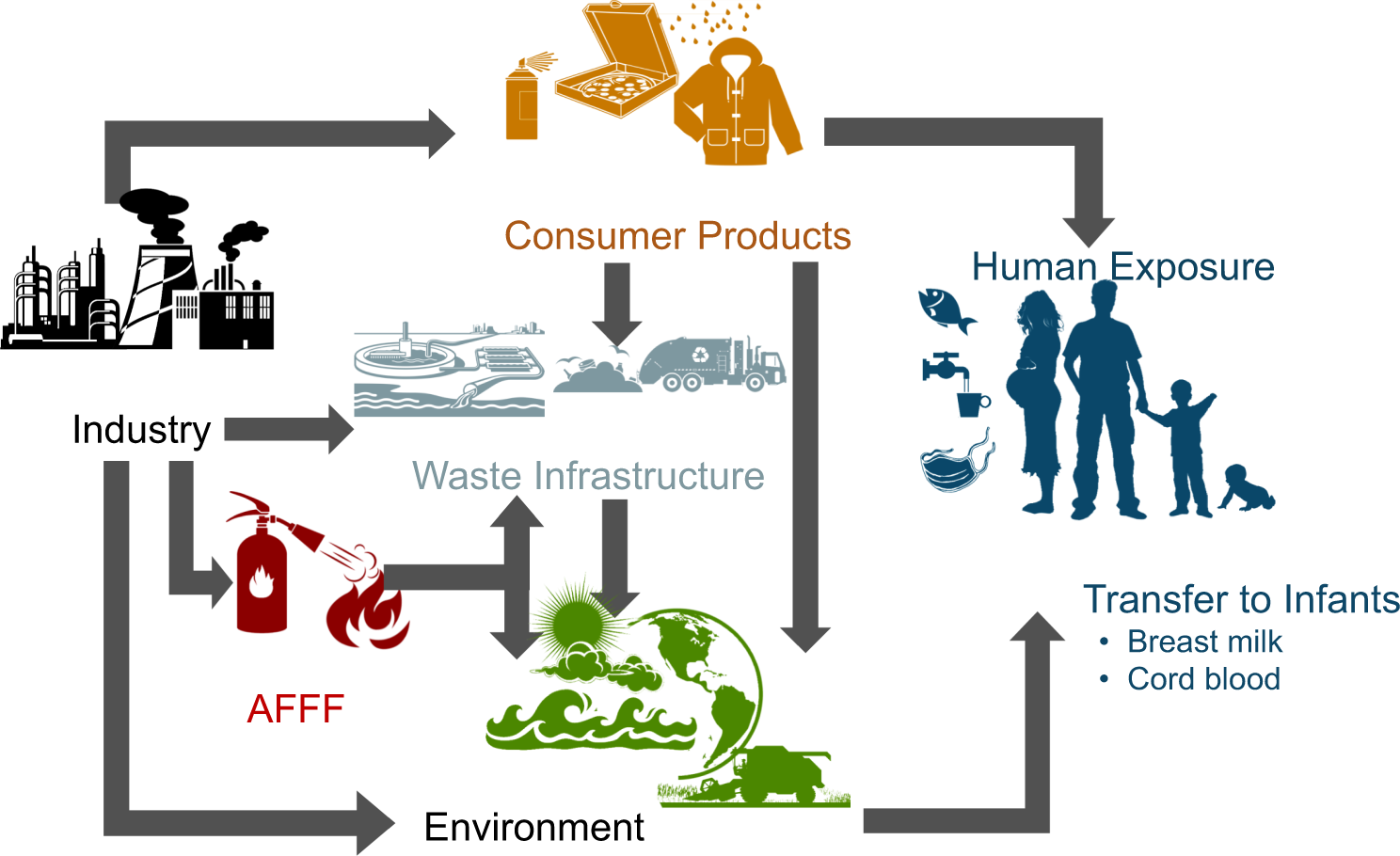
Here, we review present understanding of sources and trends in human exposure to poly- and perfluoroalkyl substances (PFASs) and epidemiologic evidence for impacts on cancer, immune function, metabolic outcomes, and neurodevelopment. More than 4000 PFASs have been manufactured by humans and hundreds have been detected in environmental samples. Direct exposures due to use in products can be quickly phased out by shifts in chemical production but exposures driven by PFAS accumulation in the ocean and marine food chains and contamination of groundwater persist over long timescales. Serum concentrations of legacy PFASs in humans are declining globally but total exposures to newer PFASs and precursor compounds have not been well characterized. Human exposures to legacy PFASs from seafood and drinking water are stable or increasing in many regions, suggesting observed declines reflect phase-outs in legacy PFAS use in consumer products. Many regions globally are continuing to discover PFAS contaminated sites from aqueous film forming foam (AFFF) use, particularly next to airports and military bases. Exposures from food packaging and indoor environments are uncertain due to a rapidly changing chemical landscape where legacy PFASs have been replaced by diverse precursors and custom molecules that are difficult to detect. Multiple studies find significant associations between PFAS exposure and adverse immune outcomes in children. Dyslipidemia is the strongest metabolic outcome associated with PFAS exposure. Evidence for cancer is limited to manufacturing locations with extremely high exposures and insufficient data are available to characterize impacts of PFAS exposures on neurodevelopment. Preliminary evidence suggests significant health effects associated with exposures to emerging PFASs. Lessons learned from legacy PFASs indicate that limited data should not be used as a justification to delay risk mitigation actions for replacement PFASs.
Bioaccumulation of Perfluoroalkyl Sulfonamides (FASA)
Abstract. Hundreds of sites across the United States have high concentrations of perfluoroalkyl sulfonamides (FASA), but little is known about their propen
Understanding Mechanisms of PFAS Absorption, Distribution, and Elimination Using a Physiologically Based Toxicokinetic Model
Abstract. Exposures to some per- and polyfluoroalkyl substances (PFAS), including perfluoroalkyl acids (PFAA), have been associated with diverse adverse he