

The state capacity-civil society tradeoff model tends to treat the “state” and “civil society” as separate entities who move to constrain one another. However, this modeling technique leaves out the nuances of individual action within a collective setting by treating each as a relative black box. This article explores this balance in the context of the surveillance state that has arisen in the 20th and 21st century. As state capacity in surveillance increases it better allows the state to respond to threats to citizens from citizens. However, the increased capacity also lessens the ability of societal pressure to check authoritarian advances even in a nation with a thriving civil society presence.
State Capacity of Secret Surveillance
The state capacity-civil society tradeoff model tends to treat the “state” and “civil society” as separate entities who move to constrain one another. However, this modeling technique leaves out the nuances of individual action within a collective setting by treating each as a relative black box. This article explores this balance in the context of the surveillance state that has arisen in the 20th and 21st century. As state capacity in surveillance increases it better allows the state to respond to threats to citizens from citizens. However, the increased capacity also lessens the ability of societal pressure to check authoritarian advances even in a nation with a thriving civil society presence.
To Repress or to Co‐opt? Authoritarian Control in the Age of Digital Surveillance
This article studies the consequences of digital surveillance in dictatorships. I first develop an informational theory of repression and co-optation. I argue that digital surveillance resolves dicta...

"Pushed into the Shadows": Evidencing Digital Surveillance Chilling Effects and the Erosion of the Rights to Freedom of Assembly and of Association
SummaryThe United Nations Special Rapporteur on the Rights to Freedom of peaceful assembly and of association, Gina Romero, presents "Pushed into the Shadows: Evidencing digital surveillance chilling effects and the erosion of the rights to freedom of assembly and of association". This Global Study documents the profound impact that pervasive digital monitoring exerts on fundamental public freedoms. Moving beyond traditional privacy-centric narratives, the Study details how contemporary surveillance ecosystems induce serious chilling effects.

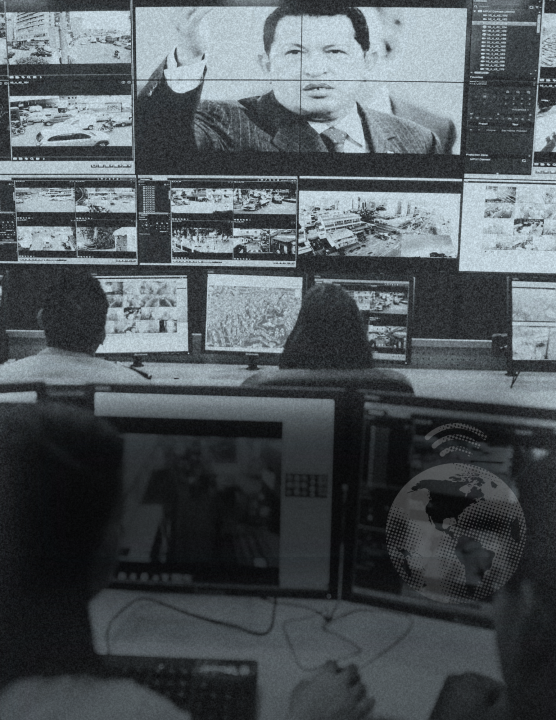
Watch the Watchers: Surveillance technologies for political control in Venezuela
Despite changes in leadership, Venezuela's extensive surveillance infrastructure remains fully operational.
From Democracies to Autocracies: How AI Systems Enable Authoritarianism by Design
AI-enabled authoritarianism is not confined to autocracies. In this paper, we provide greater transparency by investigating and mapping the lifecycles of six AI systems deployed in different political regimes, ranging from the US to China. By drawing on an extensive range of sources (academic publications, investigative research reports, third-party evaluations, media interviews, government procurement notices), we conduct a systematic, qualitative comparison across systems to identify the critical technical and operational features that enable authoritarianism within their respective political contexts. We find that enabling features include the centralization and co-optation of administrative data for law enforcement and political punishment, regulatory gaps that fail to deter misuse, weak user compliance that nullifies human oversight mechanisms, and the encoding of protected group traits that identify members of vulnerable populations. We find that these features are present across systems deployed in autocratic and democratic regimes, albeit in varying configurations. We also find that both centralized and fragmented AI systems can contribute to authoritarianism by exploiting governance gaps: centralized systems directed by executive authorities, particularly within security and military institutions, are often not subjected to formal oversight mechanisms, while fragmented systems diffuse accountability between stakeholders, paving the way for entrenchment. These findings reveal that AI-enabled authoritarianism is distributed, resulting from design and operational choices made by developers, administrators, and users alike. We conclude with recommendations for developers and policymakers to mitigate these risks.

From Democracies to Autocracies: How AI Systems Enable Authoritarianism by Design
AI-enabled authoritarianism is not confined to autocracies. In this paper, we provide greater transparency by investigating and mapping the lifecycles of six AI systems deployed in different political regimes, ranging from the US to China. By drawing on an extensive range of sources (academic publications, investigative research reports, third-party evaluations, media interviews, government procurement notices), we conduct a systematic, qualitative comparison across systems to identify the critical technical and operational features that enable authoritarianism within their respective political contexts. We find that enabling features include the centralization and co-optation of administrative data for law enforcement and political punishment, regulatory gaps that fail to deter misuse, weak user compliance that nullifies human oversight mechanisms, and the encoding of protected group traits that identify members of vulnerable populations. We find that these features are present across systems deployed in autocratic and democratic regimes, albeit in varying configurations. We also find that both centralized and fragmented AI systems can contribute to authoritarianism by exploiting governance gaps: centralized systems directed by executive authorities, particularly within security and military institutions, are often not subjected to formal oversight mechanisms, while fragmented systems diffuse accountability between stakeholders, paving the way for entrenchment. These findings reveal that AI-enabled authoritarianism is distributed, resulting from design and operational choices made by developers, administrators, and users alike. We conclude with recommendations for developers and policymakers to mitigate these risks.
Vigilantism comes for Flock
More Americans than ever are destroying Flock license plate cameras amid rising backlash against the company. Is the tide turning on intrusive U.S. mass surveillance, and where does the privacy fight go next?

📣 Take Action: Reform Section 702: End mass warrantless surveillance
Make an impact with guided actions from Freedom of The Press Foundation.
An Attack on Tech Freedom, an Assault on Dissent
We live in a world of surveillance states, militarized police, and crackdowns on dissent. Meanwhile, corporate behemoths will often ally with the state to shut down dissident speech or aid and abet surveillance. In this context, it’s important for independent groups to develop and maintain encrypted communications platforms and independent web hosting. But the Trump...
‘Invasive’ AI-led mass surveillance in Africa violating freedoms, warn experts
Countries across the continent have spent more than $2bn on Chinese tracking technology that is not ‘necessary or proportionate’, new report finds

Tell Congress to Say No to Warrantless AI Mass Surveillance
The War on Terror-era legislation that authorized decades of civil liberties-eroding mass surveillance expired June 12. . Congress has a choice to make before they reauthorize this bill: will they greenlight warrantless mass surveillance of American citizens, or uphold the Constitution and prevent more of Trump's authoritarian powergrabs? Section 702 of the Foreign Intelligence Surveillance Act (FISA) was passed in 2008 as a counterterrorist measure, but has a long history of abuse from the federal government, especially when it comes to surveillance. Congress has a choice to make: Will they greenlight warrantless mass surveillance, or hold the line and reject any effort to move forward without serious privacy guardrails. FISA as it is currently written: Allows warrantless backdoor surveillance of people in and out of the country Offers little to no protections against the administration targeting critics, activists, religious minorities, or communities of color Actively chills our freedoms of speech and association Two years ago, this reauthorization legislation sailed through Congress with bipartisan support. That can’t happen again. Democratic leadership and members must hold the line for our civil liberties. And any Democrat or Republican voting for unfettered spying on US citizens should hear from their constituents. Let your Members of Congress know you expect them to reject reauthorization unless it includes significant reforms to protect our civil liberties against this authoritarian regime.
"The S is for surveillance": fighting KOSA and bad internet bills in the ATmosphere and the fediverses
Part 2 of The Time Is Right: shifting from theory to practice.

Pluralistic: Surveillance vs guillotines (11 Aug 2026) – Pluralistic: Daily links from Cory Doctorow
In the summer of 2013, two esoteric, technical, incredibly important texts were published within weeks of one another: the first is the Snowden leaks, which revealed a system of global, pervasive digital surveillance; the second was Thomas Piketty's Capital in the 21st Century, a book about the economic inevitability (and political instability) of oligarchy:
Pluralistic: Surveillance vs guillotines (11 Aug 2026) – Pluralistic: Daily links from Cory Doctorow
In the summer of 2013, two esoteric, technical, incredibly important texts were published within weeks of one another: the first is the Snowden leaks, which revealed a system of global, pervasive digital surveillance; the second was Thomas Piketty's Capital in the 21st Century, a book about the economic inevitability (and political instability) of oligarchy:
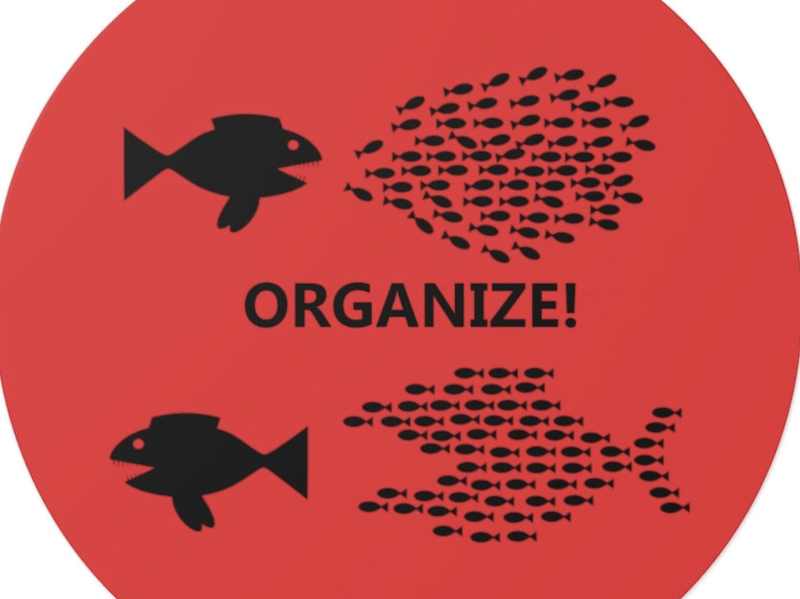
The time is right: Organizing against the surveillance-industrial complex in the ATmosphere and the fediverses
If we organize, we can have a big impact in the fight against the surveillance-industrial complex.
THE DEGRADATION OF HUMAN RIGHTS AND FREE PRESS THROUGH THE PEGASUS SOFTWARE IN THE ERA OF SURVEILLANCE, AS A THREAT TO INTERNATIONAL SECURITY. A DEBATE OF CIVIL LIBERTIES AND CENSORSHIP
The evolution of cyber spying technology presents new and rising dangers; coupled with the easy justification for use of the on-going terrorist crisis these dangers have now become major threats to the international security system. This article aims to provide analysis of these threats, using the new software Pegasus as a focal point of discussion. Developed by the Israeli ‘cyber-warfare’ company ‘NSO’, this spyware signals a danger not only to security but freedom of the press and journalistic integrity. This paper’s focus will centre on how this software is used for censorship rather than to combat terrorism and will examine the social and political ramifications of said use. As highlight, the case of UAE activist Ahmed Mansoor and his contemporaries who were writing against authoritarian governments will be discussed. This article will urge that strict global legislation is needed to stop the abuse of spyware as a tool of censorship.