


Why do some people resort to violence while others in similar circumstances do not? Drawing on 99 in-depth interviews with men from high-violence Chicago neighborhoods who participated in a community violence intervention, we examine how past exposure to violence shapes the social cognitions that influence future involvement in violence—through the schemas and scripts people use to interpret social situations and guide behavior. We identify three specific social cognitions that respondents associated with violence: misconstruing ambiguous cues as threats, defaulting to a narrow set of behavioral responses, and attributing violent behavior to fixed personal traits rather than situational factors. Respondents reported that participation in the program’s cognitive behavioral component shifted these social cognitions in ways they associated with reduced violence involvement. The consistency of these self-reports combined with the program’s experimental impacts suggest the hypothesis that these specific social cognitions could play an important role in violence and may be modifiable through intervention.
Early violence is a bad teacher. But the mind can learn anew | Aeon Essays
A world of violence sustains itself through guns, poverty and other social ills, but also through the minds it creates

When police pull back: Neighborhood‐level effects of de‐policing on violent and property crime, a research note
Abstract Many U.S. cities witnessed both de‐policing and increased crime in 2020, yet whether the former contributed to the latter remains unclear. Indeed, much of what is known about the effects of proactive policing on crime comes from studies that evaluated highly focused interventions atypical of day‐to‐day policing, used cities as the unit of analysis, or could not rule out endogeneity. This study addresses each of these issues, thereby advancing the evidence base concerning the effects of policing on crime. Leveraging two exogenous shocks presented by the onset of the coronavirus 2019 (COVID‐19) pandemic and social unrest after the murder of George Floyd, we evaluated the effects of sudden and sustained reductions in high‐discretion policing on crime at the neighborhood level in Denver, Colorado. Multilevel models accounting for trends in prior police activity, neighborhood structure, seasonality, and population mobility revealed mixed results. On the one hand, large‐scale reductions in stops and drug‐related arrests were associated with significant increases in violent and property crimes, respectively. On the other hand, fewer disorder arrests did not affect crime. These results were not universal across neighborhoods. We discuss the implications of these findings in light of debates concerning the appropriate role of policing in the 21st century.

A Cognitive View of Policing
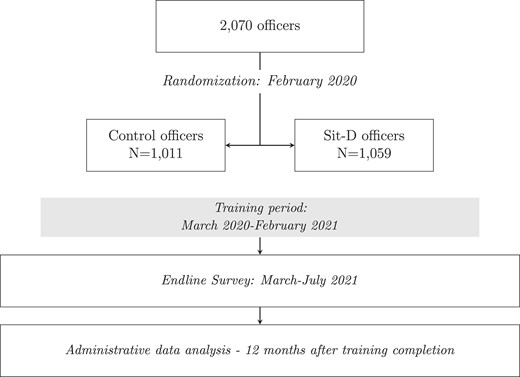
Abstract What causes adverse policing outcomes, such as excessive uses of force and unnecessary arrests? Prevailing explanations focus on problematic officers or deficient regulations and oversight. We introduce an overlooked perspective. We suggest that the cognitive demands inherent in policing can undermine officer decision making. Unless officers are prepared for these demands, they may jump to conclusions too quickly without fully considering alternative ways of seeing a situation. This can lead to adverse policing outcomes. To test this perspective, we created a new training that teaches officers to consider different ways of interpreting the situations they encounter. We evaluated this training using a randomized controlled trial with 2,070 officers from the Chicago Police Department. In a series of lab assessments, we find that treated officers were significantly more likely to consider a wider range of evidence and develop more explanations for subjects’ actions. Critically, we also find that training affected officer performance in the field, leading to reductions in uses of force, discretionary arrests, and arrests of Black civilians. Meanwhile, officer activity levels remained unchanged, and trained officers were less likely to be injured on duty. Our results highlight the value of considering the cognitive aspects of policing and demonstrate the power of using behaviorally informed approaches to improve officer decision making and policing outcomes.
“It is a racial war:” Analyzing the violent rhetoric of active club members on X - Institute for Strategic Dialogue
ISD research revealed that some members of US-based Active Clubs are using X accounts to call for violence against targeted communities.

La banalité du mal : ce que dit la recherche en psychologie sociale
La violence dans les hiérarchies sociales est exercée par des individus qui se distinguent des autres par leur orientation autoritaire.
Cognition in a Social Context: A Social-Interactionist Approach to Emergent Phenomena
The formation of collective memories, emotions, and beliefs is a fundamental characteristic of human communities. These emergent outcomes are thought to be the result of a dynamical system of communicative interactions among individuals. But despite recent psychological research on collective phenomena, no programmatic framework to explore the processes involved in their formation exists. Here, we propose a social-interactionist approach that bridges cognitive and social psychology to illuminate how microlevel cognitive phenomena give rise to large-scale social outcomes. It involves first establishing the boundary conditions of cognitive phenomena, then investigating how cognition is influenced by the social context in which it is manifested, and finally studying how dyadic-level influences propagate in social networks. This approach has the potential to (a) illuminate the large-scale consequences of well-established cognitive phenomena, (b) lead to interdisciplinary dialogues between psychology and the other social sciences, and (c) be more relevant for public policy than existing approaches.

Undersociality: miscalibrated social cognition can inhibit social connection
A person’s well-being depends heavily on forming and maintaining positive relationships, but people can be reluctant to connect in ways that would create or strengthen relationships. Emerging research suggests that miscalibrated social cognition may create psychological barriers to connecting with others more often. Specifically, people may underestimate how positively others will respond to their own sociality across a variety of social actions, including engaging in conversation, expressing appreciation, and performing acts of kindness.

When is Political Violence Justified
What the Liberal Tradition Says on the Subject

Learning how to behave: cognitive learning processes account for asymmetries in adaptation to social norms
Changes to social settings caused by migration, cultural change or pandemics force us to adapt to new social norms. Social norms provide groups of individuals with behavioural prescriptions and therefore can be inferred by observing their behaviour. This work aims to examine how cognitive learning processes affect adaptation and learning of new social norms. Using a multiplayer game, I found that participants initially complied with various social norms exhibited by the behaviour of bot-players. After gaining experience with one norm, adaptation to a new norm was observed in all cases but one, where an active-harm norm was resistant to adaptation. Using computational learning models, I found that active behaviours were learned faster than omissions, and harmful behaviours were more readily attributed to all group members than beneficial behaviours. These results provide a cognitive foundation for learning and adaptation to descriptive norms and can inform future investigations of group-level learning and cross-cultural adaptation.

The Impact of Artificial Intelligence on Violence Against Women and Girls • Stimson Center
Examining the impact of AI on violence against women and girls, particularly concerning disinformation, online abuse, and women’s participation in public life.

Between Threat and Reality: The National Association for the Advancement of Colored People and the Emergence of Armed Self-Defense in Clarksdale and Natchez, Mississippi, 1960-1965
Annelieke Dirks, Between Threat and Reality: The National Association for the Advancement of Colored People and the Emergence of Armed Self-Defense in Clarksdale and Natchez, Mississippi, 1960-1965, Journal for the Study of Radicalism, Vol. 1, No. 1 (Spring 2007), pp. 71-98
Addressing Moderated Mediation Hypotheses: Theory, Methods, and Prescriptions
This article provides researchers with a guide to properly construe and conduct analyses of conditional indirect effects, commonly known as moderated mediation effects. We disentangle conflicting d...

Introduction to Statistical Mediation Analysis
This volume introduces the statistical, methodological, and conceptual aspects of mediation analysis. Applications from health, social, and developmental psychology, sociology, communication, exercise science, and epidemiology are emphasized throughout. Single-mediator, multilevel, and longitudinal models are reviewed. The author's goal is to help the reader apply mediation analysis to their own data and understand its limitations. Each chapter features an overview, numerous worked examples, a summary, and exercises (with answers to the odd numbered questions). The accompanying CD contains outputs described in the book from SAS, SPSS, LISREL, EQS, MPLUS, and CALIS, and a program to simulate the model. The notation used is consistent with existing literature on mediation in psychology. The book opens with a review of the types of research questions the mediation model addresses. Part II describes the estimation of mediation effects including assumptions, statistical tests, and the construction of confidence limits. Advanced models including mediation in path analysis, longitudinal models, multilevel data, categorical variables, and mediation in the context of moderation are then described. The book closes with a discussion of the limits of mediation analysis, additional approaches to identifying mediating variables, and future directions. Introduction to Statistical Mediation Analysis is intended for researchers and advanced students in health, social, clinical, and developmental psychology as well as communication, public health, nursing, epidemiology, and sociology. Some exposure to a graduate level research methods or statistics course is assumed. The overview of mediation analysis and the guidelines for conducting a mediation analysis will be appreciated by all readers.

A Network Approach to Investigate the Dynamics of Individual and Collective Beliefs: Advances and Applications of the BENDING Model
Changing entrenched beliefs to alter people’s behavior and increase societal welfare has been at the forefront of behavioral-science research, but with limited success. Here, we propose a new framework of characterizing beliefs as a multidimensional system of interdependent mental representations across three cognitive structures (e.g., beliefs, evidence, and perceived norms) that are dynamically influenced by complex informational landscapes: the BENDING (Beliefs, Evidence, Norms, Dynamic Information Networked Graphs) model. This account of individual and collective beliefs helps explain beliefs’ resilience to interventions and suggests that a promising avenue for increasing the effectiveness of misinformation-reduction efforts might involve graph-based representations of communities’ belief systems. This framework also opens new avenues for future research with meaningful implications for some of the most critical challenges facing modern society, from the climate crisis to pandemic preparedness.
How Does Media Influence Social Norms? Experimental Evidence on the Role of Common Knowledge
How does media influence beliefs, attitudes, and behaviors? While many scholars have studied the effect of media on social and political outcomes, we know surprisingly little about the channels through which this effect operates. I argue that two mechanisms can account for its impact. Media provides new information that persuades individuals to accept it (individual channel), but also, media informs listeners about what others learn, thus facilitating coordination (social channel). Combining a field experiment with a plausibly natural experiment in Mexico, I disentangle these effects analyzing norms surrounding violence against women. I examine the effect of a radio program when it is transmitted privately versus when it is transmitted publicly. I find no evidence supporting the individual mechanism. The social channel, however, increased rejection of violence against women and increased support for gender equality, but unexpectedly increased pessimism about whether violence would decline in the future.
Sycophantic AI makes human interaction feel more effortful and less satisfying over time
Millions of people now turn to artificial intelligence (AI) systems for personal advice, guidance, and support. Such systems can be sycophantic, frequently affirming users' views and beliefs. Across five preregistered studies (N = 3,075 participants, 12,766 human-AI conversations), including a three-week study with a census-representative U.S. sample, we provide longitudinal experimental evidence that sycophantic AI shifts how users approach their closest relationships. We show that sycophantic AI immediately delivers the emotional and esteem support users typically associate with close friends and family. Over three weeks of such interactions, users became nearly as likely to seek personal advice from sycophantic AI as from close friends and family, and reported lower satisfaction with their real-world social interactions. When given a choice among AI response styles, a majority preferred sycophantic AI -- not for the quality of its advice, but because it made them feel most understood. Together, these findings offer a relational account of AI sycophancy and its impacts.
