Pet ownership and interactions with animals confer various physiological and psychological benefits to humans. Although interactions with animals are commonplace, there is no consensus in the liter...
Run, Spot, Run: The Ethics of Keeping Pets
A life shared with pets brings many emotions. We feel love for our companions, certainly, and happiness at the thought that we’re providing them with a safe, healthy life. But there’s another emotion, less often acknowledged, that can be nearly as powerful: guilt. When we see our cats gazing wistfully out the window, or watch a goldfish swim lazy circles in a bowl, we can’t help but wonder: are we doing the right thing, keeping these independent beings locked up, subject to our control? Is keeping pets actually good for the pets themselves? That’s the question that animates Jessica Pierce’s powerful Run, Spot, Run. A lover of pets herself (including, over the years, dogs, cats, fish, rats, hermit crabs, and more), Pierce understands the joys that pets bring us. But she also refuses to deny the ambiguous ethics at the heart of the relationship, and through a mix of personal stories, philosophical reflections, and scientifically informed analyses of animal behavior and natural history, she puts pet-keeping to the test. Is it ethical to keep pets at all? Are some species more suited to the relationship than others? Are there species one should never attempt to own? And are there ways that we can improve our pets’ lives, so that we can be confident that we are giving them as much as they give us? Deeply empathetic, yet rigorous and unflinching in her thinking, Pierce has written a book that is sure to help any pet owner, unsettling assumptions but also giving them the knowledge to build deeper, better relationships with the animals with whom they’ve chosen to share their lives.

Humans Love Having Pets. Seems Like Some Other Primates Do, Too.
We aren’t the only animals that like to take care of other species. A new study finds that the roots of keeping a pet may stretch deep into our primate past.

Heterospecific social behavior in primates: insights into the evolutionary roots of pet-keeping
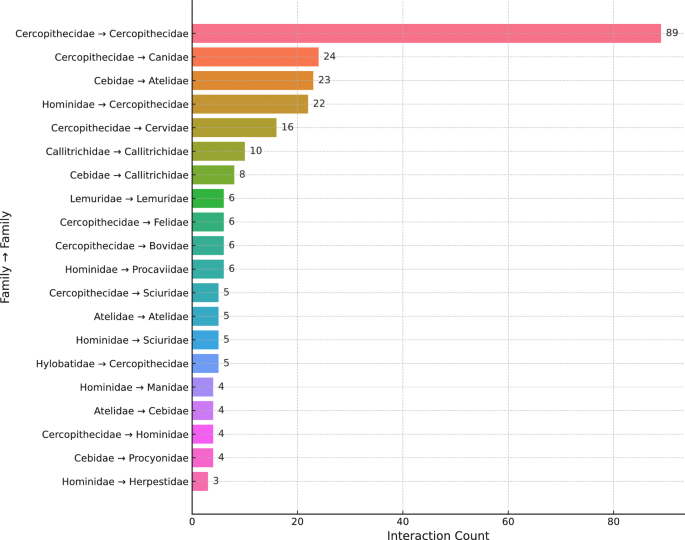
Primate interspecific interactions with both other primates and non-primate species range from predator–prey dynamics to affiliative behaviors such as grooming, play, and carrying. While many primates participate in interspecific associations or commensal relationships, to our knowledge interspecific social interactions have never been systematically synthesized. Here, we present the first comprehensive review of such interactions, compiling 427 cases from the literature, media sources, and a global survey of primatologists. These involved 88 primate species and 127 non-primate species (including mammals, birds, reptiles, amphibians, malacostracans, and insects) across wild (n = 311) and captive (n = 111) contexts. The most frequent interactions occurred within or between primate families (e.g., Cercopithecidae–Cercopithecidae, Cebidae–Atelidae), though affiliative behaviors were also directed toward distantly related taxa such as dogs and birds. Play (n = 139) and grooming (n = 136) were most common. Juveniles and infants predominantly engaged in play, while adult females were more likely to groom. Adult males were less affiliative overall. Contrary to expectations, affiliative behaviors were not more often directed toward immature than adult heterospecifics. Primates were the initiators in most interactions. These findings offer new insights into the diversity and contexts of heterospecific sociality in primates and suggest that some behavioral tendencies relevant to later forms of human–animal companionship – such as caregiving, tolerance, and exploratory play – may be more widespread among primates than previously recognized.
Mutual Aid: A Factor of Evolution
From Mutual Aid In the animal world we have seen that the vast majority of species live in societies, and that they find in association the best arms for the struggle for life: understood, of course, in its wide Darwinian sense — not as a struggle for the sheer means of existence, but as a … Continued
There's no place like home
Peace of mind for pet parents and unique stays for sitters
Mechanisms of social cognition
Social animals including humans share a range of social mechanisms that are automatic and implicit and enable learning by observation. Learning from others includes imitation of actions and mirroring of emotions. Learning about others, such as their group membership and reputation, is crucial for social interactions that depend on trust. For accurate prediction of others' changeable dispositions, mentalizing is required, i.e., tracking of intentions, desires, and beliefs. Implicit mentalizing is present in infants less than one year old as well as in some nonhuman species. Explicit mentalizing is a meta-cognitive process and enhances the ability to learn about the world through self-monitoring and reflection, and may be uniquely human. Meta-cognitive processes can also exert control over automatic behavior, for instance, when short-term gains oppose long-term aims or when selfish and prosocial interests collide. We suggest that they also underlie the ability to explicitly share experiences with other agents, as in reflective discussion and teaching. These are key in increasing the accuracy of the models of the world that we construct.
Eusociality
Eusociality is the highest level of organization of sociality. It is defined by the following characteristics: cooperative brood care, overlapping generations within a colony of adults, and a division of labor into reproductive and non-reproductive groups. The division of labor creates specialized behavioral groups within an animal society, sometimes called castes. Eusociality is distinguished from all other social systems because individuals of at least one caste usually lose the ability to perform behaviors characteristic of individuals in another caste. Eusocial colonies can be viewed as superorganisms.

The Indian street dog crisis and multispecies coexistence in tropical urban futures
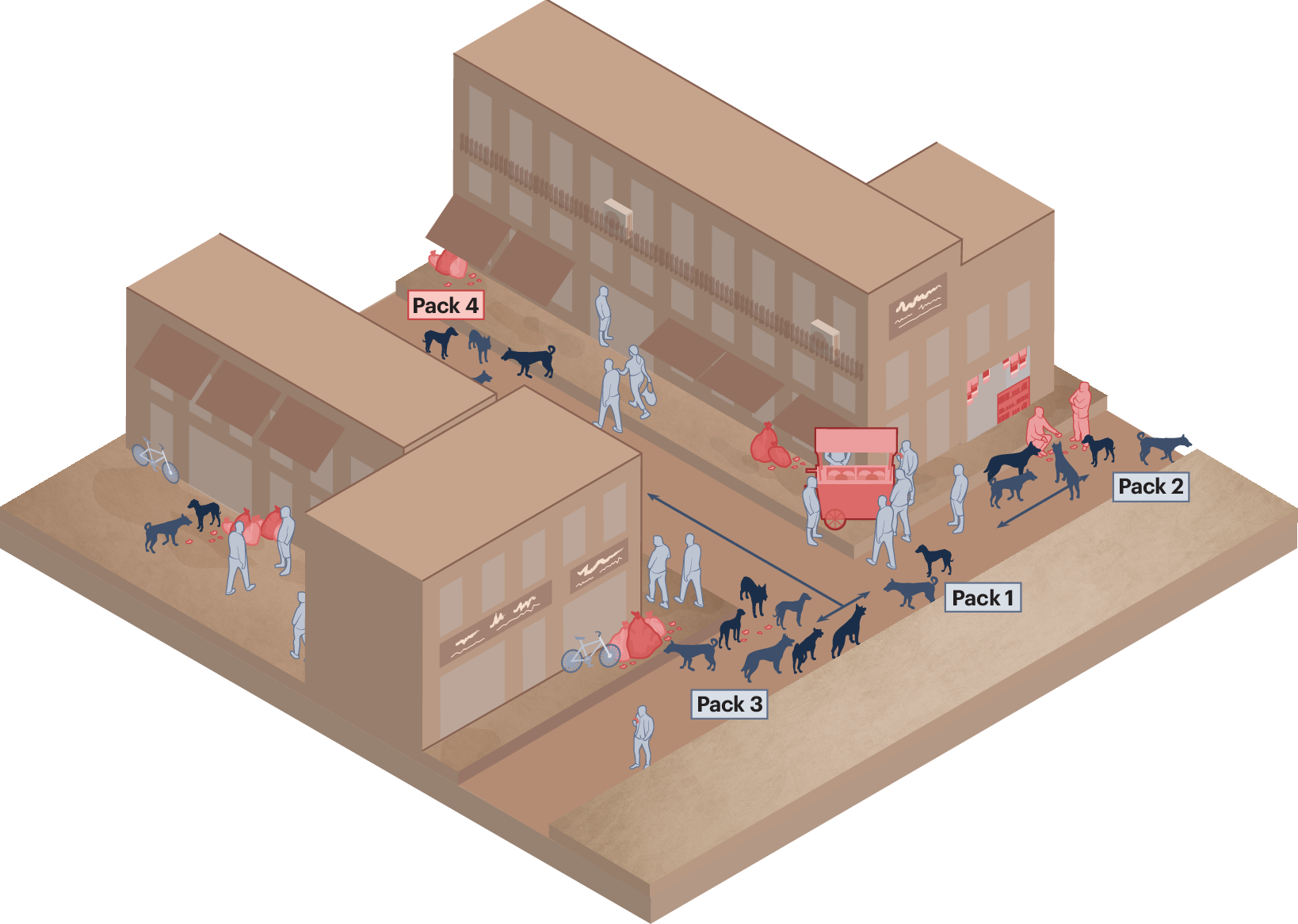
Cities in the Global South struggle with human–animal coexistence conundrums. For example, in South Asia, old and new collide: people raise livestock informally and feed free-ranging animals within heterogeneously developed, juxtaposed patches, while digital economies boom amid threats from waste piles linked with zoonotic diseases and conflicts. This is exemplified by the free-ranging dog crises in India. Humanity’s oldest companion now suffers between compassion and rising conflicts. Dogs still scavenge, guard, breed, disperse and die on streets shaped by traffic, garbage, ritual feeding and uneven care. Indian courts, attempting to address the problems, have overlooked the root cause—food subsidies. Sterilization, shelters, fencing or removals cannot succeed when urban landscapes provide food subsidies to animals without corresponding responsibility. Episodes of reactive management must yield to urban planning, acknowledging that multispecies communities in shared living spaces are complex and interconnected. Here, I suggest making compassion accountable to public health, animal well-being and urban ecology.
Mutual Aid: A Factor of Evolution
Mutual Aid: A Factor of Evolution is a 1902 collection of anthropological essays by Russian naturalist and anarchist philosopher Peter Kropotkin. The essays, initially published in the English periodical The Nineteenth Century between 1890 and 1896, explore the role of mutually beneficial cooperation and reciprocity in the animal kingdom and human societies both past and present. It is an argument against theories of social Darwinism that emphasize competition and survival of the fittest, and against the romantic depictions by writers such as Jean-Jacques Rousseau, who thought that cooperation was motivated by universal love. Instead, Kropotkin argues that mutual aid has pragmatic advantages for the survival of human and animal communities and, along with the conscience, has been promoted through natural selection.

Relational values of nature: leverage points for nature policy in Europe
Relational values reflect the qualities of the relationships between humans and nature, such as care, social bonding, place attachment and spiritual meanings. In this perspective article, we argue ...

Humanists Have Done Nothing Wrong | Defector
For many years, I’ve held a pet theory that cultural consumers can be grouped into two broad categories: Primary Source People and Secondary Source People. The former are the book lovers, cinephiles, archive perusers, and history buffs who grew to love their areas of study because of the specific objects that constitute the field: the…
Humanists Have Done Nothing Wrong | Defector
For many years, I’ve held a pet theory that cultural consumers can be grouped into two broad categories: Primary Source People and Secondary Source People. The former are the book lovers, cinephiles, archive perusers, and history buffs who grew to love their areas of study because of the specific objects that constitute the field: the…
Moderating With Humans, For Humans - Trust Issues
Moderating With Humans, For Humans - Trust Issues
How to spot a psychopath: ‘It’s like the difference between a domestic cat and a wild cat’
People with persistent predatory personalities cause an inordinate amount of pain. Recently, our shared understanding of them has grown – and it could help protect us

In Favor of Enjoying Things on Purpose
The human being is an enjoyment-seeking creature. There’s a reason people are always trying to restrain themselves from excessive eating, drinking, scrolling, and shoppin...