


Fascinating pain-related rituals have been observed throughout the world, but so far no systematic evidence exists to support previous ethnographic reports of analgesic states and dissociative sym...
Body Piercing in “Modern Primitivism” and in Thailand's Vegetarian Festival: A Comparative Study
Western “modern primitivists” and spirit mediums at the Vegetarian Festival in southern Thailand are the leading practitioners of body piercing in the contemporary world. This comparative study finds that they share a similar marginal social background and aspirations for individual distinction through body piercing, but differ radically in the cultural context, specific practices, and kinds of objects used for piercing. “Modern primitivists” are pierced by relatively small piercing objects, which combine with tattoos as part of their everyday attire. Entranced spirit mediums, believed to be possessed by Chinese deities, tend to be pierced by spectacular piercing objects, but only during the Chinese shrines' street processions in course of the annual Vegetarian Festival. In contrast to the “modern primitivists,” who are shunned by mainstream society, the spirit mediums are worshipped as deities by devotees, and constitute a major, but ambiguous attraction for foreign tourists: while piercings are “real,” and hence “authentic,” the sight of gruesome self-mutilation by some pierced mediums may offend the tourists' sensibilities. The article concludes with the observation that some “authentic” sights might be too hard for some tourists to bear and will hence repel rather than attract them. “Bearability” is thus a factor mitigating the attractiveness of such sights.
Effects of Extreme Ritual Practices on Psychophysiological Well-Being
Extreme ritual practices involving pain and suffering pose significant risks such as injury, trauma, or infection. Nonetheless, they are performed by millions of people around the world and are often culturally prescribed remedies for a variety of maladies, and especially those related to mental health. What is the actual impact of these practices on health? Combining ethnographic observations and psychophysiological monitoring, we investigated outcomes of participation in one of the world’s most extreme rituals, involving bodily mutilation and prolonged suffering. Performance of this physically demanding ordeal had no detrimental effects on physiological health and was associated with subjective health improvements, and these improvements were greater for those who engaged in more intense forms of participation. Moreover, individuals who experienced health problems and/or were of low socioeconomic status sought more painful levels of engagement. We suggest two potential mechanisms for these effects: a bottom-up process triggered by neurological responses to pain and a top-down process related to increased social support and self-enhancement. These mechanisms may buffer stress-induced pressures and positively affect quality of life. Our results stress the importance of traditional cultural practices for coping with adversity, especially in contexts where psychiatric or other medical interventions are not widely available.

Extraordinary Passion: The Tantric Ritual: Full-Body Massages
Sex, science, and Tantra - how to have incredible orgasms and amazing sex, and a completely non-spiritual look at why Tantra has such amazing effects.
Methodology in Research on the Rainbow Body: Anthropological and Psychological Reflections on Death and Dying
The rainbow body research project, engaging claims of spiritual attainment and personal transformation, enables us to examine key features of anthropological research. Engagement with communities of discourse exposed aspects of the artificial emic–etic divide, allowing the anthropological study of religion to advance methods in religious studies. The study of paranormal phenomena cannot be isolated from societal contextualization. In this instance, a study of death and dying, contextualized in a traditional community, required unique features of engagement for the researcher who would be present to the social dynamics surrounding the death of a person of high repute.
Potential analgesic function of the clitoris in pregnant women: A feasibility study
Currently, the clitoris is considered to exist solely for sexual pleasure. This prospective, single-centre pilot study focuses on and evaluates an alternative function of the clitoris; pain relief during pregnancy and childbirth. Conducted between 2020 and 2023 at Rouen University Hospital, France, this feasibility study challenges the assertion of the singular function of the clitoris. The primary aim was to assess the acceptability of an intervention focusing on the potential analgesic function of the clitoris. The secondary aim was to assess pain relief. Pregnant women were offered the option of self-external massage with a vibrating device (OVD) in the clitoral suspensory ligament area for pain relief. Data were collected via a self-schedule for precise use of the method, including pain assessment before and after the use of the OVD via a self-analytic visual scale. Acceptability was considered to have been achieved if the woman used the OVD at least twice. Comparisons before and after were performed by means of a student’s t-test. With respect to acceptability, among the 32 women included, 26 (81.25%) used an OVD at least twice. Despite concerns about sexual intimacy and the sensitive period of pregnancy, this preliminary feasibility study confirmed the suitability of this mechanical vibration for the majority of the women included. In terms of pain relief, these 26 women used the OVD to manage 304 painful episodes and the feeling of relief was reported in 86.2% of these episodes. Based on a small sample size, the numerical results are obviously highly relative to the disparity of situations and feelings. However, these few consistent reports of a positive analgesic effect encourage further studies into the potential analgesic function of the clitoris.
Extraordinary Passion: The Tantric Ritual: Setup and Meditation
Sex, science, and Tantra - how to have incredible orgasms and amazing sex, and a completely non-spiritual look at why Tantra has such amazing effects.
Logarithmic Scales of Pleasure and Pain
Rating, ranking, and comparing peak experiences suggest the existence of long tails for bliss and suffering.

Extraordinary Passion: Lingam massage: Oral Hazards
Sex, science, and Tantra - how to have incredible orgasms and amazing sex, and a completely non-spiritual look at why Tantra has such amazing effects.
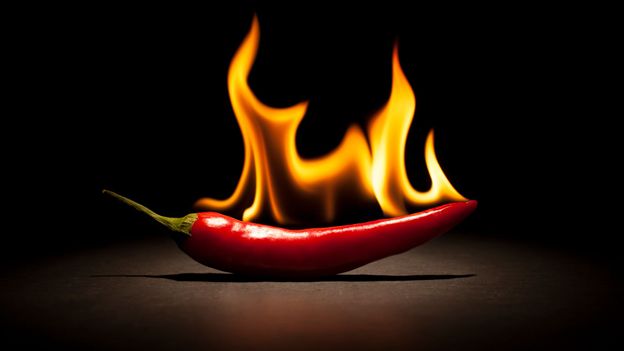
Can you hurt yourself eating chilli peppers?
Many of us love the burning sensation from hot chillies. But are they doing us any harm? Veronique Greenwood investigates.
Ordeals
AbstractI argue that medieval judicial ordeals accurately assigned accused criminals’ guilt and innocence. They did this by leveraging a medieval superstition called iudicium Dei (judgments of God). According to that superstition, God condemned the guilty and exonerated the innocent through clergy-conducted physical tests. Medieval citizens’ belief in iudicium Dei created a separating equilibrium in which only innocent defendants were willing to undergo ordeals. Conditional on observing a defendant’s willingness to do so, the administering priest knew he or she was innocent and manipulated the ordeal to find this. My theory explains the peculiar puzzle of ordeals: trials of fire and water that should have condemned most persons who underwent them did the reverse. They exonerated these persons instead. Boiling water rarely boiled persons who plunged their arms in it. Burning iron rarely burned persons who carried it. Ordeal outcomes were miraculous, but they were miracles of mechanism design.

Extraordinary Passion: Lingam Massage: Extending Arousal
Sex, science, and Tantra - how to have incredible orgasms and amazing sex, and a completely non-spiritual look at why Tantra has such amazing effects.
Entangled Magic in the Medieval Latin West
This article focusses on the history of learned magic in late medieval Europe, breaking a period of about 500 years into chronological stages to explore how medieval supporters and critics of magic represented the art and responded to each other’s arguments, then reframed their own in a continuous dynamic entanglement. In this period learned magic texts from diverse religious and cosmological traditions (primarily Christian, Jewish, Arabic and Greco-Roman) circulated among people familiar with, and emotionally invested in, a great variety of institutional and informal rituals. Sources reveal a vibrant culture of exchanges of texts between members of religious orders, physicians and lay men, clerics and lay women – a culture of entanglement: discussion, borrowing, critique and adaptation alongside practitioner-client relationships and necessary secrecy and concealment.
Extraordinary Passion: Lingam massage: Happy Endings
Sex, science, and Tantra - how to have incredible orgasms and amazing sex, and a completely non-spiritual look at why Tantra has such amazing effects.
A New Pilgrimage: John Vervaeke on Finding Practices that Build Meaning | Over the Mountains #15
Highlights from "Daily Rituals" by Mason Currey
1. A solid routine fosters a well-worn groove for one’s mental energies and helps stave off the tyranny of moods. 2. “A modern stoic,” he observed, “knows that the surest way to discipline passion...

Extraordinary Passion: The Tantric Ritual: Yab-Yum and Maithuna (Sexual Congress)
Sex, science, and Tantra - how to have incredible orgasms and amazing sex, and a completely non-spiritual look at why Tantra has such amazing effects.