

Abstract. Self-control is a promising concept for consumer research, and self-control failure may be an important cause of impulsive purchasing. Three caus
Time-inconsistent Preferences and Consumer Self-Control
Abstract Why do consumers sometimes act against their own better judgment, engaging in behavior that is often regretted after the fact and that would have been rejected with adequate forethought? More generally, how do consumers attempt to maintain self-control in the face of time-inconsistent preferences? This article addresses consumer impatience by developing a decision-theoretic model based on reference points. The model explains how and why consumers experience sudden increases in desire for a product, increases that can result in the temporary overriding of long-term preferences. Tactics that consumers use to control their own behavior are also discussed. Consumer self-control is framed as a struggle between two psychological forces, desire and willpower. Finally, two general classes of self-control strategies are described: those that directly reduce desire, and those that overcome desire through will power.
Self-Control and the Theory of Consumption
To study the behavior of agents who are susceptible to temptation in infinite horizon consumption problems under uncertainty, we define and characterize dynamic self-control (DSC) preferences. DSC pr...

Leave Home without it? The Effects of Credit Card Debt and Available Credit on Spending
This research examines how credit card debt affects consumer spending. In five experimental and field studies, the authors demonstrate that outstanding credit card debt increases spending for consumers with high self-control. They also show that this effect can be eliminated by increasing the available credit on the credit card. Thus, when the available credit is low, consumers with greater self-control increase spending, but when the available credit is high, they reduce spending. The results extend the literature on goal violation and self-control and offer insights into consumer decision making and consumption patterns under conditions of debt.

Co-holding behaviour: unlocking the puzzle
This article seeks to explain why households decide to simultaneously hold both credit and savings products. Beyond the arguments of ignorance or behavioural biases commonly used in the literature,...

Self-Control and Optimal Goals: A Theoretical Analysis
Consumers set goals to achieve a variety of objectives such as losing weight, saving for retirement, and achieving better health. A large body of literature in psychology and consumer behavior shows that goals can help consumers achieve these objectives. However, there is almost no research that examines how we should set optimal goals. The purpose of this paper is to develop a parsimonious framework that examines how goals can help performance and how we should set optimal goals. We use the literature on hyperbolic discounting to model these issues. Our results show that goals can often increase performance but can also sometimes encourage procrastination. We show that some goals are worse than having no goals, even when the goals are achieved and the consumer exerts more effort because of the goal. We also find that the presence of goals can lead to myopic consumers behaving as if they were hyperopic. Our results also show that the most difficult goals should be assigned to consumers with moderate levels of motivation and self-control problems. We also find that it is sometimes optimal to set goals that are never achieved.

Affording Disposal Control: The Effect of Circular Take-Back Programs on Psychological Ownership and Valuation
A circular economy is a “closed-loop” system designed so that products flow back into the production cycle after use. With many companies implementing take-back programs as part of their sustainability strategy, a fundamental shift in consumption has occurred, with consumers considering disposal during and even before purchase decision making. Eight experiments reveal that consumers indicate a greater willingness to pay for circular program products. An increase in psychological ownership underlies the difference in product valuation. Specifically, the additional disposal control uniquely afforded by circular products increases the capacity of circular take-back program products to evoke psychological ownership. The process explanation is directly tested through mediation. Experimentally manipulating antecedents of psychological ownership (i.e., disposal control and psychological ownership) provides further support for the conceptual framework.
Malleable Mental Accounting: The Effect of Flexibility on the Justification of Attractive Spending and Consumption Decisions
Mental accounts are often characterized as self‐control devices that consumers employ to prevent excess spending and consumption. However, under certain conditions of ambiguity, the mental accounting process is malleable; that is, consumers have flexibility in assigning expenses to different mental accounts. We demonstrate how consumers flexibly classify expenses, or construct accounts, to justify spending. An expense that can be assigned to more than one account (i.e., an ambiguous expense) is more likely to be incurred than an unambiguous expense that is constrained either by existing budgets or by previously constructed accounts. We explore the justification processes that underlie these results and their implications for mental accounts as self‐control devices.

Measuring Self-Control Problems
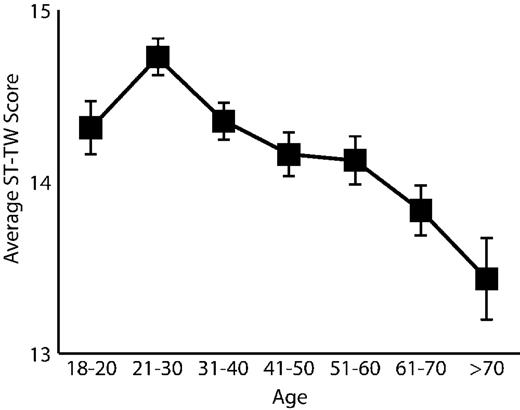
We develop a survey instrument to measure self-control problems in a sample of highly educated adults. This measure relates in the manner that theory predicts to liquid wealth accumulation and personality measures. Yet while self-control problems are typically seen as resulting in overconsumption and low wealth, we identify a significant group who underconsume and thereby accumulate high levels of wealth. In addition, self-control problems are smaller in scale for older than for younger respondents. Those who put money aside in retirement accounts may be delaying access to a point at which self-control problems are no longer important. (JEL D12, D14)
The Exception Is the Rule: Underestimating and Overspending on Exceptional Expenses
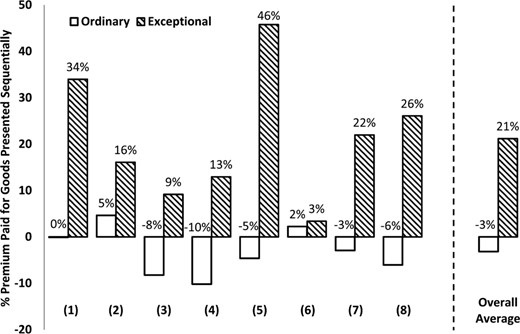
Abstract Purchases fall along a continuum from ordinary (common or frequent) to exceptional (unusual or infrequent), with many of the largest expenses (e.g., electronics, celebrations) being the most exceptional. Across seven studies, we show that, while people are fairly adept at budgeting and predicting how much they will spend on ordinary items, they both underestimate their spending on exceptional purchases overall and overspend on each individual purchase. Based on the principles of mental accounting and choice bracketing, we show that this discrepancy arises in part because consumers categorize exceptional expenses too narrowly, construing each as a unique occurrence and consequently overspending across a series of discretely exceptional expenses. We conclude by proposing an intervention that diminishes this tendency by helping consumers consider their spending on exceptional items as part of a larger set of purchases.
Purchase Justifiability Drives Payment Choice: Consumers Pay with Card to Remember and Cash to Forget
AbstractAlthough consumers often have multiple payment methods at their fingertips, such as cash and credit/debit cards, prior research is silent on how consumers choose between them. We home in on a key element of purchase—purchase justifiability—that affects how consumers choose to pay. Analysis of 118,042 real-world purchases and six experiments reveals that when consumers are motivated to forget (vs. remember) a purchase because they see it as difficult (vs. easy) to justify, they have an increased preference to pay with cash (vs. card) because cards create a “paper/electronic trail” that aids memory retrieval. These payment preferences are strongest among consumers most likely to recall/track their card spending, and manifest only when card expenses are trackable. We reconcile our results with the classic effect of payment method on pain of paying and discuss implications for merchants and for financial institutions designing payment methods of the future.

Payment Depreciation: the Behavioral Effects of Temporally Separating Payments From Consumption
Abstract. Research suggests that individuals mentally track the costs and benefits of a consumer transaction for the purpose of reconciling those costs and
Tightwads and Spendthrifts
Abstract. Consumers often behave differently than they would ideally like to behave. We propose that an anticipatory pain of paying drives “tightwads” to s
It’s the Effort That Counts: The Effect of Self-Control on Goal Progress Perceptions
Does the amount of self-control consumers must exert to choose a goal-consistent action influence their perceptions of goal progress? For example, if you choose to go to the gym when one of your favorite TV shows is on (vs. when nothing interesting is on TV), do you perceive that you have made a differential amount of progress toward your goal, despite completing the exact same workout? In eight studies (N = 7,515), the authors demonstrate that consumers perceive that they have made more progress on their goals when more (vs. less) self-control is required to choose to complete an identical goal-consistent task. This is because when consumers exert more (vs. less) self-control to choose a goal-consistent task over the goal-inconsistent alternatives, they infer higher commitment to the goal. The higher inferred commitment, in turn, leads consumers to perceive that future goal pursuit will be easier. The authors demonstrate this effect across a variety of tasks and means of exerting self-control, as well as with both hypothetical scenarios and real-behavior studies.
The Interplay among Category Characteristics, Customer Characteristics, and Customer Activities on in-Store Decision Making
The authors explore product category and customer characteristics that affect consumers’ likelihood of engaging in unplanned purchases. In addition, they examine consumer activities that can exacerbate or limit these effects. The authors employ a hierarchical modeling approach to test their hypotheses using a data set of in-store intercept interviews conducted with 2300 consumers across 28 stores. The results show that category characteristics, such as purchase frequency and displays, and customer characteristics, such as household size and gender, affect in-store decision making. Moreover, although the analysis reveals that the baseline probability of an unplanned purchase is 46%, the contextual factors can drive this probability as high as 93%. The results support the predictions that list use, more frequent trips, limiting the aisles visited, limiting time spent in the store, and paying by cash are effective strategies for decreasing the likelihood of making unplanned purchases.
A Model of Mental Accounting and Reference Price Adaptation
Consumers possess a mental account that stores the worth of items purchased and yet to be consumed. Reference prices act as the book values of these items. Movements in the account—the comparison between the reference price and the price paid at entry, and the comparison between the benefit of consumption and the reference price at exit—yield hedonic benefits. The reference price is determined by a psychological process of adaptation to the price evoked by the trade. The model is integrative in that it explains a wide array of observed anomalies such as sunk-cost effects, payment depreciation, reluctance to trade, preference for prepayment, and the flat-rate bias. The model also generates new testable implications. This paper was accepted by James Smith, decision analysis.

Overconfidence and the Credit Card Debt Puzzle
This article investigates the credit card debt puzzle. Simultaneously holding credit card debt and liquid assets is puzzling given the sizeable difference between interest rates of debt and assets. However, this behavior is common—about 31% of households in the 2016 Survey of Consumer Finances. The cost of co-holding may be justified if consumers anticipate future restrictions in credit or if they need to maintain liquidity. Other existing explanations for co-holding include impulsive spending and low financial literacy. This research reveals a new explanation for the credit card debt puzzle: consumers’ overconfidence of their financial knowledge. Using a Coarsened Exact Matching method, we found that overconfident consumers were 20%–40% more likely to co-hold credit card debt and liquid assets.