

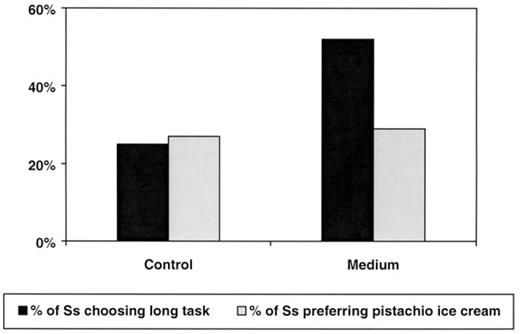
Abstract. A medium—for example, points or money—is a token people receive as the immediate reward of their effort. It has no value in and of itself, but it
Medium: Read and write stories.
On Medium, anyone can share insightful perspectives, useful knowledge, and life wisdom with the world.
maximalism
Maximalism is, generally speaking, the idea that more is better. It often incorporates the idea that qualitative improvements are dependent on quantitative increases – that "progress" is not even possible without quantitative growth. Maximalism is prominent in many areas of modern technological civilization but is particularly so in computing, thanks to Moore's law.
Money as Message | Andreessen Horowitz
Network effects — where a product or service becomes more valuable to its users as more people use it — are one of the key ways software businesses maintain a better product and more defensible market position. This is especially true of messaging apps like WeChat — which, as I’ve argued before, is not just...

A broken pricing paradigm
A token is not a fixed unit of cost Variance in usage creates an interconnected pricing and scaling issue Anjali Shrivastava anjali.shrivastava99@gmail.com | @anjali_shriva THIS ESSAY IS NOW LIVE! A token is not a fixed unit of cost PART I: High variance in AI demand breaks unit economics and re...

Why are we incentivized to make social media worse? What makes KPIs so meaningless? Perverse incentives! #incentives #socialmediastrategist #tokenmaxxing #tokenburn #algorithms
On the immaturity of tokenized value capture mechanisms
Pursuing value in an age of borderless-ness, experimental monetary policies, costless forks and unlimited innovation.

Play is doing its work even if we’re not keeping score | Aeon Essays
We are most human when we play freely, imaginatively, pointlessly. Gamification risks atrophying that most precious capacity

Selling the American People: Advertising, Optimization, and the Origins of Adtech
How marketers learned to dream of optimization and speak in the idiom of management science well before the widespread use of the Internet.Algorithms, data
How to write Medium stories people will actually read
More than 30 million people use Medium each month. They come here in search of something worth reading. Something substantial. And you can give it to them. Medium’s algorithms put you on a level playing field. Your stories can dominate news feeds. Yo...

On the Impact of the Utility in Semivalue-based Data Valuation
Semivalue–based data valuation uses cooperative‐game theory intuitions to assign each data point a value reflecting its contribution to a downstream task. Still, those values depend on the...
Medium has been great for us
More readers, wider distribution, new audiences. An enjoyable place to write. Win, win, win. Win. Just about a year ago we switched this blog, Signal vs. Noise, to Medium. Here’s the post announcin…

Socialized Proof of Work — Open Indie
There’s an increasing obsession with “humanness” these days: Humanness in the age of AI Worldcoin: a solution in search of its problem (...
Positive Sum Worlds: Remaking Public Goods
An era of global protocols requires a visionary redefinition of public goods, in service of others.
Effort for Payment: A Tale of Two Markets
The standard model of labor is one in which individuals trade their time and energy in return for monetary rewards. Building on Fiske's relational theory (1992), we propose that there are two types of markets that determine relationships between effort and payment: monetary and social. We hypothesize that monetary markets are highly sensitive to the magnitude of compensation, whereas social markets are not. This perspective can shed light on the well-established observation that people sometimes expend more effort in exchange for no payment (a social market) than they expend when they receive low payment (a monetary market). Three experiments support these ideas. The experimental evidence also demonstrates that mixed markets (markets that include aspects of both social and monetary markets) more closely resemble monetary than social markets.

What is Money, Anyway?
Editor’s Note: This topic is now comprehensively covered in my book, Broken Money. Money is a surprisingly complex subject. People spend their lives seeking money, and in some ways it seems so straightforward, and yet what humanity has defined as money has changed significantly over the centuries. How could something so simple and so universal, […]

The Value of Getting Closer to the Work
Scaling The core problem of scaling a team is that not everyone can know everything. Scaling is the work of systematizing that – so that things are understandable, knowable. It’s turnin…
