

Abstract. Consumption depletes one's available resources, but consumers may be unaware of the total resources available for consumption and, therefore, be
Malleable Mental Accounting: The Effect of Flexibility on the Justification of Attractive Spending and Consumption Decisions
Mental accounts are often characterized as self‐control devices that consumers employ to prevent excess spending and consumption. However, under certain conditions of ambiguity, the mental accounting process is malleable; that is, consumers have flexibility in assigning expenses to different mental accounts. We demonstrate how consumers flexibly classify expenses, or construct accounts, to justify spending. An expense that can be assigned to more than one account (i.e., an ambiguous expense) is more likely to be incurred than an unambiguous expense that is constrained either by existing budgets or by previously constructed accounts. We explore the justification processes that underlie these results and their implications for mental accounts as self‐control devices.

A Model of Mental Accounting and Reference Price Adaptation
Consumers possess a mental account that stores the worth of items purchased and yet to be consumed. Reference prices act as the book values of these items. Movements in the account—the comparison between the reference price and the price paid at entry, and the comparison between the benefit of consumption and the reference price at exit—yield hedonic benefits. The reference price is determined by a psychological process of adaptation to the price evoked by the trade. The model is integrative in that it explains a wide array of observed anomalies such as sunk-cost effects, payment depreciation, reluctance to trade, preference for prepayment, and the flat-rate bias. The model also generates new testable implications. This paper was accepted by James Smith, decision analysis.

Consumers’ Mental Representation of Expenditures: Implications for Spending and Saving Decisions
People’s mental representation of expenditures is crucial to how they budget. We propose that much like how people represent natural kinds (e.g., animals and pl

Affording Disposal Control: The Effect of Circular Take-Back Programs on Psychological Ownership and Valuation
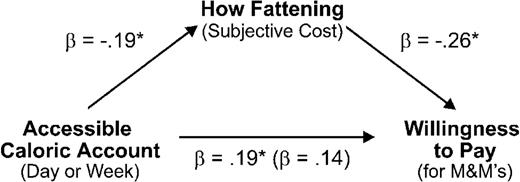
A circular economy is a “closed-loop” system designed so that products flow back into the production cycle after use. With many companies implementing take-back programs as part of their sustainability strategy, a fundamental shift in consumption has occurred, with consumers considering disposal during and even before purchase decision making. Eight experiments reveal that consumers indicate a greater willingness to pay for circular program products. An increase in psychological ownership underlies the difference in product valuation. Specifically, the additional disposal control uniquely afforded by circular products increases the capacity of circular take-back program products to evoke psychological ownership. The process explanation is directly tested through mediation. Experimentally manipulating antecedents of psychological ownership (i.e., disposal control and psychological ownership) provides further support for the conceptual framework.

Gift Cards and Mental Accounting: Green‐lighting Hedonic Spending
ABSTRACT In three studies, we examine the mental accounting rules that govern how gift cards are used. We predicted that their identity as gift cards would shift consumption from utilitarian to hedonic goods even in contexts where both types of goods are available and the consumer's needs are unchanged. In Study 1a, participants were asked to imagine that they had both a gift card and a specified amount of cash and needed to purchase both a hedonic item and a utilitarian item. When asked which currency they would use to buy which item, respondents were significantly more likely to say they would use the gift card to buy the hedonic item. Study 1b replicated this result and found that it was tied to participants' beliefs how different types of money should be used. In Study 2, we found that participants who were required to spend a certain amount of their compensation in a laboratory store spent more on hedonic goods if their payment was in the form of a gift card. In Study 3, we analyzed transactions at a campus bookstore and found that shoppers tended to spend disproportionately on hedonic goods when using their gift cards than when making credit card purchases. Taken together, these studies indicate that people tend to assign the monetary value of a gift card to a hedonic mental account and spend it accordingly. Copyright © 2014 John Wiley & Sons, Ltd.

In-Store Spending Dynamics: How Budgets Invert Relative-Spending Patterns
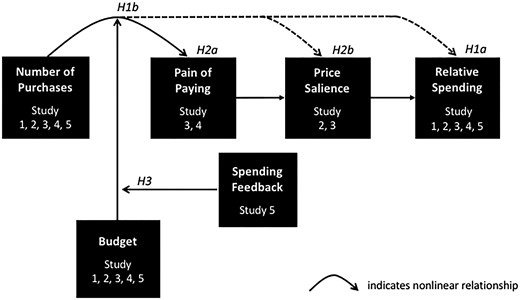
Abstract The authors conduct four controlled lab experiments and one field study in a brick-and-mortar grocery store to demonstrate that relative spending—the price of the purchased item relative to the mean price of the product category—evolves nonlinearly and distinctly for budget and nonbudget shoppers. While the relative spending of budget shoppers evolves in a concave manner, the relative spending of nonbudget shoppers evolves inversely in a convex manner. Thus, budget (nonbudget) shoppers spend relatively more (less) in the middle than at the beginning and toward the end of their shopping trip. Mediation analyses confirm that the pain of paying experienced while shopping drives price salience, which then drives relative spending. Moreover, manipulating shoppers’ pain of paying, by altering the opportunity costs associated with their spending or drawing shoppers’ attention to their spending via real-time spending feedback, is shown to influence these spending patterns. The research offers theoretical contributions to the in-store decision-making, budgeting, and pain-of-paying literature and has important implications for marketing and promotion strategies in retail and mobile technology environments, as it suggests when a shopper may be more sensitive to price-related factors.
Payment Depreciation: the Behavioral Effects of Temporally Separating Payments From Consumption
Abstract. Research suggests that individuals mentally track the costs and benefits of a consumer transaction for the purpose of reconciling those costs and
Mental Budgeting and Consumer Decisions
Abstract. Consumers often set budgets for categories of expenses (e.g., entertainment) and track expenses against their budget. Because budgets cannot perf
Behavioural economics, consumer behaviour and consumer policy: state of the art
Counter to the traditional assumption of neoclassical economics that individuals are rational Homo oeconomici that always seek to maximize their utility and follow their ‘true’ preferences, research in behavioural economics has demonstrated that people's judgements and decisions are often subject to systematic biases and heuristics, and are strongly dependent on the context of the decision. In this article, we briefly review the transition of research from neoclassical economics to behavioural economics, and discuss how the latter has influenced research in consumer behaviour and consumer policy. In particular, we discuss the impacts of key principles such as status quo bias, the endowment effect, mental accounting and the sunk-cost effect, other heuristics and biases related to availability, salience, the anchoring effect and simplicity rules, as well as the effects of other supposedly irrelevant factors such as music, temperature and physical markers on consumers’ decisions. These principles not only add significantly to research on consumer behaviour – they also offer readily available practical implications for consumer policy to nudge behaviour in beneficial directions in consumption domains including financial decision making, product choice, healthy eating and sustainable consumption.
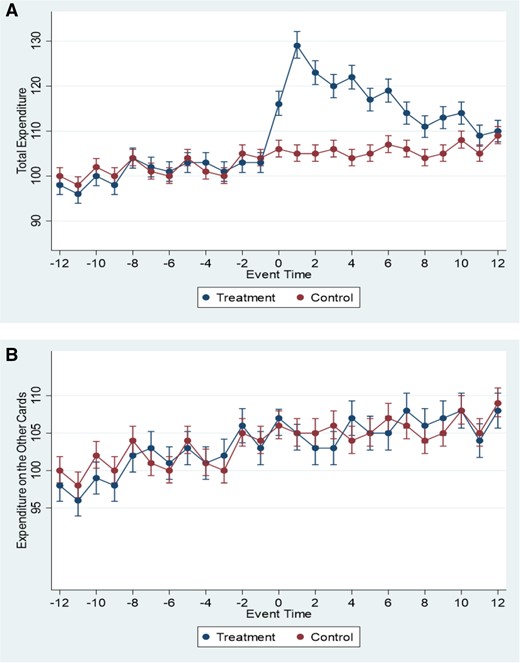
Managing Mental Accounts: Payment Cards and Consumption Expenditures
Does mental accounting matter for total consumption expenditures? We exploit a unique setting in which individuals exogenously received a new credit card, without requesting one. Using random variation in the time of receipt we show that individuals temporarily increase total consumption expenditure by making purchases with the new card without reducing spending on the others. We do not observe a corresponding increase in indebtedness. Total consumption expenditure rises even for the least liquidity-constrained individuals. The evidence is consistent with consumers treating methods of payment as nonfungible budget categories, as suggested by models of mental accounting and narrow bracketing.

Managing Mental Accounts: Payment Cards and Consumption Expenditures
Abstract Does mental accounting matter for total consumption expenditures? We exploit a unique setting in which individuals exogenously receive a new payment card, without requesting one. Using random variation in the time of receipt, we show that individuals temporarily increase total consumption expenditure by making purchases with the new card without reducing spending on the others. We do not observe a corresponding increase in indebtedness. Total consumption expenditure rises even for the least liquidity-constrained individuals. The evidence is consistent with consumers treating methods of payment as nonfungible budget categories, as suggested by models of mental accounting and narrow bracketing.
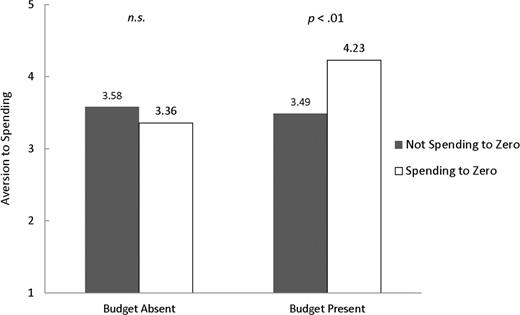
The Bottom Dollar Effect: The Influence of Spending to Zero on Pain of Payment and Satisfaction
Abstract. Spending that exhausts a budget is shown to decrease satisfaction with purchased products relative to spending when resources remain in the budge
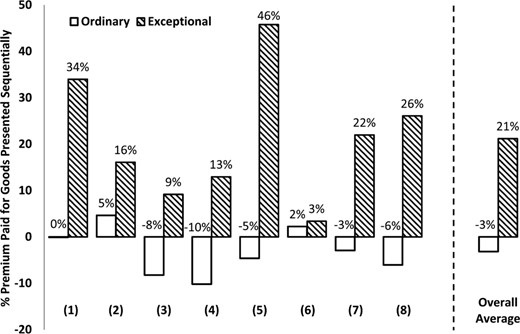
The Exception Is the Rule: Underestimating and Overspending on Exceptional Expenses
Abstract Purchases fall along a continuum from ordinary (common or frequent) to exceptional (unusual or infrequent), with many of the largest expenses (e.g., electronics, celebrations) being the most exceptional. Across seven studies, we show that, while people are fairly adept at budgeting and predicting how much they will spend on ordinary items, they both underestimate their spending on exceptional purchases overall and overspend on each individual purchase. Based on the principles of mental accounting and choice bracketing, we show that this discrepancy arises in part because consumers categorize exceptional expenses too narrowly, construing each as a unique occurrence and consequently overspending across a series of discretely exceptional expenses. We conclude by proposing an intervention that diminishes this tendency by helping consumers consider their spending on exceptional items as part of a larger set of purchases.
Tightwads and Spendthrifts
Abstract. Consumers often behave differently than they would ideally like to behave. We propose that an anticipatory pain of paying drives “tightwads” to s
The Red and the Black: Mental Accounting of Savings and Debt
In the standard economic account of consumer behavior the cost of a purchase takes the form of a reduction in future utility when expenditures that otherwise could have been made are forgone. The reality of consumer hedonics is different. When people make purchases, they often experience an immediate pain of paying, which can undermine the pleasure derived from consumption. The ticking of the taxi meter, for example, reduces one's pleasure from the ride. We propose a “double-entry” mental accounting theory that describes the nature of these reciprocal interactions between the pleasure of consumption and the pain of paying and draws out their implications for consumer behavior and hedonics. A central assumption of the model, which we call prospective accounting, is that consumption that has already been paid for can be enjoyed as if it were free and that the pain associated with payments made prior to consumption (but not after) is buffered by thoughts of the benefits that the payments will finance. Another important concept is coupling, which refers to the degree to which consumption calls to mind thoughts of payment, and vice versa. Some financing methods, such as credit cards, tend to weaken coupling, whereas others, such as cash payment, produce tight coupling. Our model makes a variety of predictions that are at variance with economic formulations. Contrary to the standard prediction that people will finance purchases to minimize the present value of payments, our model predicts strong debt aversion—that they should prefer to prepay for consumption or to get paid for work after it is performed. Such pay-before sequences confer hedonic benefits because consumption can be enjoyed without thinking about the need to pay for it in the future. Likewise, when paying beforehand, the pain of paying is mitigated by thoughts of future consumption benefits. Contrary to the economic prediction that consumers should prefer to pay, at the margin, for what they consume, our model predicts that consumers will find it less painful to pay for, and hence will prefer, flat-rate pricing schemes such as unlimited Internet access at a fixed monthly price, even if it involves paying more for the same usage. Other predictions concern spending patterns with cash, charge, or credit cards, and preferences for the earmarking of purchases. We test these predictions in a series of surveys and in a conjoint-like analysis that pitted our double-entry mental accounting model against a standard discounting formulation and another benchmark that did not incorporate hedonic interactions between consumption and payments. Our model provides a better fit of the data for 60% of the subjects; the discounting formulation provides a better fit for only 29% of the subjects (even when allowing for positive and negative discount rates). The pain of paying, we argue, plays an important role in consumer self-regulation, but is hedonically costly. From a hedonic perspective the ideal situation is one in which payments are tightly coupled to consumption (so that paying evokes thoughts about the benefits being financed) but consumption is decoupled from payments (so that consumption does not evoke thoughts about payment). From an efficiency perspective, however, it is important for consumers to be aware of what they are paying for consumption. This creates a tension between hedonic efficiency and what we call decision efficiency. Various institutional arrangements, such as financing of public parks through taxes or usage fees, play into this tradeoff. A producer developing a pricing structure for their product or service should be aware of these two conflicting objectives, and should try to devise a structure that reconciles them.

Purchase Justifiability Drives Payment Choice: Consumers Pay with Card to Remember and Cash to Forget
AbstractAlthough consumers often have multiple payment methods at their fingertips, such as cash and credit/debit cards, prior research is silent on how consumers choose between them. We home in on a key element of purchase—purchase justifiability—that affects how consumers choose to pay. Analysis of 118,042 real-world purchases and six experiments reveals that when consumers are motivated to forget (vs. remember) a purchase because they see it as difficult (vs. easy) to justify, they have an increased preference to pay with cash (vs. card) because cards create a “paper/electronic trail” that aids memory retrieval. These payment preferences are strongest among consumers most likely to recall/track their card spending, and manifest only when card expenses are trackable. We reconcile our results with the classic effect of payment method on pain of paying and discuss implications for merchants and for financial institutions designing payment methods of the future.
