

View all available purchase options and get full access to this article.
Facebook Shouldn't Give Politicians More Power Than Ordinary Users
Amidst escalating rhetoric about alleged "anti-conservative bias" on social media, Facebook has doubled down on its policies exempting (some) politicians from its ordinary fact-checking and from its

Ted Cruz campaign using firm that harvested data on millions of unwitting Facebook users
Exclusive: Documents reveal donor-funded US startup embedded in Republican’s campaign paid UK university academics to collect psychological profiles on potential voters

Selling You on Facebook
Many popular Facebook apps obtain sensitive information about users—and users' friends—so don't be surprised if details about your religious, political and even sexual preferences start popping up in unexpected places.

Who Makes Money From Facebook: Politicians and Political Candidates | Whattofix.tech
WHAT TO FIX’s Meta Monetization Archive reveals how numerous pages affiliated with politicians and political candidates have been —and in some cases continue to be— accessing Facebook's monetization services.
Facebook employs ex-political aides to help campaigns target voters
Roles for former Conservative and Labour figures prompt fears company is ‘whispering in ears’ of parties to aid micro-targeting of users
Leaked document reveals Facebook conducted research to target emotionally vulnerable and insecure youth
37K votes, 2.3K comments. 48M subscribers in the worldnews community. A place for major news from around the world, excluding US-internal news.
New study shows just how Facebook's algorithm shapes conservative and liberal bubbles
Research conducted at the height of the 2020 election reveals new details about how Facebook's algorithms handle political content. But it suggests there are no easy fixes to political polarization.
Who Makes Money From Facebook: Political Parties | Whattofix.tech
WHAT TO FIX’s Meta Monetization Archive reveals how Facebook has been – and continues to be – providing access to its monetization services to political parties.
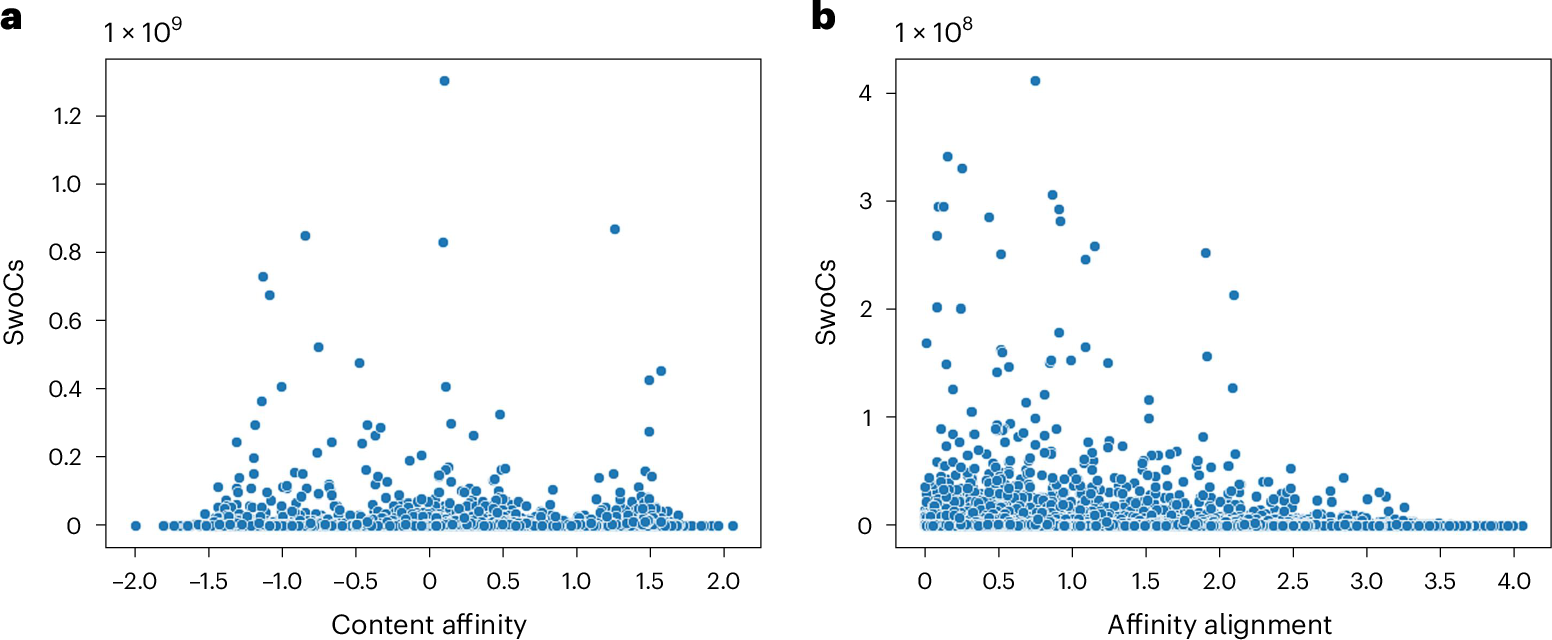
Sharing without clicking on news in social media
Social media have enabled laypersons to disseminate, at scale, links to news and public affairs information. Many individuals share such links without first reading the linked information. Here we analysed over 35 million public Facebook posts with uniform resource locators shared between 2017 and 2020, and discovered that such ‘shares without clicks’ (SwoCs) constitute around 75% of forwarded links. Extreme and user-aligned political content received more SwoCs, with partisans engaging in it more than politically neutral users. In addition, analyses with 2,969 false uniform resource locators revealed higher shares and, hence, SwoCs by conservatives (76.94%) than liberals (14.25%), probably because, in our dataset, the vast majority (76–82%) of them originated from conservative news domains. Findings suggest that the virality of political content on social media (including misinformation) is driven by superficial processing of headlines and blurbs rather than systematic processing of core content, which has design implications for promoting deliberate discourse in the online public sphere.
On Digital Disinformation and Democratic Myths – MediaWell
For two years, from 2015 to 2017, the Russian Internet Research Agency (IRA) operated a “Blacktivist” Facebook page. The Blacktivist account posed as an organic, grassroots online activism site, amplifying and contributing to the Black Lives Matter movement. It shared news, memes, and perspectives about racial injustice in America. Blacktivist was the most prominent of the IRA-generated Facebook pages, with over 6.18 million “interactions” recorded across its top 500 posts. The page had 360,000 likes, more than the verified Black Lives Matter account on Facebook (O’Sullivan and Byers 2017). In congressional hearings about Russian online disinformation and propaganda campaigns, poster-sized versions of Blacktivist posts and memes were on prominent display. Blacktivist stands as a warning sign of the sheer volume of online disinformation activities by foreign actors in US politics.

553,000,000 Reasons Not to Let Facebook Make Decisions About Your
Another day, another horrific Facebook privacy scandal. We know what comes next: Facebook will argue that losing a lot of our data means bad third-party actors are the real problem that we should
Facebook Data Privacy Scandal: A Cheat Sheet - TechRepublic
Read about the saga of Facebook's failures in ensuring privacy for user data, including how it relates to Cambridge Analytica, the GDPR, the Brexit campaign, and the 2016 US presidential election.
Facebook declines to say why it deletes certain political accounts, but not others
Civil liberties groups raise concerns company is ‘picking and choosing’ politicians to censor at US government request after Chechen leader’s accounts deleted

Government requests for Facebook user data continue to increase worldwide | TechCrunch
Facebook continues to see increased requests for user data from governments worldwide, according to its latest transparency report. The social network

Facebook 2016 Year in Review
4.3K votes, 423 comments. Date | Article | 2016-12-30 | Facebook temporarily bans author after he calls Trump fans 'nasty fascistic lot' | 2016-12-2…
Disintermediating your friends: How online dating in the United States displaces other ways of meeting
We present data from a nationally representative 2017 survey of American adults. For heterosexual couples in the United States, meeting online has become the most popular way couples meet, eclipsing meeting through friends for the first time around 2013. Moreover, among the couples who meet online, the proportion who have met through the mediation of third persons has declined over time. We find that Internet meeting is displacing the roles that family and friends once played in bringing couples together.
