

Abstract. Most of the political economy literature blames inefficient policies on institutions or politicians’ motives to supply bad policy, but voters may
Institutions and Behavior: Experimental Evidence on the Effects of Democracy
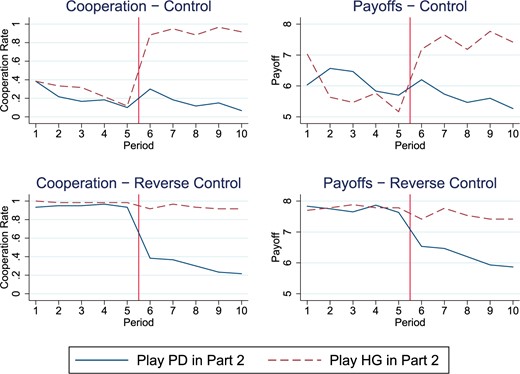
A novel experiment is used to show that the effect of a policy on the level of cooperation is greater when it is chosen democratically by the subjects than when it is exogenously imposed. In contrast to the previous literature, our experimental design allows us to control for selection effects (e.g., those who choose the policy may be affected differently by it). Our finding implies that democratic institutions may affect behavior directly in addition to having effects through the choice of policies. Our findings have implications for the generalizability of the results of randomized policy interventions. (JEL C91, D02, D12, D72)
Undermining a Rival Party’s Issue Competence through Negative Campaigning: Experimental Evidence from the USA, Denmark, and Australia
Much party communication encourages voters to lower issue-related evaluations of rival parties. Yet, studies of such influence are rare. Drawing on research on political parties’ negative campaigning, this article starts to fill this gap. We triangulate evidence from four survey experiments across six issues in Denmark, the US, and Australia, and show that a party’s negative campaigning decreases voters’ evaluations of the target party’s issue-handling competence (i.e. issue ownership), but does not backlash on voters’ evaluations of the sponsor. Such attack on the target party does not have to be tied to a negative policy development like the crime rate to undermine the target party’s competence evaluations. At the same time, a negative policy development only undermines a party’s evaluations when it is accompanied by a rival party’s negative campaigning attack. The implications for party competition and the mass-elite linkage are important.

Voters Were Right About the Economy. The Data Was Wrong.
Here’s why unemployment is higher, wages are lower and growth less robust than government statistics suggest.
The Minimal Persuasive Effects of Campaign Contact in General Elections: Evidence from 49 Field Experiments
Significant theories of democratic accountability hinge on how political campaigns affect Americans’ candidate choices. We argue that the best estimate of the effects of campaign contact and advertising on Americans’ candidates choices in general elections is zero. First, a systematic meta-analysis of 40 field experiments estimates an average effect of zero in general elections. Second, we present nine original field experiments that increase the statistical evidence in the literature about the persuasive effects of personal contact tenfold. These experiments’ average effect is also zero. In both existing and our original experiments, persuasive effects only appear to emerge in two rare circumstances. First, when candidates take unusually unpopular positions and campaigns invest unusually heavily in identifying persuadable voters. Second, when campaigns contact voters long before election day and measure effects immediately—although this early persuasion decays. These findings contribute to ongoing debates about how political elites influence citizens’ judgments.

81 percent of young Americans say economic conditions are bad or terrible: Survey
Echo Chambers and Their Effects on Economic and Political Outcomes
In this review, we survey the economics literature on echo chambers. We identify echo chambers as arising from a combination of two phenomena: ( a) the choice of individuals to segregate with like-minded ones, i.e., the creation of chambers, and ( b) behavioral biases that induce polarization when individuals exchange beliefs in these chambers, i.e., the echo. We summarize the literatures on these two phenomena and suggest how to combine the two literatures to gain insights about the effects of echo chambers on economic and political outcomes. We end by suggesting pathways for future research and discussing policy interventions to alleviate echo chambers.

Billionaires, Corporate Landlords, and AI Companies Are Seen As Among the Worst Actors in U.S. Society
Voters view billionaires, corporate landlords, payday loans, sports gambling, cryptocurrency, and AI companies as negatively impacting the U.S. economy and society.

Economic inequality cannot be explained by individual bad choices, study finds
A global study led by a researcher at Columbia University Mailman School of Public Health and published in the journal Scientific Reports finds that economic inequality on a social level cannot be explained ...
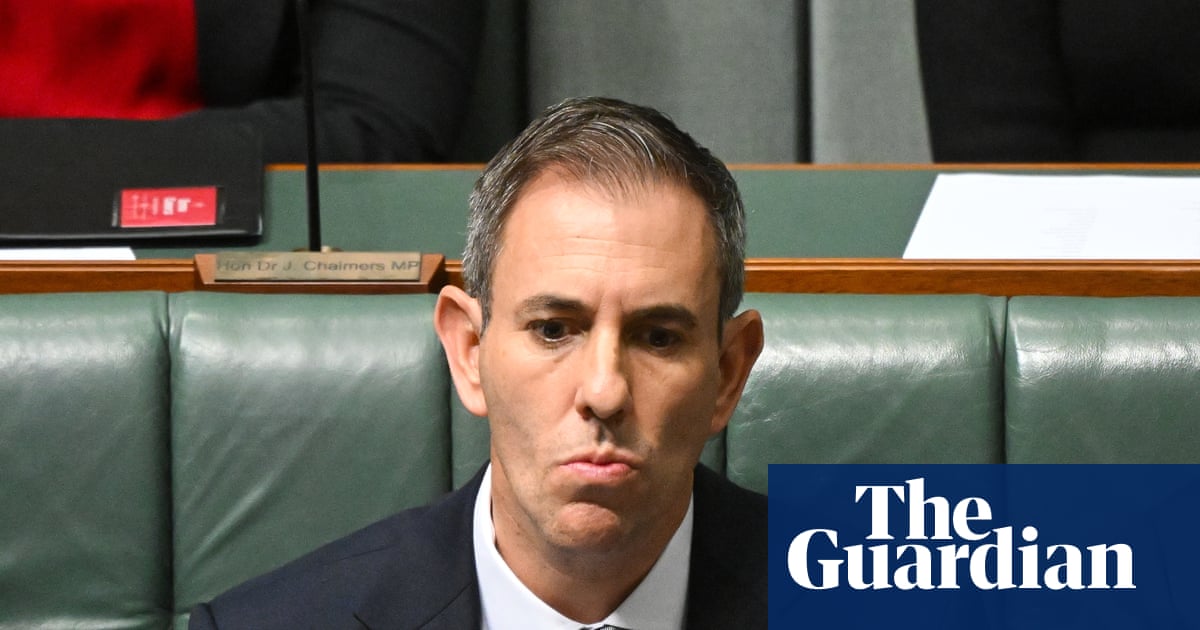
Guardian Essential poll: Labor’s housing and tax changes fail to win over voters as support for One Nation swells
Just 25% of Australians polled back the budget while the majority believe the government has fallen short of expectations over the past year
‘Unfair Elections Act’ targets the youth Trudeau wants and Harper fears
Conservative government’s electoral reforms have negative effects on low youth voter turnout
Persuasion: Empirical Evidence
We provide a selective survey of empirical evidence on the effects as well as the drivers of persuasive communication. We consider persuasion directed at consumers, voters, donors, and investors. We organize our review around four questions. First, to what extent does persuasion affect the behavior of each of these groups? Second, what models best capture the response to persuasive communication? Third, what are persuaders' incentives, and what limits their ability to distort communications? Finally, what evidence exists on the way persuasion affects equilibrium outcomes in economics and politics?
The Failed Assumptions of Free Trade - The Sling
It is neoliberal economists who are wrong about the economics of trade. Economics textbooks and popular work by economists typically hide the unrealistic assumptions that are required to conclude that free trade as practiced by the United States is a beneficial policy overall, meaning that it is welfare-improving.

Apr 2023 Issue
We need better economic models, but we also need Congress to free itself from the self-imposed constraints of modeling on the policymaking process.

Mégafeux : « A moins d’un an de l’élection présidentielle, nous avons l’obligation de ne pas laisser la sidération l’emporter et d’apporter des réponses politiques »
TRIBUNE. Pourquoi les catastrophes, comme les inondations ou les incendies, ne déclenchent-elles pas de sursaut écologique ? L’oubli des causes climatiques et la récupération des colères par les forces populistes constituent un piège démocratique, souligne le politiste Théodore Tallent, dans une tribune au « Monde ».

IDS Annual Lecture 2026 with Jason Hickel - Institute of Development Studies
Join us for the IDS Annual Lecture 2026 delivered by world-renowned political economist and author Prof Jason Hickel.

Monetary incentives, what are they good for?
This paper is a critical reflection on the use of monetary incentives in economic experiments. The argument is that incentives have their effect through their influence on one or more of three fact...
