

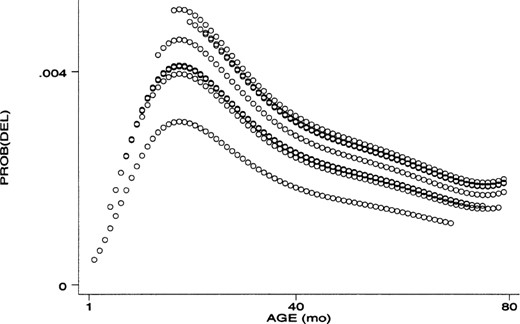
Abstract. This article uses a new dataset of credit card accounts to analyze credit card delinquency, personal bankruptcy, and the stability of credit risk
The Credit Card Debt Puzzle: The Role of Preferences, Credit Access Risk, and Financial Literacy
Abstract. We use the 1979 National Longitudinal Survey of Youth to revisit what is termed the credit card debt puzzle: why consumers simultaneously co-hold high-interest credit card debt and low-interest assets that could be used to pay down this debt. Relative to individuals with no credit card debt but positive liquid assets, borrower-savers have very different perceptions of future credit access risk and use credit cards for precautionary motives. Moreover, changing perceptions about credit access risk are essential for predicting transitions among the two groups. Preferences and the composition of financial portfolios also play a role in these transitions.
Consumption, Debt, and Portfolio Choice: Testing the Effects of Bankruptcy Law
In the United States, consumer bankruptcy (Chapter 7 and Chapter 13) is designed to provide debtors a fresh start. Broadly speaking, after a household successfully files a bankruptcy petition, its unsecured debts are erased, but it must forfeit any assets above an exemption level determined by law. Laws regulating bankruptcy are a complex mix of state and federal rules. While the specific legal details are beyond the scope of this essay, in general, state laws set the exemption levels above which households forfeit assets; these range from exemptions as low as $75 to more than $100,000 (or, indeed, potentially unlimited levels).1
Household Need for Liquidity and the Credit Card Debt Puzzle
Abstract. In the 2001 U.S. Survey of Consumer Finances, 27% of households report simultaneously revolving significant credit card debt and holding sizeable
Precautionary borrowing and the credit card debt puzzle
Do Liquidity Constraints and Interest Rates Matter for Consumer Behavior? Evidence from Credit Card Data
Abstract. This paper utilizes a unique data set of credit card accounts to analyze how people respond to credit supply. Increases in credit limits generate
The Co-Holding Puzzle: New Evidence from Transaction-Level Data
The tendency of consumers to hold low-yield liquid savings while simultaneously holding high-cost unsecured credit on revolving credit lines is a long standing

Overconfidence and the Credit Card Debt Puzzle
This article investigates the credit card debt puzzle. Simultaneously holding credit card debt and liquid assets is puzzling given the sizeable difference between interest rates of debt and assets. However, this behavior is common—about 31% of households in the 2016 Survey of Consumer Finances. The cost of co-holding may be justified if consumers anticipate future restrictions in credit or if they need to maintain liquidity. Other existing explanations for co-holding include impulsive spending and low financial literacy. This research reveals a new explanation for the credit card debt puzzle: consumers’ overconfidence of their financial knowledge. Using a Coarsened Exact Matching method, we found that overconfident consumers were 20%–40% more likely to co-hold credit card debt and liquid assets.
The Credit Card Debt Puzzle and Noncognitive Ability
Abstract Many households concurrently hold low-yield liquid assets while incurring costly credit card debt. In our sample, more than 80% of households with credit card debt also have low-yield liquid assets. Using data from the Health and Retirement Study (N = 30,517), we examine the role of noncognitive skills as well as the economic, financial, and demographic factors that affect the likelihood of co-holding. We find that the “Big Five” personality traits have a statistically significant and economically important effect: households with a more agreeable, introvert, and less conscientious head of household are more likely to co-hold. We also examine the role of intra-household dynamics.
Credit Card Debt Puzzles and Debt Revolvers for Self Control
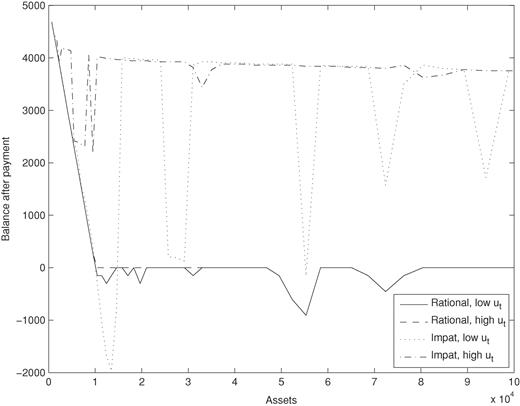
Abstract Most US credit card holders revolve high-interest debt, often with substantial liquid and retirement assets. We model separation of accounting from shopping allowed by credit cards, in a rational, dynamic game. When the shopper is more impatient than the accountant, selling assets to repay debt is not necessarily optimal, as the shopper can restore debt. Modest relative impatience generates asset-debt co-existence and target utilization rates, matching incidence and median assets of debt revolvers with substantial assets. Empirical evidence is consistent with a role for spending control considerations, after allowing for standard determinants of credit card debt.
A Model of Money and Credit, with Application to the Credit Card Debt Puzzle
Abstract. Many individuals simultaneously have significant credit card debt and money in the bank. The credit card debt puzzle is as follows: given high in
<div> When Consumer Financial Protection Spills Over: <span>Student Loan Borrowing under the CARD Act</span> </div>
<p>Credit card use among college students declined sharply following the enactment of the <span>Credit Card Accountability, Responsibility, and Disclosure
Debt literacy, financial experiences, and overindebtedness
We analyze a national sample of Americans with respect to their debt literacy, financial experiences, and their judgments about the extent of their indebtedness. Debt literacy is a component of broader financial understanding that measures knowledge about debt and self-assessed financial knowledge. Financial experiences are the participants’ reported experiences with traditional borrowing, alternative borrowing, and investing. Overindebtedness is a self-reported measure. Debt literacy is low, with only about one-third of the population grasping the basics of interest compounding. Even after controlling for demographics, we find a relationship between debt literacy and both financial experiences and debt loads. Individuals with lower levels of debt literacy tend to transact in high-cost manners, incurring higher fees and using high-cost borrowing. We provide a rough estimate of the national implications of debt ignorance on credit card costs by consumers. Less knowledgeable individuals also report that their debt loads are excessive or that they are unable to judge their debt position.
Credit Card Debt and Consumer Payment Choice: What Can We Learn from Credit Bureau Data?
We estimate a two-stage Heckman selection model of credit card adoption and use with a unique dataset that combines administrative data from the Equifax credit bureau and self-reported data from a representative survey of consumers. Higher-income consumers carry higher credit card balances, but they tend to repay those balances each month. Credit card revolvers have lower income and are less educated. Revolvers are twice as likely to use debit cards as credit cards for payments, but they carry much higher balances on their credit cards. The high cost of paying off credit card debt likely exacerbates existing inequalities in disposable income. Unlike the mortgage market, we find no evidence for lenders’ cutoff between subprime and prime consumers in the credit card market.
Consumer Misunderstanding of Credit Card Use, Payments, and Debt: Causes and Solutions
The authors identify several judgmental biases related to paying off credit card debt. Participants with stronger numerical skills made fewer errors, as did those who used the new statement format mandated by Congress in the CARD Act of 2009. Study 1 shows that people underestimate how long it takes to eliminate a debt when payments barely cover interest owed. Study 2 shows that less numerate people tend to underestimate the monthly payment required to pay off a debt in three years, whereas more numerate people tend to overestimate the payment. The newly revised statement required by the CARD Act substantially reduced these biases. However, even with the new statement, many people still underestimate required payments when still using the credit card. Study 3 identifies ambiguities in the revised statement that can lead to misjudgments about how much to pay on monthly bills. The authors recommend additional public policy actions to help cardholders understand the relationship between payments and debt elimination.

Revolving versus Convenience Use of Credit Cards: Evidence from U.S. Credit Bureau Data
Credit card payments and revolving debt are important for consumer theory but a key data source — credit bureau records — does not distinguish between current charges and revolving debt from the previous month. We develop a theory-based econometric methodology informed by survey evidence to estimate the likelihood a consumer is revolving each quarter. We validate our approach using a new survey linked to credit bureau data. For likely revolvers: (1) 100 percent of an increase in credit becomes an increase in debt eventually; (2) credit limit changes are half as salient as debt changes; and (3) revolving status is extremely persistent.
Credit Card Debt Puzzle: Liquid Assets to Pay Bills
Using transaction data from a US consumer payments diary, we revisit the credit card debt puzzle—a scenario in which consumers revolve credit card debt while al