


Abstract With over a million described species, insects represent the most successful group of animals on Earth. One of the drivers of insect diversity is their ability to engage in multifold beneficial symbioses with microorganisms, often involving specialized host organs to accommodate intra- or extracellular symbionts. The existence of such organs and their importance for sustaining and transmitting beneficial symbionts has been known for over a century, and specific terms have been established for categorizing organs harbouring intracellular bacteria (bacteriomes) or fungi (mycetomes), or cuticular crypts containing extracellular fungi (mycetangia). For others, however, general terms are lacking, e.g. organs containing extracellular bacteria associated with the cuticle or with the digestive tract. Furthermore, previously established terms have been misused in other contexts. Notably, ‘bacteriome’ has been increasingly employed in the microbiome field to refer to bacterial communities, instead of the term’s original meaning of specialized organs housing intracellular bacterial symbionts. Here, we review and categorize the diversity of symbiotic organs in insects and propose a unified terminology. Our hope is that this common language will facilitate communication and thereby support the field of symbiosis research in unravelling commonalities and differences in the evolution, ecology, development, physiology and molecular basis across symbiotic interactions. This article is part of the theme issue ‘Life in natural microcosms’.
Holobiont
A holobiont is an assemblage of a host and the many other species living in or around it, which together form a discrete ecological unit through symbiosis, though there is controversy over this discreteness. The components of a holobiont are individual species or bionts, while the combined genome of all bionts is the hologenome. The holobiont concept was initially introduced by the German theoretical biologist Adolf Meyer-Abich in 1943, and then apparently independently by Dr. Lynn Margulis in her 1991 book Symbiosis as a Source of Evolutionary Innovation. The concept has evolved since the original formulations. Holobionts include the host, virome, microbiome, and any other organisms which contribute in some way to the functioning of the whole. Well-studied holobionts include reef-building corals and humans.

Cognition without brains? Learning and memory in microorganisms
Memory and learning are cognitive abilities typically associated with animals that possess a complex nervous system. Interestingly, recent studies suggest that microorganisms might also display learning-like behaviours. However, a factor limiting progress in this field is the lack of shared, microbe-specific frameworks that allow microbiologists to easily compare discoveries with concepts developed in cognitive sciences. In this review, we aim to bridge this gap by providing a conceptual overview of the definitional requirements for memory and learning to classify microbial behaviours and capabilities. Additionally, we identify and address problems that cause conceptual ambiguity in the microbial cognition literature, thereby facilitating more productive debates on the topic. Finally, we provide a novel perspective on how microbes might ‘learn’ from each other.

A Cell So Minimal That It Challenges Definitions of Life | Quanta Magazine
The newly described microbe represents a world of parasitic, intercellular biodiversity only beginning to be revealed by genome sequencing.
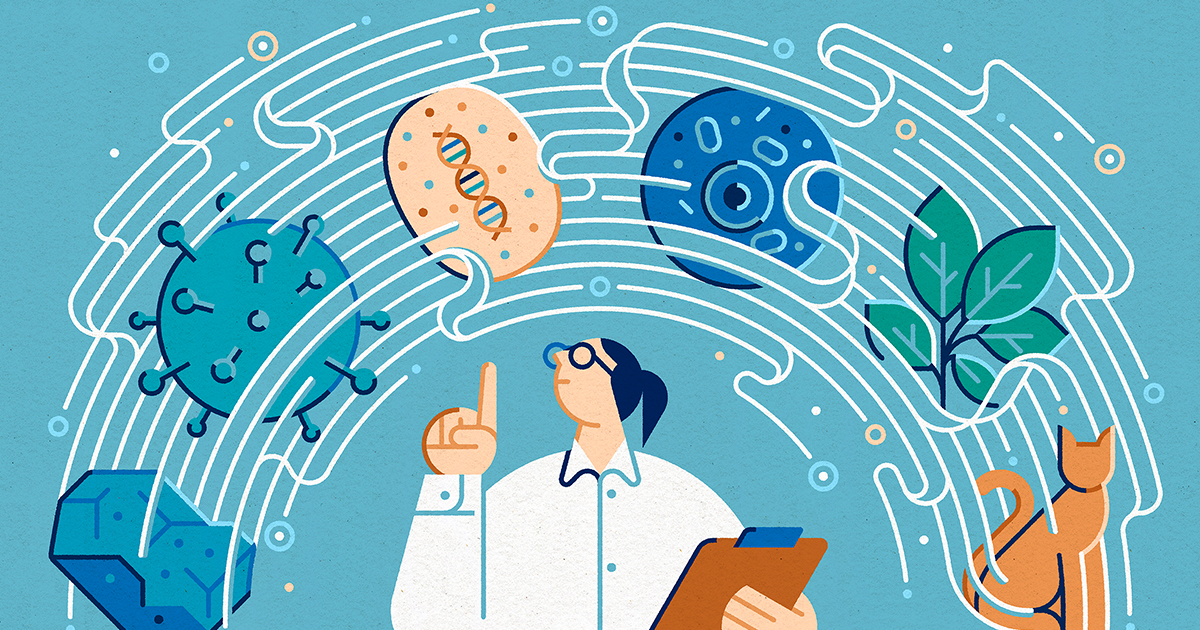
Termitomyces
Termitomyces is a genus of basidiomycete fungi known as termite mushrooms in Lyophyllaceae family farmed by fungus-growing termites. The fungi and the termites interdepend to live, as the termites house and culture the fungi, and the fungi in turn provide foods for the termites. Often after a raining, the fungi grow mushrooms, which are edible and highly regarded for their flavor.

The mycobiome as integral part of the gut microbiome: crucial role of symbiotic fungi in health and disease
The gut mycobiome significantly affects host health and immunity. However, most studies have focused on symbiotic bacteria in the gut microbiome, whereas less attention has been given to symbiotic fungi. Although fungi constitute only 0.01%-0.1% of the gut microbiome, their larger size and unique immunoregulatory functions make them significant. Factors like diet, antimicrobials use, and age can disrupt the fungal community, leading to dysbiosis. Fungal-bacterial-host immune interactions are critical in maintaining gut homeostasis, with fungi playing a role in mediating immune responses such as Th17 cell activation. This review highlights methods for studying gut fungi, the composition and influencing factors of the gut mycobiome, and its potential in therapeutic interventions for intestinal and hepatic diseases. We aim to provide new insights into the underexplored role of gut fungi in human health.

The cognitive cell: bacterial behavior reconsidered
Research on how bacteria adapt to changing environments underlies the contemporary biological understanding of signal transduction, and signal transduction provides the foundation of the information-processing approach that is the hallmark of the ‘cognitive revolution,’ which began in the mid-20th century. Yet cognitive scientists largely remain oblivious to research into microbial behavior that might provide insights into problems in their own domains, while microbiologists seem equally unaware of the potential importance of their work to understanding cognitive capacities in multicellular organisms, including vertebrates. Evidence in bacteria for capacities encompassed by the concept of cognition is reviewed. Parallels exist not only at the heuristic level of functional analogue, but also at the level of molecular mechanism, evolution and ecology, which is where fruitful cross-fertilization among disciplines might be found.

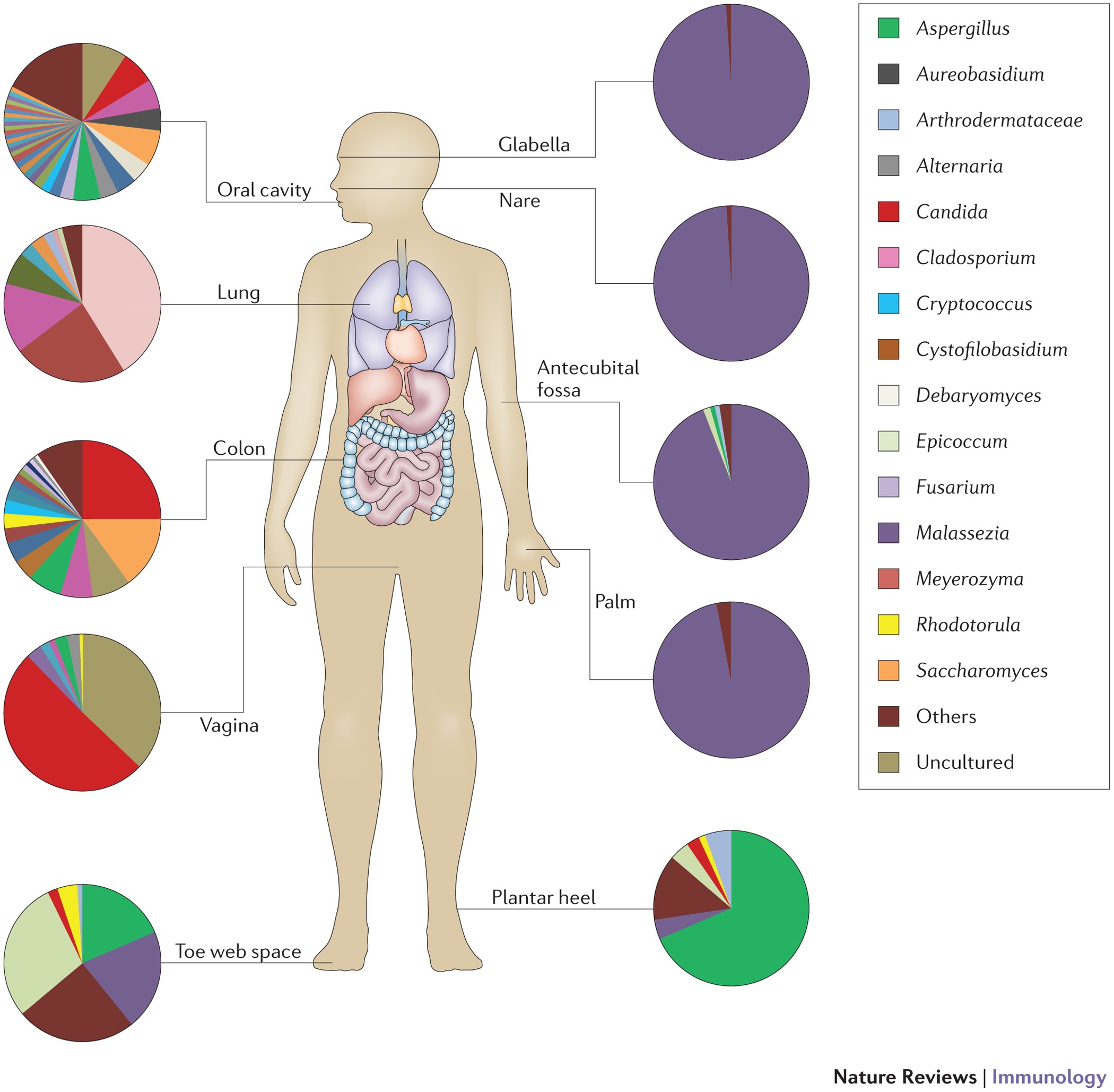
The mycobiota: interactions between commensal fungi and the host immune system
The fungal microbiota, or 'mycobiota', is an understudied component of the microflora that is found on all mucosal surfaces and on the skin.Like other microorganisms, fungi interact with the immune system at these surfaces in ways that are important both for host defence and for regulating the immune system.Investigators who study the mycobiota face both biological and bioinformatic challenges.The study of human genetic disorders and genetic polymorphisms teaches us about the mechanisms by which commensal and pathogenic fungi interact with the immune system.
Pheromone
A pheromone is a chemical that is secreted or excreted by an organism, which triggers a social response in members of the same species. There are alarm pheromones, food trail pheromones, sex pheromones, and many others that affect behavior or physiology. Pheromones are used by many organisms, from basic unicellular prokaryotes to complex multicellular eukaryotes. Their use among insects has been particularly well documented. In addition, some vertebrates, plants and ciliates communicate by using pheromones. The ecological functions and evolution of pheromones are a major topic of research in the field of chemical ecology.
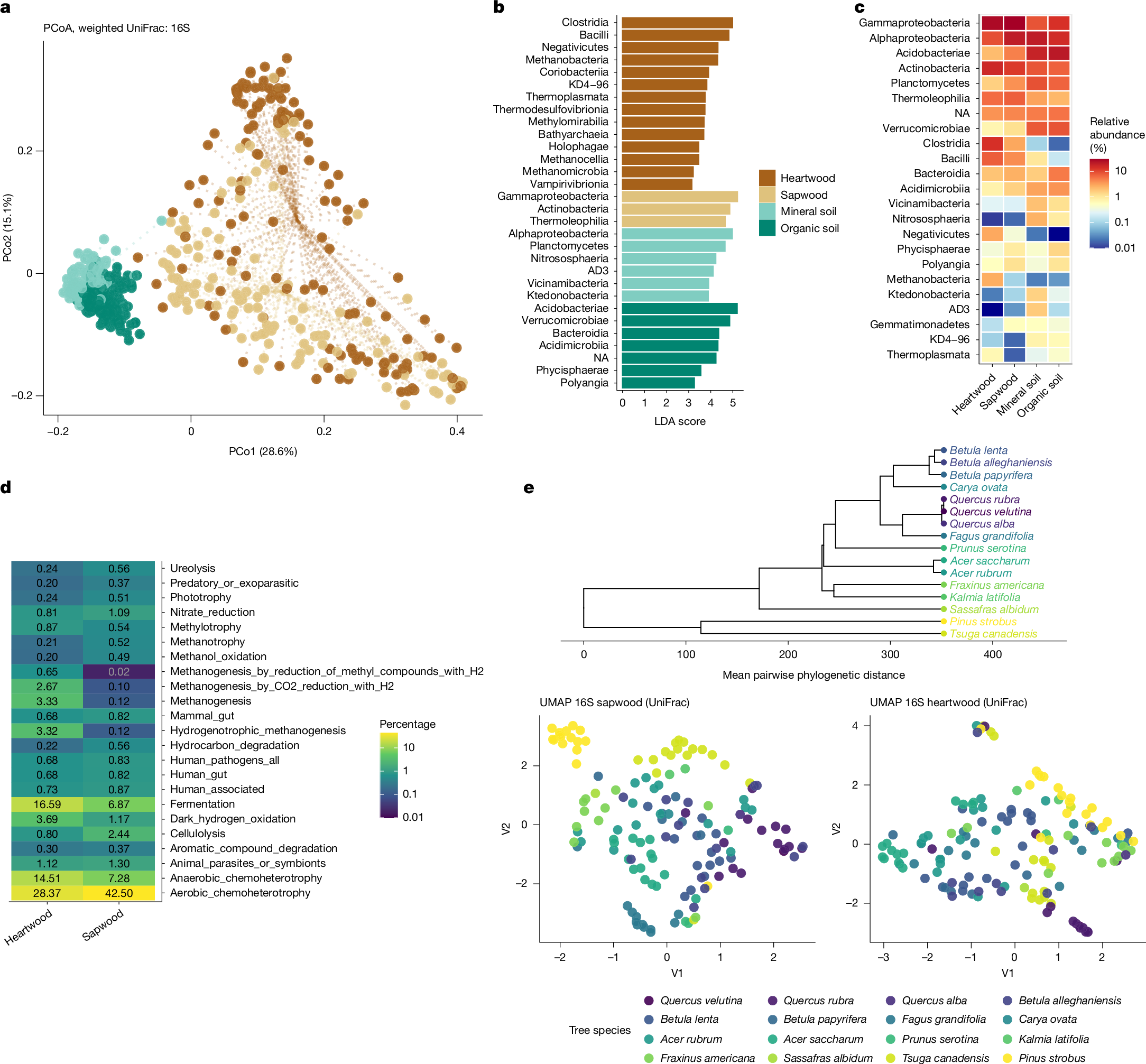
A diverse and distinct microbiome inside living trees
Nature - Microbiome analyses of living trees show that a single tree can host approximately one trillion bacteria, with microbial communities distinctly partitioned between heartwood and sapwood...
Principles of Minimal Cognition: Casting Cognition as Sensorimotor Coordination
Within the cognitive sciences, cognition tends to be interpreted from an anthropocentric perspective, involving a stringent set of human capabilities. Instead, we suggest that cognition is better explicated as a much more general biological phenomenon, allowing the lower bound of cognition to extend much further down the phylogenetic scale. We argue that elementary forms of cognition can already be witnessed in prokaryotes possessing a functional sensorimotor analogue of the nervous system. Building on a case-study of the Escherichia coli bacterium and its sensorimotor system, the TCST-system, we home in on the characteristics of minimal cognition, and distinguish it from more basic forms of ontogenetic adaptation. In our view, minimal cognition requires an embodiment consisting of a sensorimotor coupling mechanism that subsumes an autopoietic organization; this forms the basis of the growing consensus that the core of cognition revolves around sensorimotor coupling. We discuss the relevance of our interpretation of minimal cognition for the study of cognition in general

Social Insects : Ecology and Behavioural Biology
1 online resource; Here is a guide to the ecology of social insects. It is intended for general ecologists and entomologists as well as for undergraduates and those about to start research on social insects; even the experienced investigator may find the comparison between different groups of social insects illuminating. Most technical terms are translated into common language as far as can be done without loss of accuracy but scientific names are unavoidable. Readers will become familiar with the name even though they cannot visualize the animal and could reflect that only a very few of the total species have been studied so far! References too are essential and with these it should be possible to travel more deeply into the vast research literature, still increasing monthly. When I have cited an author in another author's paper, this implies that I have not read the original and the second author must take responsi bility for accuracy! Many hands and heads have helped to make this book. I thank all my colleagues past and present for their enduring though critical support, and I thank with special pleasure: E.]. M. Evesham who fashioned the diagrams;]. Free, D.J. Stradling and]. P.E.C. Darlington who supplied photographs; D.Y. Brian and R.A. Weller who were meticulous on the linguistic side; and G. Frith and R.M. Jones who collated the references. List of plates 1. Fungus combs of Acromyrmex octospinosus and Macrotermes michaelseni. 13 2. Mouthparts of larval Myrmica; 1 Introduction -- 2 Food -- 2.1 Termites as decomposers -- 2.2 Wasps and ants as predators -- 2.3 Sugars as fuel save prey -- 2.4 Seed eaters -- 2.5 Leaf eaters -- 2.6 Pollen eaters -- 3 Foraging by individuals -- 3.1 Foraging strategy -- 3.2 Worker variability -- 4 Foraging in groups -- 4.1 Communication about food -- 4.2 Group slave-raiding -- 4.3 Tunnels and tracks -- 4.4 Nomadic foraging -- 5 Cavity nests and soil mounds -- 5.1 Cavities and burrows -- 5.2 Soil mounds -- 6 Nests of fibre, silk and wax -- 6.1 Mounds of vegetation and tree nests -- 6.2 Combs of cells -- 7 Microclimate -- 7.1 Environmental regulation -- 7.2 Metabolic regulation -- 8 Defence -- 8.1 Painful and paralysing injections -- 8.2 Toxic smears and repellants -- 9 Food processing -- 9.1 Mastication, extraction and regurgitation -- 9.2 Yolk food supplements -- 9.3 Head food glands -- 10 Early population growth -- 10.1 Food distribution -- 10.2 Colony foundation -- 10.3 The growth spurt -- 11 Maturation -- 11.1 Simple models of reproduction -- 11.2 Social control over caste -- 11.3 Males in social Hymenoptera -- 11.4 Maturation in general -- 12 Reproduction -- 12.1 Caste morphogenesis -- 12.2 Copulation and dispersal -- 12.3 Production -- 12.4 Summary -- 13 Evolution of insect societies -- 13.1 Theories of individual selection -- 13.2 Models of these theories -- 13.3 Group selection -- 13.4 Conclusions -- 14 Colonies -- 14.1 The colony barrier -- 14.2 Queen number and species ecology -- 14.3 Queen interaction and queen relatedness -- 15 Comparative ecology of congeneric species -- 15.1 Ant and termite races -- 15.2 Desert ants and termites -- 15.3 Ants and termites in grassland -- 15.4 Forest ants and termites -- 15.5 Wasps and bumblebees -- 15.6 Advanced bees -- 16 Communities -- 16.1 Temperate zone communities in grass and woodland -- 16.2 Desert communities -- 16.3 Tropical rain forest -- 16.4 Conclusions -- 17 Two themes -- 17.1 Plant mutualism -- 17.2 Social organization -- References -- Author index

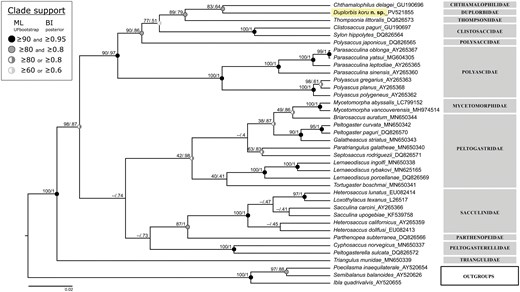
Description of a new species of the hyperparasitic barnacle <i>Duplorbis</i> Smith, 1906 and its cypris larva, with the molecular phylogenetic placement of the enigmatic family Duplorbidae Høeg & Rybakov, 1992 (Cirripedia: Rhizocephala)
Abstract Most species of Rhizocephala are obligate parasites of decapod crustaceans, but species in three families parasitize non-decapod hosts: Chthamalophilidae Bocquet-Védrine, 1961 (parasites of barnacles), Duplorbidae Høeg & Rybakov, 1992 (parasites of isopods and cumaceans), and Thompsoniidae Høeg & Rybakov, 1992 (mostly parasites of decapods but includes one species that is a parasite of stomatopods). Hyperparasitism (form of parasitism in which a secondary parasite lives on or in a primary parasite of a host) is extremely rare in Rhizocephala, but Duplorbis Smith, 1906, the type genus of the enigmatic family Duplorbidae, currently contains two named species hyperparasitic on bopyrid isopods (abdominal and branchial parasites of decapods) and one species on free-living isopods. A lectotype is selected for Duplorbis smithi Nierstrasz & Brender à Brandis, 1923. Recent work on the parasites of squat lobsters from New Zealand revealed a putative new species of this genus, described herein as Duplorbis korun. sp., hyperparasitic on branchial bopyrids of the genera Paragigantione Barnard, 1920 and Parapleurocryptella Bourdon, 1972. Each parasitized female bopyrid contained 3–8 externae of D. korun. sp. in the brood chamber. Externae of one host contained mature cypris larvae, a stage previously poorly known in this genus. These larvae are described herein using SEM and are shown to have a pair of long frontal filaments (retained from the nauplius stage), an exclusive feature shared among Duplorbidae. The first molecular (18S rRNA sequence) analysis of the family was also conducted. Duplorbids appear nested within a well-supported monophyletic lineage also comprising of Polyascidae Høeg & Glenner in Høeg, Noever, Rees, Crandall & Glenner, 2019, Polysaccidae Lützen & Takahashi, 1996, Clistosaccidae Boschma, 1928, Thompsoniidae Høeg & Rybakov, 1992, and Chthamalophilidae Bocquet-Védrine, 1961, most closely related to chthamalophilids. The discovery of this new species expands our knowledge of the species diversity, host use, and larval development of hyperparasitic rhizocephalans.
Spiracle (arthropods)
A spiracle or stigma is the opening in the exoskeletons of insects, myriapods, velvet worms and many arachnids that admits air into the respiratory system.

A cellular entity retaining only its replicative core: Hidden archaeal lineage with an ultra-reduced genome
Abstract Defining the minimal genetic requirements for cellular life remains a fundamental question in biology. Genomic exploration continually reveals novel microbial lineages, often exhibiting extreme genome reduction, particularly within symbiotic relationships. Here, we report the discovery of Candidatus Sukunaarchaeum mirabile, a novel archaeon with an unprecedentedly small genome of only 238 kbp —less than half the size of the smallest previously known archaeal genome— from a dinoflagellate-associated microbial community. Phylogenetic analyses place Sukunaarchaeum as a deeply branching lineage within the tree of Archaea, representing a novel major branch distinct from established phyla. Environmental sequence data indicate that sequences closely related to Sukunaarchaeum form a diverse and previously overlooked clade in microbial surveys. Its genome is profoundly stripped-down, lacking virtually all recognizable metabolic pathways, and primarily encoding the machinery for its replicative core: DNA replication, transcription, and translation. This suggests an unprecedented level of metabolic dependence on a host, a condition that challenges the functional distinctions between minimal cellular life and viruses. The discovery of Sukunaarchaeum pushes the conventional boundaries of cellular life and highlights the vast unexplored biological novelty within microbial interactions, suggesting that further exploration of symbiotic systems may reveal even more extraordinary life forms, reshaping our understanding of cellular evolution. Graphical Abstract

Termite
Termites are a group of eusocial insects which consume a variety of decaying plant material, generally in the form of wood, leaf litter, and soil humus. They are distinguished by their beaded (moniliform) antennae and the soft-bodied, unpigmented worker caste for which they have been commonly termed "white ants"; however, they are not ants but highly derived cockroaches; they are genetically closer to some cockroach groups than these are to other cockroaches. About 2,997 extant species are currently described, 2,125 of which are members of the family Termitidae.
