Abstract Defining the minimal genetic requirements for cellular life remains a fundamental question in biology. Genomic exploration continually reveals novel microbial lineages, often exhibiting extreme genome reduction, particularly within symbiotic relationships. Here, we report the discovery of Candidatus Sukunaarchaeum mirabile, a novel archaeon with an unprecedentedly small genome of only 238 kbp —less than half the size of the smallest previously known archaeal genome— from a dinoflagellate-associated microbial community. Phylogenetic analyses place Sukunaarchaeum as a deeply branching lineage within the tree of Archaea, representing a novel major branch distinct from established phyla. Environmental sequence data indicate that sequences closely related to Sukunaarchaeum form a diverse and previously overlooked clade in microbial surveys. Its genome is profoundly stripped-down, lacking virtually all recognizable metabolic pathways, and primarily encoding the machinery for its replicative core: DNA replication, transcription, and translation. This suggests an unprecedented level of metabolic dependence on a host, a condition that challenges the functional distinctions between minimal cellular life and viruses. The discovery of Sukunaarchaeum pushes the conventional boundaries of cellular life and highlights the vast unexplored biological novelty within microbial interactions, suggesting that further exploration of symbiotic systems may reveal even more extraordinary life forms, reshaping our understanding of cellular evolution. Graphical Abstract
A Cell So Minimal That It Challenges Definitions of Life | Quanta Magazine
The newly described microbe represents a world of parasitic, intercellular biodiversity only beginning to be revealed by genome sequencing.

Growth, metabolic partitioning, and the size of microorganisms
Population growth rate is a fundamental ecological and evolutionary characteristic of living organisms, but individuals must balance the metabolism devoted to biosynthesis and reproduction against the maintenance of existing structure and other functionality. Here we present a mathematical model that relates metabolic partitioning to the form of growth. The model captures the observed growth trajectory of single cells and individuals for a variety of species and taxa spanning prokaryotes, unicellular eukaryotes, and small multicellular eukaryotes. Our analysis suggests that the per-unit costs of biosynthesis and maintenance are conserved across prokaryotes and eukaryotes. However, the relative metabolic expenditure on growth and maintenance of whole organisms clearly differentiates taxa: prokaryotes spend an increasing fraction of their entire metabolism on growth with increasing cell size, whereas eukaryotes devote a diminishing fraction. These differences allow us to predict the minimum and maximum size for each taxonomic group, anticipating observed evolutionary life-history transitions. The framework provides energetic insights into taxonomic tradeoffs related to growth and metabolism and constrains traits that are important for size-structured modeling of microbial communities and their ecological and biogeochemical effects.

A common red algal origin of the apicomplexan, dinoflagellate, and heterokont plastids
The discovery of a nonphotosynthetic plastid in malaria and other apicomplexan parasites has sparked a contentious debate about its evolutionary origin. Molecular data have led to conflicting conclusions supporting either its green algal origin or red algal origin, perhaps in common with the plastid of related dinoflagellates. This distinction is critical to our understanding of apicomplexan evolution and the evolutionary history of endosymbiosis and photosynthesis; however, the two plastids are nearly impossible to compare due to their nonoverlapping information content. Here we describe the complete plastid genome sequences and plastid-associated data from two independent photosynthetic lineages represented by Chromera velia and an undescribed alga CCMP3155 that we show are closely related to apicomplexans. These plastids contain a suite of features retained in either apicomplexan (four plastid membranes, the ribosomal superoperon, conserved gene order) or dinoflagellate plastids (form II Rubisco acquired by horizontal transfer, transcript polyuridylylation, thylakoids stacked in triplets) and encode a full collective complement of their reduced gene sets. Together with whole plastid genome phylogenies, these characteristics provide multiple lines of evidence that the extant plastids of apicomplexans and dinoflagellates were inherited by linear descent from a common red algal endosymbiont. Our phylogenetic analyses also support their close relationship to plastids of heterokont algae, indicating they all derive from the same endosymbiosis. Altogether, these findings support a relatively simple path of linear descent for the evolution of photosynthesis in a large proportion of algae and emphasize plastid loss in several lineages (e.g., ciliates, Cryptosporidium , and Phytophthora) .

Global constraint principle for microbial growth laws | PNAS
Understanding complex living systems requires identifying universal phenomenological laws that are independent of species and molecular-biological ...

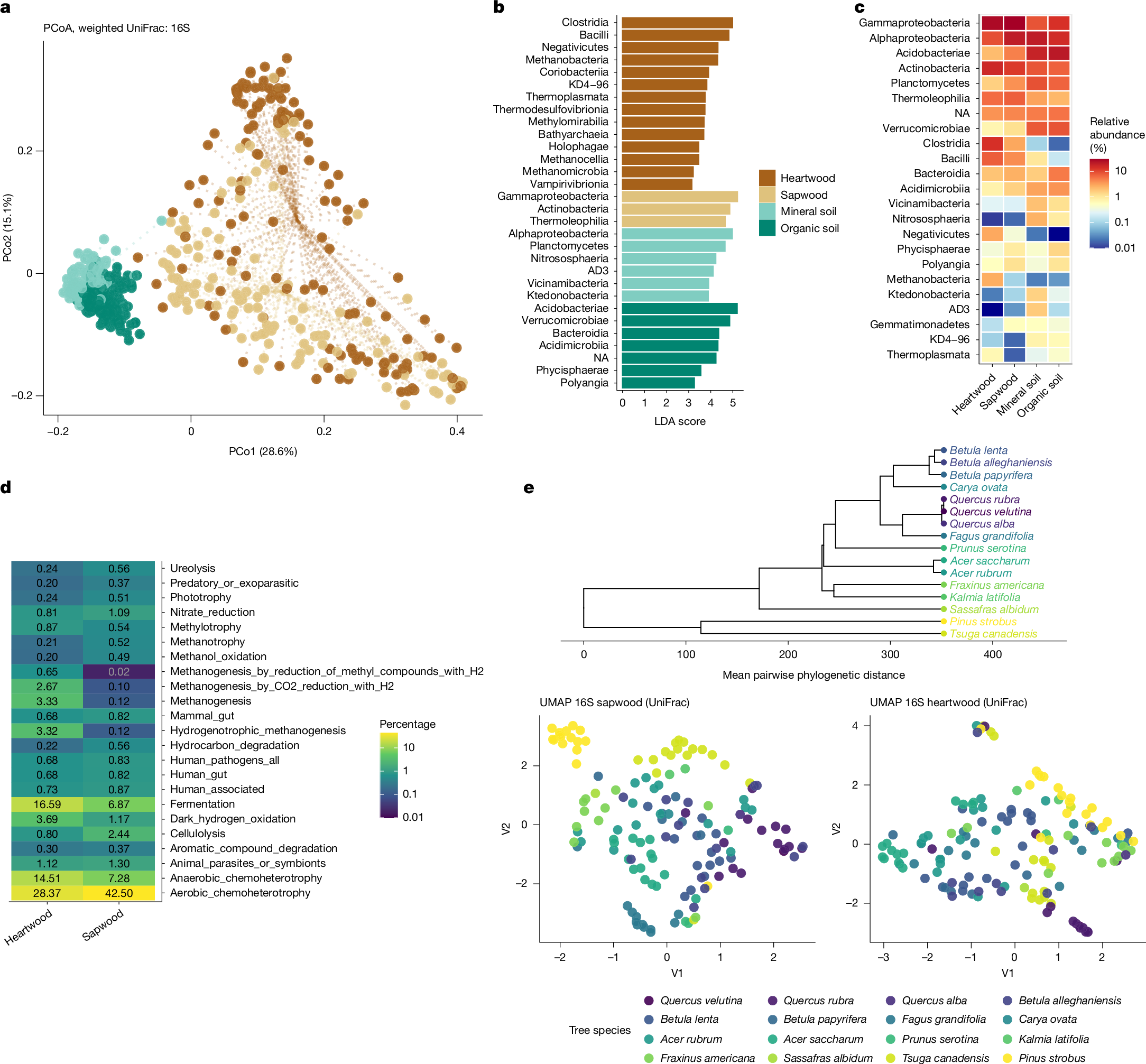
A diverse and distinct microbiome inside living trees
Nature - Microbiome analyses of living trees show that a single tree can host approximately one trillion bacteria, with microbial communities distinctly partitioned between heartwood and sapwood...
Symbiotic organs in insects: diversity, functional implications, and terminology
Abstract With over a million described species, insects represent the most successful group of animals on Earth. One of the drivers of insect diversity is their ability to engage in multifold beneficial symbioses with microorganisms, often involving specialized host organs to accommodate intra- or extracellular symbionts. The existence of such organs and their importance for sustaining and transmitting beneficial symbionts has been known for over a century, and specific terms have been established for categorizing organs harbouring intracellular bacteria (bacteriomes) or fungi (mycetomes), or cuticular crypts containing extracellular fungi (mycetangia). For others, however, general terms are lacking, e.g. organs containing extracellular bacteria associated with the cuticle or with the digestive tract. Furthermore, previously established terms have been misused in other contexts. Notably, ‘bacteriome’ has been increasingly employed in the microbiome field to refer to bacterial communities, instead of the term’s original meaning of specialized organs housing intracellular bacterial symbionts. Here, we review and categorize the diversity of symbiotic organs in insects and propose a unified terminology. Our hope is that this common language will facilitate communication and thereby support the field of symbiosis research in unravelling commonalities and differences in the evolution, ecology, development, physiology and molecular basis across symbiotic interactions. This article is part of the theme issue ‘Life in natural microcosms’.

Holobiont
A holobiont is an assemblage of a host and the many other species living in or around it, which together form a discrete ecological unit through symbiosis, though there is controversy over this discreteness. The components of a holobiont are individual species or bionts, while the combined genome of all bionts is the hologenome. The holobiont concept was initially introduced by the German theoretical biologist Adolf Meyer-Abich in 1943, and then apparently independently by Dr. Lynn Margulis in her 1991 book Symbiosis as a Source of Evolutionary Innovation. The concept has evolved since the original formulations. Holobionts include the host, virome, microbiome, and any other organisms which contribute in some way to the functioning of the whole. Well-studied holobionts include reef-building corals and humans.

Clade
Clade is a folding text editor for Linux and Windows, designed to hierarchically structure any kind of text file and especially source code. It makes navigation through source code faster and easier.
From The Anthropocene To The Microbiocene | NOEMA
The novel coronavirus compels us to rethink the modern concept of the political.

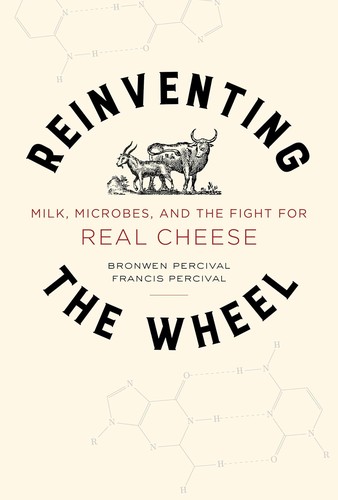
Reinventing the wheel: milk, microbes, and the fight for real cheese
"Reinventing the Wheel is equal parts popular science, history, and muckraking. Over the past hundred and fifty years, dairy farming and cheesemaking have been transformed, and this book explores what has been lost along the way. Today, using cutting-edge technologies like high-throughput DNA sequencing, scientists are beginning to understand the techniques of our great-grandparents. The authors describe how geneticists are helping conservationists rescue rare dairy cow breeds on the brink of extinction, microbiologists are teaching cheesemakers to nurture the naturally occurring microbes in their raw milk rather than destroying them, and communities of cheesemakers are producing "real" cheeses that reunite farming and flavor, rewarding diversity and sustainability at every level."--Provided by publisher.
The cognitive cell: bacterial behavior reconsidered
Research on how bacteria adapt to changing environments underlies the contemporary biological understanding of signal transduction, and signal transduction provides the foundation of the information-processing approach that is the hallmark of the ‘cognitive revolution,’ which began in the mid-20th century. Yet cognitive scientists largely remain oblivious to research into microbial behavior that might provide insights into problems in their own domains, while microbiologists seem equally unaware of the potential importance of their work to understanding cognitive capacities in multicellular organisms, including vertebrates. Evidence in bacteria for capacities encompassed by the concept of cognition is reviewed. Parallels exist not only at the heuristic level of functional analogue, but also at the level of molecular mechanism, evolution and ecology, which is where fruitful cross-fertilization among disciplines might be found.

AI creates first synthetic viruses
Genomic language model has huge potential to redesign organisms such as bacteria


Gut microbiota and bone metabolism
Abstract Osteoporosis is the most common metabolic skeletal disease. It is characterized by the deterioration of the skeletal microarchitecture and bone loss, leading to ostealgia, and even bone fractures. Accumulating evidence has indicated that there is an inextricable relationship between the gut microbiota (GM) and bone homeostasis involving host–microbiota crosstalk. Any perturbation of the GM can play an initiating and reinforcing role in disrupting the bone remodeling balance during the development of osteoporosis. Although the GM is known to influence bone metabolism, the mechanisms associated with these effects remain unclear. Herein, we review the current knowledge of how the GM affects bone metabolism in health and disease, summarize the correlation between pathogen‐associated molecular patterns of GM structural components and bone metabolism, and discuss the potential mechanisms underlying how GM metabolites regulate bone turnover. Deciphering the complicated relationship between the GM and bone health will provide new insights into the prevention and treatment of osteoporosis.

The invasive soft coral Xenia umbellata has been confirmed in Cuban waters
Octocoral colonies with unusual morphology were detected in September 2022 and October 2023 in two coastal areas east of Havana, Cuba, and tentatively identified as Unomia stolonifera. U. stolonifera is an invasive octocoral from the Indo-Pacific that was first reported in the Caribbean off Venezuela in the 2000s, where it has spread rapidly, smothering coral reefs and substantially altering benthic communities. After obtaining tissue samples from a Cuban octocoral colony, we re-examined the specimen using molecular barcoding of three mitochondrial regions (16S/ND2, mtMutS, COI) and the nuclear large ribosomal subunit (28S rRNA), and we unequivocally identified it as Xenia umbellata. X. umbellata, a native of the Red Sea, was first identified in southern Puerto Rico in October 2023 and has since been found in various marine ecosystems along the southern coast of the island. The presence of either invasive octocoral species in Cuba or elsewhere in the Caribbean would be of a serious environmental concern due to their documented tolerance, totipotentiality, propagation capacity and significant negative interactions with local benthic fauna. Attempts to eradicate the invasive soft coral colonies from Cuban waters have been initiated with apparent success, helping to control further expansion. The most likely introduction pathway is the accidental or intentional releases from the aquarium trade but transport via ballast water cannot be ruled out. We cannot discount the possibility of independent invasion events from different routes to Puerto Rico and Cuba occurring within a year of each other. Propagation from Cuba to Puerto Rico, or vice versa, which we consider highly improbable, would likely imply that soft coral populations may also have been established on Hispaniola but have remained undetected in the Dominican Republic and Haiti to date.
The Octopus: An Alien Among Us
Self-replicating, bacterial life first appeared on Earth about 4 billion years ago. For most of Earth’s history, life remained at the single-celled level, and nothing like a nervous system existed …