This paper investigates the impact of self‐service technology (SST) usage on customer satisfaction and retention. Specifically, we disentangle the distinct effects of satisfaction and switching costs as drivers of retention among self‐service customers. Our empirical analysis examines 26,924 multi‐channel customers of a nationwide retail bank. We track each customer's channel usage, overall satisfaction, and retention over a 1‐year period. We find that, relative to face‐to‐face service, customers who use self‐service channels for a greater proportion of their transactions are either no more satisfied, or less satisfied with the service they receive, depending on the channel. However, we also find that these same customers are predictably less likely to defect to a competitor if they are heavily reliant on self‐service channels characterized by high switching costs. Through a mediation model, we demonstrate that, when self‐service usage promotes retention, it does so in a way that is consistent with switching costs. As a robustness check, we examine the behavior of channel enthusiasts, who concentrate transactions among specific channels. Relative to more diversified customers, we find that self‐service enthusiasts in low switching cost channels defect with greater frequency, while self‐service enthusiasts in high switching cost channels are retained with greater frequency.
Improving Customer Compatibility with Tradeoff Transparency
Through a large-scale field experiment with 393,036 customers considering opening a credit card account with a nationwide retail bank, we investigate how providing transparency into an offering’s tradeoffs affects subsequent rates of customer acquisition and long-run engagement. Although we find tradeoff transparency to have an insignificant effect on acquisition rates, customers who were shown each offering’s tradeoffs selected different products than those who were not. Moreover, prospective customers who experienced transparency and subsequently chose to open an account went on to exhibit higher-quality service relationships over time. Monthly spending was 9.9% higher and cancellation rates were 20.5% lower among those who experienced transparency into each offering’s tradeoffs. Increased product use and retention accrued disproportionately to customers with prior category experience: more-experienced customers who were provided transparency spent 19.2% more on a monthly basis and were 33.7% less likely to defect after nine months. Importantly, we find that these gains in engagement and retention do not come at the expense of customers’ financial well-being: the probability of making late payments was reduced among customers who experienced transparency. We further find that the positive effects of tradeoff transparency on engagement and retention were attenuated in the presence of a promotion that provided financial incentives to choose particular offerings. Taken together, these results suggest that providing transparency into an offering’s tradeoffs may be an effective strategy for informing customer choices, leading to better outcomes for customers and firms alike. This paper was accepted by Vishal Gaur, operations management. Funding: Funding for this research, apart from the costs Commonwealth Bank of Australia internally incurred to support the experiment, was provided by Harvard Business School. R. W. Buell has received compensation from Commonwealth Bank of Australia in the past for executive education teaching. Supplemental Material: The online appendix and data files are available at https://doi.org/10.1287/mnsc.2024.4985 .

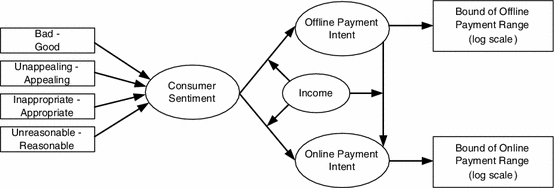
The moderating role of income on consumers’ preferences and usage for online and offline payment methods
In this paper we examine consumer attitudes towards a payment method, which is a key factor affecting the probability of completing a transaction offline and online. More specifically, we constructed a model that surveyed the offline and online usage of prepaid e-cash, debit cards, credit cards and cash. User perceptions of the attractiveness of e-cash and various traditional payment means were also empirically assessed. Consumer attitudes towards a payment technology were found to be influential on users’ perceptions in both online and offline environments. User perceptions of offline purchases with a payment technology had significant and positive effects on the corresponding online usage perceptions. The effects of our research model are contingent on the income level of users. Our findings have significant implications, as they could help shed light on why consumers abandon their shopping carts and do not complete their transactions, which could potentially play a significant role when it comes to designing applications targeting sspecific consumer segments.
Cut me some slack! How perceptions of financial slack influence pain of payment
Abstract Consumers often experience pain of payment, a tug of negative affect that holds back their spending. While the literature has long viewed pain of payment as self‐regulatory in nature, it has left the dynamics of self‐regulation that lead to the pain of paying largely unaddressed. In self‐regulation, affect arises when people move away from a goal they hold. Thus, understanding the specific goals that people consider when making a payment can help us better predict when pain of payment will arise. We propose that people have a goal to maintain financial slack, and that violating this goal contributes to pain of payment. Thus, people experience more pain of payment when the goal to maintain financial slack is stronger or when it is particularly salient that a purchase entails losing financial slack. Critically, subjective changes in financial slack are not equivalent to objective changes in wealth, altering pain of payment for economically equivalent trades. This research contributes to the existing literature by identifying a novel antecedent to the pain of payment. It additionally expands our understanding of people's preferences between payment systems. Finally, it offers guidance to practitioners who wish to minimize pain of payment among their consumers.

Do Customers Learn from Experience? Evidence from Retail Banking
We study customers' adoption and subsequent switching decisions with regard to a menu of three-part tariff plans offered by a commercial bank. Using a rich panel data set covering 70,510 fee-based checking accounts over 30 months, before and after the introduction of the plans, we find that most customers adopt non-cost-minimizing plans, preferring plans with large monthly allowances and high fixed payments. Furthermore, after adoption, customers who exceed their allowances and consequently pay overage fees are more likely to switch to plans with larger allowances than customers who do not experience such fees. Notably, after switching, these overage-paying customers pay higher monthly payments than before. In contrast, switching customers who did not pay overage payments before switching pay less after switching. Our findings, unlike those of previous research on experience-based learning, suggest that the behavior of experienced customers does not converge to the predictions of neoclassical models. We propose that “overage aversion,” which is closely related to loss aversion and mental accounting, is the most plausible explanation for our findings. This paper was accepted by John List, behavioral economics.
Leave Home without it? The Effects of Credit Card Debt and Available Credit on Spending
This research examines how credit card debt affects consumer spending. In five experimental and field studies, the authors demonstrate that outstanding credit card debt increases spending for consumers with high self-control. They also show that this effect can be eliminated by increasing the available credit on the credit card. Thus, when the available credit is low, consumers with greater self-control increase spending, but when the available credit is high, they reduce spending. The results extend the literature on goal violation and self-control and offer insights into consumer decision making and consumption patterns under conditions of debt.
The Interplay among Category Characteristics, Customer Characteristics, and Customer Activities on in-Store Decision Making
The authors explore product category and customer characteristics that affect consumers’ likelihood of engaging in unplanned purchases. In addition, they examine consumer activities that can exacerbate or limit these effects. The authors employ a hierarchical modeling approach to test their hypotheses using a data set of in-store intercept interviews conducted with 2300 consumers across 28 stores. The results show that category characteristics, such as purchase frequency and displays, and customer characteristics, such as household size and gender, affect in-store decision making. Moreover, although the analysis reveals that the baseline probability of an unplanned purchase is 46%, the contextual factors can drive this probability as high as 93%. The results support the predictions that list use, more frequent trips, limiting the aisles visited, limiting time spent in the store, and paying by cash are effective strategies for decreasing the likelihood of making unplanned purchases.
Yielding to Temptation: Self‐Control Failure, Impulsive Purchasing, and Consumer Behavior
Abstract. Self-control is a promising concept for consumer research, and self-control failure may be an important cause of impulsive purchasing. Three caus
In-Store Spending Dynamics: How Budgets Invert Relative-Spending Patterns
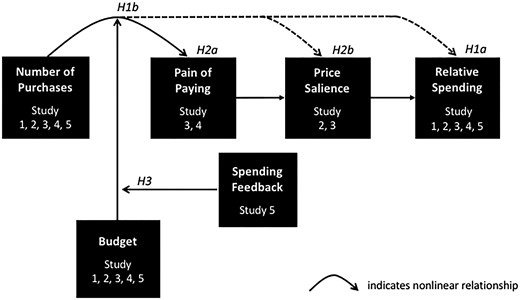
Abstract The authors conduct four controlled lab experiments and one field study in a brick-and-mortar grocery store to demonstrate that relative spending—the price of the purchased item relative to the mean price of the product category—evolves nonlinearly and distinctly for budget and nonbudget shoppers. While the relative spending of budget shoppers evolves in a concave manner, the relative spending of nonbudget shoppers evolves inversely in a convex manner. Thus, budget (nonbudget) shoppers spend relatively more (less) in the middle than at the beginning and toward the end of their shopping trip. Mediation analyses confirm that the pain of paying experienced while shopping drives price salience, which then drives relative spending. Moreover, manipulating shoppers’ pain of paying, by altering the opportunity costs associated with their spending or drawing shoppers’ attention to their spending via real-time spending feedback, is shown to influence these spending patterns. The research offers theoretical contributions to the in-store decision-making, budgeting, and pain-of-paying literature and has important implications for marketing and promotion strategies in retail and mobile technology environments, as it suggests when a shopper may be more sensitive to price-related factors.
Frontiers: ChatGPT Referrals to E-Commerce Websites: How Do LLMs Compare Against Traditional Channels?
This is a descriptive study reporting financial and engagement metrics for 973 e-commerce websites, comparing organic large language model traffic (oLLM) with traditional digital channels. , We investigate organic large language model traffic (oLLM) versus traditional digital channels in e-commerce. Analyzing 12 months of first-party data from 973 websites with $20 billion combined revenue, we examine more than 50,000 transactions from ChatGPT referrals alongside 164 million transactions from traditional channels. Using regression models that account for data sparsity, we assess financial metrics (conversion rate, average order value, revenue per session) and engagement metrics (bounce rate, session duration, page views). Results are consistent across extensive robustness checks. One year after launch, oLLM exhibits conversion rates and revenue per session above paid social but below all other traditional channels. Product complexity moderates the effects: oLLM’s financial outcomes and traffic shares are stronger in complex product categories. Engagement metrics show favorable bounce rates but lower session duration and page views. Temporal analysis shows increasing conversion rates but declining average order values, yielding only moderate revenue-per-session gains over time. Cross-website analyses support growing consumer LLM proficiency as the underlying mechanism. The descriptive study positions oLLM as a new and developing channel. With low volumes and modest revenue per session, oLLM currently serves niche informational needs of proficient consumers and does not yet function as a broad conversion channel. History: Puneet Manchanda served as the senior editor. This paper was accepted through the Marketing Science: Frontiers review process. Supplemental Material: The online appendices and data files are available at https://doi.org/10.1287/mksc.2025.0489 .

The Impact of Payment Frequency on Consumer Spending and Subjective Wealth Perceptions
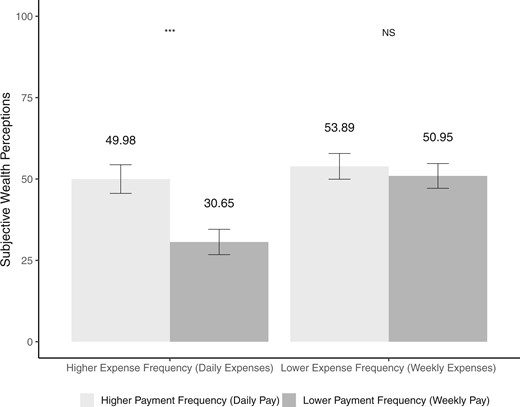
Abstract Payment frequency is a fundamental yet underexplored feature of consumers’ finances. As higher payment frequencies are becoming more prevalent, consumers are receiving more frequent yet smaller paychecks. An analysis of income and expenditure data of over 30,000 consumers from a financial services provider demonstrates a naturally occurring relationship between higher payment frequencies and increased spending. A series of lab studies support this finding, providing causal evidence that higher (vs. lower) payment frequencies increase spending. The effect of payment frequency on spending is driven by changes in consumers’ subjective wealth perceptions. Specifically, higher payment frequencies reduce consumers’ uncertainty in predicting whether they will have enough resources throughout a period, increasing their subjective wealth perceptions. As such, situational factors that reduce prediction uncertainty for those paid less frequently (e.g., the timing of consumers’ expenses, income levels) moderate the impact of payment frequency. The effects of payment frequency on subjective wealth and spending can occur even when objective wealth favors those with lower payment frequencies. More broadly, the current work underscores a need to understand how timing variations in consumers’ income impact their perceptions, behaviors, and general well-being.
Time-inconsistent Preferences and Consumer Self-Control
Abstract Why do consumers sometimes act against their own better judgment, engaging in behavior that is often regretted after the fact and that would have been rejected with adequate forethought? More generally, how do consumers attempt to maintain self-control in the face of time-inconsistent preferences? This article addresses consumer impatience by developing a decision-theoretic model based on reference points. The model explains how and why consumers experience sudden increases in desire for a product, increases that can result in the temporary overriding of long-term preferences. Tactics that consumers use to control their own behavior are also discussed. Consumer self-control is framed as a struggle between two psychological forces, desire and willpower. Finally, two general classes of self-control strategies are described: those that directly reduce desire, and those that overcome desire through will power.
Analyzing Bank Overdraft Fees with Big Data
In 2012, consumers paid $32 billion in overdraft fees, representing the single largest source of revenue for banks from demand deposit accounts during this period. Owing to consumer attrition caused by overdraft fees and potential government regulations to reform these fees, financial institutions have become motivated to investigate their overdraft fee structures. Banks need to balance the revenue generated from overdraft fees with consumer dissatisfaction and potential churn caused by these fees. However, no empirical research has been conducted to explain consumer responses to overdraft fees or to evaluate alternative pricing strategies associated with these fees. In this research, we propose a dynamic structural model with consumer monitoring costs and dissatisfaction associated with overdraft fees. We apply the model to an enterprise-level data set of more than 500,000 accounts with a history of 450 days, providing a total of 200 million transactions. We find that consumers heavily discount the future and potentially overdraw because of impulsive spending. However, we also find that high monitoring costs hinder consumers’ effort to track their balance accurately; consequently, consumers may overdraw because of rational inattention. The large data set is necessary because of the infrequent nature of overdrafts; however, it also engenders computational challenges, which we address by using parallel computing techniques. Our policy simulations show that alternative pricing strategies may increase bank revenue and improve consumer welfare. Fixed bill schedules and overdraft waiver programs may also enhance social welfare. This paper explains consumer responses to overdraft fees and evaluates alternative pricing strategies associated with these fees. The online appendices are available at https://doi.org/10.1287/mksc.2018.1106 .
Unfixed Resources: Perceived Costs, Consumption, and the Accessible Account Effect
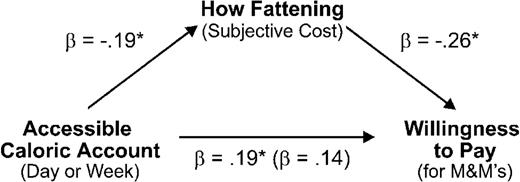
Abstract. Consumption depletes one's available resources, but consumers may be unaware of the total resources available for consumption and, therefore, be
A Mega-Replication of the Effect of Cash Versus Card Payment on Pain of Paying: Magnitude, Behavioral Outcomes, and Moderators
Abstract We revisit the widely accepted finding that paying with cash is more painful than paying with card by conducting the first systematic mega-replication (including 13 large-scale preregistered replications; a total of 32,371 participants, 65 products, and 57 price points ranging from $1.09 to $400). The aggregate evidence reveals four insights: (1) leveraging a broad set of established paradigms, we replicate the finding that paying with cash is more psychologically painful than paying with card, even among today’s consumers who own multiple cards, digital wallets, and virtual currencies; (2) comparing two outcome variables—amount spent and willingness-to-pay (WTP), we find a more reliable and larger overall direct effect of payment method on amount spent than on WTP; (3) these direct effects of payment method on outcome variables are mediated by pain of paying; (4) the mode-of-payment effect on pain of paying (and thereby on outcome variables) is moderated by individual differences, particularly the relative frequency of using cash versus card. We outline actionable guidance and future directions for researchers and practitioners interested in examining mode-of-payment effects, and discuss the value of and suitable approaches for future theory-driven large-scale replications.

Disclosing the costs of co-holding liquid assets and high-interest debt has limited impact on behavior
Abstract Why do consumers simultaneously maintain low-yield liquid assets and high-interest revolving debt? This behavior, known as ``co-holding,'' affects 23\% of credit card users in our sample from a major international bank and costs the typical co-holder hundreds of dollars annually in unnecessary interest charges. Our analysis of 38 months of detailed banking records reveals that co-holding is remarkably persistent, with typical co-holders maintaining this behavior for most months observed. Our analysis also reveals that co-holding is not a static financial position: co-holders regularly deposit and withdraw from asset accounts while simultaneously making new credit card purchases. To test whether co-holding could be addressed through information disclosure, we conducted a large-scale field experiment (n = 125,328), providing clear information about co-holding behavior and its costs. Customers received targeted messages through their bank's mobile app, where they could easily transfer money from assets to pay down debt. Despite sufficient power to detect economically small effects, we found no meaningful changes in debt repayment amount, though customers did respond in other ways---making more frequent repayments and paying above required minimums. These results challenge explanations based on limited attention or information gaps and suggest that simple information disclosure, even when carefully designed and delivered through trusted channels, may not effectively address costly financial behaviors.

Twice as happy customers = half the marketing spend
Halving your cancel rate doubles the number of customers your business has. Even if you run a subscription business forever, you will not have infinite customers. Instead you reach a steady-state number.