


ABSTRACT This article makes the case for a specific variety of what we call Collective Capital Institutions (CCIs), by returning to the idea of Wage‐Earner Funds (WEFs) – a 1970s Swedish policy proposal designed gradually to shift ownership and control over parts of the economy to democratically controlled institutions. We identify two attractive rationales in favour of such a scheme and argue that both can fruitfully be transposed to the current worldwide economic situation. The egalitarian rationale is that WEFs could help in the pursuit of equality by giving a wider set of people a stake in collectively owned companies and a right to their profits. The democratic rationale is that WEFs redistribute not only these profits, but also the power over economic decisions made within companies. We then contrast such schemes for collective capital ownership with the similar but much more privatised proposals set out in, for instance, John Rawls's idea of a ‘property‐owning democracy’. We argue that CCIs ultimately are more likely to contribute to the development of the ‘sense of justice’ within society that is needed for a stable just society. We conclude that CCIs deserve a great deal more exploration in academic and political discussions of egalitarian economic systems.
‘What is it actually about?’ Asymmetric mobilisation and the defeat of wage-earner fund policies in Sweden
‘Wage-earner funds’, an ultimately-defeated idea for union-controlled funds to develop stakes in Swedish companies, dominated Swedish politics in the late 1970s and early 1980s. They are regularly cited as a prominent attempt to introduce economic democracy. However, factors behind the funds’ defeat are often under-analysed, with the sequencing of events particularly neglected. This article corrects for this. It seeks to explain the defeat of wage-earner funds by tracing decision-making processes in the Social Democratic Party. It argues that the funds were defeated due to asymmetries in mobilisation, which were connected to asymmetries in everyday experiences. While capital owners mobilised strongly against wage-earner funds as an existential threat, most Social Democratic leaders, voters and union members saw the issue as detached from their everyday concerns. This points to the importance that asymmetries in experience and mobilisation can have in policy contests, which provides an advantage to capital in contests over investment control.

Preface | The World After Capital
Since publishing the previous version of The World After Capital, I have met with people across the political spectrum to discuss the ideas from the book. When I present these in person, I emphasize that the ideas are neither left nor right but forward (credit to Scott Santens who first used this phrase about Universal Basic Income). My writing, however, at times has alienated readers who identify as being more on the right. In this new edition, I am therefore making an extra effort to emphasize how both my diagnosis of where we are at and my suggestions for how to move forward do not map onto the existing political divides. Instead this is a new way of understanding our challenges and opportunities that can be the basis for movements and parties that are not trapped in Industrial Age ideology.
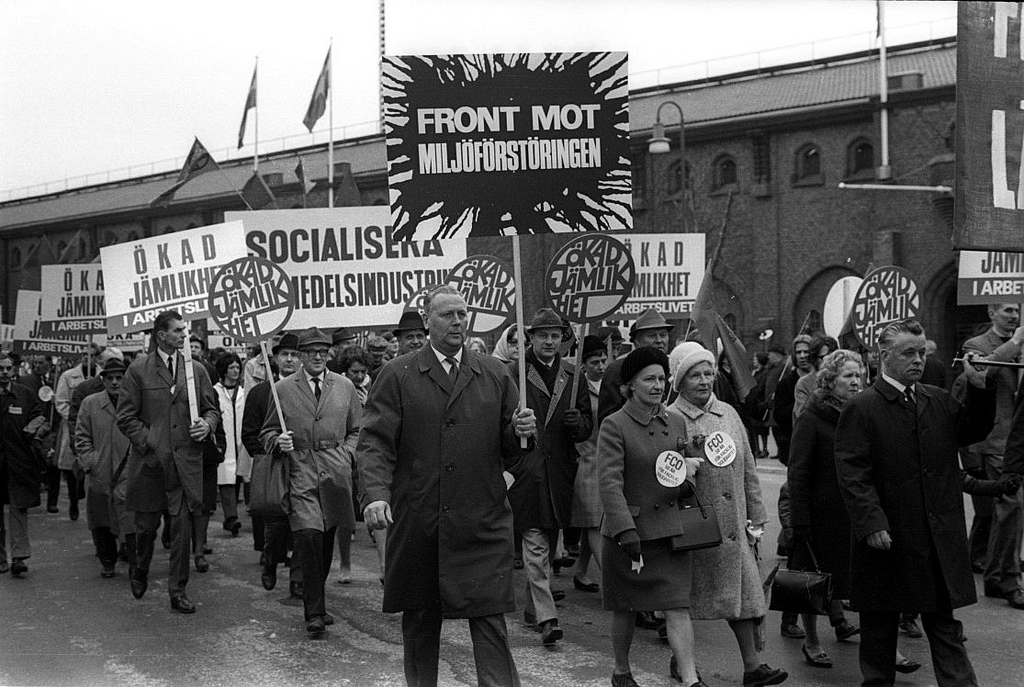
Revisiting the Meidner Plan
In the 1970s, the Swedish labor movement developed a plan to gradually socialize ownership. What can we learn from it today?
Democracy in trade unions, democracy through trade unions?
Since the Webbs published Industrial Democracy at the end of the nineteenth century, the principle that workers have a legitimate voice in decision-making in the world of work – in some versions through trade unions, in others at least formally through separate representative structures – has become widely accepted in most West European countries. There is now a vast literature on the strengths and weaknesses of such mechanisms, and we review briefly some of the key interpretations of the rise (and fall) of policies and structures for workplace and board-level representation. We also discuss the mainly failed attempts to establish broader processes of economic democracy, which the eclipse of nationally specific mechanisms of class compromise makes again a salient demand. Economic globalization also highlights the need for transnational mechanisms to achieve worker voice (or more radically, control) in the dynamics of capital–labour relations. We therefore examine the role of trade unions in coordinating pressure for a countervailing force at European and global levels, and in the construction of (emergent?) supranational industrial relations. However, many would argue that unions cannot win legitimacy as a democratizing force unless manifestly democratic internally. Therefore we revisit debates on and dilemmas of democracy within trade unions, and examine recent initiatives to enhance democratization.
Democratic Ownership Funds: Creating Shared Wealth and Power
Recent decades have seen a rapid and little-discussed transformation in corporate ownership structure, with vital consequences for company behaviour and inequality.

Power: A Primer for Perplexed Economists
Let's Assume an Unfettered Marketplace of Ideas! Or Actually, Let's Not.

A Revised “Ostrom’s Design Principles for Collective Governance of the Commons
A Revised “Ostrom’s Design Principles for Collective Governance of the Commons” The traditional economic definition of “the commons” are those resources...

The corporation—a return to origins?
This paper contributes to contemporary debates in political theory about the power of business corporations by offering a genealogy of the corporation through the lens of a series of historical mutations of the corporate form. Originally, there were two corporate forms, both non-profit: member corporations (today's associations) and property corporations (today's charitable foundations). The contemporary business corporation arguably is a hybrid of both of these original forms, introducing unique commercial features (shares with profit distribution rights that are transferable). These commercial features are largely responsible for the corporation's extractive nature, that is, its tendency to prey on non-shareholder interests. The future of the corporation may well lie in a partial return to the two original non-profit forms. Two corporate forms developed in the nineteenth century can provide the format for such a return: cooperatives (which reinforce the idea of membership) and foundation-owned companies. The cooperative structure is a halfway house between a business corporation and a member corporation (association), and in a parallel fashion, a foundation-owned company is a halfway house between a business corporation and a property corporation (foundation). If we want to reduce corporations’ extractive nature, facilitating the spread of cooperatives and foundation-owned companies seems the way forward.
When Does Worker Ownership Work? ESOPs, Law Firms, Codetermination, and Economic Democracy
Think Like a Commoner | A Short Introduction to the Life of the Commons
In our age of predatory markets and make-believe democracy, our troubled political institutions have lost sight of real people and practical realities. But if you look to the edges, ordinary people are reinventing governance and provisioning on their own terms. The commons is arising as a serious, practical alternative to the corrupt Market/State.
Hope in Common
We seem to have reached an impasse. Capitalism as we know it appears to be coming apart. But as financial institutions stagger and crumble, there is no obvious alternative. Organized resistance appears scattered and incoherent; the global justice movement a shadow of its former self. There is good reason to believe that, in a generation […]
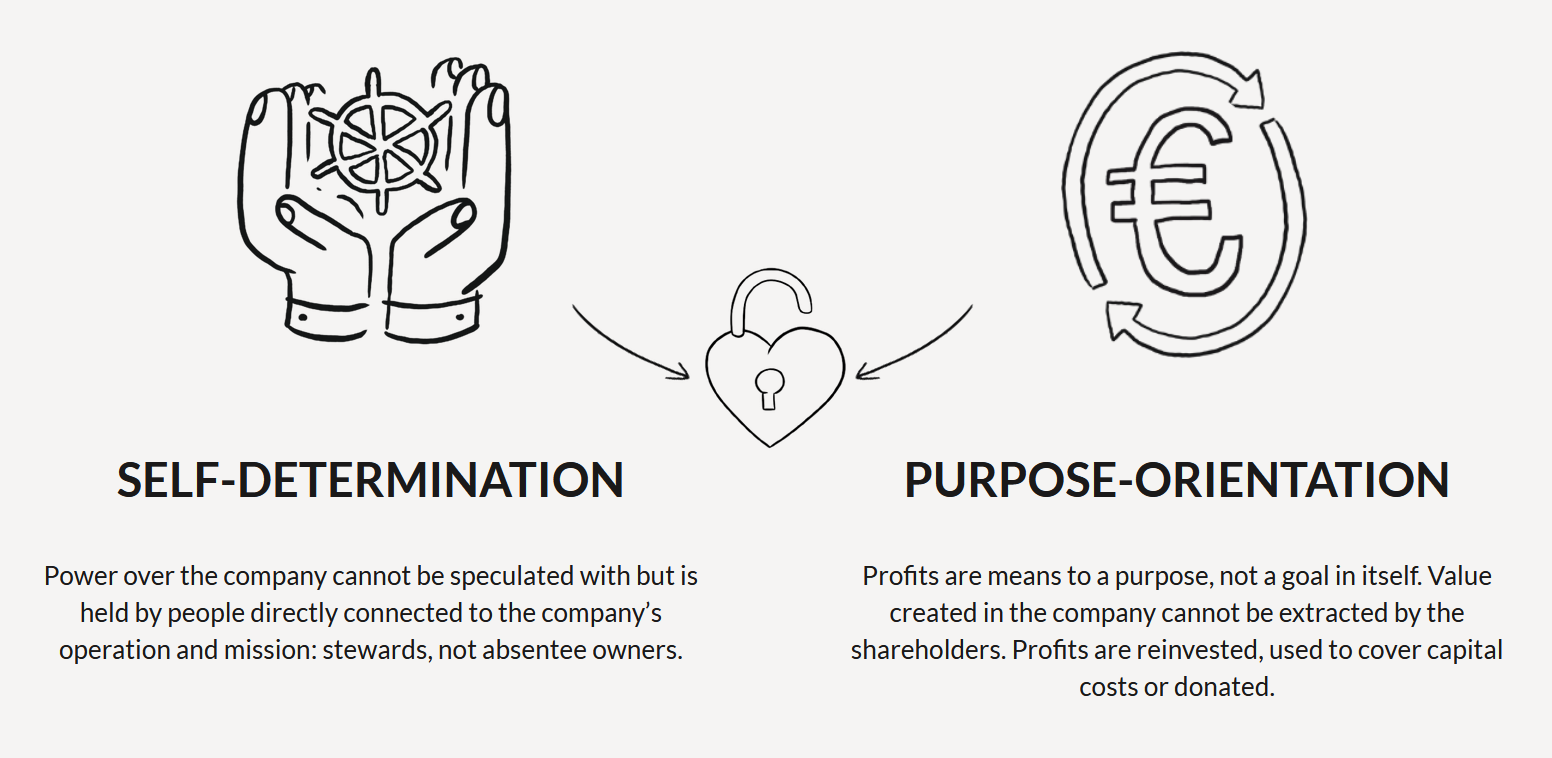
Company as a Commons
What if excess wealth derived from business couldn't be privatized? Through the levers of steward-ownership, companies can protect their purpose-oriented long term mission from the maligned incentives of absentee stakeholders.
A Revised “Ostrom’s Design Principles for Collective...
A Revised “Ostrom’s Design Principles for Collective Governance of the Commons” The traditional economic definition of “the commons” are those resources...
Re-enchanting the world : feminism and the politics of the commons
xviii, 227 pages ; 23 cm; "Silvia Federici is one of the most important contemporary theorists of capitalism and feminist movements. In this collection of her work spanning over twenty years, she provides a detailed history and critique of the politics of the commons from a feminist perspective. In her clear and combative voice, Federici provides readers with an analysis of some of the key issues and debates in contemporary thinking on this subject. Drawing on rich historical research, she maps the connections between the previous forms of enclosure that occurred with the birth of capitalism and the destruction of the commons and the "new enclosures" at the heart of the present phase of global capitalist accumulation. Considering the commons from a feminist perspective, this collection centers on women and reproductive work as crucial to both our economic survival and the construction of a world free from the hierarchies and divisions capital has planted in the body of the world proletariat. Federici is clear that the commons should not be understood as happy islands in a sea of exploitative relations but rather autonomous spaces from which to challenge the existing capitalist organization of life and labor"--; Foreward by Peter Linebaugh; Includes bibliographical references (pages198-216) and index; On primitive accumulation, globalization, and reproduction -- Introduction to the new enclosures -- The debt crisis, Africa, and the new enclosures -- China: breaking the iron rice bowl -- From commoning to debt: financialization, microcredit, and the changing architecture of capital accumulation -- Beneath the United States, the Commons -- Commons against and beyond Capitalism -- The University: a knowledge common? -- Feminism and the politics of the commons in an era of primitive accumulation -- Women's struggles for land in Africa and the reconstruction of the commons -- Women's struggles for land and the common good in Latin America -- Marxism, feminism, and the commons -- From crisis to commons: reproductive work, affective labor and technology, and the transformation of everyday life -- Re-enchanting the world: technology, the body, and the construction of the commons


"I think thinking about it in terms of new institutions is really a useful way to think about it. It's funny for me as a VC, because I think a lot of this stuff will and even goes for us to say should be illegible to venture capital in a lot of ways." - @eclecticcapital.bsky.social

The Economics of Sovereign Media: A Roadmap for AT Protocol | ATmosphereConf VODs
atmosphereconf-vods.wisp.place