


ABSTRACT Many individual investors, mutual funds, and institutions trade as if dividends and capital gains are disconnected attributes, not fully appreciating that dividends result in price decreases. Behavioral trading patterns (e.g., the disposition effect) are driven by price changes instead of total returns. Investors rarely reinvest dividends, and trade as if dividends are a separate, stable income stream. Analysts fail to account for the effect of dividends on price, leading to optimistic price forecasts for dividend‐paying stocks. Demand for dividends is systematically higher in periods of low interest rates and poor market performance, leading to lower returns for dividend‐paying stocks.
Educating Investors about Dividends
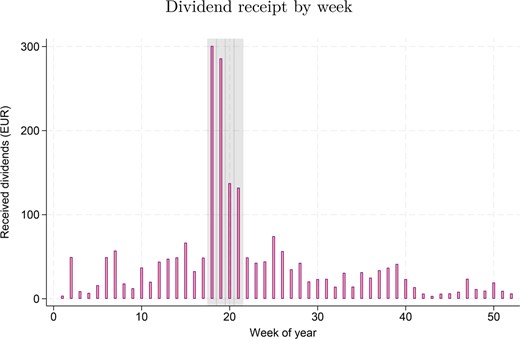
Abstract We educate investors about the benefits of dividend reinvestment and costs of misperceiving dividends as free income. The intervention increases planned dividend reinvestment in survey responses. Using trading records, we observe a causal increase in dividend reinvestment in the field of roughly 50 cents for every euro received. This holds relative to investors’ prior behavior and various control samples. Investors who learned the most from the intervention update their trading the most. The results suggest the free dividends fallacy is a significant source of dividend demand. Our study demonstrates that simple, targeted, and focused educational interventions can affect investment behavior.
Mapping the Potential and Pitfalls of "Data Dividends" as a Means of Sharing the Profits of Artificial Intelligence
Identifying strategies to more broadly distribute the economic winnings of AI technologies is a growing priority in HCI and other fields. One idea gaining prominence centers on "data dividends", or sharing the profits of AI technologies with the people who generated the data on which these technologies rely. Despite the rapidly growing discussion around data dividends - including backing by prominent politicians - there exists little guidance about how data dividends might be designed and little information about if they will work. In this paper, we begin the process of developing a concrete design space for data dividends. We additionally simulate the effects of a variety of important design decisions using well-known datasets and algorithms. We find that seemingly innocuous decisions can create counterproductive effects, e.g. severely concentrated dividends and demographic disparities. Overall, the outcomes we observe -- both desirable and undesirable -- highlight the need for dividend implementers to make design decisions cautiously.

The Arbitrage Principle in Financial Economics
The importance of arbitrage conditions in financial economics has been recognized since Modigliani and Miller's classic work on the financial structure of the firm. They showed that if a firm could change its market value by purely financial operations such as adjusting its debt-equity ratio, then individual shareholders and bondholders could engage in analogous portfolio transactions that would yield pure arbitrage profits. If the market was efficient enough to eliminate arbitrage profits for the individual shareholders, then it would eliminate arbitrage profits for the firm as well. Subsequently, financial economists have used arbitrage arguments to examine a variety of other issues involving asset pricing. One of the major advances in financial economics in the past two decades has been to clarify and formalize the exact meaning of "no arbitrage" and to apply this idea systematically to uncover hidden relationships in asset prices. Many important results of financial economics are based squarely on the hypothesis of no arbitrage, and it serves as one of the most basic unifying principles of the study of financial markets. In this essay we will examine some of these results.

Interest Rates: Prices Hidden in Plain Sight
I study ways the shift in credit price disclosures from dollar terms to interest rates has impacted consumer and firm behavior. In an experiment, I find that co


Japan’s Nikkei Hits New Record High
The Nikkei 225 Index rose 0.8% to trade above 63,700 on Thursday, setting fresh all-time highs as strong corporate earnings and upbeat guidance reinforced investor confidence, while sustained demand for artificial intelligence-related stocks continued to drive gains. Japanese equities also mirrored a tech-led rally on Wall Street overnight, even as accelerating US inflation fueled concerns that the Federal Reserve could still opt for another rate hike. At the same time, markets remained focused on the meeting between US President Donald Trump and Chinese President Xi Jinping, with discussions expected to prioritize trade relations. Among individual movers, gains were led by Kioxia Holdings (1.7%), Furukawa Electric (1.5%), Advantest (2.8%), Fanuc (10.4%) and Resonac Holdings (15.6%). In contrast, mining firm Mitsui Kinzoku fell 11.8% after issuing a weaker profit forecast for FY2027 despite projecting higher sales.
The Coholding Puzzle: New Evidence from Transaction-Level Data
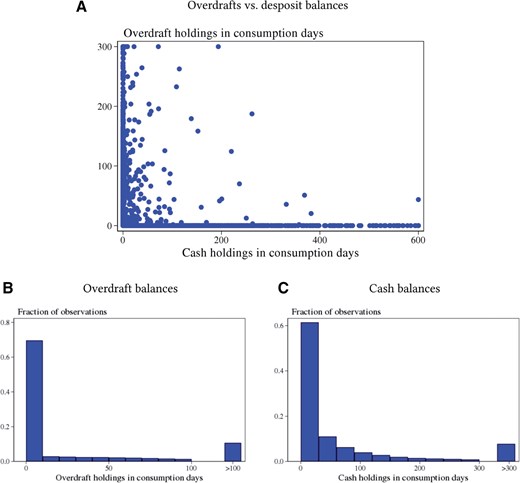
Abstract Why do individuals pay debt interest when they could use their savings to pay down the debt? We explore why individuals “cohold” debt and savings using detailed and highly disaggregated daily-level data on household finances. We find that coholding mostly occurs in short spells within the month and the level of coholding is typically modest. Periods of coholding are not associated with shocks at the individual level. We show that mental accounting has a role to play in explaining coholding, in particular how individuals allocate different categories of expenditure to accounts in credit and debit.
Beyond the Status Quo: A Critical Assessment of Lifecycle Investment Advice
<div> <div> <div> We challenge two tenets of lifecycle investing: (i) diversify across stocks and bonds and (ii) <span>reduce equity allocations with
The Value of Nothing: Capital versus Growth - American Affairs Journal
Throughout 2021, U.S. stock market valuations have hovered near all‑time highs. In June, the unadjusted price-to-earnings (P/E) ratio of the S&P 500 index eclipsed the tech boom record of 2000. Many other asset classes have attained, or nearly attained, record valuations as well. Stratospheric valuations may be partially attributable to the unique circumstances surrounding Covid-19...

Chip stocks slide in wake of ‘casino’ comment by Broadcom boss
Declines for Samsung and SK Hynix drag Kospi sharply lower as investors fret over scale of AI investment

Exponential Growth Bias and Household Finance
ABSTRACT Exponential growth bias is the pervasive tendency to linearize exponential functions when assessing them intuitively. We show that exponential growth bias can explain two stylized facts in household finance: the tendency to underestimate an interest rate given other loan terms, and the tendency to underestimate a future value given other investment terms. Bias matters empirically: More‐biased households borrow more, save less, favor shorter maturities, and use and benefit more from financial advice, conditional on a rich set of household characteristics. There is little evidence that our measure of exponential growth bias merely proxies for broader financial sophistication.

Prediction Marketing
The prediction market boom is liquidity extraction before a liquidity crisis.

Rational Inattention: A Review
We review the recent literature on rational inattention, identify the main theoretical mechanisms, and explain how it helps us understand a variety of phenomena across fields of economics. The theory of rational inattention assumes that agents cannot process all available information, but they can choose which exact pieces of information to attend to. Several important results in economics have been built around imperfect information. Nowadays, many more forms of information than ever before are available due to new technologies, and yet we are able to digest little of it. Which form of imperfect information we possess and act upon is thus largely determined by which information we choose to pay attention to. These choices are driven by current economic conditions and imply behavior that features numerous empirically supported departures from standard models. Combining these insights about human limitations with the optimizing approach of neoclassical economics yields a new, generally applicable model.

Disclosing the costs of co-holding liquid assets and high-interest debt has limited impact on behavior
Why do consumers simultaneously maintain low-yield liquid assets and high-interest revolving debt? This behavior, known as "co-holding," affects 23% o
The Co-Holding Puzzle: New Evidence from Transaction-Level Data
The tendency of consumers to hold low-yield liquid savings while simultaneously holding high-cost unsecured credit on revolving credit lines is a long standing
Does Saving Cause Borrowing? Implications for the Coholding Puzzle
ABSTRACT Using an experiment in which 3.1 million bank customers were encouraged to save, we explore the mechanisms behind coholding liquid savings and credit card debt. Theoretically, we show that the joint responses of spending, saving, and borrowing to the nudge differ across economic models of coholding. Using machine learning techniques, we find that the most responsive individuals reduce spending and increase savings by 4.9% (206 USD PPP per month) while their credit card debt remains unchanged. These individuals' marginal responses to the nudge are consistent with our model of coholding for the purpose of self‐ or partner‐control.
