


Usability is one of the factors that determines the success of a software system. Aiming to improve it’s usability, it is necessary to evaluate the interfaces using scientific evaluation methods, like questionnaires. Often the results of these ...
The Decline of Usability: Revisited | datagubbe.se
Accommodating Both Expert Users and Novice Users in One Interface by Utilizing Multi-layer Interface in Complex Function Products
Rapid development of electronic technology promotes the complex function of a product. Users have to adapt themselves to interface with diverse mental model setting. To improve usability, both resolutions of consistent interface and wizard interface were frequently applied to help novice. However, both of them require as much time for those who are familiar with the system, i.e. expert users. Shneiderman (2000) remarked that Universal Usability requires that software systems accommodate a diverse set of users. Multi-Layer interface might be a solution for complex user interface and satisfy both novice and expert users. The idea of multi-layer interface has been applied to hardware and software interface design. Cases were discussed in which the improved Multi-Layer Interface was analyzed and conclusions made.

Generative UI: A rich, custom, visual interactive user experience for any prompt
Yaniv Leviathan, Google Fellow, Dani Valevski, Senior Staff Software Engineer, Vishnu Natchu, Principal Engineer, and Yossi Matias, Vice President & Head of Google Research

Interface Experimentation | Projects
This page indexes the files currently present in interface-experiments.
10 Usability Heuristics for User Interface Design
Jakob Nielsen's 10 general principles for interaction design. They are called "heuristics" because they are broad rules of thumb and not specific usability guidelines.

Let your designs fail for the right reasons – Firefox UX
How AI-assisted native prototypes changed what usability testing could show me. If you've ever simplified an interaction just to make a prototype manageable, you've probably felt the tension between ...
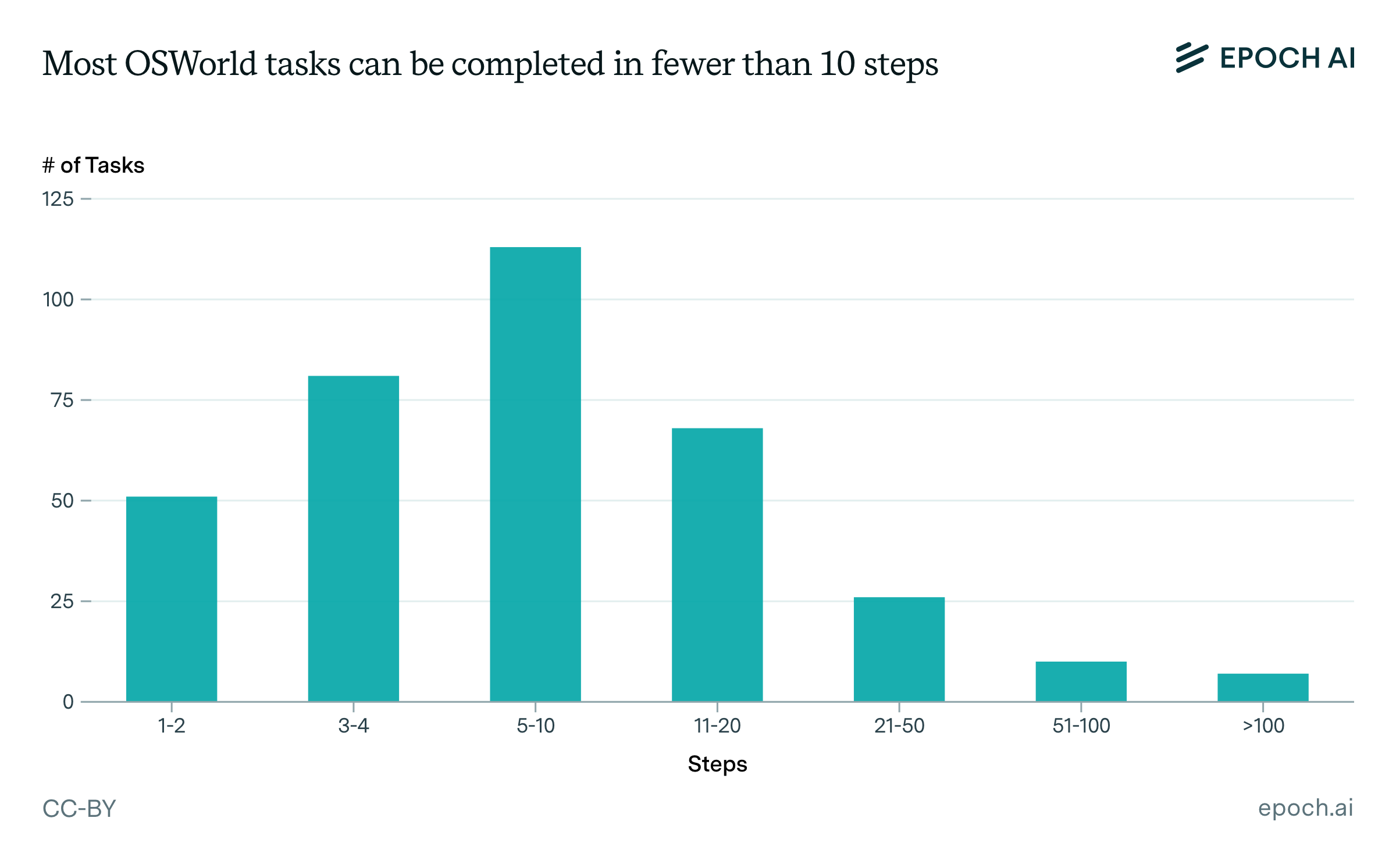
What does OSWorld tell us about AI’s ability to use computers?
We review OSWorld, a prominent computer use benchmark. Tasks are relatively simple, many don’t require GUIs, and success often hinges on interpreting ambiguous instructions. The benchmark is also not stable over time.
Towards a Better GUI Programming Benchmark | HackerNoon
GUI <a href="https://hackernoon.com/tagged/programming" target="_blank">programming</a> is <a href="https://medium.com/@eugenkiss/challenges-in-gui-programming-65d360466e3f" target="_blank">challenging</a>. We strive to find better ways to program GUIs and we do make progress. The fact that countless GUI toolkits with different ways to develop GUIs exist indicates that the road ahead is still long. If only there was a benchmark to compare GUI programs with one another. Then identifying good ideas would become much easier.
Instrumental interaction: an interaction model for designing post-WIMP user interfaces
Although the power of personal computers has increased 1000-fold over the past 20 years, user interfaces remain essentially the same. Innovations in HCI research, particularly novel interaction techniques, are rarely incorporated into products. In this ...

Beautiful UI — Crafted primitives for AI-native interfaces
A small library of extremely crafted, copy-paste components for chat agents, thinking states, human-in-the-loop approvals, and everything agents need to talk to humans beautifully.
Desktop, Touch, Browser, Now AI? The Next OS in Computing
Explore how AI is reshaping human-computer interaction, from command lines to modern SaaS. Key insights on the next computing paradigm for startups and tech leaders.
Interfaces › Cheat Sheet
A list of tips, improvements and best practices that quickly make your interfaces better.

We built the GUI for AI - agentic workflows now have a canvas
232 votes, 50 comments. So we built something different: A canvas-based browser interface where you can visually organize, run, and monitor…
The New Science of Designing for Humans (SSIR)
The rise of behavioral science and impact evaluation has created a new way for engineering programs and human interactions. <meta property=
Imbue on Twitter / X
what if your personal computer felt like a little world of your own?Ming used Imbue Studio to build an interactive personal dashboard with daily briefings, an AI assistant that remembers her tastes and preferences, and tools she can create and customize as she goesyour… pic.twitter.com/FtMLTXLPzr— Imbue (@imbue_ai) October 13, 2026
PersonaEval: Persona-Based User Simulation for Evaluating Interactive Applications
Real user studies are important for understanding how people interact with systems under test or already deployed. In practice, however, they are often costly, time-consuming, and difficult to scale. To address these challenges, we introduce PersonaEval, a persona-based user simulation framework that approximates real-user behavior across diverse interactive settings. PersonaEval connects simulated users drawn from existing persona datasets to task-specific application interfaces and collects the interaction trajectories and outcomes. PersonaEval provides a plug-and-play evaluation workflow in which the application being evaluated can be easily changed. In this demo, we present PersonaEval on three forms of interactive applications: surveys, chatbots, and web applications. Together, these examples show that PersonaEval can support repeatable, parallelizable, and scalable evaluation across different interaction settings, while producing user-oriented feedback and task-specific behavior.