Computer attitude affects a user's choice and/or behaviour towards working with a computer. Computer attitude consists of computer anxiety, computer liking and computer confidence. Literature indicates that computer experience has either a positive ...
Digital Confessions: The Willingness to Disclose Intimate Information to a Chatbot and its Impact on Emotional Well-Being
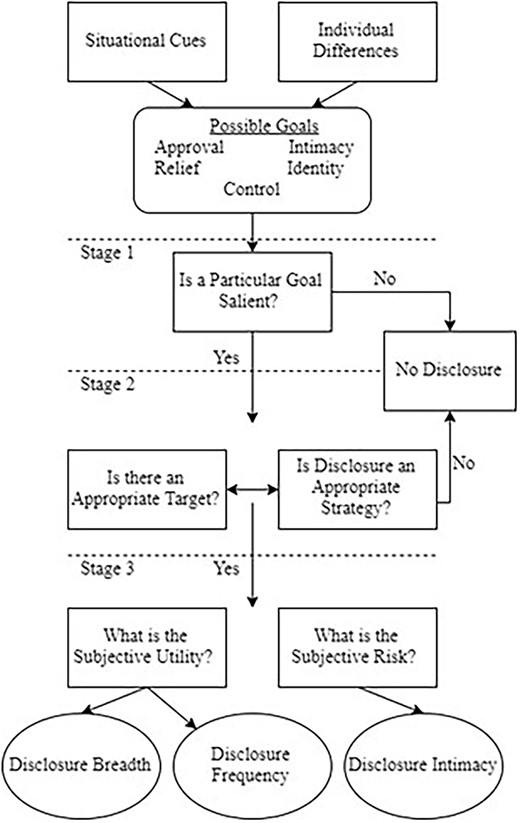
Abstract Chatbots have several features that may stimulate self-disclosure, such as accessibility, anonymity, convenience and their perceived non-judgmental nature. The aim of this study is to investigate if people disclose (more) intimate information to a chatbot, compared to a human, and to what extent this enhances their emotional well-being through feelings of relief. An experiment with a 2 (human vs. chatbot) by 2 (low empathetic vs. high empathetic) design was conducted (N = 286). Results showed that there was no difference in the self-reported intimacy of self-disclosure between the human and chatbot conditions. Furthermore, people perceived less fear of judgment in the chatbot condition, but more trust in the human interactant compared to the chatbot interactant. Perceived anonymity was the only variable to directly impact self-disclosure intimacy. The finding that humans disclose equally intimate information to chatbots and humans is in line with the CASA paradigm, which states that people can react in a social manner to both computers and humans.
Demand characteristics in human–computer experiments
Demand characteristics refer to cues that can inform participants in experiments about the hypothesis and influence their behavior. They lead researchers to erroneously infer non-existing effects, undermining the experimental integrity of empirical studies. Despite a widespread acknowledgment of their confounding influence in experimental psychology, experiments involving humans and computers to a lesser extent consider effects of demand characteristics, as computerized protocols are thought to be immune to some experimenter biases. Furthermore, demand characteristics are considered to mainly effect subjective measures. As a result, demand characteristics often remain uncontrolled in studies involving computers, and in particular for objective measures such as performance. In this paper, we present two experiments that underline the importance of demand characteristics in human–computer interaction experiments. In a text-entry study, we made participants believe they were evaluating a research-based keyboard. This belief led to increased performance and self-reported user experience. In a second study, we conducted a thought experiment on the illusion of body ownership in virtual reality, where the experimental design indicated the study hypothesis. We found hypothesis-compliant responses from participants, even when they did not experience the illusion. We conclude that demand characteristics pose a significant challenge to the interpretation and validity of human–computer experiments, even when they are fully automated. We discuss the implications and offer guidelines to mitigate effects of demand characteristics.
Feeling of Computing — Conversations
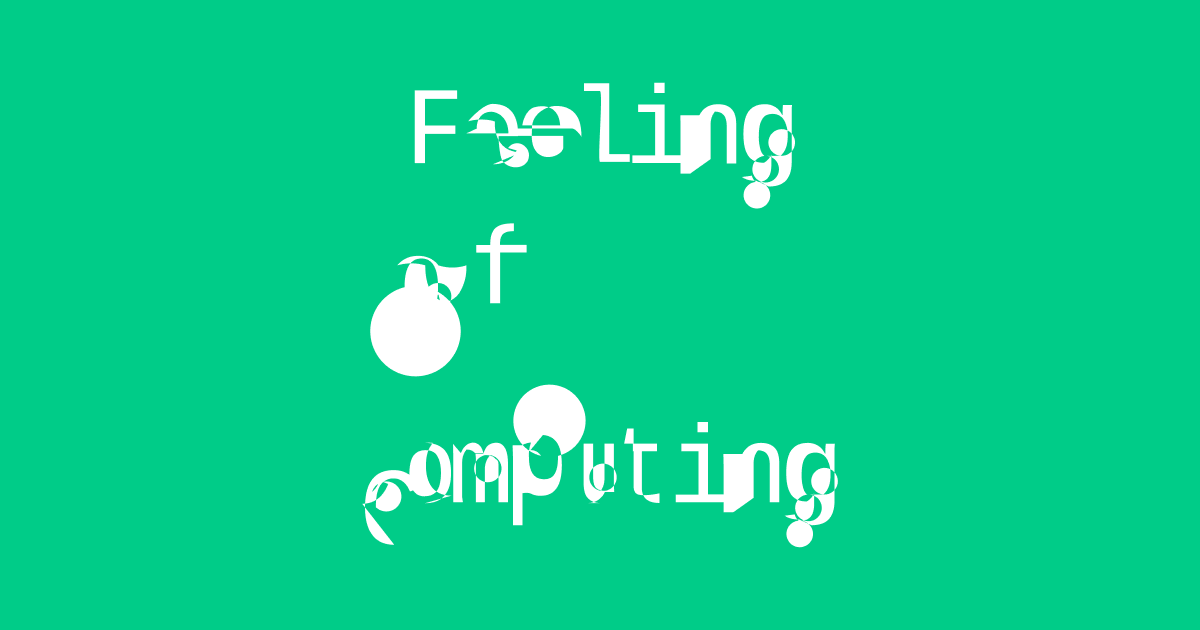
Letting AI Do Your Work Erodes Your Confidence, According to a New Study
Those who actively question the technology, however, feel more confident.
Feeling of Computing
Feeling of Computing is an online community with a welcoming, cooperative, and revolutionary spirit. We are unified in the belief that the computer is tragically less humane than it could be. There’s a world of possibilities that get more beautiful the further away from the norm you go. We’re here to explore this world together, to discuss ideas about theory and practice, and to champion and support our members’ research and development efforts to reimagine the computer.
Keyboard Shortcut Usage: The Roles of Social Factors and Computer Experience
Previous research (Lane, Napier, Peres, & Sándor, in press) has shown that despite the fact that it typically takes half as much time to issue a command to a computer application using that command's keyboard shortcut, most people issue a particular command by clicking an icon on a toolbar or by selecting the command from a pull-down menu. This study examined reasons why that might be the case with a web survey that focused on demographic characteristics of people who do and do not use keyboard shortcuts, as well as social factors of computer use that might influence use of keyboard shortcuts. Participants' shortcut usage was influenced by social factors, such as working in an environment with other shortcut users and experiential factors, primarily the hours spent using a computer per week.

Computer-Mediated Communication, Social Media, and Mental Health: A Conceptual and Empirical Meta-Review
Computer-mediated communication (CMC), and specifically social media, may affect the mental health (MH) and well-being of its users, for better or worse. Research on this topic has accumulated rapidly, accompanied by controversial public debate and numerous systematic reviews and meta-analyses. Yet, a higher-level integration of the multiple disparate conceptual and operational approaches to CMC and MH and individual review findings is desperately needed. To this end, we first develop two organizing frameworks that systematize conceptual and operational approaches to CMC and MH. Based on these frameworks, we integrate the literature through a meta-review of 34 reviews and a content analysis of 594 publications. Meta-analytic evidence, overall, suggests a small negative association between social media use and MH. However, effects are complex and depend on the CMC and MH indicators investigated. Based on our conceptual review and the evidence synthesis, we devise an agenda for future research in this interdisciplinary field.
Study Finds AI Use Eats Away at Users’ Confidence in Their Own Brains
A new study out of Middlesex University argues that the ultimate effects on an AI users' brain come down to how they use it.
Unbundling Tools for Thought
Disparate thoughts on personal information management after traversing the hype cycle.
Computer power and human reason : from judgment to calculation
xii, 300 pages : 24 cm; Includes bibliographical references and index

Objective, subjective, and accurate reporting of social media use: No evidence that daily social media use correlates with personality traits, motivational states, or well-being.
Metacognitive experiences as information: Processing fluency in consumer judgment and decision making
Abstract Thinking is accompanied by metacognitive experiences of ease or difficulty. People draw on these experiences as a source of information that can complement or challenge the implications of declarative information. We conceptualize the operation of metacognitive experiences within the framework of feelings‐as‐information theory and review their implications for judgments relevant to consumer behavior, including popularity, trust, risk, truth, and beauty.

Metacognitive experiences as information: Processing fluency in consumer judgment and decision making
Abstract Thinking is accompanied by metacognitive experiences of ease or difficulty. People draw on these experiences as a source of information that can complement or challenge the implications of declarative information. We conceptualize the operation of metacognitive experiences within the framework of feelings‐as‐information theory and review their implications for judgments relevant to consumer behavior, including popularity, trust, risk, truth, and beauty.

The Social Meaning of the Personal Computer: Or, Why the Personal Computer Revolution Was No Revolution
This essay presents a processual model of the personal computing movement that depicts the PC's birth within the context of complex and often contradictory social strategies, each of which used the meaning of computer technology in a distinctive way. It suggests that innovators are constrained by such processes to depict new artifacts in culturally meaningful ways, so that it is difficult for them to conceive of their technologies in radical terms. The rhetoric of "revolution" aside, innovators found it expedient to draw from the stock of meanings at hand as they created new meaning-frameworks for their artifacts. The result is that the new artifacts did not express a coherent or effective political vision and failed to have the intended social effects. This study implies that new technologies frequently reproduce existing social and meaning systems; if they do bring about social change, the changes may differ from those intended by the innovators.
The Social Meaning of the Personal Computer: Or, Why the Personal Computer Revolution Was No Revolution
This essay presents a processual model of the personal computing movement that depicts the PC's birth within the context of complex and often contradictory social strategies, each of which used the meaning of computer technology in a distinctive way. It suggests that innovators are constrained by such processes to depict new artifacts in culturally meaningful ways, so that it is difficult for them to conceive of their technologies in radical terms. The rhetoric of "revolution" aside, innovators found it expedient to draw from the stock of meanings at hand as they created new meaning-frameworks for their artifacts. The result is that the new artifacts did not express a coherent or effective political vision and failed to have the intended social effects. This study implies that new technologies frequently reproduce existing social and meaning systems; if they do bring about social change, the changes may differ from those intended by the innovators.
About Browser Choice Allliance
The issue Microsoft’s deceptive tacticsimpede consumer choiceFor years, Microsoft has manipulated desktop browser choice, using deceptive tactics to push Edge onto users. Instead of competing on quality, it relies on forced resets, misleading prompts, and hidden settings to trap people into using its browser. Every time Microsoft forces, pushes or…