

This summary was generated using automated tools and was not authored or reviewed by the article's author(s). It is provided to support discovery, help readers assess relevance, and assist readers from adjacent research areas in understanding the work. It is intended to complement the author-supplied abstract, which remains the primary summary of the paper. The full article remains the authoritative version of record. Click here to learn more.
Conflict-Free Replicated Data Types
Replicating data under Eventual Consistency (EC) allows any replica to accept updates without remote synchronisation. This ensures performance and scalability in large-scale distributed systems (e.g., clouds). However, published EC approaches are ad-hoc and error-prone. Under a formal Strong Eventual Consistency (SEC) model, we study sufficient conditions for convergence. A data type that satisfies these conditions is called a Conflict-free Replicated Data Type (CRDT). Replicas of any CRDT are guaranteed to converge in a self-stabilising manner, despite any number of failures. This paper formalises two popular approaches (state- and operation-based) and their relevant sufficient conditions. We study a number of useful CRDTs, such as sets with clean semantics, supporting both add and remove operations, and consider in depth the more complex Graph data type. CRDT types can be composed to develop large-scale distributed applications, and have interesting theoretical properties.
The CRDT Dictionary: A Field Guide to Conflict-Free Replicated Data Types - Ian Duncan
A comprehensive guide to CRDTs and their tradeoffs, from counters to sequences. Written in the spirit of the Typeclassopedia, exploring how different CRDTs solve the distributed consensus puzzle.
A Critique of the CAP Theorem
The CAP Theorem is a frequently cited impossibility result in distributed systems, especially among NoSQL distributed databases. In this paper we survey some of the confusion about the meaning of CAP, including inconsistencies and ambiguities in its definitions, and we highlight some problems in its formalization. CAP is often interpreted as proof that eventually consistent databases have better availability properties than strongly consistent databases; although there is some truth in this, we show that more careful reasoning is required. These problems cast doubt on the utility of CAP as a tool for reasoning about trade-offs in practical systems. As alternative to CAP, we propose a "delay-sensitivity" framework, which analyzes the sensitivity of operation latency to network delay, and which may help practitioners reason about the trade-offs between consistency guarantees and tolerance of network faults.

CRDT Papers • Conflict-free Replicated Data Types
Resources and community around CRDT technology — papers, blog posts, code and more.
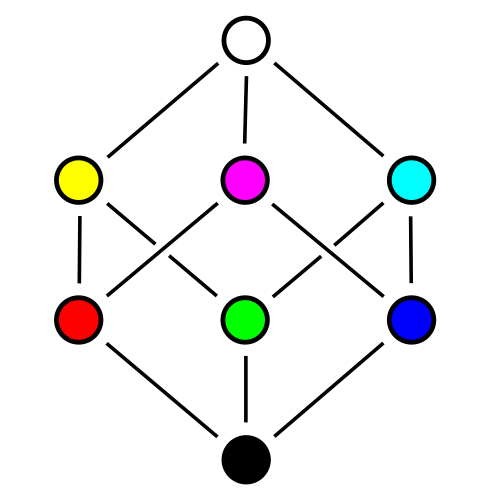
A Conflict-Free Replicated JSON Datatype
Many applications model their data in a general-purpose storage format such as JSON. This data structure is modified by the application as a result of user input. Such modifications are well understood if performed sequentially on a single copy of the data, but if the data is replicated and modified concurrently on multiple devices, it is unclear what the semantics should be. In this paper we present an algorithm and formal semantics for a JSON data structure that automatically resolves concurrent modifications such that no updates are lost, and such that all replicas converge towards the same state (a conflict-free replicated datatype or CRDT). It supports arbitrarily nested list and map types, which can be modified by insertion, deletion and assignment. The algorithm performs all merging client-side and does not depend on ordering guarantees from the network, making it suitable for deployment on mobile devices with poor network connectivity, in peer-to-peer networks, and in messaging systems with end-to-end encryption.
DASL — Data-Addressed Structures & Links
A small set of simple, standard primitives to work on content-addressed data.

DASL — Data-Addressed Structures & Links
A small set of simple, standard primitives to work on content-addressed data.

Eventual Interoperability – Pieter Colpaert
A pragmatic approach to interoperability: model your data richly for your own needs, then allow the eventual creation of one‑to‑many alignments.

Conflict-Free Replicated Data Types (CRDTs)
Composing capability security and conflict-free replicated data types — Spritely Institute
In August, I attended the DWeb Seminar where a small group of builders gathered to discuss the state-of-the-art and open problems in the distributed web space. Some in the group are primarily concerned with distributed data and focus on sync algorithms and local-first use cases. I am mainly concerned with distributed behavior and focus on the object capability security model. Both areas of study are steeped in their own lore and research papers, which makes it difficult for the two camps to communicate effectively with each other.
About CRDTs • Conflict-free Replicated Data Types
Resources and community around CRDT technology — papers, blog posts, code and more.
Spatial Data Science
Data science is concerned with finding answers to questions on the basis of available data, and communicating that effort. Besides showing the results, this communication involves sharing the data used, but also exposing the path that led to the answers in a comprehensive and reproducible way. It also acknowledges the fact that available data may not be sufficient to answer questions, and that any answers are conditional on the data collection or sampling protocols employed.
Dremel: interactive analysis of web-scale datasets: Proceedings of the VLDB Endowment: Vol 3, No 1-2
Dremel is a scalable, interactive ad-hoc query system for analysis of read-only nested data. By combining multi-level execution trees and columnar data layout, it is capable of running aggregation queries over trillion-row tables in seconds. The system ...

Data Minimisation in Communication Protocols: A Formal Analysis...
With the growing amount of personal information exchanged over the Internet, privacy is becoming more and more a concern for users. One of the key principles in protecting privacy is data...