


As part of the Digital Library's transition to Open Access, new features for researchers are available in the Premium Edition. Click here to learn more.
Revisiting Keyed-Verification Anonymous Credentials
This summary was generated using automated tools and was not authored or reviewed by the article's author(s). It is provided to support discovery, help readers assess relevance, and assist readers from adjacent research areas in understanding the work. It is intended to complement the author-supplied abstract, which remains the primary summary of the paper. The full article remains the authoritative version of record. Click here to learn more.
PACT: Anonymous Credentials for the Web – Mozilla Hacks - the Web developer blog
A deeper look at PACT: a new initiative to tackle the rising tide of CAPTCHAs on the web whilst keeping the web open and preserving user's privacy.

Keycloak
Keycloak - the open source identity and access management solution. Add single-sign-on and authentication to applications and secure services with minimum effort.
Introducing Automatic Key Verification
Signal now offers a feature called “automatic key verification” which complements the existing safety number system. Signal is always end-to-end encrypted, and automatic key verification provides an additional, streamlined way to confirm that there’s no unexpected party between you and the other ...

Identity verification on Claude | Claude Help Center
Being responsible with powerful technology starts with knowing who is using it. Identity verification helps us prevent abuse, enforce our usage policies, and comply with legal obligations.

Digital Credentials · Issue #1003 · mozilla/standards-positions
Request for Mozilla Position on an Emerging Web Specification Specification title: Digital Credentials Specification or proposal URL (if available): https://wicg.github.io/digital-identities/ Expla...
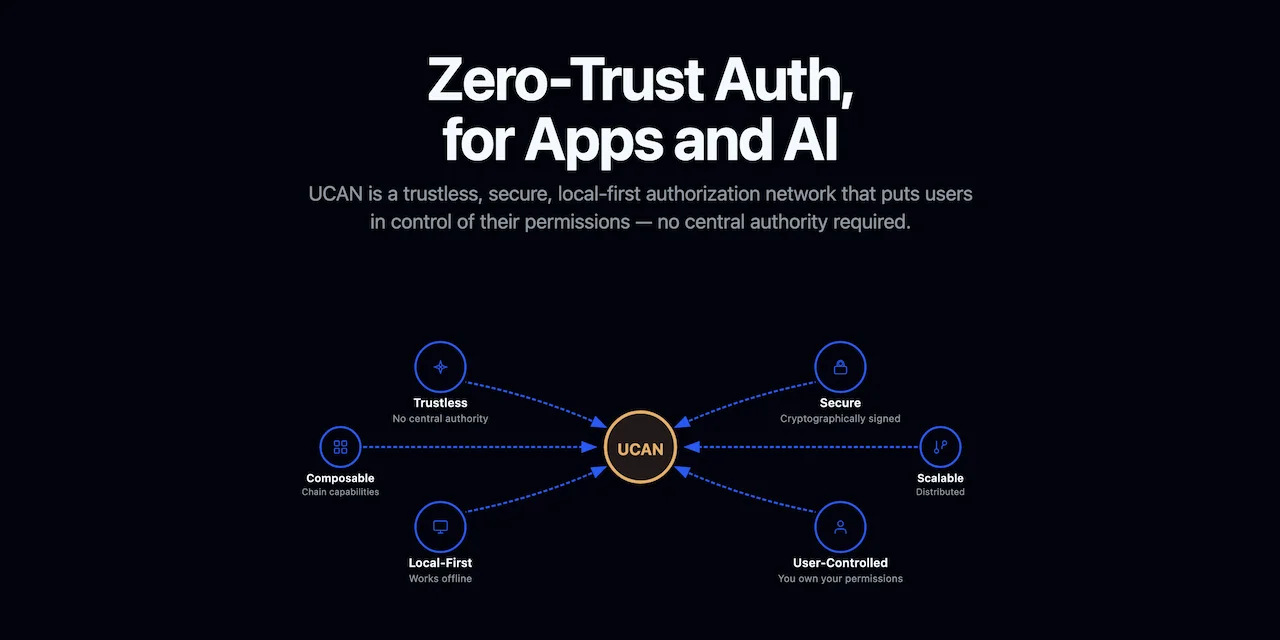
UCAN - User Controlled Authorization Network
A trustless, secure, local-first, user-originated, distributed authorization scheme.
Keyhive: Local-first access control
Keyhive is a project exploring local-first access control. It aims to provide a firm basis for secure collaboration, similar to the guarantees of private chat but for any local-first application.

Building AIP: An ATProtocol Authorization Gateway - Nick's Blog
OAuth is the first challenge developers face in the atmosphere. This post is about AIP, the authorization gateway we built at Graze Social to alleviate some of the pain.
Spaces | contrail
Auth-gated store for records that can’t live on public PDSes — private events, invite-only groups, members-only chat. Opt-in; zero cost if you don’t enable it.

Data integration | Proceedings of the twenty-first ACM SIGMOD-SIGACT-SIGART symposium on Principles of database systems
As part of the Digital Library's transition to Open Access, new features for researchers are available in the Premium Edition. Click here to learn more.

Major Identity Verification Firm AU10TIX Exposes User Data in Year-Long Security Lapse
In a significant security breach, AU10TIX, an Israeli firm known for verifying identities for...

Cross-App Authentication on AT Protocol: How Roomy and OpenMeet Share Identity
The free, open-source alternative to Meetup. Create groups and events for your community — no fees, no ads, community-owned forever.

Tools from EFF's Tech Team
EFF’s team of technologists and computer scientists engineers solutions to the problems of sneaky tracking, inconsistent encryption, and more. Where users face threats to their privacy and security

Keytrace — One identity, many proofs.
Link your GitHub, domain, and other accounts to your internet handle. Cryptographically signed, user-owned, and portable.