Since ChatGPT's release in 2022, demand for artificial intelligence (AI)–related skills in finance has grown rapidly, as generative AI drives significant technological changes in both the financial research field and the broader economy. We show that financial occupations are highly exposed to the productivity effects of generative AI, review the literature on the impact of ChatGPT on firm value, and provide directions for future research investigating the impact of this major technology shock. Generative AI also holds great potential as a tool for finance researchers and practitioners: We review and describe innovations in research methods linked to improvements in AI tools, along with their applications. We offer a practical introduction to available tools and advice for researchers in academia and industry interested in using these tools.
Artificial intelligence and personal finance
Artificial intelligence (AI) is transforming how consumers access and use financial information, education and advice for personal financial decision making. While consumers’ increasing use of AI tools and AI-generated content for personal finance brings opportunities in terms of accessibility, personalisation and decision making, it also increases risks related to bias, hallucinations, commercial influence, data privacy and exclusion, with uncertain benefits on long-term financial well-being. This policy paper provides policymakers and stakeholders with an overview of current trends, opportunities and risks in the use of AI in personal finance and in the design and delivery of financial education. It also proposes a set of financial literacy competencies to support the use of AI in personal financial decision making.

Certainly! Generative AI and its Impact on Academic Writing (in Finance)
We examine how the public release of large language models (LLMs) has affected academic writing and publication outcomes in finance. Using a sample of 55,964 fu

Fi Money rolls out AI feature for users' queries on personal finance via ChatGPT, Gemini- Moneycontrol.com
Until now, users relied on generic prompts and manual inputs to use AI tools for financial advice, Fi has replaced this with a structured, consent-driven way to share real financial data, the neo-banking firm's co-founder Sumit Gwalani has said

Human + AI in Accounting: Early Evidence from the Field
This paper provides early evidence on the integration and impact of Generative Artificial Intelligence (GenAI) in accounting at both the accountant and task levels. Using a multi-method approach, we first identify the heterogeneous adoption patterns, perceived benefits, and concerns through survey data from 277 accountants, which we formalize into testable predictions. Leveraging field data from a technology firm providing AI-based accounting software to 79 small- and medium-sized enterprises, we analyze hundreds of thousands of transaction-level records. We document significant productivity gains among adopters, including an 18% increase in weekly client support per standard deviation of AI use, with estimates reaching 59% when comparing the highest to lowest usage levels. We also find a reallocation of approximately 9% of accountant time from routine data entry toward high-value tasks. AI use corresponds to improved financial reporting quality, evidenced by a 12% increase in ledger granularity and a 7.5-day reduction in monthly close time. Experienced accountants selectively intervene when AI confidence scores are low, suggesting complementarity between expertise and AI. A framed field experiment shows that accountants sometimes over-rely on inaccurate AI-suggested classifications, illustrating risks of AI use. Overall, our findings highlight AI’s role in potentially augmenting, rather than replacing, professional accounting expertise.
How generative AI can make accountants more productive | MIT Sloan
A new study finds that working with artificial intelligence boosted efficiency and reporting quality. But human expertise still matters.

Human + AI in Accounting: Early Evidence from the Field
This paper provides early evidence on the integration and impact of Generative Artificial Intelligence (GenAI) in accounting at both the accountant and task lev
Human + AI in Accounting: Early Evidence from the Field
This paper provides early evidence on the integration and impact of Generative Artificial Intelligence (GenAI) in accounting at both the accountant and task lev
Where does the rigor go? Research software and the future of trustworthy science.
Generative AI now makes it dramatically easier to produce something that looks like research: analysis code, figures, literature reviews, even whole pap…
Artificial Intelligence for Economic Development Conference: Roundup of 27 presentations
Is artificial intelligence the future for economic development? Earlier this month, a group of World Bank staff, academic researchers, and technology company representatives convened at a conference in San Francisco to discuss new advances in artificial intelligence. One of the takeaways for Bank staff was how AI technologies might be ...

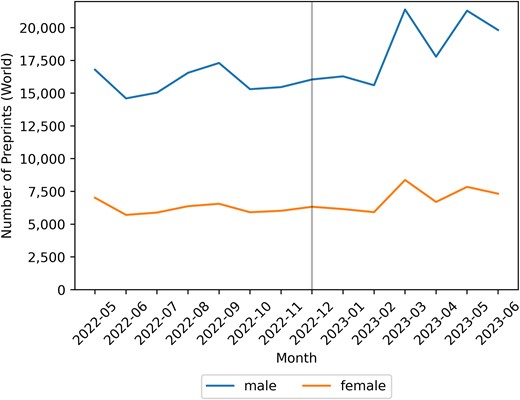
Gender disparities in the impact of generative artificial intelligence: Evidence from academia
Abstract. The emergence of generative artificial intelligence (AI) tools such as ChatGPT has substantially increased individuals’ productivity. In this stu
AI
Discover Block AI: Building intelligent financial tools to empower commerce. Explore our open-source agent Goose, latest research papers, and the Agentic AI Foundation.

Investing for Programmers
Maximize your portfolio, analyze markets, and make data-driven investment decisions using Python and generative AI.

In spite of hype, many companies are moving cautiously when it comes to generative AI | TechCrunch
Companies are extremely interested in generative AI as vendors push potential benefits, but turning that desire from a proof of concept into a working product is proving much more challenging.

The CEO’s Guide to Generative AI: Cost of compute
The IBM Institute for Business Value uses data-driven research and expert analysis to deliver thought-provoking insights to leaders on the emerging trends that will determine future success.'

Consumer Finance AI Standard
AI (artificial intelligence) is making consequential decisions about consumers’ financial lives, including who gets access to credit, which claims get paid, what financial products consumers are shown, and how users are advised to manage their accounts, among many others. It’s doing this at scale, largely out of sight, and with almost no accountability when it
The end of theory? AI and ignorance in financial markets
AI’s growing role in finance challenges traditional expectations of transparency and theoretical understanding. While machine learning (ML) models enhance financial decision-making, they remain largely agnostic to established financial theories, producing knowledge and ignorance in ways that differ from traditional models like VaR, DCF, and Black-Scholes. This essay explores the decoupling of AI models from theoretical financial knowledge and the resulting forms of ignorance. Using 22 semi-structured interviews, we investigate how ML models generate epistemic uncertainties. We focus on causal ignorance: AI systems, including those supported by XAI, fail to provide genuine causal explanations. Because understanding causation is inherently theoretical, AI-driven finance remains theory-agnostic and marked by theoretical ignorance. We explore how this ignorance differs from that of traditional models and what it implies for the role of theory in finance. Finally, we present three possible scenarios for the future of theory in finance and outline directions for further research.