

Abstract. Firms spend billions of dollars developing advertising content, yet there is little field evidence on how much or how it affects demand. We analy
Debunking the science of advertising
We delve into the world of advertising, worth hundreds of billions of dollars annually, to find out if it's really even that effective. A collection with 3 stories from The Correspondent.

“You Will:” A Macroeconomic Analysis of Digital Advertising
Abstract. An information-based model is developed where traditional and digital advertising finance the provision of free media goods and affect price comp

The $2.43 Billion Question: Podcast Advertising in 2024
An immersive data story exploring podcast advertising trends and the breaking point where ads drive audiences away.
Cognitive Load and Social Media Advertising
Social media engagement requires cognitive resources, which subsequently impact the advertisements consumers see while browsing. For the most part, however, advertising practitioners and scholars s...

Variety Effects in Mobile Advertising
Mobile app users are often exposed to a sequence of short-lived marketing interventions (e.g., ads) within each usage session. This study examines how an increase in the variety of ads shown in a session affects a user's response to the next ad. The authors leverage the quasi-experimental variation in ad assignment in their data and propose an empirical framework that accounts for different types of confounding to isolate the effects of a unit increase in variety. Across a series of models, the authors consistently show that an increase in ad variety in a session results in a higher response rate to the next ad: holding all else fixed, a unit increase in variety of the prior sequence of ads can increase the click-through rate on the next ad by approximately 13%. The authors then explore the underlying mechanism and document empirical evidence for an attention-based account. The article offers important managerial implications by identifying a source of interdependence across ad exposures that is often ignored in the design of advertising auctions. Furthermore, the attention-based mechanism suggests that platforms can incorporate real-time attention measures to help advertisers with targeting dynamics.

Opinion | Why Is Behavioral Economics So Popular? (Published 2018)
The recent vogue for this academic field is in part a triumph of marketing.

New Research: Is an Ad-Supported Internet Feasible in Emerging Markets? | The Mozilla Blog
Fresh research conducted by Caribou Digital and funded by Mozilla explores digital advertising models in the Global South — whether they can succeed, and

Is the online advertising bubble finally starting to pop?
I started calling online advertising a bubble in 2008. I made “The Advertising Bubble” a chapter in The Intention Economy in 2012. I’ve been unpacking what I figure ought to be ob…

The Ads Model for Prompts Vertically Integrates AI
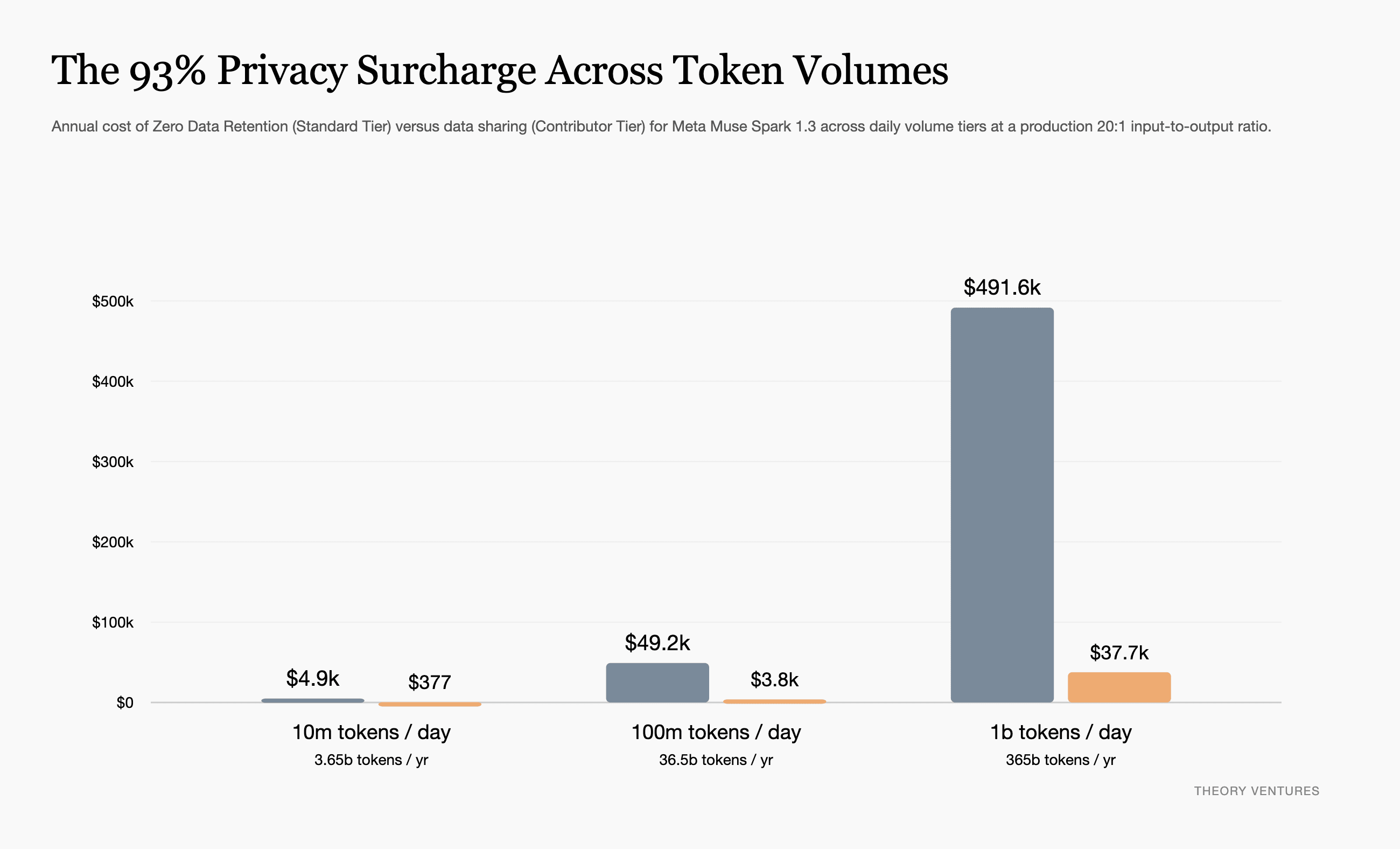
Meta's dual-tier AI pricing introduces an explicit barter : a 92% discount on inference in exchange for your data. Applying Michael Mauboussin's insight that prices contain information reveals the clearing price of prompt data : $1.24 per million tokens.
Advertising as a Reminder: Evidence from the Dutch State Lottery
We show that advertising can act as a reminder for consumers who intend to buy a product. , Consumers who intend to buy a product may forget to do so because they suffer from limited attention. Therefore, they may value being reminded by an advertisement. This reminder effect of advertising could be important in many markets but is usually difficult to document. We study it in the context of buying a product that has existed for almost 300 years: a ticket for the Dutch State Lottery. This context is particularly suitable for our analysis because the product is simple, it is very well known, and there are multiple fixed and known purchase cycles per year. Moreover, radio and TV advertisements are designed explicitly to remind consumers to buy a lottery ticket before the draw. This can conveniently be done online. We develop an approach to distinguish reminder effects of advertising from other effects, such as conveying information about the size of the jackpot. The key idea is that reminder effects are short lived. We use minute-level advertising and online sales data and find that the reminder effect of advertising is strong. Reaching 1% of the population by a radio advertisement leads to an increase in online sales of 1.55% in the four hours after the advertisement is aired. For TV advertisements, the increase is 0.78%. We show that the effects generally last longer for radio advertisements. We also provide direct evidence that reminding consumers not only affects the timing of purchases but also leads to market expansion. Finally, we estimate a model of consumer behavior under limited attention to quantify the effect on total sales. We find that total sales would be 16.7% lower without the reminder effect of advertising and that shifting advertising to the week of the draw would lead to a 9.2% increase in sales. History: Puneet Manchanda served as the senior editor and Günter Hitsch served as associate editor for this article. Supplemental Material: A replication package with code and log files and an Online Appendix are available at https://doi.org/10.1287/mksc.2022.1405 .

Why Stack Overflow Doesn’t Care About Ad Blockers - Stack Overflow
Hi! I’m Steve Feldman, Senior Ad Ops Manager at Stack Overflow. My whole life I’ve been fascinated by advertising. Even as a kid, I wondered what a company was trying to tell me by using one word instead of another in an ad. Over time, I developed a strong (read: subjective) opinion of what makes an ad ’good,’ and what makes an ad ’bad.’ It took me many years-- in fact, it wasn’t until joining the Ad Sales team at Stack Overflow-- to finally figure out that the common thread shared by the best ads is relevance. Maintaining that relevance is how we’ve managed to avoid one of the biggest issues facing publishers today: ad blocking.

Field Experimentation in Marketing Research
Despite increasing efforts to encourage the adoption of field experiments in marketing research (e.g., Campbell 1969 ; Cialdini 1980 ; Li et al. 2015 ), the majority of scholars continue to rely primarily on laboratory studies ( Cialdini 2009 ). For example, of the 50 articles published in Journal of Marketing Research in 2013, only three (6%) were based on field experiments. The goal of this article is to motivate a methodological shift in marketing research and increase the proportion of empirical findings obtained using field experiments. The author begins by making a case for field experiments and offers a description of their defining features. She then demonstrates the unique value that field experiments can offer and concludes with a discussion of key considerations that researchers should be mindful of when designing, planning, and running field experiments.
Can We Ever Know If Online Advertising Really Works?
In the summer of 2003, Viacom executive Mel Karmazin managed to sum up old media’s horror of the Internet with one of business lore’s greatest vulgar...

What I Learned Burning $13,867 on YouTube Ads for Candy Japan
Explains how expensive it is to advertise on YouTube, what is involved in launching a campaign and finally tweaking it towards profitability.

We spent $51,975 on podcast advertising: here’s everything we learned
Demystifying a good bit of the podcast sponsorship experience.

Dare Obasanjo (@carnage4life@mas.to)
The decline of the advertising supported internet is inevitable yet sad. Tech has been unique in being an equalizer. A poor Nigerian kid, a techie in the US or Jeff Bezos all used the same apps and websites. Now many charge $5-$15 per month creating a huge financial divide. Online advertising is a progressive form of taxation as the rich, mostly US-based consumers who buy goods & services from ads subsidized the internet for everyone else. We now live in the flat tax version of the internet.