


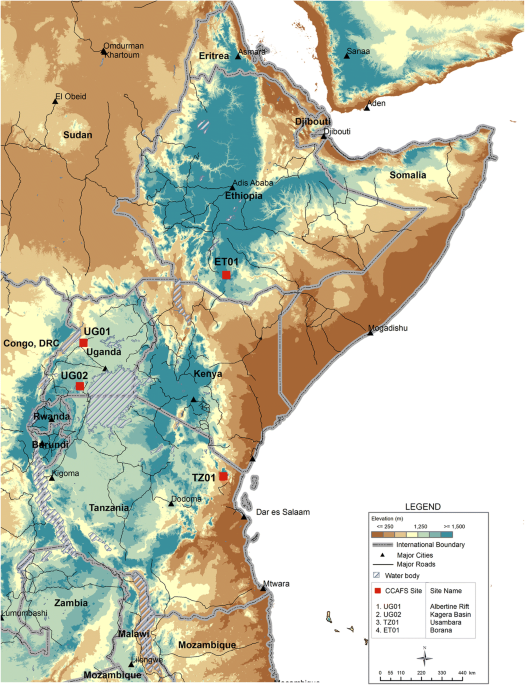
This study investigated the abiotic and biotic environmental indicators used among pastoralists and arable farmers to predict the onset and cessation of rain as well as to make short-term and seasonal forecasts in the Rwenzori region of Western Uganda. We used a mixed-methods approach that included surveys of 907 households, focus group discussions, and key informant interviews. The results indicate that resident birds such as white-browed coucals and turacos and migrant birds such as eagles and swallows were important indicators of the onset of rains. Butterflies were an important indicator for the cessation of rains, and red ants were an indicator for the onset of rains. Among the abiotic indicators, winds, clouds, earthquakes, and cloud formation on Mount Rwenzori were important indicators. Behavior of cattle at the onset of rains was important among the pastoralists, and flowering of coffee plants was important among the arable farmers. The behavior of the biotic indicators was driven by the availability of food, water, or other necessities. An attempt to explain the phenology underlying the behavior of biotic indicators and the meteorological science underlying some of the abiotic indicators is made. Although biotic environmental indicators are rudimentary and their accuracy is influenced by external factors such as climate change, they provide climate information within the locality of the farmers. Our results suggest that the indicators used in indigenous forecasting could be incorporated in national meteorological systems in a bid to improve the accuracy of rainfall forecasts and their use among farmers and pastoralists in rural Africa.
Indigenous knowledge for seasonal weather and climate forecasting across East Africa
Climate information and agro-advisory services are crucial in helping smallholder farmers and pastoralists in East Africa manage climate-related risks and adapt to climate change. However, significant gaps exist in provision of climate information that effectively addresses the needs of farmers and pastoralists. Most farmers and pastoralists, therefore, rely on indigenous knowledge (IK), where local indicators and experiences are used to observe and forecast weather conditions. While IK-based forecasting is inbuilt and established in many communities in East Africa, coordinated research and systematic documentation of IK for weather forecasting, including accuracy and reliability of IK is largely lacking. This paper documents and synthesizes existing IK for weather forecasting in East Africa using case studies from Ethiopia, Tanzania, and Uganda. The results show that farmers and pastoralists use a combination of meteorological, biological, and astrological indicators to forecast local weather conditions. IK weather forecasting is, therefore, crucial in supporting efforts to improve access to climate information in East Africa, especially in resource-poor and vulnerable communities. The paper draws valuable lessons on how farmers and pastoralists in East Africa use IK weather forecasts for making crop and livestock production decisions and demonstrates that the trust and willingness to apply scientific forecasts by farmers and pastoralists is likely to increase when integrated with IK. Therefore, a systematic documentation of IK, and a framework for integrating IK and scientific weather forecasting from national meteorological agencies can improve accuracy, uptake, and use of weather forecasts.
(PDF) Hunters and Guides: Multispecies Encounters between Humans, Honeyguide Birds and Honeybees
PDF | This paper discusses the relationship between humans and honeyguide birds (Indicator indicator) in the Adamaoua Region of Cameroon. Throughout... | Find, read and cite all the research you need on ResearchGate

GainForest — Biodiversity Observations & Nature Projects
Explore field observations, biodiversity records, and nature projects from communities and organizations using GainForest.
GainForest — Biodiversity Observations & Nature Projects
Explore field observations, biodiversity records, and nature projects from communities and organizations using GainForest.
GainForest — Biodiversity Observations & Nature Projects
Explore field observations, biodiversity records, and nature projects from communities and organizations using GainForest.
Assessing nature's contributions to people
Recognizing culture, and diverse sources of knowledge, can improve assessments , A major challenge today and into the future is to maintain or enhance beneficial contributions of nature to a good quality of life for all people. This is among the key motivations of the Intergovernmental Science-Policy Platform on Biodiversity and Ecosystem Services (IPBES), a joint global effort by governments, academia, and civil society to assess and promote knowledge of Earth's biodiversity and ecosystems and their contribution to human societies in order to inform policy formulation. One of the more recent key elements of the IPBES conceptual framework ( 1 ) is the notion of nature's contributions to people (NCP), which builds on the ecosystem service concept popularized by the Millennium Ecosystem Assessment (MA) ( 2 ). But as we detail below, NCP as defined and put into practice in IPBES differs from earlier work in several important ways. First, the NCP approach recognizes the central and pervasive role that culture plays in defining all links between people and nature. Second, use of NCP elevates, emphasizes, and operationalizes the role of indigenous and local knowledge in understanding nature's contribution to people.

Atmospheric doesn’t have to be an app · Applied Meteorology
You can just build features into the websites you've already got!
Praying for Rain
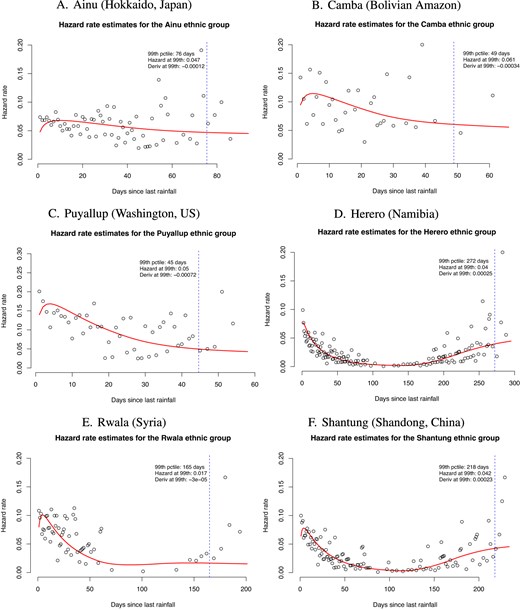
Abstract We study rainmaking as an instrumental religious belief. We present a model in which a religious leader tries to persuade people to believe. Praying for rain can persuade only where the hazard of rainfall during a dry spell is increasing over time, so that prayer is most likely to succeed when people most want rain. We present evidence from prayers for rain in Murcia, Spain, where the hazard rate is increasing, that the church’s prayers for rain predict rainfall over two centuries. To generalize this finding, we gather an original data set of whether ethnic groups around the world traditionally prayed for rain. We find that ethnic groups facing an increasing rainfall hazard are 47% more likely to pray for rain, consistent with our model’s prediction that societies are more likely to pray for rain where prayer is persuasive.
The Old Farmer’s Almanac: Gardening, Weather, Moon, Calendar
The Old Farmer’s Almanac is your trusted source for long range weather forecasts, moon phases, full moon dates and times, gardening tips, sunrise and sunset times, Best Days, tide charts, home remedies, folklore, and more. All from the oldest continuously-published and best-selling farmers’ almanac in North America.
Thibault Datry, écohydrologue : « Des rivières qui, de mémoire d’homme, ne s’étaient jamais asséchées ne coulent plus »
Le spécialiste de l’eau à l’Institut national de recherche pour l’agriculture, l’alimentation et l’environnement explique, dans un entretien au « Monde », le rôle majeur des petits cours d’eau pour les écosystèmes et les activités humaines, et l’importance de les préserver.
Emergent Properties of Balinese Water Temple Networks: Coadaptation on a Rugged Fitness Landscape
For over a thousand years, generations of Balinese farmers have gradually transformed the landscape of their island, clearing forests, digging irrigation canals, and terracing hillsides to enable themselves and their descendants to grow irrigated rice. Paralleling the physical system of terraces and irrigation works, the Balinese have also constructed intricate networks of shrines and temples dedicated to agricultural deities. Ecological modeling shows that water temple networks can have macroscopic effects on the topography of the adaptive landscape, and may be representative of a class of complex adaptive systems that have evolved to manage agroecosystems.

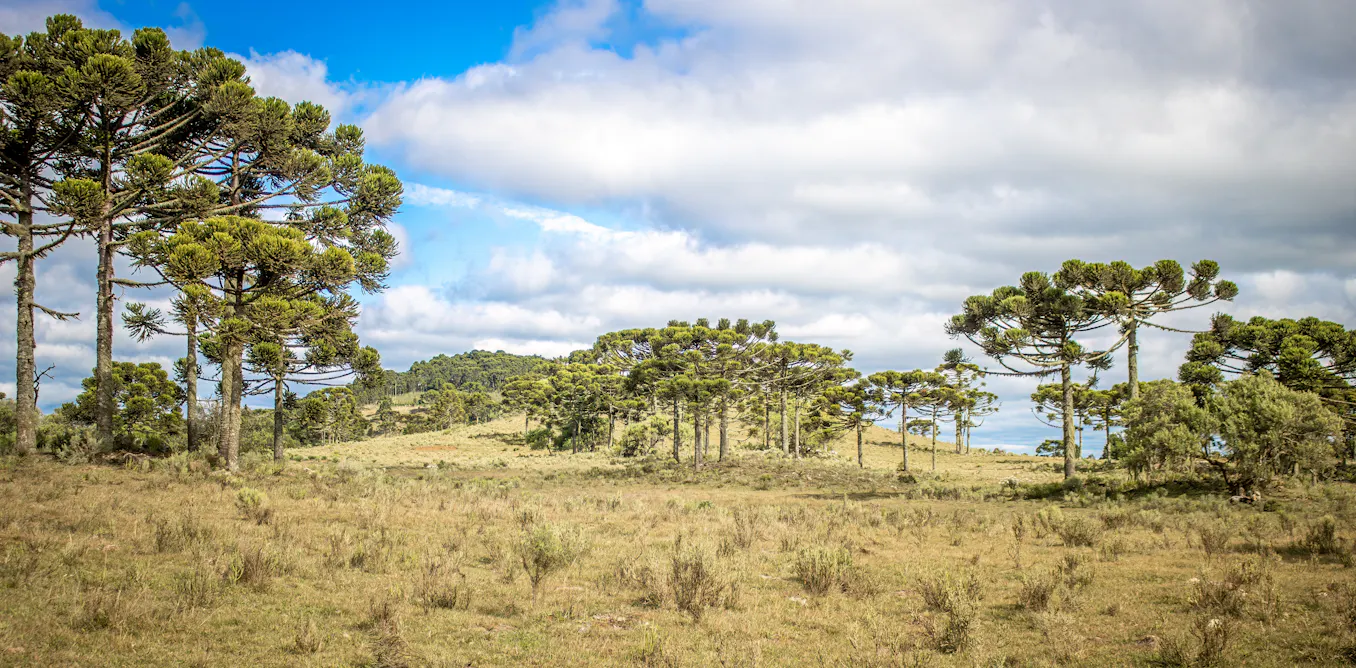
Brazil’s highland forest has been shaped by climate change and Indigenous people for 6,000 years
Prehistoric pollen records show that forest dynamics were driven by more than just broad-scale climatic changes.
Atmospheric doesn’t have to be an app - Applied Meteorology
You can just build features into the websites you've already got!
Atmospheric doesn’t have to be an app - Applied Meteorology
You can just build features into the websites you've already got!
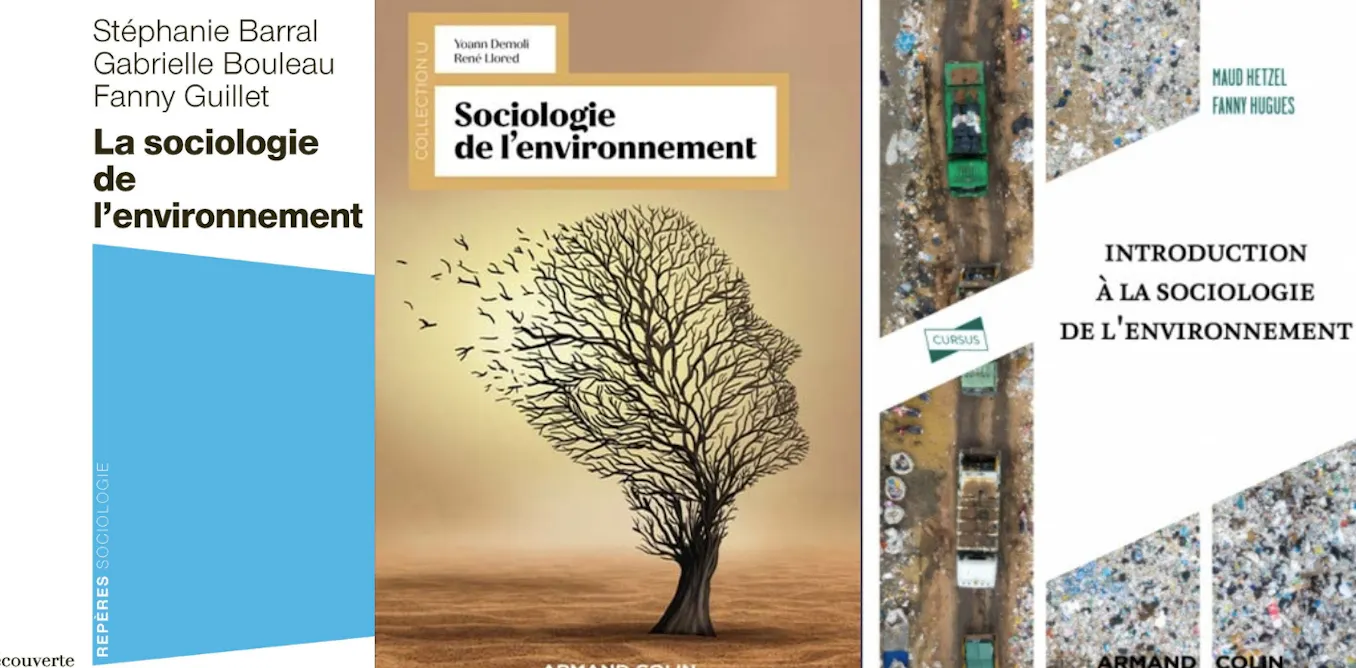
Pourquoi l’environnement est (aussi) une affaire de sociologie
Les activités humaines sont à l’origine du changement climatique comme de la dégradation de la biodiversité. Cette réalité rappelle l’importance de la sociologie de l’environnement.
Water Rhythms | Susie Ibarra
Water rhythms is a story of climate change told by ice and water. It is a story about the dualism of water, the universal connector of nature and humans. It is also an intergenerational story of the rapid change and depletion of our glaciers and freshwater sources worldwide.
