


I explore here how trainees in a community of practice learn new techniques and technologies when approved practices for learning are insufficient. I do so through two studies: a two-year, five-sited, comparative ethnographic study of learning in robotic and traditional surgical practice, and a blinded interview-based study of surgical learning practices at 13 top-tier teaching hospitals around the U.S. I found that learning surgery through increasing participation using approved methods worked well in traditional (open) surgery, as current literature would predict. But the radically different practice of robotic surgery greatly limited trainees’ role in the work, making approved methods ineffective. Learning surgery in this context required what I call “shadow learning”: an interconnected set of norm- and policy-challenging practices enacted extensively, opportunistically, and in relative isolation that allowed only a minority of robotic surgical trainees to come to competence. Successful trainees engaged extensively in three practices: “premature specialization” in robotic surgical technique at the expense of generalist training; “abstract rehearsal” before and during their surgical rotations when concrete, empirically faithful rehearsal was prized; and “undersupervised struggle,” in which they performed robotic surgical work close to the edge of their capacity with little expert supervision—when norms and policy dictated such supervision. Shadow learning practices were neither punished nor forbidden, and they contributed to significant and troubling outcomes for the cadre of initiate surgeons and the profession, including hyperspecialization and a decreasing supply of experts relative to demand.
Wait… whats a Community of Practice?
“Learning is not merely the acquisition of knowledge by individuals. It is a process of social participation.” A slightly bastardised…
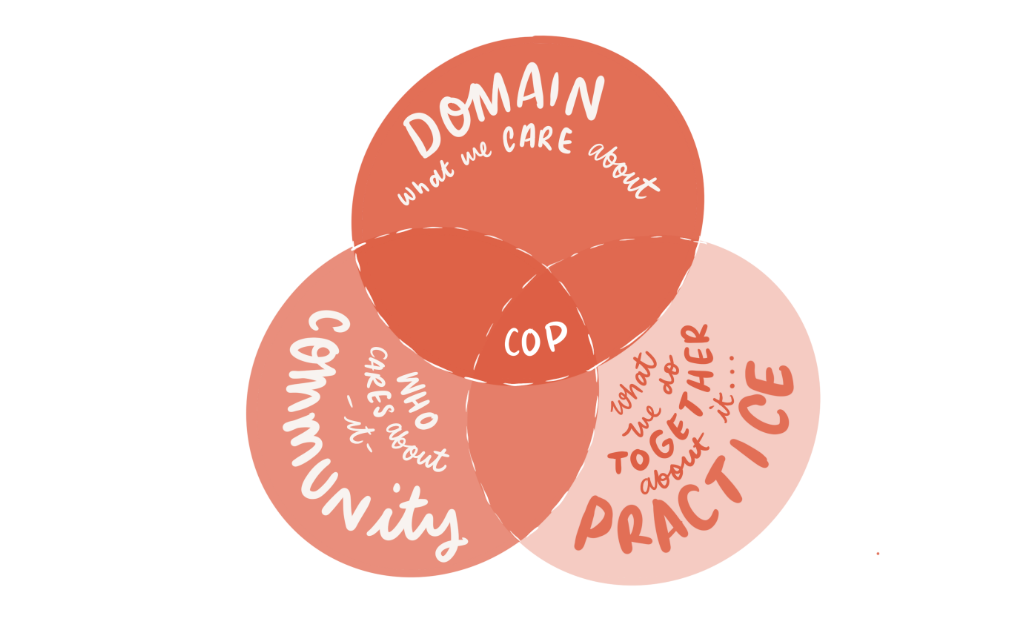
Let me remind me
Truly learning a lesson is deeper than simply knowing the lesson. It’s possible to know a whole lot more than you’re capable of acting on with regularity. And it’s the act, not the mere knowing, th…

The Learning Dispatch | Carl Hendrick | Substack
Making sense of how learning happens. https://www.carlhendrick.com/. Click to read The Learning Dispatch, by Carl Hendrick, a Substack publication with tens of thousands of subscribers.

Enhancing Craftsmanship: Evaluation of AR-Assisted Learning of Work Steps in Woodworking
This study addresses an unexplored intersection of vocational education and training (VET), motor skill learning, craftsmanship and the architecture, engineering and construction (AEC) industry as well as expertise sharing. Acquiring proficiency in craftsmanship involves not only theoretical knowledge but also a multitude of physical skills, such as chiselling, which are honed through repetition. Mastering these manual skills and combining them with knowledge of materials, such as wood, is essential for an effective executing of craftmanship. We developed an augmented reality (AR) prototype through the design case study approach to design a support for beginners, especially apprentices, in woodworking education where the connection between craftspeople and material is important for the end results. The prototype was evaluated by 28 apprentices inside and outside a woodwork shop setting. While participants praised the prototype’s 3D visualisations and interactive models, challenges in compatibility with woodwork shop environments were evident. Our findings highlight the importance of on-site evaluations in the craftsmanship context and the significance of direct interaction with real world materials. We provide a set of seven design guidelines derived from our empirical findings to inform the development of AR-based learning applications in craftsmanship. Our discussion opens up the question of the role of interactive 3D models for collaborative learning. The research extends AR’s impact in craftsmanship and AEC industry. Our study underscores the importance of expert knowledge in handling certain materials and the potential of AR to reshape work practices and visualisations, contributing to expertise sharing in this domain.

The Limits of Knowing Other Minds
New care workers in Britain typically struggle to understand, on their initial encounters, people who communicate atypically due to their intellectual disabilities. But they are required to provide care that is attuned to these individuals’ desires and intentions. Why, then, does a care organization called L'Arche UK make it harder for carers to learn what is going on inside these people's minds? I argue that doing so does not prevent the acquisition of essential knowledge, but rather trains new carers to relate to those with intellectual disabilities as opaque. This creates a more involved relationship that opens up the possibility of forms of status and intimacy otherwise closed to such people—thereby raising questions about the supposedly fundamental role that transparency and knowledge play in knowing others.
What Exactly is Acquired During Skill Acquisition? | Request PDF
Request PDF | What Exactly is Acquired During Skill Acquisition? | In this paper we propose that the term skill acquisition, as commonly used in traditional psychology, and the philosophy, education, movement... | Find, read and cite all the research you need on ResearchGate

Excess Capacity Learning
How do humans learn from experience? Traditionally, cognitive scientists have assumed that discovering generalizable patterns requires that humans compress rich and noisy experiences. However, recent computer science results suggest otherwise — systems can learn by ‘overfitting’ and expanding all the details of their experiences. We offer a new perspective on learning based on a cognitive system’s representational capacity, which can be constrained (forcing the system to compress details of past experiences), sufficient (to memorize past experiences), or excess (allowing the system to expand on the details of past experiences). This framework has implications for understanding learning across cognitive, clinical, and developmental contexts.
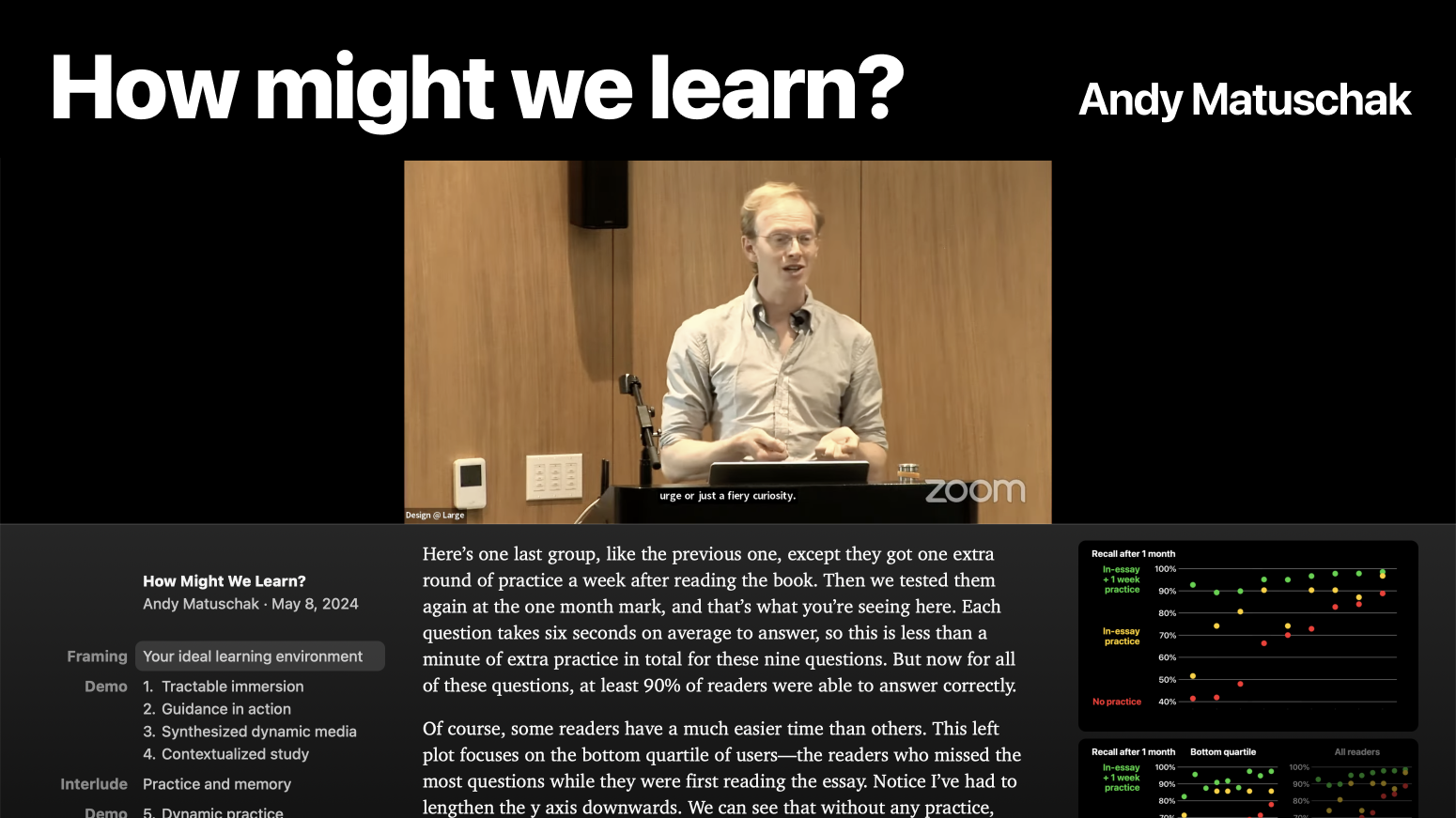
How Learning Happens | Seminal Works in Educational Psychology and Wha
How Learning Happens introduces 28 giants of educational research and their findings on how we learn and what we need to learn effectively, efficiently, and

What counts as evidence in AI & ED: Towards Science-for-Policy 3.0
Abstract Since the 1990s, there have been heated debates about how evidence should be used to guide teaching practice and education policy, and how educational research can generate robust and trustworthy evidence. This paper reviews existing debates on evidence-based education and research on the impacts of AI in education and suggests a new conceptualisation of evidence aligned with an emerging learning-oriented model of science-for-policy, which we call S4P 3.0. Existing empirical evidence on AIED suggests some positive effects, but a closer look reveals methodological and conceptual problems and leads to the conclusion that existing evidence should not be used to guide policy or practice. AI is a new type of technology that interacts with human cognition, communication, and social knowledge infrastructures, and it requires rethinking what we mean by “learning outcomes” and policy and practice-relevant evidence. A common belief that AI-supported personalisation will “revolutionise” education is historically rooted in a methodological confusion that we call the Bloomian paradox in AIED, and based on a limited view on the social functions of education.
To build gentler technology, practice trauma-informed design
Understanding trauma helps craft gentler user experiences.

How to do hard things
A fully general system for learning to do things you currently find difficult, only somewhat tongue-in-cheek.
Curse of the Chocolate-Covered Broccoli (or: Emotion in Learning)
So earlier this year, I learnt my whole career was based on a lie. As one does.

Redefining the Software Engineering Profession for AI
"How do you train someone to verify work in fields they haven’t mastered, when the AI itself prevents them from developing mastery?"
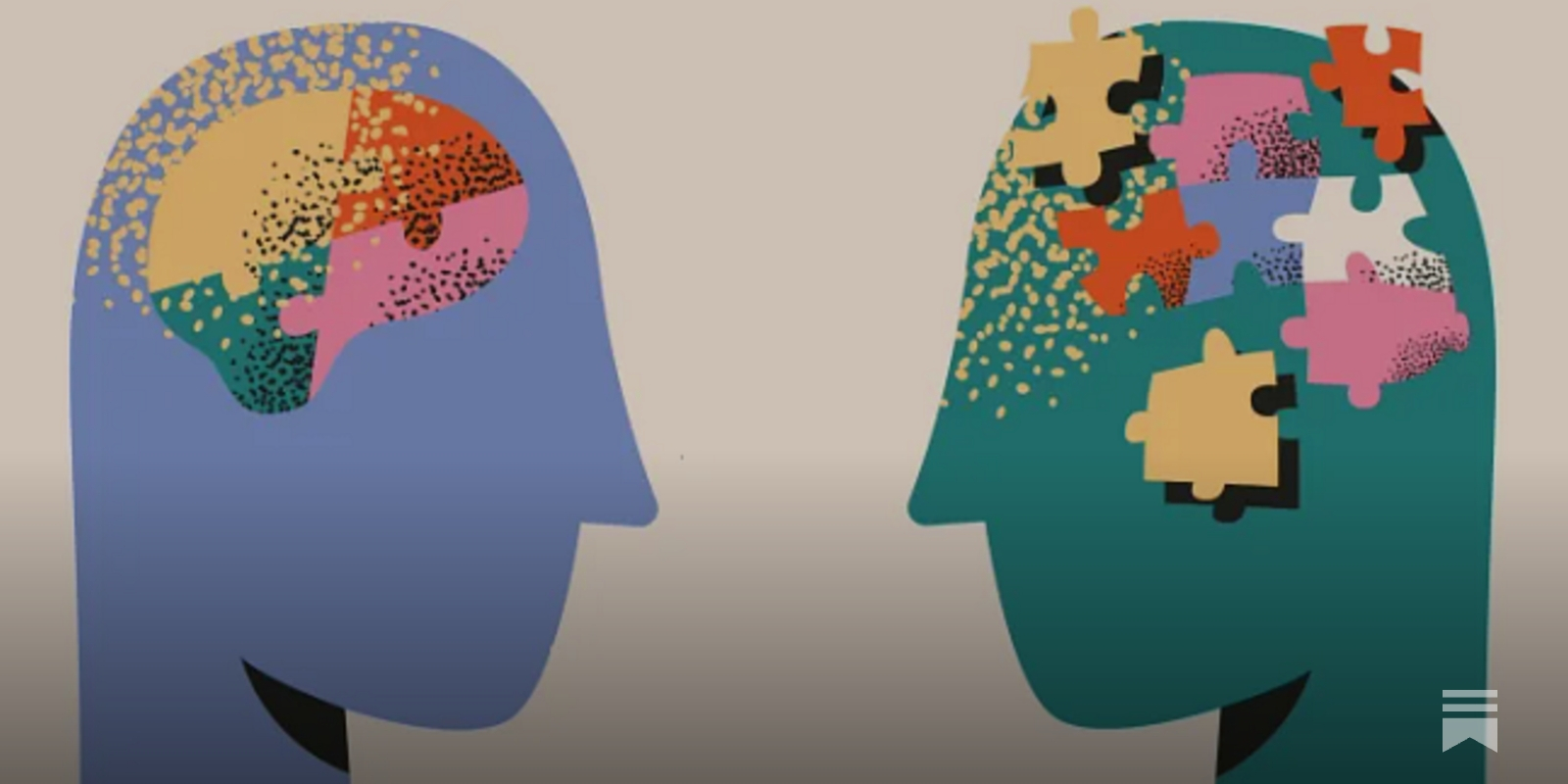
Ever thought we acquire generalizable knowledge by discarding details and compressing our experiences? In a new BBS paper, @sabinasloman.bsky.social and I argue otherwise, proposing a novel way of studying human learning inspired by double descent in ML. Disagree? Propose a commentary by May 15 :)
