


Technological innovations are creating new products, services, and markets that satisfy enduring consumer needs. These technological innovations create value for consumers and firms in many ways, but they also disrupt psychological ownership––the feeling that a thing is “MINE.” The authors describe two key dimensions of this technology-driven evolution of consumption pertaining to psychological ownership: (1) replacing legal ownership of private goods with legal access rights to goods and services owned and used by others and (2) replacing “solid” material goods with “liquid” experiential goods. They propose that these consumption changes can have three effects on psychological ownership: they can threaten it, cause it to transfer to other targets, and create new opportunities to preserve it. These changes and their effects are organized in a framework and examined across three macro trends in marketing: (1) growth of the sharing economy, (2) digitization of goods and services, and (3) expansion of personal data. This psychological ownership framework generates future research opportunities and actionable marketing strategies for firms aiming to preserve the positive consequences of psychological ownership and navigate cases for which it is a liability.
Affording Disposal Control: The Effect of Circular Take-Back Programs on Psychological Ownership and Valuation
A circular economy is a “closed-loop” system designed so that products flow back into the production cycle after use. With many companies implementing take-back programs as part of their sustainability strategy, a fundamental shift in consumption has occurred, with consumers considering disposal during and even before purchase decision making. Eight experiments reveal that consumers indicate a greater willingness to pay for circular program products. An increase in psychological ownership underlies the difference in product valuation. Specifically, the additional disposal control uniquely afforded by circular products increases the capacity of circular take-back program products to evoke psychological ownership. The process explanation is directly tested through mediation. Experimentally manipulating antecedents of psychological ownership (i.e., disposal control and psychological ownership) provides further support for the conceptual framework.
Restoring Consumer Sovereignty
For decades, there has been broad consensus within antitrust, intellectual property, and consumer law scholarship that consumers make decisions in their own best interests by consciously weighting the market’s relative prices, quantities, and qualities against each other. That consensus is unraveling in light of novel findings from cognitive and social psychology that explain how individuals’ concepts of what they prefer drive the global economy. At the same time, producers nowadays no longer merely satisfy consumers’ needs but also communicate their values, identities, and aspirations through the sale and marketing of products. As part of the growing interest in observations such as these, a wealth of psychological studies challenge the fundamental teaching of economics that the interplay of demand and supply of goods in a free market economy provides us with material wealth. This book provides a normative defense of that assumption and a theoretical framework for understanding its contradictions. It argues that the erosion of consumer sovereignty through the ability of product manufacturers and sellers to systematically take advantage of individuals’ psychological weaknesses demands a twenty-first-century reconceptualization of the consumer and a modern account of how the law should regulate the digital economy. Such an account is justified to ensure a diverse marketplace in which consumers can influence how our societies are structured and arranged. By examining the role that market manipulation plays, it offers ingredients for a realistic descriptive and normative market regulatory theory that is aware of its political economy, its behavioral suppositions, and its distributional consequences.
Psychological Ownership in Financial Decisions
Policy makers have long intuitively realized the benefit of encouraging strong psychological ownership toward social programs. For example, Franklin D. Roosevelt in the 1930s purposely designed the Social Security program to include a high feeling of ownership by workers, to generate a sense of responsibility and protection from future legislation. Recent research suggests that this sense of ownership continues to be an important part of the SSA program and is a significant predictor of when retirees claim their benefits. Strong feelings of ownership also exist for other programs (e.g., Medicare) and financial services (e.g., investments), and there are significant implications of that psychological ownership on consumers’ decisions and behavior around these programs. Policy makers and marketers may wish to consider the role of interventions that affect consumers’ psychological ownership, along with feelings of trust and fairness, for such products.

How Artificial Intelligence Constrains the Human Experience
AbstractArtificial intelligence (AI) and related technologies are transforming many consumption activities, powering breakthroughs that expand the human experience by enhancing human capabilities, performance, and creativity. While this explains the consumer enthusiasm and rapid adoption of these technologies, AI systems can also have the opposite effect: reducing and constraining the range of experiences that are available to consumers. This article examines the mechanisms through which AI can constrain the human experience, considering individual, interpersonal, and societal processes. Our analysis uncovers a complex interplay between the advantages of AI and its inadvertent negative repercussions, which potentially restrict human autonomy, self-identity, relational dynamics, and social behavior. In this article, we propose three different mechanisms at the core of these constraining forces: parametric reductionism, agency transference, and regulated expression. Our exploration of these mechanisms highlights the risks connected to system design and points to questions and implications for future researchers and policymakers.

Is cash perceived as more valuable than digital money? The mediating effect of psychological ownership and psychological distance
This research examines how the type of money (cash vs. digital) affects consumers’ perceived purchasing power (PPP) of the money and the mediating mechanisms of psychological ownership and psychological distance. Three lab experiments confirm that cash results in higher PPP than does digital money, and that both psychological ownership and psychological distance contribute to the effect of money type on PPP. Our findings provide theoretical implications for the psychological research on the type of money and its influence and practical implications for e-payment and online shopping behaviors.

Payment method and perceptions of ownership
How consumers pay influences how they feel about a transaction. In particular, paying by card has been argued to have an effect on the perception of cost, making it less salient and painful. We propose and show that payment method also influences how consumers feel about the acquired good. Specifically, we focus on effects of the payment method on psychological ownership, i.e., the perception of an object as “mine.” We propose that cash payment results in stronger psychological ownership because it influences the extent of perceived investment in an object. We provide evidence for the proposed effect from field and laboratory settings. Results of a longitudinal exit survey and an experiment show that cash payers report higher levels of immediate psychological ownership than card payers. However, this effect seems to depend on the meanings associated with a payment method. Asian students (who associate credit card payment with investment and debt) do not exhibit this effect. Moreover, the initial boost in psychological ownership seems to be comparably short-lived. While those paying in cash experience no further increase in psychological ownership over time, those paying by card do.

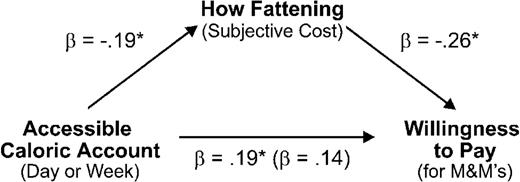
Unfixed Resources: Perceived Costs, Consumption, and the Accessible Account Effect
Abstract. Consumption depletes one's available resources, but consumers may be unaware of the total resources available for consumption and, therefore, be
Malleable Mental Accounting: The Effect of Flexibility on the Justification of Attractive Spending and Consumption Decisions
Mental accounts are often characterized as self‐control devices that consumers employ to prevent excess spending and consumption. However, under certain conditions of ambiguity, the mental accounting process is malleable; that is, consumers have flexibility in assigning expenses to different mental accounts. We demonstrate how consumers flexibly classify expenses, or construct accounts, to justify spending. An expense that can be assigned to more than one account (i.e., an ambiguous expense) is more likely to be incurred than an unambiguous expense that is constrained either by existing budgets or by previously constructed accounts. We explore the justification processes that underlie these results and their implications for mental accounts as self‐control devices.

Advancing the Understanding of Phenotypic Mimicry in Men’s Conspicuous Consumption
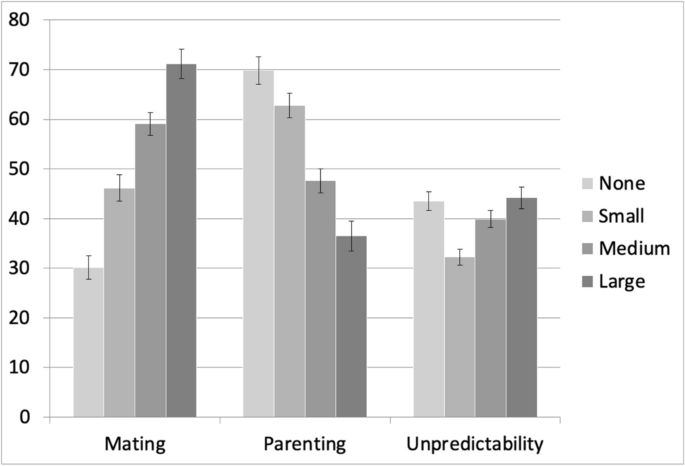
Two studies advance the understanding of phenotypic mimicry in consumer products. Product features mimicking more prominent male secondary sexual characteristics are associated with men’s behavioral strategies which are higher in mating effort and lower in paternal investment in offspring, in parallel with reproductive strategies across species and within the human population. The first study demonstrated a continuous relationship between the sizes of luxury brand logos and perceptions of the owners’ life histories. Two partial replications reproduced Study 1 results. Study 2 demonstrated that a manipulation of coloration, another fundamental dimension of variation in secondary sex characteristics, generates a similar pattern of results. In both studies, men owning shirts with more prominent sensory characteristics were believed to use authority and intimidation as strategies for advancing social status, whereas men owning shirts with less showy characteristics were believed to demonstrate useful abilities and foster cooperative alliances. Participants also recognized the strategic use of luxury display properties across social contexts.
When Purchase Means License: Digital Ownership's Quiet Erosion — Koios
When Purchase Means License: Digital Ownership's Quiet Erosion
Introducing the Ownership Model Canvas
A new tool to re-align business success with ownership

Overcoming Barriers to Employee Ownership: Insights From Small and Medium-Sized Businesses
This research investigates the limited adoption of employee stock ownership plans (ESOPs) among small-to-medium sized businesses (SMBs) in the U.S. Through interviews with 30 SMB owners across various industries, we identify the key barriers to ESOP adoption as lack of time, money, and skills on the part of the owners. In doing so, the study suggests that a “shared ownership light” model, which involves sharing profits, information, and decision-making opportunities with employees, appears more feasible for SMBs than ESOPs. For SMBs that are interested in ESOP adoption, our research suggests that organizations providing employee ownership services could better assist SMBs by offering templatized models and best practices for profit-sharing plans, open-book management, and structured employee participation. The paper aims to broaden the discussion around shared ownership by considering a spectrum of options that have the potential to increase both value creation by and value-sharing among employees.
Restoring Consumer Sovereignty: How Markets Manipulate Us and What the Law Can Do About It
Abstract. For decades, there has been broad consensus within antitrust, intellectual property, and consumer law scholarship that consumers make decisions i
On the Mental Accounting of Restricted-Use Funds: How Gift Cards Change What People Purchase
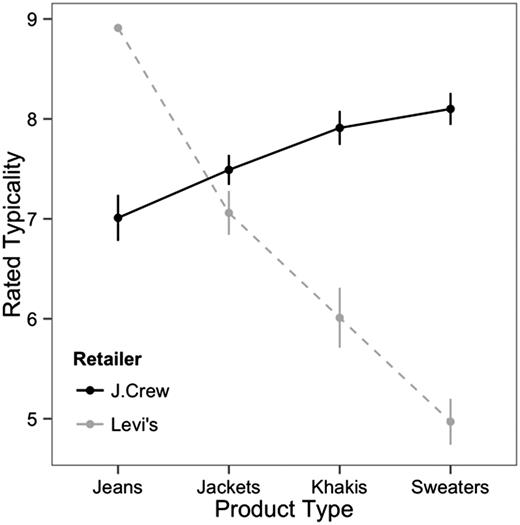
Abstract. This article emphasizes the role of categorization in mental accounting and proposes that once a mental account is established, purchases that ar
Behavioural economics, consumer behaviour and consumer policy: state of the art
Counter to the traditional assumption of neoclassical economics that individuals are rational Homo oeconomici that always seek to maximize their utility and follow their ‘true’ preferences, research in behavioural economics has demonstrated that people's judgements and decisions are often subject to systematic biases and heuristics, and are strongly dependent on the context of the decision. In this article, we briefly review the transition of research from neoclassical economics to behavioural economics, and discuss how the latter has influenced research in consumer behaviour and consumer policy. In particular, we discuss the impacts of key principles such as status quo bias, the endowment effect, mental accounting and the sunk-cost effect, other heuristics and biases related to availability, salience, the anchoring effect and simplicity rules, as well as the effects of other supposedly irrelevant factors such as music, temperature and physical markers on consumers’ decisions. These principles not only add significantly to research on consumer behaviour – they also offer readily available practical implications for consumer policy to nudge behaviour in beneficial directions in consumption domains including financial decision making, product choice, healthy eating and sustainable consumption.
Co-holding behaviour: unlocking the puzzle
This article seeks to explain why households decide to simultaneously hold both credit and savings products. Beyond the arguments of ignorance or behavioural biases commonly used in the literature,...
