A circular economy is a “closed-loop” system designed so that products flow back into the production cycle after use. With many companies implementing take-back programs as part of their sustainability strategy, a fundamental shift in consumption has occurred, with consumers considering disposal during and even before purchase decision making. Eight experiments reveal that consumers indicate a greater willingness to pay for circular program products. An increase in psychological ownership underlies the difference in product valuation. Specifically, the additional disposal control uniquely afforded by circular products increases the capacity of circular take-back program products to evoke psychological ownership. The process explanation is directly tested through mediation. Experimentally manipulating antecedents of psychological ownership (i.e., disposal control and psychological ownership) provides further support for the conceptual framework.
Evolution of Consumption: A Psychological Ownership Framework
Technological innovations are creating new products, services, and markets that satisfy enduring consumer needs. These technological innovations create value for consumers and firms in many ways, but they also disrupt psychological ownership––the feeling that a thing is “MINE.” The authors describe two key dimensions of this technology-driven evolution of consumption pertaining to psychological ownership: (1) replacing legal ownership of private goods with legal access rights to goods and services owned and used by others and (2) replacing “solid” material goods with “liquid” experiential goods. They propose that these consumption changes can have three effects on psychological ownership: they can threaten it, cause it to transfer to other targets, and create new opportunities to preserve it. These changes and their effects are organized in a framework and examined across three macro trends in marketing: (1) growth of the sharing economy, (2) digitization of goods and services, and (3) expansion of personal data. This psychological ownership framework generates future research opportunities and actionable marketing strategies for firms aiming to preserve the positive consequences of psychological ownership and navigate cases for which it is a liability.
Malleable Mental Accounting: The Effect of Flexibility on the Justification of Attractive Spending and Consumption Decisions
Mental accounts are often characterized as self‐control devices that consumers employ to prevent excess spending and consumption. However, under certain conditions of ambiguity, the mental accounting process is malleable; that is, consumers have flexibility in assigning expenses to different mental accounts. We demonstrate how consumers flexibly classify expenses, or construct accounts, to justify spending. An expense that can be assigned to more than one account (i.e., an ambiguous expense) is more likely to be incurred than an unambiguous expense that is constrained either by existing budgets or by previously constructed accounts. We explore the justification processes that underlie these results and their implications for mental accounts as self‐control devices.

Psychological Ownership in Financial Decisions
Policy makers have long intuitively realized the benefit of encouraging strong psychological ownership toward social programs. For example, Franklin D. Roosevelt in the 1930s purposely designed the Social Security program to include a high feeling of ownership by workers, to generate a sense of responsibility and protection from future legislation. Recent research suggests that this sense of ownership continues to be an important part of the SSA program and is a significant predictor of when retirees claim their benefits. Strong feelings of ownership also exist for other programs (e.g., Medicare) and financial services (e.g., investments), and there are significant implications of that psychological ownership on consumers’ decisions and behavior around these programs. Policy makers and marketers may wish to consider the role of interventions that affect consumers’ psychological ownership, along with feelings of trust and fairness, for such products.

Payment Depreciation: the Behavioral Effects of Temporally Separating Payments From Consumption
Abstract. Research suggests that individuals mentally track the costs and benefits of a consumer transaction for the purpose of reconciling those costs and
Payment method and perceptions of ownership
How consumers pay influences how they feel about a transaction. In particular, paying by card has been argued to have an effect on the perception of cost, making it less salient and painful. We propose and show that payment method also influences how consumers feel about the acquired good. Specifically, we focus on effects of the payment method on psychological ownership, i.e., the perception of an object as “mine.” We propose that cash payment results in stronger psychological ownership because it influences the extent of perceived investment in an object. We provide evidence for the proposed effect from field and laboratory settings. Results of a longitudinal exit survey and an experiment show that cash payers report higher levels of immediate psychological ownership than card payers. However, this effect seems to depend on the meanings associated with a payment method. Asian students (who associate credit card payment with investment and debt) do not exhibit this effect. Moreover, the initial boost in psychological ownership seems to be comparably short-lived. While those paying in cash experience no further increase in psychological ownership over time, those paying by card do.

Co-holding behaviour: unlocking the puzzle
This article seeks to explain why households decide to simultaneously hold both credit and savings products. Beyond the arguments of ignorance or behavioural biases commonly used in the literature,...

Unfixed Resources: Perceived Costs, Consumption, and the Accessible Account Effect
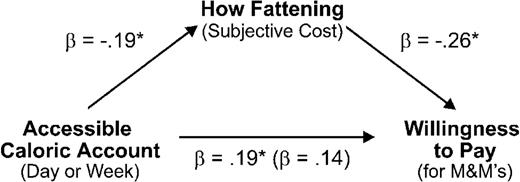
Abstract. Consumption depletes one's available resources, but consumers may be unaware of the total resources available for consumption and, therefore, be
Mental accounting of product returns
Abstract Product returns incur a substantial financial loss for retailers. We demonstrate how, when, and why cross‐selling during the product returns process can reduce this loss in revenue. We find consumers more readily spend money refunded from product returns than unspent money. We theorize that this refund effect occurs because consumers psychologically realize the loss of money when purchasing products and earmark that money for spending. Thus, consumers feel a smaller psychological loss when spending refunded money than unspent money on a subsequent purchase. In six experiments, we find consumers spend refunded money more freely than unspent money, even more than windfall gains like lottery winnings, on products in similar and different product categories (e.g., groceries vs. apparel). However, the refund effect only holds when consumers do not expect to return products at the point of purchase and before refunded money is commingled with money in other accounts. Our findings identify a new fungibility violation due to mental accounting (i.e., a new source effect), and illustrate its value for generating, validating, and explaining revenue retention strategies.

A Model of Mental Accounting and Reference Price Adaptation
Consumers possess a mental account that stores the worth of items purchased and yet to be consumed. Reference prices act as the book values of these items. Movements in the account—the comparison between the reference price and the price paid at entry, and the comparison between the benefit of consumption and the reference price at exit—yield hedonic benefits. The reference price is determined by a psychological process of adaptation to the price evoked by the trade. The model is integrative in that it explains a wide array of observed anomalies such as sunk-cost effects, payment depreciation, reluctance to trade, preference for prepayment, and the flat-rate bias. The model also generates new testable implications. This paper was accepted by James Smith, decision analysis.

Yielding to Temptation: Self‐Control Failure, Impulsive Purchasing, and Consumer Behavior
Abstract. Self-control is a promising concept for consumer research, and self-control failure may be an important cause of impulsive purchasing. Three caus
Circular Economy
The circular economy prioritises the reuse of materials, preventing the over extraction of natural resources and usable materials that end up in landfill.

Context-Dependent Drivers of Discretionary Debt Decisions: Explaining Willingness to Borrow for Experiential Purchases
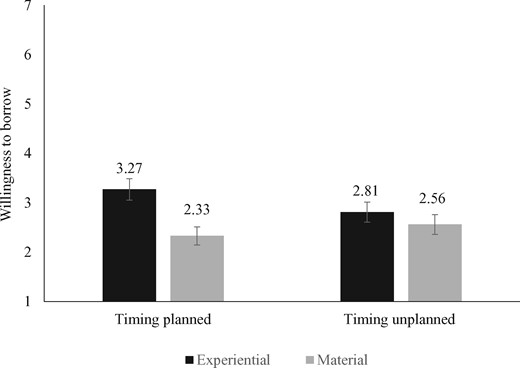
Abstract Mental accounting research suggests that consumers prefer borrowing for longer-lasting purchases in order to receive benefits from the purchases as they pay for them. In contrast, two sets of archival data and five lab studies show that consumers are more willing to borrow for experiential versus material purchases, even though experiential purchases tend to have a shorter physical duration. Further, framing the same purchase as more experiential than material increases willingness to borrow. This effect occurs because purchase timing is more important for experiential purchases—a function of consumers’ aversion to missing out on planned consumption. Thus, we moderate the proposed effect by varying whether the borrowing decision impacts planned consumption. Other differences between material and experiential purchases, such as scarcity or expected happiness, cannot similarly explain our results. Moreover, our conceptualization allows us to reconcile the apparent contradiction between the previous and current research by examining the relative impact of purchase-timing importance and payment-benefit duration matching in different contexts (i.e., “purchasing” and “source-of-funding” decisions).
The Effects of Prior Spending on Future Spending Decisions: The Role of Acquisition Liabilities and Payments
Research in mental accounting shows that prior spending influences a consumer's decision to make a new spending decision (Heath and Soll 1996, Soman 2001). In particular, greater spending in a particular category reduces the likelihood of further spending in that category. In the present research, we decompose “spending” into two distinct episodes—the acquisition liability episode during which a purchase is made accompanied by a commitment to pay (e.g., using a credit card) and the payment episode during which the consumer's wealth actually gets depleted (e.g., paying the credit card bill). Using a controlled laboratory experiment and real world data from a group of consumers, we replicate earlier findings that prior spending influences a pending spending decision, but also show that the location of both the acquisition liability episode and the payment episode play a role. Our results contribute to an understanding of the dynamic mental accounting of acquisition liability and actual outflows.
Time-inconsistent Preferences and Consumer Self-Control
Abstract Why do consumers sometimes act against their own better judgment, engaging in behavior that is often regretted after the fact and that would have been rejected with adequate forethought? More generally, how do consumers attempt to maintain self-control in the face of time-inconsistent preferences? This article addresses consumer impatience by developing a decision-theoretic model based on reference points. The model explains how and why consumers experience sudden increases in desire for a product, increases that can result in the temporary overriding of long-term preferences. Tactics that consumers use to control their own behavior are also discussed. Consumer self-control is framed as a struggle between two psychological forces, desire and willpower. Finally, two general classes of self-control strategies are described: those that directly reduce desire, and those that overcome desire through will power.
Restoring Consumer Sovereignty
For decades, there has been broad consensus within antitrust, intellectual property, and consumer law scholarship that consumers make decisions in their own best interests by consciously weighting the market’s relative prices, quantities, and qualities against each other. That consensus is unraveling in light of novel findings from cognitive and social psychology that explain how individuals’ concepts of what they prefer drive the global economy. At the same time, producers nowadays no longer merely satisfy consumers’ needs but also communicate their values, identities, and aspirations through the sale and marketing of products. As part of the growing interest in observations such as these, a wealth of psychological studies challenge the fundamental teaching of economics that the interplay of demand and supply of goods in a free market economy provides us with material wealth. This book provides a normative defense of that assumption and a theoretical framework for understanding its contradictions. It argues that the erosion of consumer sovereignty through the ability of product manufacturers and sellers to systematically take advantage of individuals’ psychological weaknesses demands a twenty-first-century reconceptualization of the consumer and a modern account of how the law should regulate the digital economy. Such an account is justified to ensure a diverse marketplace in which consumers can influence how our societies are structured and arranged. By examining the role that market manipulation plays, it offers ingredients for a realistic descriptive and normative market regulatory theory that is aware of its political economy, its behavioral suppositions, and its distributional consequences.
On the Mental Accounting of Restricted-Use Funds: How Gift Cards Change What People Purchase
Abstract. This article emphasizes the role of categorization in mental accounting and proposes that once a mental account is established, purchases that ar