


A meta-analysis was conducted to examine the extent of continued influence of misinformation in the face of correction and the theoretical explanations of this phenomenon. Aggregation of results from 32 studies ( N = 6,527) revealed that, on average, correction does not entirely eliminate the effect of misinformation ( r = –.05, p = .045). Corrective messages were found to be more successful when they are coherent, consistent with the audience’s worldview, and delivered by the source of the misinformation itself. Corrections are less effective if the misinformation was attributed to a credible source, the misinformation has been repeated multiple times prior to correction, or when there was a time lag between the delivery of the misinformation and the correction. These findings are consistent with predictions based on theories of mental models and offer concrete recommendations for practitioners.
Debunking: A Meta-Analysis of the Psychological Efficacy of Messages Countering Misinformation
This meta-analysis investigated the factors underlying effective messages to counter attitudes and beliefs based on misinformation. Because misinformation can lead to poor decisions about consequential matters and is persistent and difficult to correct, debunking it is an important scientific and public-policy goal. This meta-analysis ( k = 52, N = 6,878) revealed large effects for presenting misinformation ( ds = 2.41–3.08), debunking ( ds = 1.14–1.33), and the persistence of misinformation in the face of debunking ( ds = 0.75–1.06). Persistence was stronger and the debunking effect was weaker when audiences generated reasons in support of the initial misinformation. A detailed debunking message correlated positively with the debunking effect. Surprisingly, however, a detailed debunking message also correlated positively with the misinformation-persistence effect.
Explicit warnings reduce but do not eliminate the continued influence of misinformation
Information that initially is presumed to be correct, but that is later retracted or corrected, often continues to influence memory and reasoning. This occurs even if the retraction itself is well remembered. The present study investigated whether the continued influence of misinformation can be reduced by explicitly warning people at the outset that they may be misled. A specific warning— giving detailed information about the continued influence effect (CIE)—succeeded in reducing the continued reliance on outdated information but did not eliminate it. A more general warning—reminding people that facts are not always properly checked before information is disseminated—was even less effective. In an additional experiment, a specific warning was combined with the provision of a plausible alternative explanation for the retracted information. This combined manipulation further reduced the CIE but still failed to eliminate it altogether.
When Corrections Fail: The Persistence of Political Misperceptions
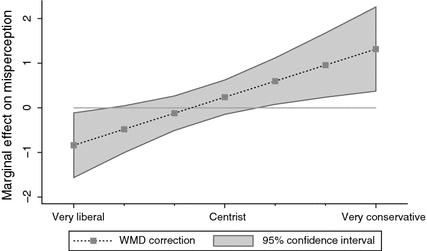
An extensive literature addresses citizen ignorance, but very little research focuses on misperceptions. Can these false or unsubstantiated beliefs about politics be corrected? Previous studies have not tested the efficacy of corrections in a realistic format. We conducted four experiments in which subjects read mock news articles that included either a misleading claim from a politician, or a misleading claim and a correction. Results indicate that corrections frequently fail to reduce misperceptions among the targeted ideological group. We also document several instances of a “backfire effect” in which corrections actually increase misperceptions among the group in question.
Capturing our Attention
What are the harms of misinformation? It’s widely believed that it causes false belief, including false beliefs in quite bizarre claims. I argue that this threat is greatly exaggerated: while plaus...

Facts and Myths about Misperceptions
Misperceptions threaten to warp mass opinion and public policy on controversial issues in politics, science, and health. What explains the prevalence and persistence of these false and unsupported beliefs, which seem to be genuinely held by many people? Though limits on cognitive resources and attention play an important role, many of the most destructive misperceptions arise in domains where individuals have weak incentives to hold accurate beliefs and strong directional motivations to endorse beliefs that are consistent with a group identity such as partisanship. These tendencies are often exploited by elites who frequently create and amplify misperceptions to influence elections and public policy. Though evidence is lacking for claims of a “post-truth” era, changes in the speed with which false information travels and the extent to which it can find receptive audiences require new approaches to counter misinformation. Reducing the propagation and influence of false claims will require further efforts to inoculate people in advance of exposure (for example, media literacy), debunk false claims that are already salient or widespread (for example, fact-checking), reduce the prevalence of low-quality information (for example, changing social media algorithms), and discourage elites from promoting false information (for example, strengthening reputational sanctions).
Disinformation and grievance narratives
Synthese - Disinformation is often defined as misleading content intended to instill false beliefs. But this definition is too narrow. We need to focus instead on its broader epistemic effects....

I saw this meta-analysis shared a couple of times recently, so we took a look and re-analyzed the data. | František Bartoš
I saw this meta-analysis shared a couple of times recently, so we took a look and re-analyzed the data. We found that the conclusion is almost entirely driven by publication bias. Both state-of-the-art and standard methods reduce the degree of the effect 2-3 fold. Moreover, the data no longer show statistical evidence for the main conclusions. Importantly, our findings do not imply that there is no positive effect of ChatGPT, or other large language models on learning; in fact, our analysis reveals that there is “absence of evidence” rather than “evidence of absence”. The present literature appears to be contaminated by publication bias; high-quality registered reports are needed to properly evaluate the effect of large language models in educational settings. See the full response just submitted for publication at https://lnkd.in/eGKHHKtg

How Social Media Rewards Misinformation
A majority of false stories are spread by a small number of frequent users, suggests a new study co-authored by Yale SOM’s Gizem Ceylan. But they can be taught to change their ways.

The Liar’s Dividend: Can Politicians Claim Misinformation to Evade Accountability?
This study addresses the phenomenon of misinformation about misinformation, or politicians "crying wolf"' over fake news. Strategic and false claims that stories are fake news or deepfakes may benefit politicians by helping them maintain support after a scandal. We posit that this benefit, known as the "liar's dividend," may be achieved through two politician strategies: by invoking informational uncertainty or by encouraging oppositional rallying of core supporters. We administer five survey experiments to over 15,000 American adults detailing hypothetical politician responses to stories describing real politician scandals. We find that claims of misinformation representing both strategies raise politician support across partisan subgroups. These strategies are effective against text-based reports of scandals, but are largely ineffective against video evidence and do not reduce general trust in media. Finally, these false claims produce greater dividends for politicians than alternative responses to scandal, such as remaining silent or apologizing.
Anticipating Election Misinformation in the 2026 Midterms
Election misinformation often follows the same pattern every cycle. Here are some of the false and misleading claims that voters are likely to see.

The Role of Media in Political Polarization| Inoculation Can Reduce the Perceived Reliability of Polarizing Social Media Content
Little research is available on psychological interventions that counter susceptibility to polarizing online content. We conducted 3 studies (n1 = 472, n2 = 193, n3 = 772) to evaluate whether psychological resistance against polarizing social media content can be conferred, using the Bad News game, a “technique-based inoculation” intervention that simulates a social media feed. We investigate (1) whether technique-based inoculation can reduce susceptibility to content designed to fuel intergroup polarization; (2) whether technique-based inoculation can offer cross-protection against misinformation techniques that people were not inoculated against; and (3) whether political ideology plays a role in how people engage with anti-misinformation interventions. In Studies 1 and 3 (but not Study 2), we found that technique-based inoculation significantly reduces the perceived reliability of polarizing content and offers partial cross-protection against untreated misinformation techniques. We found no effect for attitudinal certainty and news-sharing intentions. Finally, we report preliminary evidence that people may choose to engage with politically congruent news topics within the intervention.
Leveraging Motivations to Curb Misinformation: Self-Affirmation Reduces the Appeal of Political Conspiracy Theories
Abstract: In an era where digital misinformation poses significant challenges to societal well-being, this study explores a novel approach to preserving information integrity by addressing the motivational underpinnings of conspiracy theory engagement. As conspiracy theories proliferate online, traditional fact-checking and debunking strategies often prove ineffective due to the self-reinforcing nature of conspiracy theories. This research investigates whether a priori self-affirmation interventions can reduce individuals’ propensity to engage with conspiracy theories by preemptively fulfilling the ego-protective function these theories often serve. Using a randomized experiment ( N = 451), this study finds that participants who completed a self-affirmation task were less likely to read politicized conspiracy theories, and those who chose to read a conspiracy theory reported greater feelings of affirmation than those who did not. Thus, bolstering individuals’ self-integrity may offer an opportunity to mitigate the appeal of politicized conspiracy theories.

Dialogues on Democracy: Belief-Tailored AI Conversations Reduce Inaccurate Election Denial Beliefs
Elections, while central to democratic functioning, have become increasingly threatened by beliefs about election fraud. Artificial intelligence (AI) provides a novel opportunity to address such false beliefs through dynamic conversation and debunking. Through two experiments (N = 1,802 Republicans from Lucid who endorsed election fraud claims), we examined the use of AI to fact-check 2020 election conspiracies prior to the 2024 US Presidential election. We tested the effects of two treatments (an information-tailored and values-tailored AI dialogue) in which AI fact-checked their claims and tailored arguments to the specific election conspiracy that the participant themselves articulated. Both treatment conditions, when compared to a control dialogue and a simple statement that the conspiracy was incorrect, reduced confidence in their election conspiracy claims. There was no significant difference between information-tailored and values-tailored feedback. Promisingly, participants with the strongest baseline denialism experienced the largest decreases in denialism beliefs. These studies highlight the potential of AI-driven interventions to address election misinformation.

When Nature Calls: The Enshittification of Science and Its Enablers
Proof-of-work papers, policy laundering, and the collapse of self-correction

Why Most Published Research Findings Are False
Summary There is increasing concern that most current published research findings are false. The probability that a research claim is true may depend on study power and bias, the number of other studies on the same question, and, importantly, the ratio of true to no relationships among the relationships probed in each scientific field. In this framework, a research finding is less likely to be true when the studies conducted in a field are smaller; when effect sizes are smaller; when there is a greater number and lesser preselection of tested relationships; where there is greater flexibility in designs, definitions, outcomes, and analytical modes; when there is greater financial and other interest and prejudice; and when more teams are involved in a scientific field in chase of statistical significance. Simulations show that for most study designs and settings, it is more likely for a research claim to be false than true. Moreover, for many current scientific fields, claimed research findings may often be simply accurate measures of the prevailing bias. In this essay, I discuss the implications of these problems for the conduct and interpretation of research.
