


This research investigates the limited adoption of employee stock ownership plans (ESOPs) among small-to-medium sized businesses (SMBs) in the U.S. Through interviews with 30 SMB owners across various industries, we identify the key barriers to ESOP adoption as lack of time, money, and skills on the part of the owners. In doing so, the study suggests that a “shared ownership light” model, which involves sharing profits, information, and decision-making opportunities with employees, appears more feasible for SMBs than ESOPs. For SMBs that are interested in ESOP adoption, our research suggests that organizations providing employee ownership services could better assist SMBs by offering templatized models and best practices for profit-sharing plans, open-book management, and structured employee participation. The paper aims to broaden the discussion around shared ownership by considering a spectrum of options that have the potential to increase both value creation by and value-sharing among employees.
Introducing the Ownership Model Canvas
A new tool to re-align business success with ownership

Employee financial participation and corporate social and environmental performance: Evidence from European panel data
Abstract Compensation and benefit practices are mainly considered as instruments to align employee behaviour to an organization's strategic goals, such as economic outcomes. Going beyond this economic focus, this study examines whether and how employee financial participation, may drive corporate sustainability performance (CSP; i.e. social and environmental performance). We investigate the relationship between employee share ownership, stock option and profit‐sharing plans, on the one hand, and CSP, on the other hand. In addition, we investigate the relationship between narrow‐based employee share ownership plans (only eligible for top management) and broad‐based employee share ownership plans (all employees eligible), on the one side, and CSP, on the other side. Using a unique European panel dataset, the results indicate that companies with (broad‐based) employee share ownership plans portray higher CSP, while companies with profit‐sharing plans exhibit lower CSP when there is no share ownership plan present. Also, the positive effect of broad‐based employee share ownership plans on CSP is magnified when the employees own a larger stake in the company. The results indicate that employee share ownership increases stakeholder orientation, strengthening the mutual interests of the organization and employees to long‐term investments in terms of CSP, at the same time broadening their orientation to long‐term external stakeholders’ interests.

Managed Returns in Employee-Owned Firms
<span>This paper examines the returns of private firms that offer shares to their rank-and-file employees through Employee Stock Ownership Plans (ESOPs), a type

WSJ News Exclusive | Private-Equity Giants Back New Nonprofit Promoting Employee Ownership
More than 60 groups, including banks and pension funds, have also signed on to support Ownership Works, which aims to promote broad-based stock ownership as a means of curbing income inequality.

Exclusive | Blackstone to Grant Equity to Most Employees in Future U.S. Buyouts
The private-equity firm’s plan is part of a broader movement in the buyout industry to expand ownership beyond management ranks.

A game of co-opetition: exploring the benefits of asset owner collaboration - Thinking Ahead Institute
It may seem like a hidden truth but the reality is that asset owners are in competition with each other. They are in competition for the best alpha ideas, the best manager products and the best research – all with the aim of improving risk-return trade-offs to increase the likelihood of meeting their liabilities. As a result, many asset owners find it difficult to collaborate, even in initiatives that may prove mutually beneficial. At the Thinking Ahead Institute’s recent Sydney roundtable event, asset owner attendees highlighted the top three barriers to successful peer collaboration: (1) difficulties being transparent; (2) lack of time and resources available; and (3) difficulties in aligning interests. At the same time, attendees agreed on the value to funds of collaborating productively on industry structure and regulation, and on a universal owner / alignment of interest agenda.

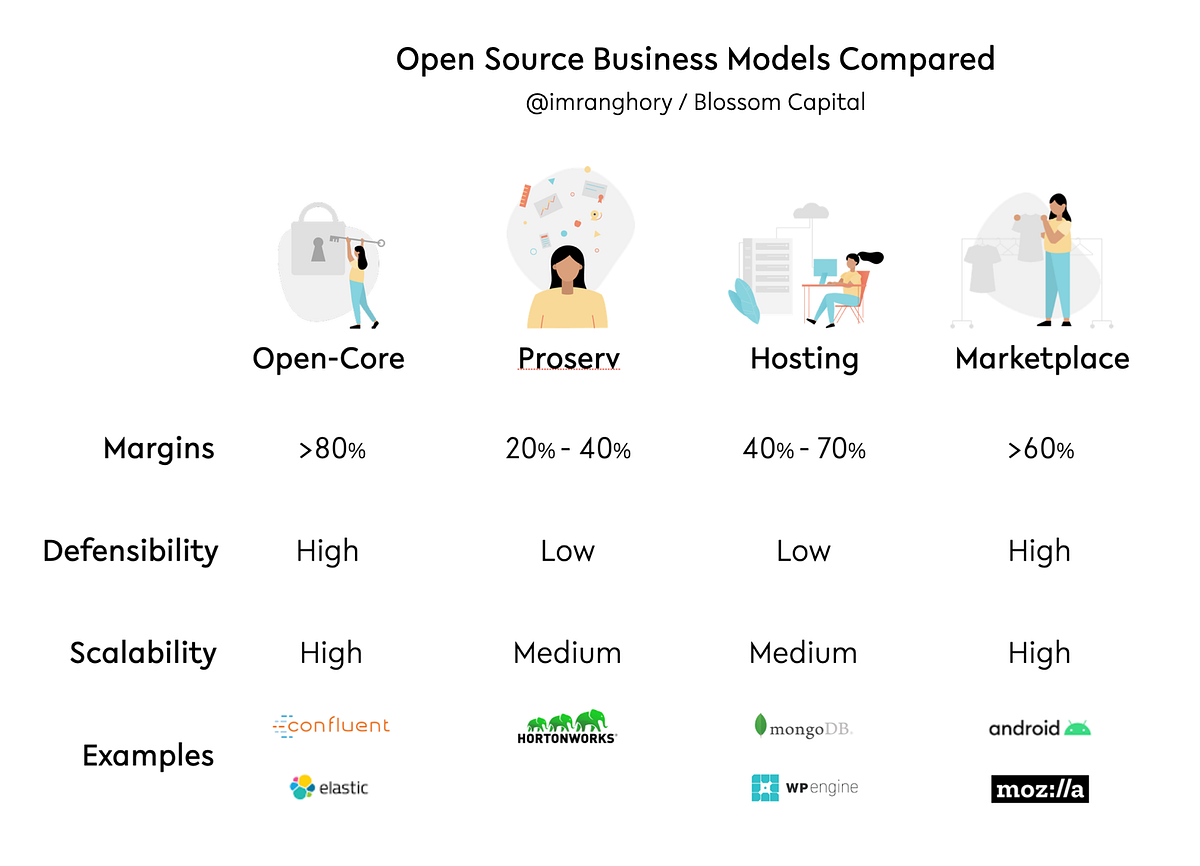
There is NO Open Source Business Model
Preface: It has been brought to my attention by friends and trusted advisors that a valid interpretation of my point below is that open…

Democratic Ownership Funds: Creating Shared Wealth and Power
Recent decades have seen a rapid and little-discussed transformation in corporate ownership structure, with vital consequences for company behaviour and inequality.

Evolution of Consumption: A Psychological Ownership Framework
Technological innovations are creating new products, services, and markets that satisfy enduring consumer needs. These technological innovations create value for consumers and firms in many ways, but they also disrupt psychological ownership––the feeling that a thing is “MINE.” The authors describe two key dimensions of this technology-driven evolution of consumption pertaining to psychological ownership: (1) replacing legal ownership of private goods with legal access rights to goods and services owned and used by others and (2) replacing “solid” material goods with “liquid” experiential goods. They propose that these consumption changes can have three effects on psychological ownership: they can threaten it, cause it to transfer to other targets, and create new opportunities to preserve it. These changes and their effects are organized in a framework and examined across three macro trends in marketing: (1) growth of the sharing economy, (2) digitization of goods and services, and (3) expansion of personal data. This psychological ownership framework generates future research opportunities and actionable marketing strategies for firms aiming to preserve the positive consequences of psychological ownership and navigate cases for which it is a liability.
Founders Hub | Transform Finance
The founder playbook for building a company that lasts and stays true to why you started it. Research, case studies, and practical tools for incorporation, fundraising terms, board structure, ownership, and culture.
Private Equity Is Starting to Share With Workers, Without Taking a Financial Hit (Published 2024)
The buyout giant KKR pioneered a model of granting ownership stakes to employees at portfolio companies. Now it wants the approach to spread.

The Secrets of Successful Open Source Business Models
Finding the right model for your open-source startup
Launching a European Employee Stock Ownership - ProQuest
Explore millions of resources from scholarly journals, books, newspapers, videos and more, on the ProQuest Platform.
Managing and resisting ‘degeneration’ in employee-owned businesses: A comparative study of two large retailers in Spain and the United Kingdom
Employee-owned businesses have recently enjoyed a resurgence of interest as possible ‘alternatives’ to the somewhat tarnished image of conventional investor-owned capitalist firms. Within the context of global economic crisis, such alternatives seem newly attractive. This is somewhat ironic because, for more than a century, academic literature on employee-owned businesses has been dominated by the ‘degeneration thesis’. This suggested that these businesses tend towards failure—they either fail commercially, or they relinquish their democratic characters. Bucking this trend and offering a beacon—especially in the United Kingdom —has been the commercially successful, co-owned enterprise of the John Lewis Partnership whose virtues have seemingly been rewarded with favourable and sustainable outcomes. This article makes comparisons between John Lewis Partnership and its Spanish equivalent Eroski—the supermarket group which is part of the Mondragon cooperatives. The contribution of this article is to examine in a comparative way how the managers in John Lewis Partnership and Eroski have constructed and accomplished their alternative scenarios. Using longitudinal data and detailed interviews with senior managers in both enterprises, it explores the ways in which two large, employee-owned, enterprises reconcile apparently conflicting principles and objectives. The article thus puts some new flesh on the ‘regeneration thesis’.
What Managers Need to Know About Social Tools
To identify the value that social tools can bring to companies, the authors split employees at a large financial services firm into two groups, only one of which used an internal social platform, and observed them for six months. Those who had used the tool became 31% more likely to find coworkers with relevant expertise and 88% more likely to discover who had useful connections. Internal social tools can help employees make faster decisions, develop more innovative ideas for products and services, and become more engaged in their work and their companies. But companies that try to “go social” often fall into four traps: They (1) assume that Millennials will embrace social tools at work; (2) struggle to foster personal interaction that builds trust and promotes knowledge sharing; (3) fail to recognize how learning occurs on social tools; and (4) focus on the wrong data. The authors offer advice on how to avoid these traps.

Levels of Employee Share Ownership and the Performance of Listed Companies in Europe
Abstract We investigate the effects of employee share ownership (ESO) on three alternative measures of firm performance in a panel of 1,115 companies from the five largest European economies. The results show that firms with ESO enjoy significantly higher levels of capital market performance and of accounting performance than firms without ESO; however, the marginal effects of ESO are declining with increasing ESO levels. ESO does not have a clear effect on productivity. These findings hold for all countries except Spain. Variations in ESO levels within firms over time exert few performance effects.
