Prosocial interventions grounded in social interactions have shown limited effectiveness in alleviating depressive symptoms, possibly because of the discomfort and unease that depressed individuals experience during such interactions. We developed and examined an innovative prosocial intervention—an online micro-charitable giving intervention, in which individuals voluntarily donated at least one Chinese cent (¥0.01, or about $0.0014) daily. We conducted three preregistered, 2-month randomized controlled trials with depressed individuals (Sample 1: N = 125, Sample 2: N = 296, Sample 3: N = 462). Results showed that, compared with the waitlist group, the intervention group exhibited significantly greater improvements in both depressive symptoms (Cohen’s d s = −0.19 to −0.46) and emotional positivity (Cohen’s d s = 0.22 to 0.49), and that emotional positivity mediated the intervention’s effect on the reduction of depressive symptoms. Exploratory analysis found a slightly larger intervention effect for generous donors than for minimal donors. This low-cost, easily accessible prosocial intervention holds potential for the prevention of depression. Statement of Relevance Can donating one cent (specifically one Chinese cent, or about $0.0014) alleviate depressive symptoms? We have developed a practical and effective intervention—donating at least one cent daily on an online charity platform—and have discovered that this intervention effectively mitigates depressive symptoms in depressed individuals. Despite the nominal purchasing power of one cent in contemporary society, this act of giving has been shown to significantly enhance mental health. Our findings could be relevant to everyone in society; charitable donations promote societal harmony and, in addition, offer a cost-effective way to alleviate depressive symptoms. As the intervention instruction asserts, “Charity encompasses love, regardless of its size, as even one cent holds value.”
Unconditional cash transfers reduce homelessness
Homelessness is an economic and social crisis. In a cluster-randomized controlled trial, we address a core cause of homelessness—lack of money—by providing a one-time unconditional cash transfer of CAD$7,500 to each of 50 individuals experiencing homelessness, with another 65 as controls in Vancouver, BC. Exploratory analyses showed that over 1 y, cash recipients spent fewer days homeless, increased savings and spending with no increase in temptation goods spending, and generated societal net savings of $777 per recipient via reduced time in shelters. Additional experiments revealed public mistrust toward the ability of homeless individuals to manage money and demonstrated interventions to increase public support for a cash transfer policy using counter-stereotypical or utilitarian messaging. Together, this research offers a new approach to address homelessness and provides insights into homelessness reduction policies.

Reducing debt improves psychological functioning and changes decision-making in the poor
Significance The impact of chronic debt on the poor is psychological, not just financial. We hypothesize that chronic debt impairs psychological functioning and decision-making, contributing to the poverty trap. This is because debt is not considered fungible and is viewed as costly mental accounts that consume cognitive bandwidth. We test this using quasiexperimental evidence from a one-off, unanticipated debt-relief program worth several months’ household income. Comparing the poor before and after debt relief, those with more debt accounts paid off experienced greater improvements in cognitive functioning, reported less anxiety, and became less present-biased. These findings provide actionable evidence for poverty-alleviation policy. , We examine how chronic debt affects behavior by studying how a large, unanticipated debt-relief program affected psychological functioning and economic decision-making in beneficiaries. A charity granted low-income households debt relief worth up to Singapore dollars 5,000 (∼3 month’s household income). We exploited quasiexperimental variation in the structure of debt relief: For the same dollar amount of relief, some beneficiaries had more debt accounts eliminated, while others had fewer paid off. Comparing 196 beneficiaries before and after debt relief, and controlling for debt-relief amount, having an additional debt account paid off improves cognitive functioning by about one-quarter of a SD and reduces the likelihood of exhibiting anxiety by 11% and of present bias by 10%. To achieve the same effect on cognitive functioning of eliminating one debt account, a beneficiary must receive debt relief worth ∼1 month’s household income. There is no effect of debt-relief magnitude on anxiety and decision-making. We exclude training and calendar effects, debt-causing behaviors, and liquidity constraints as explanations. Instead, these results support the hypothesis that chronic debt impairs behavior because the mental-accounting costs of owing distinct debt accounts consume mental bandwidth. Poverty-alleviation policies aimed at the indebted poor should consider addressing mental accounting and bandwidth taxes.

Psychological ownership interventions increase interest in claiming government benefits
Significance Most government benefits programs exhibit a sizable participation gap, with eligible individuals forgoing billions of dollars in government benefits each year. Many policymakers have focused on addressing this participation gap, as receiving government benefits has been shown to reduce poverty, childhood hunger, educational gaps, and physical and mental illness. The current work presents psychological ownership framing as a behavioral science intervention, and we show that it can help address this benefits participation gap. These interventions are subtle, simple to implement, and cheaper to execute relative to logistical interventions. Moreover, the data show that psychological ownership interventions can be more efficacious than other common psychological interventions such as social norms and urgency. , Each year, eligible individuals forgo billions of dollars in financial assistance in the form of government benefits. To address this participation gap, we identify psychological ownership of government benefits as a factor that significantly influences individuals’ interest in applying for government benefits. Psychological ownership refers to how much an individual feels that a target is their own. We propose that the more individuals feel that government benefits are their own, the less likely they are to perceive applying for them as an aversive ask for help, and thus, the more likely they are to pursue them. Three large-scale field experiments among low-income individuals demonstrate that higher psychological ownership framing of government benefits significantly increases participants’ pursuit of benefits and outperforms other common psychological interventions. An additional experiment shows that this effect occurs because greater psychological ownership reduces people’s general aversion to asking for assistance. Relative to control messages, these psychological ownership interventions increased interest in claiming government benefits by 20% to 128%. These results suggest that psychological ownership framing is an effective tool in the portfolio of potential behavioral science interventions and a simple way to stimulate interest in claiming benefits.

Framing charitable donations as exceptional expenses increases giving.
Relationship between online social support and adolescents’ mental health: A systematic review and meta‐analysis
Abstract Introduction The potential benefits of supportive interactions on social networking sites on adolescents’ mental health are promising; however, no systematic evaluation has been conducted on this topic. This review examined empirical research on the relationship between social support derived from social networking sites and adolescents’ mental health both theoretically and empirically. Methods Followed PRISMA guidelines, we conducted a systematic literature search on six English and three Chinese databases in February 2020. Four thousand one hundred and seventy‐seven articles were screened first by title, then abstract, and lastly, full articles. Results Fourteen studies (five English and nine Chinese) were identified, with total sample of 11,616 adolescents (age: 10–19 years; females: 42.7%–56.3%). Meta‐analysis showed that the correlation of online social support with self‐esteem was moderate and significant ( r = .29), but with depression was small and insignificant ( r = −.09). Sensitivity analysis indicated that social support from acquaintances on the internet may not be as beneficial as from real‐life acquaintances. Despite that there isn't enough research on other specific mental health outcomes to run a quantitative synthesis, individual studies suggest that online social support (OSS) may be associated with increased self‐identity and life satisfaction, decreased loneliness and social anxiety, it also counteracts the negative effect of stress and cyberbullying on mental health. Conclusions OSS might be beneficial for adolescents' mental health, especially self‐esteem, although the causal relationship requires longitudinal studies to confirm, and the underlying mechanisms need further investigation.

A Mega-Replication of the Effect of Cash Versus Card Payment on Pain of Paying: Magnitude, Behavioral Outcomes, and Moderators
Abstract We revisit the widely accepted finding that paying with cash is more painful than paying with card by conducting the first systematic mega-replication (including 13 large-scale preregistered replications; a total of 32,371 participants, 65 products, and 57 price points ranging from $1.09 to $400). The aggregate evidence reveals four insights: (1) leveraging a broad set of established paradigms, we replicate the finding that paying with cash is more psychologically painful than paying with card, even among today’s consumers who own multiple cards, digital wallets, and virtual currencies; (2) comparing two outcome variables—amount spent and willingness-to-pay (WTP), we find a more reliable and larger overall direct effect of payment method on amount spent than on WTP; (3) these direct effects of payment method on outcome variables are mediated by pain of paying; (4) the mode-of-payment effect on pain of paying (and thereby on outcome variables) is moderated by individual differences, particularly the relative frequency of using cash versus card. We outline actionable guidance and future directions for researchers and practitioners interested in examining mode-of-payment effects, and discuss the value of and suitable approaches for future theory-driven large-scale replications.

Are donations effective for open source projects?
The other day I came across a new initiative for funding open source development called the Bitcoin Grant. While interesting at first sight, I was wondering: How is this better than the traditional donation button most open source projects have? The Bitcoin Grant then seems to limit who can donate and how you can use those donations (you can’t pay rent with bitcoins just yet).
Prosocial Compliance in P2P Lending: A Natural Field Experiment
We implement behavioral mechanisms in a natural field experiment to increase loan repayment rates on a peer-to-peer (P2P) lending website. The results show that text message reminders that convey lenders’ positive expectations considerably increase the likelihood that borrowers will repay their loans, whereas reminders emphasizing the adverse consequences of failure to repay loans do not have enduring effects. Our experiment results in an increase in loan repayments in the sample period. In addition, our reminders are cost-free to implement, showing the potential importance of such interventions in enhancing prosocial compliance in P2P lending. This paper was accepted by John List, behavioral economics.

The Hedonics of Debt
Psychologists and economists often discuss the “pain” of paying for our purchases. Four experiments examine how people evaluate prospective debt payments, analyzing how different features of a loan (down payment, final payment, duration, monthly payments) affect willingness to accept the loan. Akin to previous findings on physical pain, participants exhibited duration neglect and over-weighted final moments. However, participants also focused heavily on the monthly or average payment (unlike in retrospective studies of physical pain where only peak-end moments seem to count). In Experiment 2, participants’ willingness to accept the loan was not significantly diminished by making it more expensive through keeping the same monthly payment but extending the length of the loan by 40 percent (evincing duration neglect). Further, in Experiments 3 and 4, we show that participants increased their willingness to buy if loans were made longer and more expensive by adding smaller, less “painful” payments to the end.

Is WordPress A Thankless Community?
Over the past few weeks, I’ve noticed a disturbing trend. Many of the plugin authors I have spoken with throughout the community tell me that very rarely do they ever get a donation let alone…

Context-Dependent Drivers of Discretionary Debt Decisions: Explaining Willingness to Borrow for Experiential Purchases
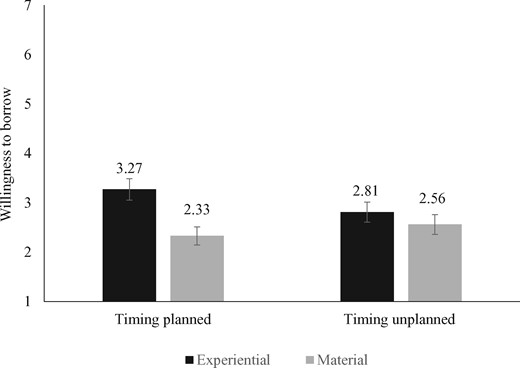
Abstract Mental accounting research suggests that consumers prefer borrowing for longer-lasting purchases in order to receive benefits from the purchases as they pay for them. In contrast, two sets of archival data and five lab studies show that consumers are more willing to borrow for experiential versus material purchases, even though experiential purchases tend to have a shorter physical duration. Further, framing the same purchase as more experiential than material increases willingness to borrow. This effect occurs because purchase timing is more important for experiential purchases—a function of consumers’ aversion to missing out on planned consumption. Thus, we moderate the proposed effect by varying whether the borrowing decision impacts planned consumption. Other differences between material and experiential purchases, such as scarcity or expected happiness, cannot similarly explain our results. Moreover, our conceptualization allows us to reconcile the apparent contradiction between the previous and current research by examining the relative impact of purchase-timing importance and payment-benefit duration matching in different contexts (i.e., “purchasing” and “source-of-funding” decisions).
Ground Control: Volunteer where it counts
We've evaluated hundreds of organizations to find opportunities open to anyone, immediately impactful, and ready to accept your help.
Fundraising Software For Nonprofits | Givebutter
Not another fundraising tool. All of them. Givebutter brings together everything you need for smoother fundraising, marketing, and donor management under one roof.

Social Media and Depression Symptoms: a Meta-Analysis
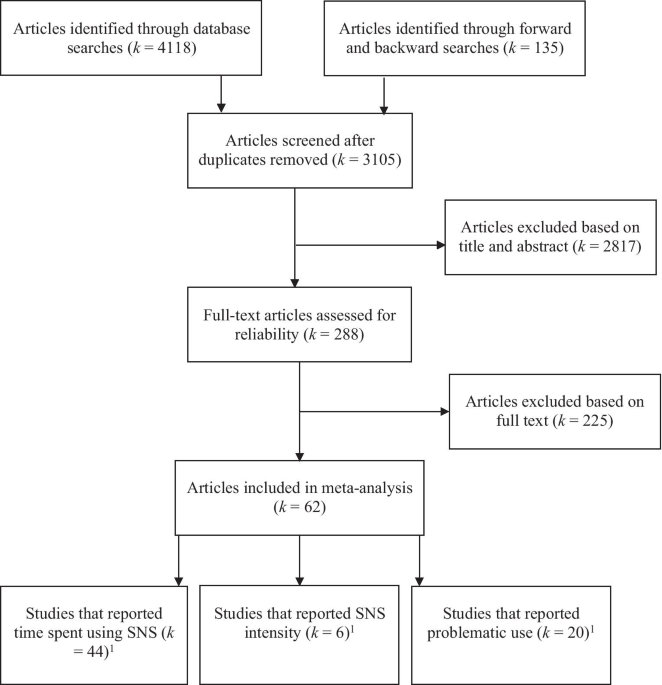
Social Networking Sites (SNS) have close to 3 billion users worldwide. Recently, however, SNS have come under media scrutiny for their potential association with depression. Two previous meta-analyses failed to find evidence for a robust concurrent association between SNS use and depression symptoms. However, these analyses focused primarily on the time spent using SNS. The current meta-analysis is the first to consider the multi-dimensional nature of SNS use, and examines separately the quantitative associations of depression symptoms to SNS use in three types of SNS studies examining three distinct constructs of SNS use: time spent using SNS, intensity of SNS use, and problematic SNS use. Sixty-two studies (N = 451, 229) met inclusion criteria. Depression symptoms were significantly, but weakly, associated with time spent using SNS (r = 0.11) and intensity of SNS use (r = 0.09). However, the association of depression symptoms to problematic SNS use was moderate (r = 0.29), was significantly higher than for time spent using SNS (Qbetween = 35.85, p < 0.001) or intensity of SNS use (Qbetween = 13.95, p < 0.001), and was not significantly moderated by age, gender, year of study publication, or mode of recruitment. These results suggest that future research examining causal models of the relation of SNS use and depression, as well as research on intervention and prevention, should focus in more detail on individuals who are engaging in a pattern of problematic SNS use.
Ten more unintuitive things about impact philanthropy fundraising
some more lessons I’ve learned, for the $free.99