Indigenous communities that rely on the consumption of local fish and shellfish may have elevated exposures to environmental contaminants, such as PFAS (perfluoroalkyl and polyfluoroalkyl substances). Conventional public health communication that focuses on reducing consumption can conflict with cultural identities tied to harvesting local fish. Through a series of focus groups and interviews ( n = 25) and a community-wide survey ( n = 155) among members of the Mashpee Wampanoag Tribe (Cape Cod, Massachusetts, USA), we document the connection between local fish/shellfish consumption and Tribal cultural identity, how PFAS contamination may threaten this identity, and explore how to more effectively communicate health risks to Tribal communities.
Considerations and challenges in support of science and communication of fish consumption advisories for per‐ and polyfluoroalkyl substances
Abstract. Federal, state, tribal, or local entities in the United States issue fish consumption advisories (FCAs) as guidance for safer consumption of loca
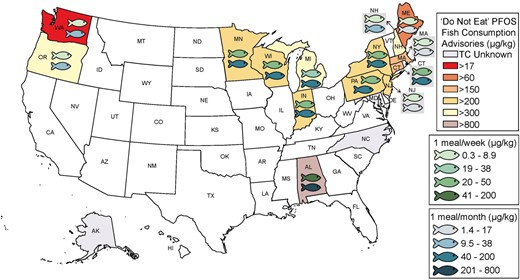
PFAS and Precursor Bioaccumulation in Freshwater Recreational Fish: Implications for Fish Advisories
Abstract. Per- and polyfluoroalkyl substances (PFAS) are a diverse class of fluorinated anthropogenic chemicals that include perfluoroalkyl acids (PFAA), w

Shifting Global Exposures to Poly- and Perfluoroalkyl Substances (PFASs) Evident in Longitudinal Birth Cohorts from a Seafood-Consuming Population
Abstract. Rapid declines in legacy poly- and perfluoroalkyl substances (PFASs) have been reported in human populations globally following changes in produc
Characterizing the Areal Extent of PFAS Contamination in Fish Species Downgradient of AFFF Source Zones
Abstract. Most monitoring programs next to large per- and polyfluoroalkyl substances (PFAS) sources focus on drinking water contamination near source zones

Characterizing the Areal Extent of PFAS Contamination in Fish Species Downgradient of AFFF Source Zones
Dataset of targeted PFAS and extractable organofluorine concentrations in water, sediment, and biological tissue samples that support data included in two papers: "Characterizing the Areal Extent of PFAS Contamination in Fish Species Downgradient of AFFF Source Zones" and "Bioaccumulation of Perfluoroalkyl Sulfonamides (FASA)"
Sociodemographic Factors Are Associated with the Abundance of PFAS Sources and Detection in U.S. Community Water Systems
Abstract. Drinking water contaminated by per- and polyfluoroalkyl substances (PFAS) is a widespread public health concern, and exposure–response relationsh
The evolution of cultural adaptations: Fijian food taboos protect against dangerous marine toxins
The application of evolutionary theory to understanding the origins of our species' capacities for social learning has generated key insights into cultural evolution. By focusing on how our psychology has evolved to adaptively extract beliefs and practices by observing others, theorists have hypothesized how social learning can, over generations, give rise to culturally evolved adaptations. While much field research documents the subtle ways in which culturally transmitted beliefs and practices adapt people to their local environments, and much experimental work reveals the predicted patterns of social learning, little research connects real-world adaptive cultural traits to the patterns of transmission predicted by these theories. Addressing this gap, we show how food taboos for pregnant and lactating women in Fiji selectively target the most toxic marine species, effectively reducing a woman's chances of fish poisoning by 30 per cent during pregnancy and 60 per cent during breastfeeding. We further analyse how these taboos are transmitted, showing support for cultural evolutionary models that combine familial transmission with selective learning from locally prestigious individuals. In addition, we explore how particular aspects of human cognitive processes increase the frequency of some non-adaptive taboos. This case demonstrates how evolutionary theory can be deployed to explain both adaptive and non-adaptive behavioural patterns.

PFAS Exposure Pathways for Humans and Wildlife: A Synthesis of Current Knowledge and Key Gaps in Understanding
Abstract. We synthesize current understanding of the magnitudes and methods for assessing human and wildlife exposures to poly‐ and perfluoroalkyl substanc
Uptake of Per- and Polyfluoroalkyl Substances by Fish, Mussel, and Passive Samplers in Mobile Laboratory Exposures using Groundwater from a Contamination Plume at a Historical Fire Training Area, Cape Cod, Massachusetts - Chemical and Biological Data from August to September 2018
This data release presents chemical and biological results from an investigation of the uptake of per- and polyfluoroalkyl substances (PFAS) from groundwater contaminated by fire training activities on Cape Cod, Massachusetts. Exposure experiments were conducted from August 29 to September 21, 2018 using groundwater from a relatively uncontaminated reference site and a fire training area contaminated site. To assess the uptake characteristics of the PFAS mixtures present in the 2 groundwater sources, 21-day mobile laboratory exposure experiments were conducted using fathead minnows (Pimephales promelas), polar organic chemical integrative samplers, and polyethylene tube samplers. Freshwater mussel (Ligumia subrostrata) exposure experiments were conducted for 14 days, beginning on day 7 of the fish and passive sampler exposures. Groundwater samples were collected daily (with a few exceptions). Samples for male fish and passive samplers were collected on days 0, 4, 7, 14, and 21. Samples for female fish were collected on days 0, 7, 14, and 21. The 14 day mussel exposures began on day 7 of the fish and passive sampler exposures, and mussel samples were collected on days 7, 11, 14, and 21. Groundwater site locations and well characteristics are presented in Table 1. Information on the various PFAS and co-occurring contaminants measured in the different media are presented in Table 2. Quality assurance results for PFAS analysis of the different media are presented in Table 3. Results for PFAS in groundwater are presented in Table 4. Results for co-occurring contaminants in groundwater are presented in Table 5. Results for fish biomarkers are presented in Table 6. Results for PFAS in male and female fish tissue are presented in Table 7. Results for PFAS in mussel tissue are presented in Table 8. Results for PFAS in polar organic chemical integrative samplers are presented in Table 9. Results for PFAS in polyethylene tube samplers are presented in Table 10.
A review of the pathways of human exposure to poly- and perfluoroalkyl substances (PFASs) and present understanding of health effects
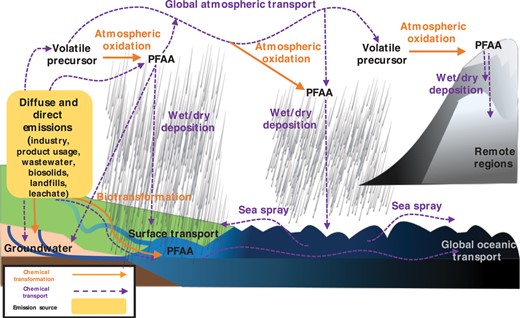
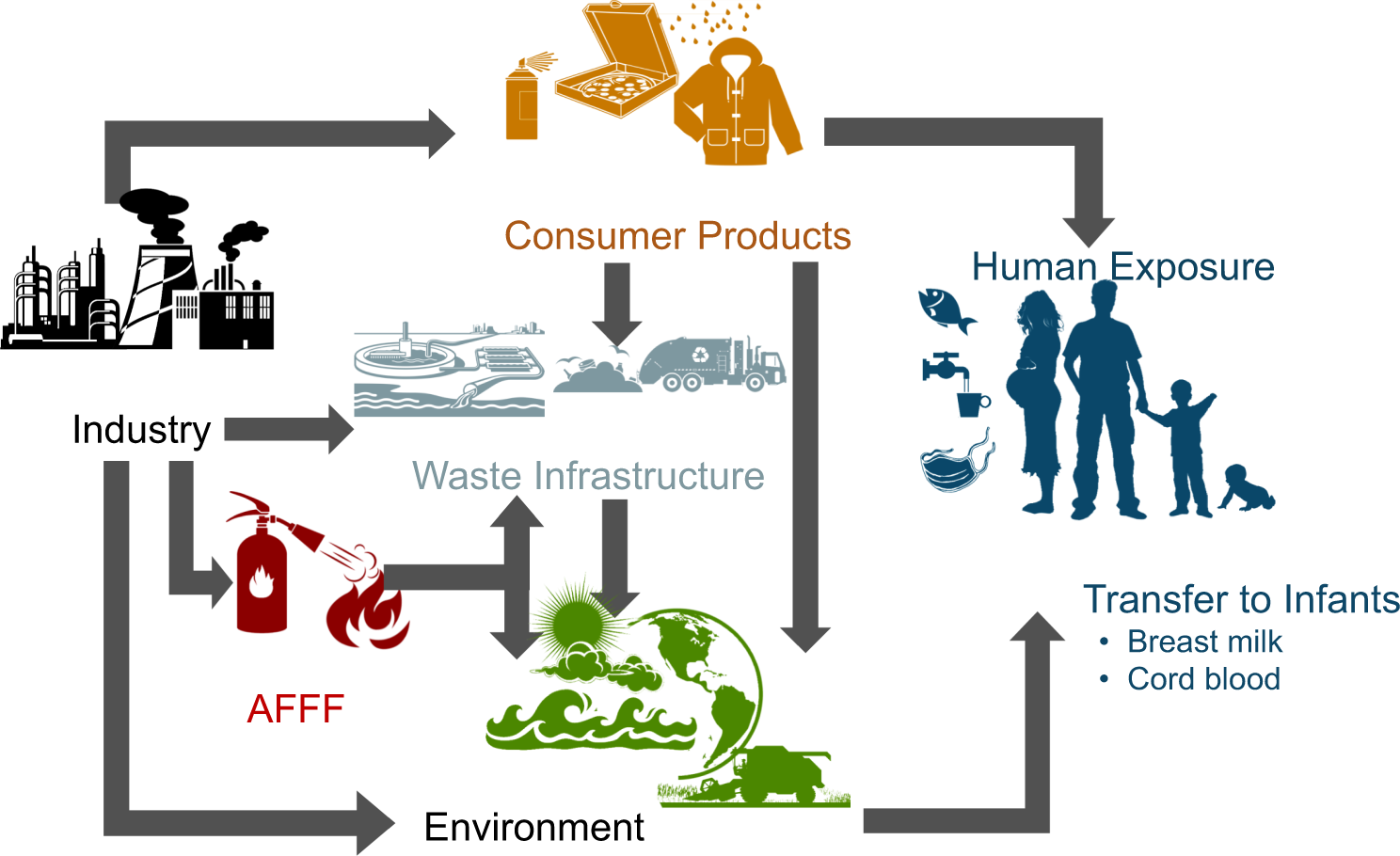
Here, we review present understanding of sources and trends in human exposure to poly- and perfluoroalkyl substances (PFASs) and epidemiologic evidence for impacts on cancer, immune function, metabolic outcomes, and neurodevelopment. More than 4000 PFASs have been manufactured by humans and hundreds have been detected in environmental samples. Direct exposures due to use in products can be quickly phased out by shifts in chemical production but exposures driven by PFAS accumulation in the ocean and marine food chains and contamination of groundwater persist over long timescales. Serum concentrations of legacy PFASs in humans are declining globally but total exposures to newer PFASs and precursor compounds have not been well characterized. Human exposures to legacy PFASs from seafood and drinking water are stable or increasing in many regions, suggesting observed declines reflect phase-outs in legacy PFAS use in consumer products. Many regions globally are continuing to discover PFAS contaminated sites from aqueous film forming foam (AFFF) use, particularly next to airports and military bases. Exposures from food packaging and indoor environments are uncertain due to a rapidly changing chemical landscape where legacy PFASs have been replaced by diverse precursors and custom molecules that are difficult to detect. Multiple studies find significant associations between PFAS exposure and adverse immune outcomes in children. Dyslipidemia is the strongest metabolic outcome associated with PFAS exposure. Evidence for cancer is limited to manufacturing locations with extremely high exposures and insufficient data are available to characterize impacts of PFAS exposures on neurodevelopment. Preliminary evidence suggests significant health effects associated with exposures to emerging PFASs. Lessons learned from legacy PFASs indicate that limited data should not be used as a justification to delay risk mitigation actions for replacement PFASs.
Delayed discovery, dissemination, and decisions on intervention in environmental health: a case study on immunotoxicity of perfluorinated alkylate substances
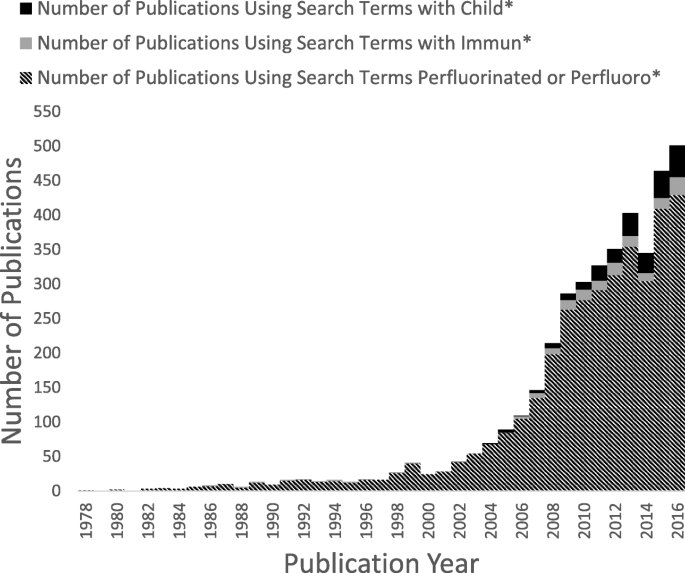
Identification and characterization of environmental hazards that impact human health must rely on the best possible science to inform and inspire appropriate public health intervention. The perfluorinated alkylate substances (PFASs) are persistent emerging pollutants that are now being recognized as important human health hazards. Although the PFASs have been produced for over 60 years, academic research on environmental health aspects has appeared only in the most recent 10 years or so. In the meantime, these persistent chemicals accumulated in the global environment. Some early studies e.g., on population exposures and toxicity, were not released to the public until after year 2000. Still, the first PFAS risk assessments ignored these reports and relied on scant journal publications. The first guidelines and legal limits for PFAS exposure, e.g., from drinking water, were proposed 10 years ago. They have decreased substantially since then, but remain higher than suggested by data on human adverse effects, especially on the immune system, that occur at background exposure levels. By now, the best-known PFASs are being phased out, and related PFASs are being introduced as substitutes. Given the substantial delays in discovery of PFAS toxicity, in dissemination of findings, and in regulatory decisions, PFAS substitutes and other persistent industrial chemicals should be subjected to prior scrutiny before widespread usage.
Phospholipid Levels Predict the Tissue Distribution of Poly- and Perfluoroalkyl Substances in a Marine Mammal
Abstract. Exposure to poly- and perfluoroalkyl substances (PFASs) has been linked to many negative health impacts in humans and wildlife. Unlike neutral hy

Emerging questions in exposure, regulation, and remediation of PFAS
My research is highly interdisciplinary and includes exposure and risk analysis. Many of our colleagues have diverse backgrounds and work together to address the interdisciplinary challenges associated with PFAS contamination …I think one of the largest gaps right now is understanding the importance of different exposure pathways for the general population.Given the tremendous physical and mental toll affected communities have experienced due to their exposure to PFAS, there is an unusually strong connection between citizens and scientists, and I hope that bond will strengthen over time.

County-level associations between drinking water PFAS contamination and COVID-19 mortality in the United States
Epidemiologic and animal studies both support relationships between exposures to per- and polyfluoroalkyl substances (PFAS) and harmful effects on the immune system. Accordingly, PFAS have been identified as potential environmental risk factors for adverse COVID-19 outcomes.
Climate change and overfishing increase neurotoxicant in marine predators
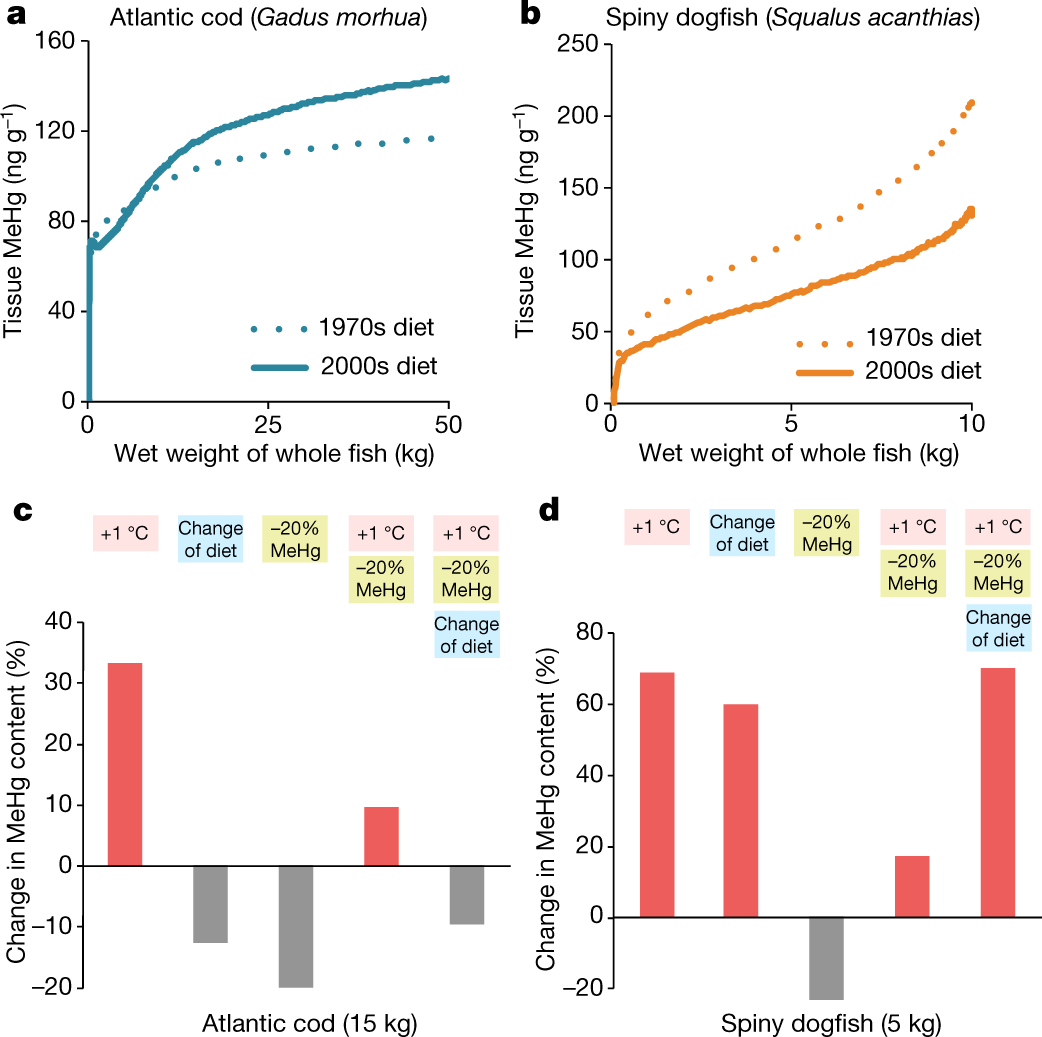
More than three billion people rely on seafood for nutrition. However, fish are the predominant source of human exposure to methylmercury (MeHg), a potent neurotoxic substance. In the United States, 82% of population-wide exposure to MeHg is from the consumption of marine seafood and almost 40% is from fresh and canned tuna alone1. Around 80% of the inorganic mercury (Hg) that is emitted to the atmosphere from natural and human sources is deposited in the ocean2, where some is converted by microorganisms to MeHg. In predatory fish, environmental MeHg concentrations are amplified by a million times or more. Human exposure to MeHg has been associated with long-term neurocognitive deficits in children that persist into adulthood, with global costs to society that exceed US$20 billion3. The first global treaty on reductions in anthropogenic Hg emissions (the Minamata Convention on Mercury) entered into force in 2017. However, effects of ongoing changes in marine ecosystems on bioaccumulation of MeHg in marine predators that are frequently consumed by humans (for example, tuna, cod and swordfish) have not been considered when setting global policy targets. Here we use more than 30 years of data and ecosystem modelling to show that MeHg concentrations in Atlantic cod (Gadus morhua) increased by up to 23% between the 1970s and 2000s as a result of dietary shifts initiated by overfishing. Our model also predicts an estimated 56% increase in tissue MeHg concentrations in Atlantic bluefin tuna (Thunnus thynnus) due to increases in seawater temperature between a low point in 1969 and recent peak levels—which is consistent with 2017 observations. This estimated increase in tissue MeHg exceeds the modelled 22% reduction that was achieved in the late 1990s and 2000s as a result of decreased seawater MeHg concentrations. The recently reported plateau in global anthropogenic Hg emissions4 suggests that ocean warming and fisheries management programmes will be major drivers of future MeHg concentrations in marine predators.
Bioconcentration of Per- and Polyfluoroalkyl Substances and Precursors in Fathead Minnow Tissues Environmentally Exposed to Aqueous Film-Forming Foam–Contaminated Waters
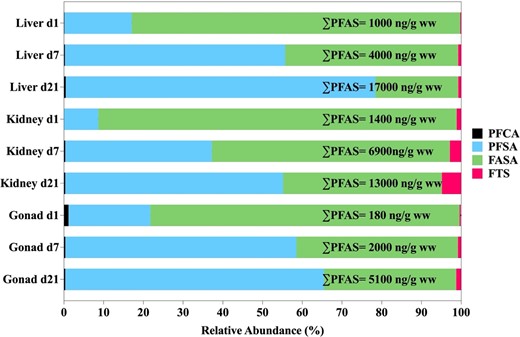
Abstract Exposure to per- and polyfluoroalkyl substances (PFAS) has been associated with toxicity in wildlife and negative health effects in humans. Decades of fire training activity at Joint Base Cape Cod (MA, USA) incorporated the use of aqueous film-forming foam (AFFF), which resulted in long-term PFAS contamination of sediments, groundwater, and hydrologically connected surface waters. To explore the bioconcentration potential of PFAS in complex environmental mixtures, a mobile laboratory was established to evaluate the bioconcentration of PFAS from AFFF-impacted groundwater by flow-through design. Fathead minnows (n = 24) were exposed to PFAS in groundwater over a 21-day period and tissue-specific PFAS burdens in liver, kidney, and gonad were derived at three different time points. The ∑PFAS concentrations in groundwater increased from approximately 10,000 ng/L at day 1 to 36,000 ng/L at day 21. The relative abundance of PFAS in liver, kidney, and gonad shifted temporally from majority perfluoroalkyl sulfonamides (FASAs) to perfluoroalkyl sulfonates (PFSAs). By day 21, mean ∑PFAS concentrations in tissues displayed a predominance in the order of liver > kidney > gonad. Generally, bioconcentration factors (BCFs) for FASAs, perfluoroalkyl carboxylates (PFCAs), and fluorotelomer sulfonates (FTS) increased with degree of fluorinated carbon chain length, but this was not evident for PFSAs. Perfluorooctane sulfonamide (FOSA) displayed the highest mean BCF (8700 L/kg) in day 21 kidney. Suspect screening results revealed the presence of several perfluoroalkyl sulfinate and FASA compounds present in groundwater and in liver for which pseudo-bioconcentration factors are also reported. The bioconcentration observed for precursor compounds and PFSA derivatives detected suggests alternative pathways for terminal PFAS exposure in aquatic wildlife and humans. Environ Toxicol Chem 2024;43:1795–1806. © 2024 The Author(s). Environmental Toxicology and Chemistry published by Wiley Periodicals LLC on behalf of SETAC. Flow-through dosing experiments utilizing aqueous film-forming foam (AFFF)–contaminated groundwater revealed positive linear correlations between fluorinated carbon chain length and logarithm-transformed bioconcentration factors (BCFs) for perfluoroalkyl sulfonamides identified in fathead minnow (Pimephales promelas) liver via target analysis and suspect screening using high-resolution mass spectrometry. FBSA = perfluorobutane sulfonamide; FHxSA = perfluorohexane sulfonamide; FOSA = perfluorooctane sulfonamide; FPeSA= perfluoropentane sulfonamide; FPrSA = perfluoropropane sulfonamide.