


Social chatbot (SC) applications offering social companionship and basic therapy tools have grown in popularity for emotional, social, and psychological support. While use appears to offer mental health benefits, few studies unpack the potential for harms. Our grounded theory study analyzes mental health experiences with the popular SC application Replika. We identified mental health relevant posts made in the r/Replika Reddit community between 2017 and 2021 ( n = 582). We find evidence of harms, facilitated via emotional dependence on Replika that resembles patterns seen in human–human relationships. Unlike other forms of technology dependency, this dependency is marked by role-taking, whereby users felt that Replika had its own needs and emotions to which the user must attend. While prior research suggests human–chatbot and human–human interactions may not resemble each other, we identify social and technological factors that promote parallels and suggest ways to balance the benefits and risks of SCs.
Too human and not human enough: A grounded theory analysis of mental health harms from emotional dependence on the social chatbot Replika
Social chatbot (SC) applications offering social companionship and basic therapy tools have grown in popularity for emotional, social, and psychological support. While use appears to offer mental health benefits, few studies unpack the potential for harms. Our grounded theory study analyzes mental health experiences with the popular SC application Replika. We identified mental health relevant posts made in the r/Replika Reddit community between 2017 and 2021 ( n = 582). We find evidence of harms, facilitated via emotional dependence on Replika that resembles patterns seen in human–human relationships. Unlike other forms of technology dependency, this dependency is marked by role-taking, whereby users felt that Replika had its own needs and emotions to which the user must attend. While prior research suggests human–chatbot and human–human interactions may not resemble each other, we identify social and technological factors that promote parallels and suggest ways to balance the benefits and risks of SCs.
How AI and Human Behaviors Shape Psychosocial Effects of Extended Chatbot Use: A Longitudinal Randomized Controlled Study
As people increasingly seek emotional support and companionship from AI chatbots, understanding how such interactions impact mental well-being becomes critical. We conducted a four-week randomized controlled experiment (n=981, >300k messages) to investigate how interaction modes (text, neutral voice, and engaging voice) and conversation types (open-ended, non-personal, and personal) influence four psychosocial outcomes: loneliness, social interaction with real people, emotional dependence on AI, and problematic AI usage. No significant effects were detected from experimental conditions, despite conversation analyses revealing differences in AI and human behavioral patterns across the conditions. Instead, participants who voluntarily used the chatbot more, regardless of assigned condition, showed consistently worse outcomes. Individuals' characteristics, such as higher trust and social attraction towards the AI chatbot, are associated with higher emotional dependence and problematic use. These findings raise deeper questions about how artificial companions may reshape the ways people seek, sustain, and substitute human connections.

Investigating Affective Use and Emotional Well-being on ChatGPT
As AI chatbots see increased adoption and integration into everyday life, questions have been raised about the potential impact of human-like or anthropomorphic AI on users. In this work, we investigate the extent to which interactions with ChatGPT (with a focus on Advanced Voice Mode) may impact users' emotional well-being, behaviors and experiences through two parallel studies. To study the affective use of AI chatbots, we perform large-scale automated analysis of ChatGPT platform usage in a privacy-preserving manner, analyzing over 3 million conversations for affective cues and surveying over 4,000 users on their perceptions of ChatGPT. To investigate whether there is a relationship between model usage and emotional well-being, we conduct an Institutional Review Board (IRB)-approved randomized controlled trial (RCT) on close to 1,000 participants over 28 days, examining changes in their emotional well-being as they interact with ChatGPT under different experimental settings. In both on-platform data analysis and the RCT, we observe that very high usage correlates with increased self-reported indicators of dependence. From our RCT, we find that the impact of voice-based interactions on emotional well-being to be highly nuanced, and influenced by factors such as the user's initial emotional state and total usage duration. Overall, our analysis reveals that a small number of users are responsible for a disproportionate share of the most affective cues.
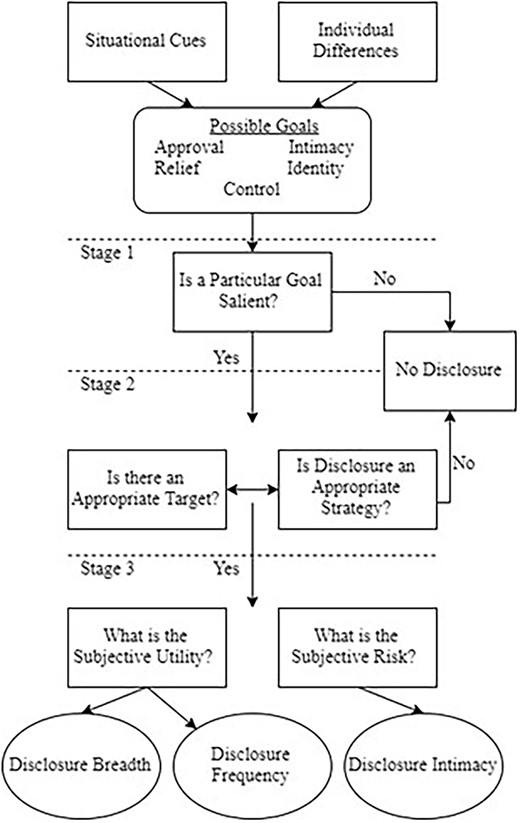
Digital Confessions: The Willingness to Disclose Intimate Information to a Chatbot and its Impact on Emotional Well-Being
Abstract Chatbots have several features that may stimulate self-disclosure, such as accessibility, anonymity, convenience and their perceived non-judgmental nature. The aim of this study is to investigate if people disclose (more) intimate information to a chatbot, compared to a human, and to what extent this enhances their emotional well-being through feelings of relief. An experiment with a 2 (human vs. chatbot) by 2 (low empathetic vs. high empathetic) design was conducted (N = 286). Results showed that there was no difference in the self-reported intimacy of self-disclosure between the human and chatbot conditions. Furthermore, people perceived less fear of judgment in the chatbot condition, but more trust in the human interactant compared to the chatbot interactant. Perceived anonymity was the only variable to directly impact self-disclosure intimacy. The finding that humans disclose equally intimate information to chatbots and humans is in line with the CASA paradigm, which states that people can react in a social manner to both computers and humans.
Using AI for advice or other personal reasons is linked to depression and anxiety
A new survey found that people who spend more time with chatbots for social interactions or emotional support were likelier to report mental health symptoms.

Anthropomorphism in AI Companion Communities: Age, Gender, and Emotional Correlates
Artificial intelligence (AI) systems are increasingly integrated into daily life, with millions now using AI chatbots built on Large Language Models (LLMs) for companionship. Both humanlike AI qualities and user predispositions to anthropomorphize relate to social consequences, such as increased trust, social health benefits, and psychological harms. Populations such as children, older adults, or those with mental health vulnerabilities may be particularly susceptible to anthropomorphism and its detriments, but mixed findings complicate the role of demographics. We used publicly available Reddit data from three popular AI companion subreddits to assess relationships between gender, age, anthropomorphism, and elicited emotions, to better understand how different people perceive and are affected by AI companions. We investigated three questions: How do age and gender relate to anthropomorphization of AI?, How does emotional expression relate to anthropomorphization?, and How do age and gender moderate emotion-anthropomorphization relationships? We found that adults and women anthropomorphize AI chatbots more than teens and men, and that positive emotional expression, particularly joy, is positively associated with anthropomorphization, while neutrality is negatively associated with anthropomorphism. Both relationships were stronger in adults than teens. Our findings suggest that the tendency to anthropomorphize may be more broadly distributed across age groups than previously expected, thereby prompting the reevaluation of existing digital safety norms.
New research: AI chatbots may worsen mental illness
A new study from Aarhus University and Aarhus University Hospital suggests that the use of AI chatbots such as ChatGPT can have serious negative consequences for people with mental illness. The researchers are calling for increased awareness among healthcare professionals and for regulation.

Experts Caution Against Using AI Chatbots for Emotional Support
TC faculty break down the risks of using artificial intelligence for emotional support, and what a healthier AI future might look like
“It happened to be the perfect thing”: experiences of generative AI chatbots for mental health
The global mental health crisis underscores the need for accessible, effective interventions. Chatbots based on generative artificial intelligence (AI), like ChatGPT, are emerging as novel solutions, but research on real-life usage is limited. We interviewed nineteen individuals about their experiences using generative AI chatbots for mental health. Participants reported high engagement and positive impacts, including better relationships and healing from trauma and loss. We developed four themes: (1) a sense of ‘emotional sanctuary’, (2) ‘insightful guidance’, particularly about relationships, (3) the ‘joy of connection’, and (4) comparisons between the ‘AI therapist’ and human therapy. Some themes echoed prior research on rule-based chatbots, while others seemed novel to generative AI. Participants emphasised the need for better safety guardrails, human-like memory and the ability to lead the therapeutic process. Generative AI chatbots may offer mental health support that feels meaningful to users, but further research is needed on safety and effectiveness.

“It happened to be the perfect thing”: experiences of generative AI chatbots for mental health
The global mental health crisis underscores the need for accessible, effective interventions. Chatbots based on generative artificial intelligence (AI), like ChatGPT, are emerging as novel solutions, but research on real-life usage is limited. We interviewed nineteen individuals about their experiences using generative AI chatbots for mental health. Participants reported high engagement and positive impacts, including better relationships and healing from trauma and loss. We developed four themes: (1) a sense of ‘emotional sanctuary’, (2) ‘insightful guidance’, particularly about relationships, (3) the ‘joy of connection’, and (4) comparisons between the ‘AI therapist’ and human therapy. Some themes echoed prior research on rule-based chatbots, while others seemed novel to generative AI. Participants emphasised the need for better safety guardrails, human-like memory and the ability to lead the therapeutic process. Generative AI chatbots may offer mental health support that feels meaningful to users, but further research is needed on safety and effectiveness.
Reality Roundtable #20 — Hacking Human Attachment: The Loneliness Crisis, Cognitive Atrophy, and Other Personal Dangers of AI - The Great Simplification
Mainstream conversations about artificial intelligence tend to center around the technology’s economic and large-scale impacts. Yet it’s at the individual level where we’re seeing AI’s most potent effects, and they may not be what you think. Even in the limited time that AI chatbots have been publicly available (like Claude, ChatGPT, Perplexity, etc.), studies show that our increasing reliance on them wears down our ability to think and communicate effectively, and even erodes our capacity to nurture healthy attachments to others. In essence, AI is atrophying the skills that sit at the core of what it means to be human. Can we as a society pause to consider the risks this technology poses to our well-being, or will we keep barreling forward with its development until it’s too late?

Potentially Harmful Consequences of Artificial Intelligence ( <span style="font-variant:small-caps;">AI</span> ) Chatbot Use Among Patients With Mental Illness: Early Data From a Large Psychiatric Service System
Click on the article title to read more.

Potentially Harmful Consequences of Artificial Intelligence ( <span style="font-variant:small-caps;">AI</span> ) Chatbot Use Among Patients With Mental Illness: Early Data From a Large Psychiatric Service System
Click on the article title to read more.

Can ChatGPT Be Addictive? A Call to Examine the Shift from Support to Dependence in AI Conversational Large Language Models
The rapid rise of ChatGPT has introduced a transformative tool that enhances productivity, communication, and task automation across industries. However, concerns are emerging regarding the addictive potential of AI large language models. This paper explores how ChatGPT fosters dependency through key features such as personalised responses, emotional validation, and continuous engagement. By offering instant gratification and adaptive dialogue, ChatGPT may blur the line between AI and human interaction, creating pseudosocial bonds that can replace genuine human relationships. Additionally, its ability to streamline decision-making and boost productivity may lead to over-reliance, reducing users' critical thinking skills and contributing to compulsive usage patterns. These behavioural tendencies align with known features of addiction, such as increased tolerance and conflict with daily life priorities. This viewpoint paper highlights the need for further research into the psychological and social impacts of prolonged interaction with AI tools like ChatGPT.
Americans are increasingly concerned about AI exacerbating mental health problems
One in 10 Americans (10%) say they definitely (2%) or probably (8%) could form a deep emotional bond with an AI chatbot companion.
Let me tell you a story. Perhaps you can guess where this is going... though it does have a bit of a twist. I was poking around Google Scholar for publications about the relationship between chatbots and wellness. Oh how useful: a systematic literature review! Let's dig into the findings. 🧵
