


As the state of U.S. local journalism continues to deteriorate, contributing to growing news deserts and the proliferation of mis- and disinformation, alternative models for sustaining local news are increasingly paramount. One such alternative to the failing commercial model that deserves more attention, we argue, is the American public media system. While less robust than its international counterparts, the U.S. public media system tends to be less reliant on market support, less subject to commercial pressures, and more devoted to a universal service mission. This study explores to what extent the American public media system may serve to lessen the severity of the local journalism crisis. Drawing on interviews and conversations with two dozen public media practitioners and analysts, our research examines how public media could be reimagined and repurposed to better serve local information needs. We conclude that a renewed investment in the existing system in tandem with structural reforms presents a possible pathway towards a more sustainable future for local news.
Reimagining American public media: A key infrastructure for local journalism
As the state of U.S. local journalism continues to deteriorate, contributing to growing news deserts and the proliferation of mis- and disinformation, alternative models for sustaining local news are increasingly paramount. One such alternative to the failing commercial model that deserves more attention, we argue, is the American public media system. While less robust than its international counterparts, the U.S. public media system tends to be less reliant on market support, less subject to commercial pressures, and more devoted to a universal service mission. This study explores to what extent the American public media system may serve to lessen the severity of the local journalism crisis. Drawing on interviews and conversations with two dozen public media practitioners and analysts, our research examines how public media could be reimagined and repurposed to better serve local information needs. We conclude that a renewed investment in the existing system in tandem with structural reforms presents a possible pathway towards a more sustainable future for local news.
Local News and National Politics
The level of journalistic resources dedicated to coverage of local politics is in a long-term decline in the US news media, with readership shifting to national outlets. We investigate whether this trend is demand- or supply-driven, exploiting a recent wave of local television station acquisitions by a conglomerate owner. Using extensive data on local news programming and viewership, we find that the ownership change led to (1) substantial increases in coverage of national politics at the expense of local politics, (2) a significant rightward shift in the ideological slant of coverage, and (3) a small decrease in viewership, all relative to the changes at other news programs airing in the same media markets. These results suggest a substantial supply-side role in the trends toward nationalization and polarization of politics news, with negative implications for accountability of local elected officials and mass polarization.

Local News and National Politics
The level of journalistic resources dedicated to coverage of local politics is in a long-term decline in the US news media, with readership shifting to national outlets. We investigate whether this trend is demand- or supply-driven, exploiting a recent wave of local television station acquisitions by a conglomerate owner. Using extensive data on local news programming and viewership, we find that the ownership change led to (1) substantial increases in coverage of national politics at the expense of local politics, (2) a significant rightward shift in the ideological slant of coverage, and (3) a small decrease in viewership, all relative to the changes at other news programs airing in the same media markets. These results suggest a substantial supply-side role in the trends toward nationalization and polarization of politics news, with negative implications for accountability of local elected officials and mass polarization.
Opinion: Losing the Local Journalism Initiative leaves communities in the dark
With more outlets vying for federal funding, why are national outlets opening up new bureaus in communities with healthy media ecosystems?


The Problem of the Media: U.S. Communication Politics in the Twenty-First Century | JSTOR
The symptoms of the crisis of the U.S. media are well-knowna decline in hard news, the growth of info-tainment and advertorials, staff cuts and concentration…
The Metric Media network runs more than 1,200 local news sites. Here are some of the non-profits funding them.
<p>This is the first part of a two-part investigation. The second piece can be found here. As local news outlets across the US struggle to stay afloat, pop-up newsrooms are filling the void. Organizations with ties to political parties, special-interest groups, and lobbyists have emerged under the guise of news. One of the biggest such […]</p>

Filling the News Gap in Cambridge and Beyond: Citizen Journalism and Grassroots Media
The event will explore the quickly expanding world of citizen journalism: how technology is fueling its growth; how that growth is changing the way we see our world, enact change, and disseminate the news; and how people in communities around the world are taking the initiative to share stories that are left untold by the mainstream media. It is free and open to the public.

Why local US newspapers are sounding the alarm
In the past decade, hundreds of local US newspapers have closed or merged. What happens to the communities they leave behind?

Another Media System is Possible: Ripping Open the Overton Window, from Platforms to Public Broadcasting
Despite their absence within dominant policy discourses, radical ideas for structurally reforming information and communication systems are proliferating. This article begins to explore and synthes...

Americans Trust Local News. That Belief Is Being Exploited. (Published 2019)
A growth in impostor local news that promotes ideological agendas.

When people trust humans more than brands: the incubator newsroom
How we might rebuild journalism from the ground up by rethinking what a newsroom is.

Advocacy groups and Metric Media collaborate on local ‘community news’
<p>This is the second part of a two-part investigation. The first piece can be found here. Metric Media launched “Community Newsmaker” in 2020 using the language of citizen journalism. However, what appeared to be grassroots news is part of a sprawling network that promotes political agendas and corporate interests, without disclosing those ties to the […]</p>
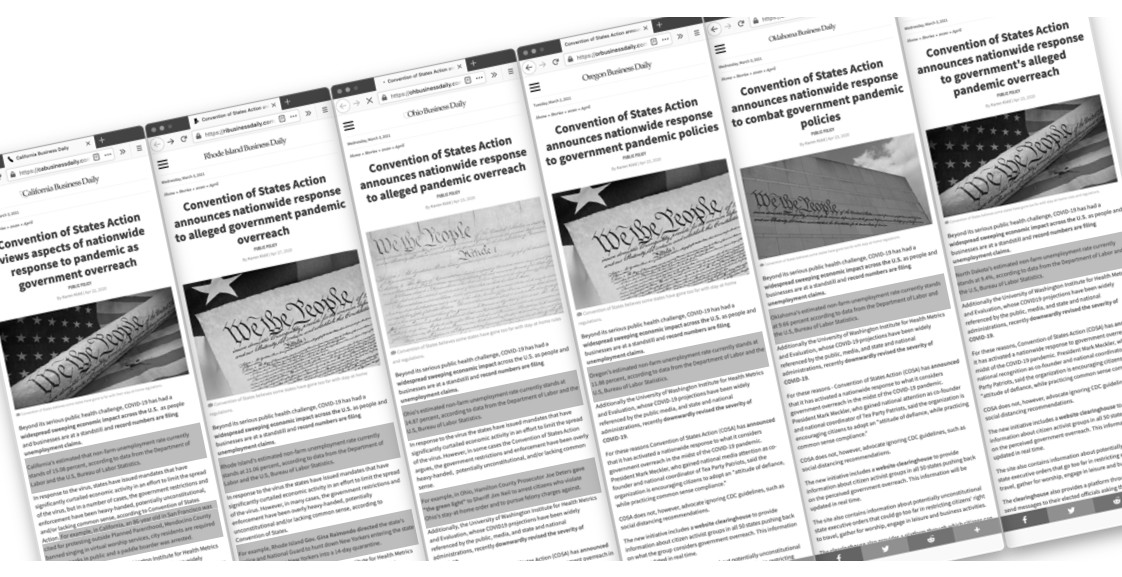
Newspapers with a partisan aim filling the void of traditional media
As independent local papers collapse, a new industry is being fueled by ideological donors seeking to further political agendas.

Overview and key findings of the 2025 Digital News Report
This year’s report comes at a time of deep political and economic uncertainty, changing geo-political alliances, not to mention climate breakdown and continuing destructive conflicts around the world. Against that background, evidence-based and analytical journalism should be thriving, with newspapers flying off shelves, broadcast media and web traffic booming. But as our report shows the reality is very different. In most countries we find traditional news media struggling to connect with much of the public, with declining engagement, low trust, and stagnating digital subscriptions.

Local Journalism Directory | Media and Democracy Project
We created a directory to help you find local journalism and local news sources in your area worth reading and supporting.
