


Noise in behavior is often considered a nuisance: Although the mind aims for the best possible action, it is let down by unreliability in the sensory and response systems. Researchers often represent noise as additive, Gaussian, and independent. Yet a careful look at behavioral noise reveals a rich structure that defies easy explanation. First, in both perceptual and preferential judgments sensory and response noise may potentially play only minor roles, with most noise arising in the cognitive computations. Second, the functional form of the noise is both non-Gaussian and nonindependent, with the distribution of noise being better characterized as heavy-tailed and as having substantial long-range autocorrelations. It is possible that this structure results from brains that are, for some reason, bedeviled by a fundamental design flaw, albeit one with intriguingly distinctive characteristics. Alternatively, noise might not be a bug but a feature. Specifically, we propose that the brain approximates probabilistic inference with a local sampling algorithm, one using randomness to drive its exploration of alternative hypotheses. Reframing cognition in this way explains the rich structure of noise and leads to the surprising conclusion that noise is not a symptom of cognitive malfunction but plays a central role in underpinning human intelligence.
Random noise promotes slow heterogeneous synaptic dynamics important for robust working memory computation
Recurrent neural networks (RNNs) based on model neurons that communicate via continuous signals have been widely used to study how cortical neural circuits perform cognitive tasks. Training such networks to perform tasks that require information maintenance over a brief period (i.e., working memory tasks) remains a challenge. Inspired by the robust information maintenance observed in higher cortical areas such as the prefrontal cortex, despite substantial inherent noise, we investigated the effects of random noise on RNNs across different cognitive functions, including working memory. Our findings reveal that random noise not only speeds up training but also enhances the stability and performance of RNNs on working memory tasks. Importantly, this robust working memory performance induced by random noise during training is attributed to an increase in synaptic decay time constants of inhibitory units, resulting in slower decay of stimulus-specific activity critical for memory maintenance. Our study reveals the critical role of noise in shaping neural dynamics and cognitive functions, suggesting that inherent variability may be a fundamental feature driving the specialization of inhibitory neurons to support stable information processing in higher cortical regions.

Guessing reveals internal models of perceptual precision
When observers lack sufficient information to support a confident response, they often guess. Guessing plays a pervasive role in visual cognition and working memory, yet the mechanisms that govern how observers generate guesses remain poorly understood. Standard models traditionally assume that responses produced in the absence of information are either uniformly distributed over feature space or are perhaps weighted towards prevailing environmental statistics. In contrast, here we consider an intriguing alternative: that guesses incorporate observers’ knowledge of their own perceptual capacities. We empirically measured guessing by eliciting responses under extreme target uncertainty (Experiment 1) as well as a novel “0ms presentation” approach in which no stimulus appeared but subjects believed one had (Experiment 2). We evaluated three accounts of guesses under these conditions: unsystematic (lapse) responding, biases toward environmental statistics, and a self-representational account in which guesses reflect observers’ knowledge of their own feature-dependent precision (e.g., preferring to guess feature values they believe they would be likely to miss). Guess responses were non-uniform and systematically biased toward feature values typically encoded with the least precision (e.g., oblique orientations) — a counterintuitive bias away from high-frequency, high-fidelity feature values (e.g., cardinal orientations). This complementary relationship between guessing and perceptual fidelity held within individuals and across paradigms, and was recoverable via an empirical-guess mixture model that replaced the standard uniform assumption with empirically measured guess distributions. Our findings challenge prevailing views that guesses reflect random noise, and suggest instead that guessing behavior reflects metacognitive knowledge of internal precision. Rather than defaulting to environmental priors, observers appear to model their own sensory limitations and leverage these representations to inform decisions in the absence of evidence. These results reframe guessing as a theoretically informative behavior that expresses observers’ own beliefs about their perceptual capacities. Significance Guessing is commonly treated as random noise in models of perception and memory, assumed to reflect lapses or uninformed responses. Instead, we show that human guesses are systematically structured across feature space: observers preferentially guess values they typically encode with the least precision, revealing a consistent, strategic bias away from high-fidelity representations. By directly measuring guess behavior on stimulus-absent trials and integrating these empirical distributions into a mixture model, we find that guesses on stimulus-present trials can be systematically recovered, and that they too form the complement of perceptual precision. These findings challenge foundational psychophysical modeling assumptions and position guessing as a strategic, informative behavior that engages self-representation.

Addressing the Precision-Breadth-Simplicity Impossible Trinity in Psychological Research: A Comprehensive Exploration Approach
Psychological research faces a fundamental challenge—the Precision-Breadth-Simplicity (PBS) impossible trinity. While experimental findings are often precise and simple, they tend to be narrow in scope. Conversely, broad-and-simple concepts frequently lack precision. Developing theories that are both precise and broad is scientifically valuable but inevitably introduces complexity, which conflicts with humans’ cognitive limitations in processing complexity. To address this impossible trinity, I propose a comprehensive exploration (CE) approach—a data-guided theory-building framework that involves: (1) designing experimental conditions in a stimulus-driven way, with minimal upfront theoretical specification; (2) conducting experiments with tens of millions of observations (e.g., 40 million responses in Huang, 2025a); (3) modeling the results through iterative improvements; and (4) producing the outcome: a moderately complex quantitative information-processing model to integrate diverse empirical findings. Inspired by similar strategies that drove breakthroughs in artificial intelligence (e.g., ImageNet’s role in advancing object recognition), the CE approach offers a promising path toward more integrative psychological theories. Initial implementations in visual working memory research demonstrate both its practicality and potential to transform how we study mental processes.
Eliciting Beliefs with Random Generation Tasks
Elicitation methods, such as asking people to produce the deciles of a distribution, are standard practices in policy or applied statistics. Similarly, much of cognitive science and psychology focuses on determining people's people's beliefs or latent traits through questionnaires or judgment tasks. However, these approaches often only capture a rough outline of what people know and are usually limited to point estimates of people's beliefs. Here, we present a novel experimental paradigm that allows us to access people's beliefs and how variable these beliefs are. Our task is based on an established random generation paradigm in which participants produce quantities from a particular domain as randomly as possible. We hypothesize that due to the minds' general-purpose mechanisms for probabilistic inferences, these random sequences represent the participants' underlying prior beliefs. We show that our method can infer participants' beliefs for a wide range of numeric quantities at comparable accuracy as an established elicitation method. Moreover, these inferred beliefs are consistent with individual participants' generalization and inference patterns in a subsequent conditional prediction task. We then extend our approach to non-numeric belief elicitation, highlighting how our method can go beyond numeric elicitation and provide insight into complex beliefs that are challenging to assess experimentally. Empirically, our results highlight that people know the rough shapes of environmental distributions, and these beliefs guide inference and generalization. Moreover, using our novel approach, we also show that people know the fine details of environmental distributions. Finally, our experimental results show that random generation paradigms can be a useful tool for cognitive scientists, psychologists, and applied statisticians.
Harnessing Chaos: How the Brain Turns Randomness into Robust Memory | Columbia Engineering
AI systems reveal how random fluctuations in brain activity may help stabilize memories
Verbalizable Representations Form a Global Workspace in Language Models
If the mind is an ocean, we spend our lives floating at the surface. Beneath us, an enormous amount of processing takes place without our knowledge: our visual systems parsing the contours of a face, our motor circuits maintaining our posture. At any given moment, only a small fraction of this neural activity is accessible to us. Yet it is this privileged sliver of activity that we rely on to reason deliberately: to plan what ingredients to buy for a recipe, or to puzzle out why an engine won’t start. Such thoughts can be articulated out loud, deliberately held in mind, and brought to bear on whatever task the moment demands. This distinction, between our accessible thoughts and our unconscious processing, is perhaps the most striking feature of human cognition.
Verbalizable Representations Form a Global Workspace in Language Models
If the mind is an ocean, we spend our lives floating at the surface. Beneath us, an enormous amount of processing takes place without our knowledge: our visual systems parsing the contours of a face, our motor circuits maintaining our posture. At any given moment, only a small fraction of this neural activity is accessible to us. Yet it is this privileged sliver of activity that we rely on to reason deliberately: to plan what ingredients to buy for a recipe, or to puzzle out why an engine won’t start. Such thoughts can be articulated out loud, deliberately held in mind, and brought to bear on whatever task the moment demands. This distinction, between our accessible thoughts and our unconscious processing, is perhaps the most striking feature of human cognition.
A Rational Analysis of the Effects of Sycophantic AI
People increasingly use large language models (LLMs) to explore ideas, gather information, and make sense of the world. In these interactions, they encounter agents that are overly agreeable. We argue that this sycophancy poses a unique epistemic risk to how individuals come to see the world: unlike hallucinations that introduce falsehoods, sycophancy distorts reality by returning responses that are biased to reinforce existing beliefs. We provide a rational analysis of this phenomenon, showing that when a Bayesian agent is provided with data that are sampled based on a current hypothesis the agent becomes increasingly confident about that hypothesis but does not make any progress towards the truth. We test this prediction using a modified Wason 2-4-6 rule discovery task where participants (N=557) interacted with AI agents providing different types of feedback. Unmodified LLM behavior suppressed discovery and inflated confidence comparably to explicitly sycophantic prompting. By contrast, unbiased sampling from the true distribution yielded discovery rates five times higher. These results reveal how sycophantic AI distorts belief, manufacturing certainty where there should be doubt.

Metacognitive Myopia: A Major Obstacle on the Way to Rationality
The notion of metacognitive myopia refers to a conspicuous weakness of the quality control of memory and reasoning processes. Although people are often remarkably sensitive even to complex samples of information when making evaluative judgments and decisions, their uncritical and naive tendency to take the validity of sampled information for granted constitutes a major obstacle to rational behavior. After illustrating this phenomenon with reference to prominent biases (base-rate neglect, misattribution, perseverance), we decompose metacognitive myopia into two distinct but intertwined functions, monitoring and control. We offer explanations for why effectively monitoring the biases resulting from information sampling in an uncertain world is so difficult and why the control function is severely restricted by the lack of volitional control over mental actions. Because of these and other difficulties, metacognitive myopia constitutes a major obstacle to rational judgment and decision making.
Non-equilibrium active noise enhances generative memory in diffusion models
Generative diffusion models have emerged as powerful tools for sampling high-dimensional distributions, yet they typically rely on white gaussian noise and noise schedules to destroy and reconstruct information. Here, we demonstrate that driving the generative process out of equilibrium using active, temporally correlated noise sources fundamentally alters the information thermodynamics of the system. We show that coupling the data to an active non-Markovian bath creates a `memory effect' where high-level semantic information (such as class identity or molecular metastability) is stored in the temporal correlations of auxiliary degrees of freedom. Using Fisher information analysis, we prove that this active mechanism significantly retards the rate of information decay compared to passive Brownian motion. Crucially, this memory effect facilitates an earlier and more robust symmetry breaking (speciation) during the reverse generative process, allowing the system to resolve multi-scale structures, reminiscent of metastable states in molecular configurations that are washed out in the typical noising processes. Our results suggest that non-equilibrium protocols, inspired by active matter physics, offer a thermodynamically distinct and potentially advantageous pathway for recovering high-dimensional energy landscapes using generative diffusion.
Useful Mental Model: Normal Distribution - Scott H Young
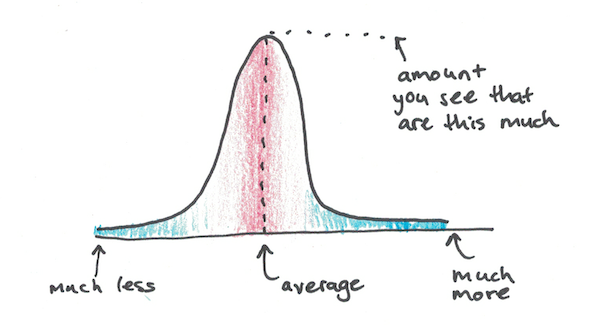
Some ideas are so powerful once you know them, you start to see them everywhere. Normal distributions are one of these ideas. Let's understand it!
MetaCOG: A Hierarchical Probabilistic Model for Learning Meta-Cognitive Visual Representations
Humans have the capacity to question what we see and to recognize when our vision is unreliable (e.g., when we realize that we are experiencing a visual illusion). Inspired by this capacity, we present MetaCOG: a hierarchical probabilistic model that can be attached to a neural object detector to monitor its outputs and determine their reliability. MetaCOG achieves this by learning a probabilistic model of the object detector's performance via Bayesian inference -- i.e., a meta-cognitive representation of the network's propensity to hallucinate or miss different object categories. Given a set of video frames processed by an object detector, MetaCOG performs joint inference over the underlying 3D scene and the detector's performance, grounding inference on a basic assumption of object permanence. Paired with three neural object detectors, we show that MetaCOG accurately recovers each detector's performance parameters and improves the overall system's accuracy. We additionally show that MetaCOG is robust to varying levels of error in object detector outputs, showing proof-of-concept for a novel approach to the problem of detecting and correcting errors in vision systems when ground-truth is not available.
Understanding the Limits of Vision Language Models Through the Lens of the Binding Problem
Recent work has documented striking heterogeneity in the performance of state-of-the-art vision language models (VLMs), including both multimodal language models and text-to-image models. These models are able to describe and generate a diverse array of complex, naturalistic images, yet they exhibit surprising failures on basic multi-object reasoning tasks -- such as counting, localization, and simple forms of visual analogy -- that humans perform with near perfect accuracy. To better understand this puzzling pattern of successes and failures, we turn to theoretical accounts of the binding problem in cognitive science and neuroscience, a fundamental problem that arises when a shared set of representational resources must be used to represent distinct entities (e.g., to represent multiple objects in an image), necessitating the use of serial processing to avoid interference. We find that many of the puzzling failures of state-of-the-art VLMs can be explained as arising due to the binding problem, and that these failure modes are strikingly similar to the limitations exhibited by rapid, feedforward processing in the human brain.
Ultra-Processed Information: AI and the Coming Deluge of Noise | Frankly 128
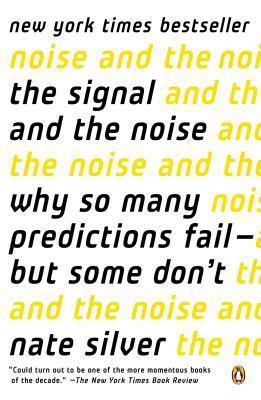
The signal and the noise: why so many predictions fail - but some don't
"Nate Silver's The Signal and the Noise is The Soul of …
Adversarial construction as a potential solution to the experiment design problem in large task spaces
Despite decades of work, we still lack a robust, task-general theory of human behavior even in the simplest domains. In this paper we tackle the generality problem head-on, by aiming to develop a unified model for all tasks embedded in a task-space. In particular we consider the space of binary sequence prediction tasks where the observations are generated by the space parameterized by hidden Markov models (HMM). As the space of tasks is large, experimental exploration of the entire space is infeasible. To solve this problem we propose the adversarial construction approach, which helps identify tasks that are most likely to elicit a qualitatively novel behavior. Our results suggest that adversarial construction significantly outperforms random sampling of environments and therefore could be used as a proxy for optimal experimental design in high-dimensional task spaces.