

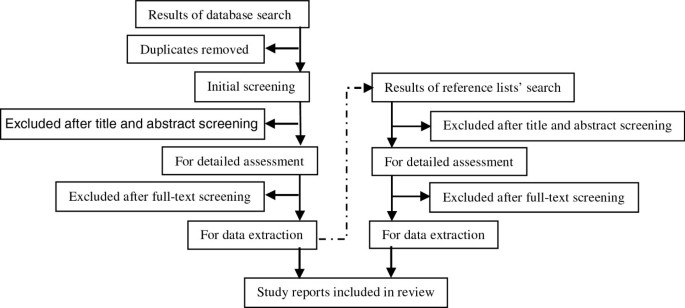
Participation in leisure-time physical activity benefits health and is thought to be more prevalent in higher socioeconomic groups. Evidence indicates that childhood socioeconomic circumstances may have long-term influences on adult health and behaviour; however, it is unclear if this extends to an influence on adult physical activity. The aim of this review is to examine whether a lower childhood socioeconomic position is associated with lower levels of leisure-time physical activity during adulthood.
Homebound: The Long-Term Rise in Time Spent at Home Among U.S. Adults
The changes in daily life induced by the COVID-19 pandemic brought renewed attention to longstanding concerns about social isolation in the United States. Despite the links between the physical setting for individuals' daily lives and their connections with family, friends, and the various institutions of collective life, trends in where American adults spend their time have been largely overlooked as researchers have focused on how and with whom they spend their time. This article analyzes data from the American Time Use Survey over a timeframe spanning nineteen years and argues that the changes in Americans' daily routines induced by the COVID era should be seen as an acceleration of a longer-term trend: the rise of time spent at home. Results show that from 2003 to 2022, average time spent at home among American adults has risen by one hour and 39 minutes in a typical day. Time at home has risen for every subset of the population and for virtually all activities. Preliminary analysis indicates that time at home is associated with lower levels of happiness and less meaning, suggesting the need for enhanced empirical attention to this major shift in the setting of American life.

Homebound: The Long-Term Rise in Time Spent at Home Among U.S. Adults
The changes in daily life induced by the COVID-19 pandemic brought renewed attention to longstanding concerns about social isolation in the United States. Despite the links between the physical setting for individuals' daily lives and their connections with family, friends, and the various institutions of collective life, trends in where American adults spend their time have been largely overlooked as researchers have focused on how and with whom they spend their time. This article analyzes data from the American Time Use Survey over a timeframe spanning nineteen years and argues that the changes in Americans' daily routines induced by the COVID era should be seen as an acceleration of a longer-term trend: the rise of time spent at home. Results show that from 2003 to 2022, average time spent at home among American adults has risen by one hour and 39 minutes in a typical day. Time at home has risen for every subset of the population and for virtually all activities. Preliminary analysis indicates that time at home is associated with lower levels of happiness and less meaning, suggesting the need for enhanced empirical attention to this major shift in the setting of American life.
Americans’ Social Activity Has Steeply Declined in the Past 30 Years
Our survey finds significant, double-digit declines in Americans’ participation in key social activities from 1995 to 2026.

Why Do Americans Have Shorter Life Expectancy and Worse Health Than Do People in Other High-Income Countries?
Americans lead shorter and less healthy lives than do people in other high-income countries. We review the evidence and explanations for these variations in longevity and health. Our overview suggests that the US health disadvantage applies to multiple mortality and morbidity outcomes. The American health disadvantage begins at birth and extends across the life course, and it is particularly marked for American women and for regions in the US South and Midwest. Proposed explanations include differences in health care, individual behaviors, socioeconomic inequalities, and the built physical environment. Although these factors may contribute to poorer health in America, a focus on proximal causes fails to adequately account for the ubiquity of the US health disadvantage across the life course. We discuss the role of specific public policies and conclude that while multiple causes are implicated, crucial differences in social policy might underlie an important part of the US health disadvantage.

Incident gout and weight change patterns: a retrospective cohort study of US adults
Although the relationship between obesity and incident gout has been clarified, the influence of weight changes during the transition from early adulthood to midlife and the different weight change patterns in specific age ranges on the incidence of gout in later life remain unknown. Therefore, we aimed to investigate the association between weight change patterns across adulthood and incident gout.

Abolishing Daylight Saving Time is easy, setting a permanent time is not
Daylight Saving Time – the biannual ritual of adjusting clocks forwards and backwards – has long been debated. Advocates argue it saves energy and promotes outdoor activities, while critics highlight its disruptive effects on health, productivity, and social routines. This column examines the health impacts, societal costs, and the outdated rationale behind the implementation of Daylight Saving Time, and argues that there is good reason to abolish it. This would imply trade-offs, however. While adopting Standard Time permanently would be better from a health perspective, ‘summer time’ is preferred in many countries.

How Health Disparities Develop over the Lifecycle
In the Netherlands, there are striking socioeconomic differences in mortality among older adults, with a 4.4 percentage point (67 percent) higher five-year mortality rate for 70-year-old individuals with below-median income than for those with above-median income. To better understand the role of chronic disease in these health disparities, Kaveh Danesh, Jonathan T. Kolstad, William D. Parker, and Johannes Spinnewijn develop an index of chronic disease burden in The Chronic Disease Index: Analyzing Health Inequalities over the Lifecycle (NBER Working Paper 32577). This index is a measure of health status that can be measured earlier in life and shows how chronic health evolves with age and differs across income groups.

The association between attention-deficit/hyperactivity (ADHD) symptoms and self-employment
Attention-deficit/hyperactivity (ADHD) symptoms have been associated with the decision to become self-employed. Although these symptoms are generally regarded as disadvantageous, there may also be a bright side. To our knowledge, however, there has been no systematic, epidemiological evidence to support this claim. This paper examines the association between ADHD symptoms and self-employment in a population-based sample from the STAGE cohort of the Swedish Twin Registry (N = 7208). For replication, we used a sample of Dutch students who participated in the Global University Entrepreneurial Spirit Students' Survey (N = 13,112). In the Swedish sample, we found a positive association with self-employment for both general ADHD symptoms [odds ratio (OR) 1.13; 95 % confidence intervals (CI) 1.04-1.23] and hyperactivity symptoms [OR 1.19; 95 % CI 1.08-1.32], whereas no association was found for attention-deficit symptoms [OR 0.99; 95 % CI 0.89-1.10]. The positive association between hyperactivity and self-employment was replicated in the Dutch student sample [OR 1.09; 95 % CI 1.03-1.15]. Our results show that certain aspects of ADHD, in particular hyperactivity, can have a bright side, as they are positively associated with self-employment.
Associations of Sociodemographic and Neighborhood Vulnerability With Cardiovascular Health in Midlife Women in the United States
BACKGROUND: Many women have suboptimal cardiovascular health (CVH), which declines during midlife. Few studies have characterized CVH across the menopausal transition or identified its sociodemographic and neighborhood determinants. METHODS: We analyzed a prospective cohort of women in eastern Massachusetts enrolled during pregnancy (1999–2002) and followed to midlife (2019–2024). Exposures included household income, education, race and ethnicity, and neighborhood Social Vulnerability Index (categorized from very low [<20th percentile] to very high [≥80th percentile]; higher categories=greater neighborhood vulnerability). Women self-reported their menopause status using questionnaires. Using Life’s Essential 8, we derived CVH scores (0–100 points; higher score=better CVH) at 3-, 8-, 13-, 18-, and 23-year follow-up visits. Linear spline mixed-effect models examined associations of sociodemographics and neighborhood Social Vulnerability Index with differences in CVH across different menopause stages (premenopause, perimenopause, and postmenopause). RESULTS: Among 1200 women (mean enrollment age, 32.1 years; 67.5% Non-Hispanic White), 15.4% had household incomes ≤$40 000/y, 8.8% had ≤high school education, and 17.4% resided in very high Social Vulnerability Index neighborhoods. After covariate adjustment, women with lower income, lower education, or identifying as Non-Hispanic Black exhibited lower CVH across follow-up. Independent of individual sociodemographics, continued residence in vulnerable neighborhoods over time was associated with lower CVH and unfavorable CVH trajectories across follow-up. For example, residence in very high (versus very low) Social Vulnerability Index neighborhoods from enrollment to 3-year follow-up corresponded to mean CVH differences of −6.7 (95% CI, −12.3 to −1.2) at 3-year, −9.8 (95% CI, −15.6 to −4.0) at 8-year, −8.9 (95% CI, −13.9 to −3.9) at 13-year, −6.7 (95% CI, −12.9 to −0.5) at 18-year, and −7.2 (95% CI, −12.5 to −1.9) at 23-year follow-up, and with faster CVH score decline during premenopause (−0.62 points/y; 95% CI, −1.22 to −0.02). CONCLUSIONS: Women from disadvantaged sociodemographic backgrounds or residing in vulnerable neighborhoods exhibit poorer CVH across the menopausal transition, highlighting opportunities to optimize long-term CVH and mitigate cardiovascular disease risk.

Why working fewer hours would make us more productive
A shorter working week could improve our mental and physical health and even mitigate climate change, research shows

Statistical Modeling, Causal Inference, and Social Science
I saw in a recent issue of the Times Literary Supplement that you have been critical of the “chambermaid” study which purported to show that people were losing weight without changing their diet or exercise. I agree that this study did not show what it claimed.
Low on energy? A new understanding of rest could help revitalise you
There is a state of relaxation that few of us spend much time in, but which comes with profound well-being benefits. With healthier ageing, reduced risk of disease and feeling more energised all on offer, here's how to get there

How do social media use, gaming frequency, and internalizing symptoms predict each other over time in early-to-middle adolescence?
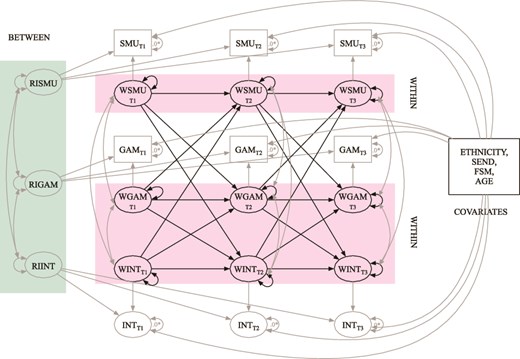
Abstract Background The effects of adolescent digital technology use (e.g. social media, gaming) on their mental health are a major public health concern, but existing evidence is of mixed quality and findings have been inconclusive. Methods Separating within-person effects from between-person effects, a random-intercept cross-lagged panel model was applied to three annual waves of data (T1, T2, T3) on social media use, gaming, and internalizing symptoms among N = 25 629 adolescents (51% girls, average age 12 years, 7 months (SD = 3.58 months) at baseline) in Greater Manchester, England. Results Longitudinal relationships varied by gender, such that more frequent gaming at T2 predicted less time spent on social media use at T3 in girls (but not boys), and more frequent internalizing symptoms at T2 predicted reductions in gaming frequency at T3 in boys (but not girls). There was no evidence that time spent on social media or gaming frequency predicted later internalizing symptoms among girls or boys. Sensitivity analyses that distinguished active versus passive social media use replicated these findings. Conclusions The findings of this study do not support the widely held view that adolescent technology use is a major causal factor in their mental health difficulties.
‘We need to reclaim childhood’: UK ministers urged to restore right to play
A steady erosion of outdoor playtime is impairing the development of infants, say experts

Why you shouldn’t exercise to lose weight, explained with 60+ studies
Vox is a general interest news site for the 21st century. Its mission: to help everyone understand our complicated world, so that we can all help shape it. In text, video and audio, our reporters explain politics, policy, world affairs, technology, culture, science, the climate crisis, money, health and everything else that matters. Our goal is to ensure that everyone, regardless of income or status, can access accurate information that empowers them.

❤️🩹 Fitness and Health

Fitness and health related bookmarks, highlights, and comments.
Noise — binaural beats generator
burrito.space/overrun

Summit Bag
Your Fit. Your Way. | A Mobile App That Makes Motivation Easier | Yes.Fit
Wandrer

CityStrides