

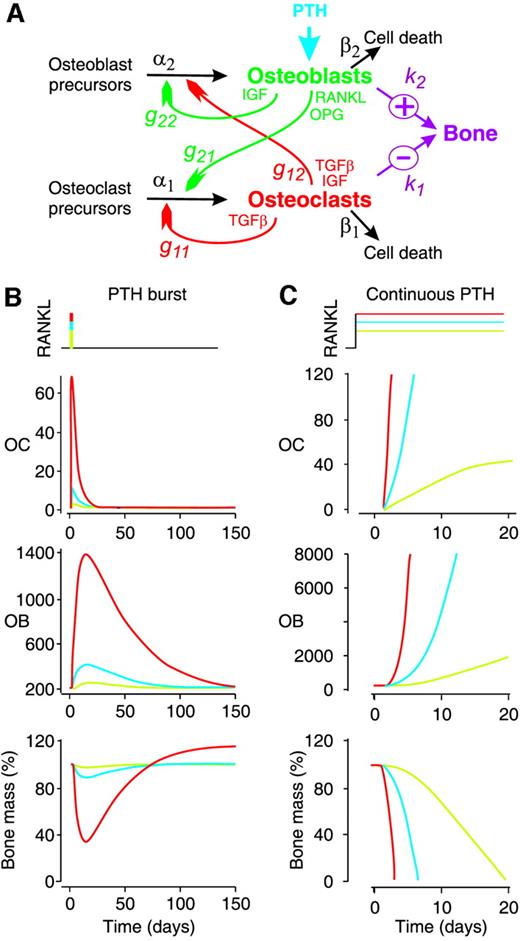
Abstract. To restore falling plasma calcium levels, PTH promotes calcium liberation from bone. PTH targets bone-forming cells, osteoblasts, to increase exp
Regulation of Bone Remodeling by Parathyroid Hormone
Parathyroid hormone (PTH) exerts profound effects on skeletal homeostasis through multiple cellular and molecular mechanisms. Continuous hyperparathyroidism causes net loss of bone mass, despite accelerating bone formation by osteoblasts. Intermittent treatment with PTH analogs represents the only Food and Drug Administration (FDA)-approved bone anabolic osteoporosis treatment strategy. Functional PTH receptors are present on cells of the osteoblast lineage, ranging from early skeletal stem cells to matrix-embedded osteocytes. In addition, bone remodeling by osteoclasts liberates latent growth factors present within bone matrix. Here, we will provide an overview of the multiple cellular and molecular mechanisms through which PTH influences bone homeostasis. Notably, net skeletal effects of continuous versus intermittent can differ significantly. Where possible, we will highlight mechanisms through which continuous hyperparathyroidism leads to bone loss, and through which intermittent hyperparathyroidism boosts bone mass. Given the therapeutic usage of intermittent PTH (iPTH) treatment for osteoporosis, particular attention will be paid toward mechanisms underlying the bone anabolic effects of once daily PTH administration.
Dynamics of bone cell signaling and PTH treatments of osteoporosis
In this paper we analyze and generalize the dynamical system introduced by Lemaire and co-workers [14] as a model of cell signaling in bone remodeling. We show that for large classes of parameter values, including the physically-realistic baseline values, the system has a unique physically relevant equilibrium which is a global attractor. We generalize that model, minimally, to incorporate a mechanism by which parathyroid hormone (PTH) retards osteoblast apoptosis. We show that with this mechanism, which is a simplified version of that proposed by Bellido and co-workers [4], the model exhibits a well-known phenomenon that has puzzled researchers: the system responds catabolically to the continuous administration of PTH andally to appropriately pulsed administration of PTH.
Mathematical Model of Bone Remodeling Captures the Antiresorptive and Anabolic Actions of Various Therapies
A better understanding of the molecular pathways regulating the bone remodeling process should help in the development of new antiresorptive regulators and anabolic regulators, that is, regulators of bone resorption and of bone formation. Understanding the mechanisms by which parathyroid hormone (PTH) influences bone formation and how it switches from anabolic to catabolic action is important for treating osteoporosis (Poole and Reeve in Curr Opin Pharmacol 5:612–617, 2005). In this paper we describe a mathematical model of bone remodeling that incorporates, extends, and integrates several models of particular aspects of this biochemical system (Cabal et al. in J Bone Miner Res 28(8):1830–1836, 2013; Lemaire et al. in J Theor Biol 229:293–309, 2004; Peterson and Riggs in Bone 46:49–63, 2010; Raposo et al. in J Clin Endocrinol Metab 87(9):4330–4340, 2002; Ross et al. in J Disc Cont Dyn Sys Series B 17(6):2185–2200, 2012). We plan to use this model as a bone homeostasis platform to develop anabolic and antiresorptive compounds. The model will allow us to test hypotheses about the dynamics of compounds and to test the potential benefits of combination therapies. At the core of the model is the idealized account of osteoclast and osteoblast signaling given by Lemaire et al. (J Theor Biol 229:293–309, 2004). We have relaxed some of their assumptions about the roles of osteoprotegerin, transforming growth factor $$\upbeta $$, and receptor activator of nuclear factor $$\upkappa $$B ligand; we have devised more detailed models of the interactions of these species. We have incorporated a model of the effect of calcium sensing receptor antagonists on remodeling (Cabal et al. in J Bone Miner Res 28(8):1830–1836, 2013). We have also incorporated a basic model of the effects of vitamin D on calcium homeostasis. We have included a simple model of the mechanism proposed by Bellido et al. (2003), Ross et al. (J Disc Cont Dyn Sys Series B 17(6):2185–2200, 2012), of the influence of PTH on osteoblast apoptosis, a mechanism that accounts for the anabolic response to pulsatile PTH administration. Finally, we have devised a simple model of the administration and effects of bisphosphonates. The biomarkers in the model are procollagen type 1 amino-terminal propeptide and C-terminal telopeptide. Bone mineral density is the model’s principal endpoint.

Parathyroid hormone temporal effects on bone formation and resorption
Parathyroid hormone (PTH) paradoxically causes net bone loss (resorption) when administered in a continuous fashion, and net bone formation (deposition) when administered intermittently. Currently no pharmacological formulations are available to promote bone formation, as needed for the treatment of osteoporosis. The paradoxical behavior of PTH confuses endocrinologists, thus, a model bone resorption or deposition dependent on the timing of PTH administration would de-mystify this behavior and provide the basis for logical drug formulation. We developed a mathematical model that accounts for net bone loss with continuous PTH administration and net bone formation with intermittent PTH administration, based on the differential effects of PTH on the osteoblastic and osteoclastic populations of cells.

TRANCE Is Necessary and Sufficient for Osteoblast-mediated Activation of Bone Resorption in Osteoclasts
TRANCE (tumor necrosis factor–related activation-induced cytokine) is a recently described member of the tumor necrosis factor superfamily that stimulates dendritic cell survival and has also been found to induce osteoclastic differentiation from hemopoietic precursors. However, its effects on mature osteoclasts have not been defined. It has long been recognized that stimulation of osteoclasts by agents such as parathyroid hormone (PTH) occurs through a hormonal interaction with osteoblastic cells, which are thereby induced to activate osteoclasts. To determine whether TRANCE accounts for this activity, we tested its effects on mature osteoclasts. TRANCE rapidly induced a dramatic change in osteoclast motility and spreading and inhibited apoptosis. In populations of osteoclasts that were unresponsive to PTH, TRANCE caused activation of bone resorption equivalent to that induced by PTH in the presence of osteoblastic cells. Moreover, osteoblast-mediated stimulation of bone resorption was abrogated by soluble TRANCE receptor and by the soluble decoy receptor osteoprotegerin (OPG), and stimulation of isolated osteoclasts by TRANCE was neutralized by OPG. Thus, TRANCE expression by osteoblasts appears to be both necessary and sufficient for hormone-mediated activation of mature osteoclasts, and TRANCE-R is likely to be a receptor for signal transduction for activation of the osteoclast and its survival.

Parathyroid Hormone and Teriparatide for the Treatment of Osteoporosis: A Review of the Evidence and Suggested Guidelines for Its Use
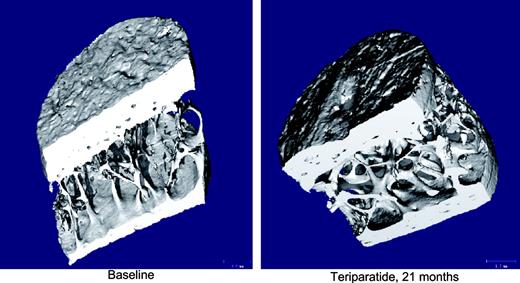
All therapies currently recommended for the management of osteoporosis act mainly to inhibit bone resorption and reduce bone remodeling. PTH and its analog
Simulated Interventions to Ameliorate Age-Related Bone Loss Indicate the Importance of Timing
Bone remodeling is the continuous process of bone resorption by osteoclasts and bone formation by osteoblasts, in order to maintain homeostasis. The activity of osteoclasts and osteoblasts is regulated by a network of signaling pathways, including Wnt, parathyroid hormone (PTH), RANKL/OPG and TGF-β, in response to stimuli such as mechanical loading. During aging there is a gradual loss of bone mass due to dysregulation of signaling pathways. This may be due to a decline in physical activity with age and/or changes in hormones and other signaling molecules. In particular, hormones such as PTH have a circadian rhythm which may be disrupted in aging. Due to the complexity of the molecular and cellular networks involved in bone remodeling, several mathematical models have been proposed to aid understanding of the processes involved. However, to date there are no models which explicitly consider the effects of mechanical loading, the circadian rhythm of PTH and the dynamics of signaling molecules on bone remodeling. Therefore, we have constructed a network model of the system using a modular approach which will allow further modifications as required in future research. The model was used to simulate the effects of mechanical loading and also the effects of different interventions such as continuous or intermittent administration of PTH. Our model predicts that the absence of regular mechanical loading and/or an impaired PTH circadian rhythm leads to a gradual decrease in bone mass over time which can be restored by simulated interventions and that the effectiveness of some interventions may depend on their timing.

Study of the combined effects of PTH treatment and mechanical loading in postmenopausal osteoporosis using a new mechanistic PK-PD model
One of only a few approved and available anabolic treatments for severe osteoporosis is daily injections of PTH (1-34). This drug has a specific dual action which can act either anabolically or catabolically depending on the type of administration, i.e. intermittent or continuous, respectively. In this paper, we present a mechanistic pharmacokinetic–pharmacodynamic model of the action of PTH in postmenopausal osteoporosis. This model accounts for anabolic and catabolic activities in bone remodelling under intermittent and continuous administration of PTH. The model predicts evolution of common bone biomarkers and bone volume fraction (BV/TV) over time. We compared the relative changes in BV/TV resulting from a daily injection of 20 $$\upmu$$g of PTH with experimental data from the literature. Simulation results indicate a site-specific bone gain of 8.66$$\%$$(9.4 ± 1.13$$\%$$) at the lumbar spine and 3.14$$\%$$(2.82 ± 0.72$$\%$$) at the femoral neck. Bone gain depends nonlinearly on the administered dose, being, respectively, 0.68$$\%$$, 3.4$$\%$$and 6.16$$\%$$for a 10, 20 and 40 $$\upmu$$g PTH dose at the FN over 2 years. Simulations were performed also taking into account a bone mechanical disuse to reproduce elderly frail subjects. The results show that mechanical disuse ablates the effects of PTH and leads to a 1.08% reduction of bone gain at the FN over a 2-year treatment period for the 20 $$\upmu$$g of PTH. The developed model can simulate a range of pathological conditions and treatments in bones including different PTH doses, different mechanical loading environments and combinations. Consequently, the model can be used for testing and generating hypotheses related to synergistic action between PTH treatment and physical activity.

Forecasting the critical role of intermittent therapies for the control of bone resorption
Osteoporosis is a chronic metabolic disease characterized by an imbalance of bone resorption and formation, leading to bone fragility and increased susceptibility to fracture. Parathyroid hormone is approved therapy for the treatment of osteoporosis.

Application of a mechanism-based disease systems model for osteoporosis to clinical data
A recently proposed mechanism-based disease systems model for osteoporosis (Schmidt et al., J Pharmacokinet Pharmacodyn 38:873–900, 2011) was applied to clinical data from post-menopausal women (n = 767) receiving various doses of the selective estrogen receptor modulator tibolone. Plasma bone-specific alkaline phosphatase activity and urinary N-telopeptide were used as biomarkers reflecting the activity of osteoblasts (bone forming cells) and osteoclasts (bone removing cells), respectively. These data were analyzed in conjunction with data on osteocalcin and on bone mineral density (BMD) (both lumbar spine and total hip), which reflect the activity of both cell types. While the dynamics of bone turnover markers changes rapidly, closely following changes in the activity of bone cells, changes in BMD are slower and have their own dynamics. Application of the mechanism-based disease systems model to the clinical data allowed for an adequate description of the data and yielded parameter estimates that are consistent with physiological values reported in the literature (Lemaire et al., J Theor Biol 229:293–309, 2004). The fitted model enabled characterization of (i) the critical time scales involved in disease progression, (ii) the dynamics of the system during onset and offset of the therapeutic intervention, and (iii) the distinction between responders and low-responders to tibolone treatment.

Dynamics of Bone Cell Interactions and Differential Responses to PTH and Antibody-Based Therapies
We propose a mathematical model describing the dynamics of osteoblasts and osteoclasts in bone remodeling. The goal of this work is to develop an integrated modeling framework for bone remodeling and bone cell signaling dynamics that could be used to explore qualitatively combination treatments for osteoporosis in humans. The model has been calibrated using 57 checks from the literature. Specific global optimization methods based on qualitative objectives have been developed to perform the model calibration. We also added pharmacokinetics representations of three drugs to the model, which are teriparatide (PTH(1–34)), denosumab (a RANKL antibody) and romosozumab (a sclerostin antibody), achieving excellent goodness-of-fit of human clinical data. The model reproduces the paradoxical effects of PTH on the bone mass, where continuous administration of PTH results in bone loss but intermittent administration of PTH leads to bone gain, thus proposing an explanation of this phenomenon. We used the model to simulate different categories of osteoporosis. The main attributes of each disease are qualitatively well captured by the model, for example changes in bone turnover in the disease states. We explored dosing regimens for each disease based on the combination of denosumab and romosozumab, identifying adequate ratios and doses of both drugs for subpopulations of patients in function of categories of osteoporosis and the degree of severity of the disease.

An impulsive mathematical model of bone formation and resorption: effects of parathyroid hormone, calcitonin and impulsive estrogen supplement
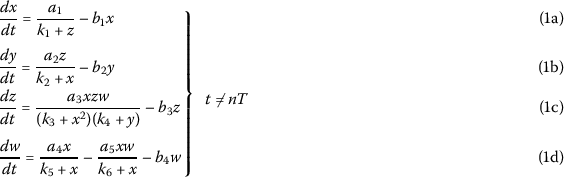
In this paper, we propose an impulsive mathematical model of bone formation and resorption accounting for the number of active osteoclastic cells, bone resorbing cells, and the number of active osteoblastic cells, bone forming cells, based on the effects of parathyroid hormone and calcitonin with impulsive estrogen supplement. The model is then analyzed theoretically in terms of its stability, permanence and oscillatory behavior. The conditions on the model parameters, for which the desirable behaviors of the solution of the system can be expected, are derived. Numerical simulations are also carried out in order to support our theoretical predictions. The results indicate that the frequency and dosage of the estrogen supplements are important since the behavior of the solution of the system depends on the frequency and dosage of the estrogen supplements.
The bone remodelling cycle
The bone remodelling cycle replaces old and damaged bone and is a highly regulated, lifelong process essential for preserving bone integrity and maintaining mineral homeostasis. During the bone remodelling cycle, osteoclastic resorption is tightly coupled to osteoblastic bone formation. The remodelling cycle occurs within the basic multicellular unit and comprises five co-ordinated steps; activation, resorption, reversal, formation and termination. These steps occur simultaneously but asynchronously at multiple different locations within the skeleton. Study of rare human bone disease and animal models have helped to elucidate the cellular and molecular mechanisms that regulate the bone remodelling cycle. The key signalling pathways controlling osteoclastic bone resorption and osteoblastic bone formation are receptor activator of nuclear factor-κB (RANK)/RANK ligand/osteoprotegerin and canonical Wnt signalling. Cytokines, growth factors and prostaglandins act as paracrine regulators of the cycle, whereas endocrine regulators include parathyroid hormone, vitamin D, calcitonin, growth hormone, glucocorticoids, sex hormones, and thyroid hormone. Disruption of the bone remodelling cycle and any resulting imbalance between bone resorption and formation leads to metabolic bone disease, most commonly osteoporosis. The advances in understanding the cellular and molecular mechanisms underlying bone remodelling have also provided targets for pharmacological interventions which include antiresorptive and anabolic therapies. This review will describe the remodelling process and its regulation, discuss osteoporosis and summarize the commonest pharmacological interventions used in its management.

Biology of Bone Tissue: Structure, Function, and Factors That Influence Bone Cells
Bone tissue is continuously remodeled through the concerted actions of bone cells, which include bone resorption by osteoclasts and bone formation by osteoblasts, whereas osteocytes act as mechanosensors and orchestrators of the bone remodeling process. This process is under the control of local (e.g., growth factors and cytokines) and systemic (e.g., calcitonin and estrogens) factors that all together contribute for bone homeostasis. An imbalance between bone resorption and formation can result in bone diseases including osteoporosis. Recently, it has been recognized that, during bone remodeling, there are an intricate communication among bone cells. For instance, the coupling from bone resorption to bone formation is achieved by interaction between osteoclasts and osteoblasts. Moreover, osteocytes produce factors that influence osteoblast and osteoclast activities, whereas osteocyte apoptosis is followed by osteoclastic bone resorption. The increasing knowledge about the structure and functions of bone cells contributed to a better understanding of bone biology. It has been suggested that there is a complex communication between bone cells and other organs, indicating the dynamic nature of bone tissue. In this review, we discuss the current data about the structure and functions of bone cells and the factors that influence bone remodeling.

Disease Systems Analysis of Bone Mineral Density and Bone Turnover Markers in Response to Alendronate, Placebo, and Washout in Postmenopausal Women
A previously established mechanism‐based disease systems model for osteoporosis that is based on a mathematically reduced version of a model describing the interactions between osteoclast (bone removing) and osteoblast (bone forming) cells in bone remodeling has been applied to clinical data from women ( n = 1,379) receiving different doses and treatment regimens of alendronate, placebo, and washout. The changes in the biomarkers, plasma bone‐specific alkaline phosphatase activity (BSAP), urinary N‐telopeptide (NTX), lumbar spine bone mineral density (BMD), and total hip BMD, were linked to the underlying mechanistic core of the model. The final model gave an accurate description of all four biomarkers for the different treatments. Simulations were used to visualize the dynamics of the underlying network and the natural disease progression upon alendronate treatment and discontinuation. These results complement the previous applications of this mechanism‐based disease systems model to data from various treatments for osteoporosis.

Dynamic Biochemical and Cellular Models of Bone Physiology: Integrating Remodeling Processes, Tumor Growth, and Therapy
Bone is an activeCoelho, Rui M. Neto, Joana P. connective tissue composed of different types of cells. The dynamic behavior of bone remodeling processes is typically represented throughValério, Duarte differential equations, which represent the physiological phenomena occurring in this organ. These models takeVinga, Susana into account the tight biochemical regulation between osteoclasts and osteoblasts and have also been enriched with variables and parameters related to bone pathologies and treatment. This chapter reviews some of the more recent models describing bone physiology, focusing on those that include the main cellular processes, along the biochemical control, and also the pharmacokinetic/pharmacodynamic (PK/PD) of the most common treatments for diseases such as cancer. These models are then compared in terms of the simulations obtained and, finally, some highlights on integrating them with the biomechanical component of the system which will be given. These models are expected to provide a valuable insight into this complex system and to support the development of clinical decision systems for bone pathologies.
