


Benjamini and Hochberg suggest that the false discovery rate may be the appropriate error rate to control in many applied multiple testing problems. A simple procedure was given there as an FDR controlling procedure for independent test statistics and was shown to be much more powerful than comparable procedures which control the traditional familywise error rate. We prove that this same procedure also controls the false discovery rate when the test statistics have positive regression dependency on each of the test statistics corresponding to the true null hypotheses. This condition for positive dependency is general enough to cover many problems of practical interest, including the comparisons of many treatments with a single control, multivariate normal test statistics with positive correlation matrix and multivariate $t$. Furthermore, the test statistics may be discrete, and the tested hypotheses composite without posing special difficulties. For all other forms of dependency, a simple conservative modification of the procedure controls the false discovery rate. Thus the range of problems for which a procedure with proven FDR control can be offered is greatly increased.
Controlling the False Discovery Rate: A Practical and Powerful Approach to Multiple Testing
SUMMARY The common approach to the multiplicity problem calls for controlling the familywise error rate (FWER). This approach, though, has faults, and we point out a few. A different approach to problems of multiple significance testing is presented. It calls for controlling the expected proportion of falsely rejected hypotheses — the false discovery rate. This error rate is equivalent to the FWER when all hypotheses are true but is smaller otherwise. Therefore, in problems where the control of the false discovery rate rather than that of the FWER is desired, there is potential for a gain in power. A simple sequential Bonferronitype procedure is proved to control the false discovery rate for independent test statistics, and a simulation study shows that the gain in power is substantial. The use of the new procedure and the appropriateness of the criterion are illustrated with examples.

Why Most Published Research Findings Are False
Summary There is increasing concern that most current published research findings are false. The probability that a research claim is true may depend on study power and bias, the number of other studies on the same question, and, importantly, the ratio of true to no relationships among the relationships probed in each scientific field. In this framework, a research finding is less likely to be true when the studies conducted in a field are smaller; when effect sizes are smaller; when there is a greater number and lesser preselection of tested relationships; where there is greater flexibility in designs, definitions, outcomes, and analytical modes; when there is greater financial and other interest and prejudice; and when more teams are involved in a scientific field in chase of statistical significance. Simulations show that for most study designs and settings, it is more likely for a research claim to be false than true. Moreover, for many current scientific fields, claimed research findings may often be simply accurate measures of the prevailing bias. In this essay, I discuss the implications of these problems for the conduct and interpretation of research.
Multiple Hypothesis Testing
Sign in to access your institutional or personal subscription or get immediate access to your online copy - available in PDF and ePub formats

The natural selection of bad science
Abstract. Poor research design and data analysis encourage false-positive findings. Such poor methods persist despite perennial calls for improvement, sugg

Statistical Models Answer the Fundamental Clinical Question and Provide Clinical Trial Estimands – Statistical Thinking
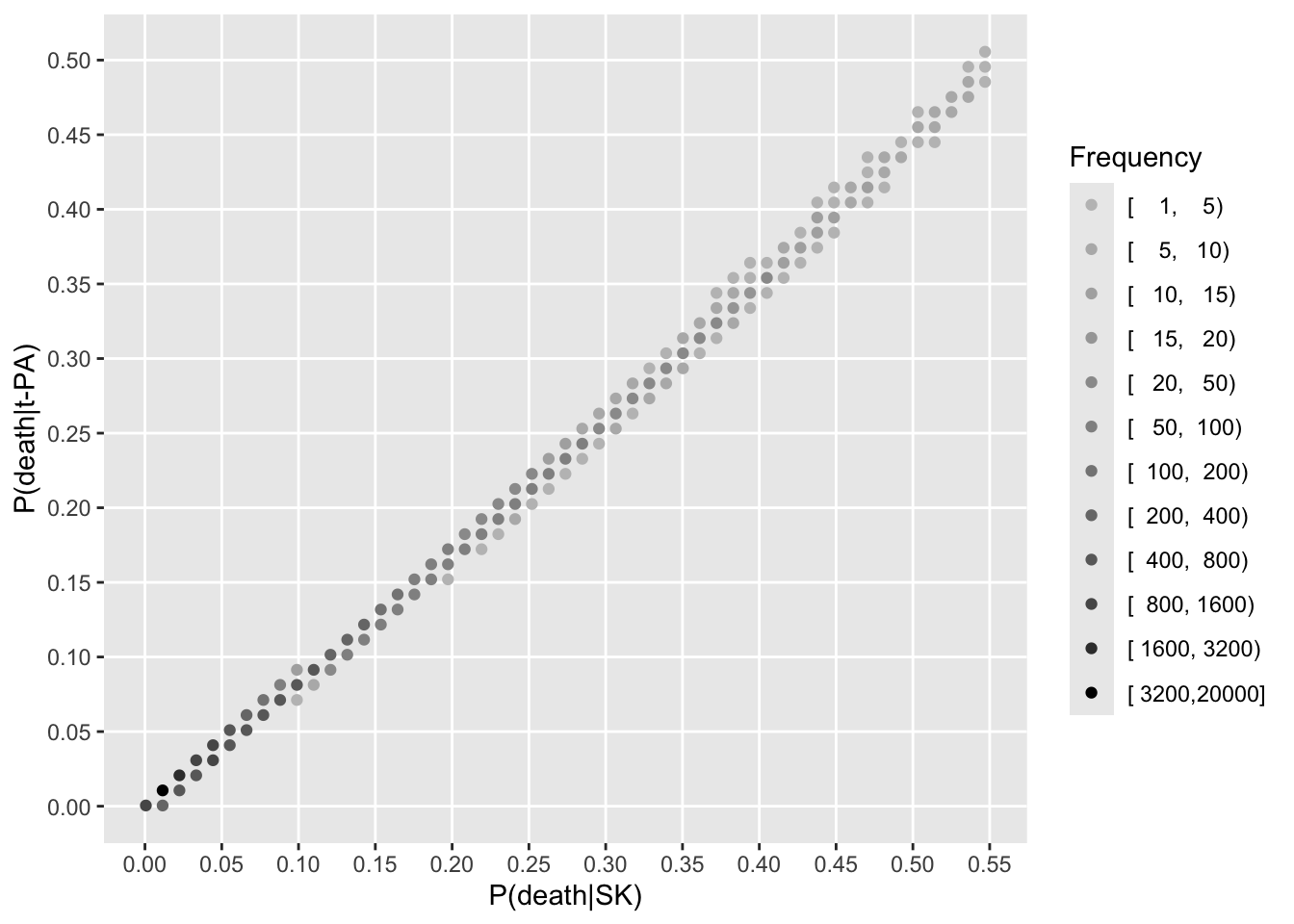
Specific goals and estimation targets for randomized clinical trials have still not been well defined for general outcome variables. Proponents of causal inference calculus have claimed to define goals and estimands, but they have largely done so in a way that is not concordant with the most popular design, the parallel-group randomized trial. Causal inferential methods require the use of counterfactuals that are not informed by any data (outside of crossover studies) and make assumptions that are unverifiable, e.g., about the correlation structure of potential outcomes. Causal inferential structure also leads practitioners to act as if marginal treatment effect estimates are both helpful in decision making and transport to populations when in fact neither is true. Heterogeneity of participants within a treatment arm dictates heterogeneity of outcomes and heterogeneity of treatment effects when quantified on an absolute scale. Statistical models are best poised for estimation and causal inference that is specific to patient types. The increasing generality and robustness of statistical models bolsters the case. In this article I provide a succinct statement of the clinical goal of a parallel-group trial, and statistical estimands for it in the context of a general family of robust and efficient ordinal models that contain virtually all routinely used statistical models and tests as special cases.
Hypothesis, Antithesis, synthesis
Introducing Hegel, our new family of property-based testing libraries.

Randomized Controlled Trials without Data Retention
Amidst rising appreciation for privacy and data usage rights, researchers have increasingly acknowledged the principle of data minimization, which holds that the accessibility, collection, and retention of subjects' data should be kept to the bare amount needed to answer focused research questions. Applying this principle to randomized controlled trials (RCTs), this paper presents algorithms for making accurate inferences from RCTs under stringent data retention and anonymization policies. In particular, we show how to use recursive algorithms to construct running estimates of treatment effects in RCTs, which allow individualized records to be deleted or anonymized shortly after collection. Devoting special attention to non-i.i.d. data, we further show how to draw robust inferences from RCTs by combining recursive algorithms with bootstrap and federated strategies.

Hypothesis: A new approach to property-based testing
The property-based testing library for Python
Choosing informative priors in Bayesian regression models: a simulation study and tutorial using Stan and R
BackgroundBayesian regression models provide a robust framework for complex data analysis, which is particularly advantageous in scenarios with small sample sizes, common in psychology or medical research. However, specifying appropriate prior distributions that incorporate existing knowledge to regularize model parameters remains a challenge for many researchers. This can lead to unstable or implausible estimates. This study aims to demonstrate the impact of different prior distributions on regression models and to provide a practical guide for choosing and justifying informative priors to produce more stable and credible results.MethodsThe study involved two parts. First, a simulation study was conducted to systematically assess the sensitivity of Bayesian linear regression models to prior specification. We systematically varied the sample size, prior location, and prior scale to observe their impact on posterior estimates for a known true effect size. Second, a case–control study using real-world patient data (N = 526) demonstrated the practical application of choosing informative priors. Bayesian logistic regression models were used to analyze the relationship between severe dementia and fall incidence, comparing results from priors based on existing literature (“believer”), conservative priors (“agnostic”), and priors assuming an opposite effect (“skeptical”).ResultsThe simulation study showed that strongly informative priors had a substantial influence on posterior estimates, particularly for smaller sample sizes. As the sample size increased, the influence of the data increased, and the estimates converged toward the true effect. In the case–control study, a standard frequentist logistic regression produced an odds ratio of 8.87 with a very wide and unstable confidence interval (1.66–165.19), likely due to data sparsity. In contrast, a Bayesian model using a moderately informative “believer” prior derived from existing research yielded a more stable and plausible odds ratio of 4.01 with a substantially narrower credible interval (1.99–8.78).ConclusionCareful and transparent specification of informative priors is a critical tool in Bayesian analysis, especially when data are sparse. By incorporating justified evidence-based assumptions, researchers can regularize models to prevent implausible outcomes and produce more stable, interpretable, and credible results. This approach enhances the robustness of statistical inference in fields where small sample sizes are a frequent challenge.

Estimating Causal Effects of Treatments in Randomized and Nonrandomized Studies
Presents a discussion of matching, randomization, random sampling, and other methods of controlling extraneous variation. The objective was to specify the benefits of randomization in estimating causal effects of treatments. It is concluded that randomization should be employed whenever possible but that the use of carefully controlled nonrandomized data to estimate causal effects is a reasonable and necessary procedure in many cases.
Assessing and mitigating batch effects in large-scale omics studies
Batch effects in omics data are notoriously common technical variations unrelated to study objectives, and may result in misleading outcomes if uncorrected, or hinder biomedical discovery if over-corrected. Assessing and mitigating batch effects is crucial for ensuring the reliability and reproducibility of omics data and minimizing the impact of technical variations on biological interpretation. In this review, we highlight the profound negative impact of batch effects and the urgent need to address this challenging problem in large-scale omics studies. We summarize potential sources of batch effects, current progress in evaluating and correcting them, and consortium efforts aiming to tackle them.

Verification in the Age of AI Scientists
AI Scientists now operate at a scale that outpaces human capacity for manual review. Systems such as Sakana’s AI Scientist write entire workshop papers end-to-end. Lila Sciences runs autonomous ``AI Science Factories’’ that hypothesize, experiment, and iterate without human guidance. FutureHouse’s Kosmos and Robin generate thousands of candidate hypotheses in a single run, and Google’s Co-Scientist proposes testable experiments at a rate no laboratory can fully evaluate. Each of these systems emphasizes verified results, yet that standard ranges from near-perfect formal proof in mathematics to decade-long clinical trials in medicine, with no shared framework for judging sufficiency across domains. As outputs scale beyond what humans can manually inspect, the question of which results to trust becomes as hard as generating them. The bottleneck for AI for Science is no longer hypothesis generation, it is verification.
GraphDx: A Cost-Aware Knowledge-Enhanced Multi-Agent Framework for Sequential Diagnosis
Unlike static question answering, sequential diagnosis mirrors actual clinical workflows: physicians iteratively gather information through symptom inquiries and diagnostic tests, making decisions under uncertainty while balancing diagnostic accuracy against resource costs including monetary expense, patient discomfort, and time. This multi-turn process requires not merely knowledge recall, but systematic reasoning that coordinates information acquisition with hypothesis refinement.
Accelerating scientific discovery with Co-Scientist
Scientific discovery is driven by scientists generating novel hypotheses for complex problems that undergo rigorous experimental validation. To augment this process, we introduce Co-Scientist, a multi-agent AI system built on Gemini for structured scientific thinking and hypothesis generation. Co-Scientist aims to help scientists discover new original knowledge. Conditioned on their research objectives and prior scientific evidence, it formulates demonstrably novel research hypotheses for experimental verification. The system's design involves agents continuously generating, critiquing and refining hypotheses accelerated by scaling test-time compute. Key contributions include: (1) a multi-agent architecture with an asynchronous task execution framework for flexible compute scaling; (2) a tournament evolution process for self-improving hypotheses generation. Automated evaluations show continued benefits of test-time compute scaling, improving hypothesis quality over time. While general purpose, we focus the validation in three biomedical applications: drug repurposing, novel target discovery, and explaining mechanisms of anti-microbial resistance. Specifically, Co-Scientist helped identify new drug repurposing candidates and synergistic combination therapies for acute myeloid leukemia, which were validated through in vitro experiments. These real-world validations demonstrate the potential of Co-Scientist to accelerate scientific discovery and usher in an era of AI empowered scientists.
Causality
Written by one of the preeminent researchers in the field, this book provides a comprehensive exposition of modern analysis of causation. It shows how causality has grown from a nebulous concept into a mathematical theory with significant applications in the fields of statistics, artificial intelligence, economics, philosophy, cognitive science, and the health and social sciences. Judea Pearl presents and unifies the probabilistic, manipulative, counterfactual, and structural approaches to causation and devises simple mathematical tools for studying the relationships between causal connections and statistical associations. Cited in more than 2,100 scientific publications, it continues to liberate scientists from the traditional molds of statistical thinking. In this revised edition, Judea Pearl elucidates thorny issues, answers readers' questions, and offers a panoramic view of recent advances in this field of research. Causality will be of interest to students and professionals in a wide variety of fields. Dr Judea Pearl has received the 2011 Rumelhart Prize for his leading research in Artificial Intelligence (AI) and systems from The Cognitive Science Society.
New preprint! We introduce a new benchmark, SciConBench, with 9.11k scientific questions derived from Cochrane Systematic Reviews. We find evidence that frontier AI agents **cannot** synthesize scientific conclusions well. A thread 🧵 w/ @hayoungjung.bsky.social & others!
