


Tip request messages are marketing communications that can help digital platforms balance customer spending with worker effort and compensation. We report the first field experiments testing how three appeals based on tipping motivations—injunctive norms (“It’s customary to leave a tip for the seller’s service”), personalized reciprocity, and impersonal reciprocity—affect tipping and future demand in a global freelance marketplace. Overall, the norms message increased tipping the most, and did so without reducing returning demand, showing that tip request messages can motivate customer tipping to better incentivize and compensate gig workers. , Tip request messages are marketing communications that can help digital platforms balance customer spending with worker effort and compensation. We report the first academic field experiments manipulating tip request message content, to our knowledge, analyzing 436,969 transactions. We test how three appeals based on tipping motivations—injunctive norms (“It’s customary to leave a tip for the seller’s service”), personalized reciprocity, and impersonal reciprocity—affect tipping and future demand in a global freelance marketplace. On the web, first exposures to the injunctive norms message increased new buyers’ tipping rate by 11.8 percentage points (p.p.) and repeat buyers’ tipping rate by 6.8 p.p. In the app, first exposures to the injunctive norms message increased tipping rate by 2.5 p.p. for new buyers and 1.4 p.p. for repeat buyers. Treatment effects on tipping increase with transaction order price. The norms and personalized reciprocity messages increased subsequent orders and spending in the web experiment and did not significantly change repatronage in the app experiment, suggesting that effective tipping prompts need not reduce future business. Overall, tip request messages can motivate customer tipping to better incentivize and compensate gig workers, but optimization requires careful testing. History: Hema Yoganarasimhan served as the senior editor. Supplemental Material: The online appendix is available at https://doi.org/10.1287/mksc.2025.0392 .
Prosocial Compliance in P2P Lending: A Natural Field Experiment
We implement behavioral mechanisms in a natural field experiment to increase loan repayment rates on a peer-to-peer (P2P) lending website. The results show that text message reminders that convey lenders’ positive expectations considerably increase the likelihood that borrowers will repay their loans, whereas reminders emphasizing the adverse consequences of failure to repay loans do not have enduring effects. Our experiment results in an increase in loan repayments in the sample period. In addition, our reminders are cost-free to implement, showing the potential importance of such interventions in enhancing prosocial compliance in P2P lending. This paper was accepted by John List, behavioral economics.

Preference Filtering: When Customers Share Narrow Preferences with Algorithms
Digital platforms commonly ask customers to select interest categories (e.g., genres/topics) as input for personalized recommendations. Twelve main studies and two pilot studies (total n = 8,808) reveal that customers share less diverse preferences with algorithms (vs. human curators or when merely listing preferences for themselves); they focus on core preferences while omitting tangential ones, a phenomenon termed “preference filtering.” It is driven by customers’ expectation that algorithms weight their preferences more uniformly than human curators (i.e., expected uniformity). A mathematical model identifies conditions under which preference filtering appears rational ex ante yet reduces recommendation fit ex post. Interviews and a survey suggest that customers expect more uniform weighting than practitioners do. The authors examine key design dimensions of the preference elicitation task—when preferences are elicited, how customers articulate them, what purpose is made salient, and who customers believe they are interacting with—that determine the extent to which customers engage in preference filtering. Two studies on self-developed video-streaming websites show that alleviating preference filtering can boost engagement and enhance customer reviews of recommendation services. These findings offer valuable insights for firms that rely on algorithms to engage customers.

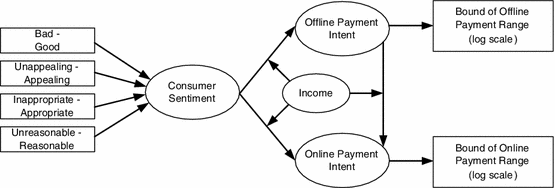
The moderating role of income on consumers’ preferences and usage for online and offline payment methods
In this paper we examine consumer attitudes towards a payment method, which is a key factor affecting the probability of completing a transaction offline and online. More specifically, we constructed a model that surveyed the offline and online usage of prepaid e-cash, debit cards, credit cards and cash. User perceptions of the attractiveness of e-cash and various traditional payment means were also empirically assessed. Consumer attitudes towards a payment technology were found to be influential on users’ perceptions in both online and offline environments. User perceptions of offline purchases with a payment technology had significant and positive effects on the corresponding online usage perceptions. The effects of our research model are contingent on the income level of users. Our findings have significant implications, as they could help shed light on why consumers abandon their shopping carts and do not complete their transactions, which could potentially play a significant role when it comes to designing applications targeting sspecific consumer segments.
The Challenge of Understanding What Users Want: Inconsistent Preferences and Engagement Optimization
Online platforms have a wealth of data, run countless experiments, and use industrial-scale algorithms to optimize user experience. Despite this, many users seem to regret the time they spend on these platforms. One possible explanation is that incentives are misaligned: platforms are not optimizing for user happiness. We suggest the problem runs deeper, transcending the specific incentives of any particular platform, and instead stems from a mistaken foundational assumption. To understand what users want, platforms look at what users do. This is a kind of revealed-preference assumption that is ubiquitous in the way user models are built. Yet research has demonstrated, and personal experience affirms, that we often make choices in the moment that are inconsistent with what we actually want. The behavioral economics and psychology literatures suggest, for example, that we can choose mindlessly or that we can be too myopic in our choices, behaviors that feel entirely familiar on online platforms. In this work, we develop a model of media consumption where users have inconsistent preferences. We consider a platform which wants to maximize user utility, but only observes behavioral data in the form of the user’s engagement. We show how our model of users’ preference inconsistencies produces phenomena that are familiar from everyday experience but difficult to capture in traditional user interaction models. These phenomena include users who have long sessions on a platform but derive very little utility from it, and platform changes that steadily raise user engagement before abruptly causing users to go “cold turkey” and quit. A key ingredient in our model is a formulation for how platforms determine what to show users: they optimize over a large set of potential content (the content manifold) parametrized by underlying features of the content. Whether improving engagement improves user welfare depends on the direction of movement in the content manifold: For certain directions of change, increasing engagement makes users less happy, whereas in other directions on the same manifold, increasing engagement makes users happier. We provide a characterization of the structure of content manifolds for which increasing engagement fails to increase user utility. By linking these effects to abstractions of platform design choices, our model thus creates a theoretical framework and vocabulary in which to explore interactions between design, behavioral science, and social media. This paper was accepted by Yan Chen, behavioral economics and decision analysis. Funding: This work was supported by the Vannevar Bush Faculty Fellowship and Multidisciplinary University Research Initiative [Grant W911NF-19-0217]. Supplemental Material: The online appendices are available at https://doi.org/10.1287/mnsc.2022.03683 .
Always Leave Home Without It: A Further Investigation of the Credit-Card Effect on Willingness to Pay
In studies involving genuine transactions of potentially high value we show that willingness-to-pay can be increased when customers are instructed to use a credit card rather than cash. The effect may be large (up to 100%) and it appears unlikely that it arises due solely to liquidity constraints. In addition to demonstrating the effect, we provide a methodology for detecting it, and our findings suggest a source of variance to test alternative explanations.
Small Probabilistic Discounts Stimulate Spending: Pain of Paying in Price Promotions
AbstractWe find that small probabilistic price promotions effectively stimulate demand, even more so than comparable fixed price promotions (e.g., “1% chance it’s free” vs. “1% off,” respectively), because they more effectively reduce the pain of paying. In three field experiments at a grocer, we exogenously and endogenously manipulated the salience of pain of paying via elicitation timing (e.g., at entrance or checkout) and payment method (i.e., cash/debit cards or credit cards). This modulated the attractiveness of probabilistic discounts and their ability to stimulate spending. Shoppers paying with cash or debit cards, for example, spent 54% more if they received a 1% probabilistic discount than a 1% fixed discount (experiment 2). A fourth experiment showed that consumers’ sensitivity to pain of paying modulates the greater comparative efficacy of small probabilistic than fixed discounts. More broadly, the results elucidate a novel affective route through which price promotions stimulate demand––pain of paying.

Persuasion: Empirical Evidence
We provide a selective survey of empirical evidence on the effects as well as the drivers of persuasive communication. We consider persuasion directed at consumers, voters, donors, and investors. We organize our review around four questions. First, to what extent does persuasion affect the behavior of each of these groups? Second, what models best capture the response to persuasive communication? Third, what are persuaders' incentives, and what limits their ability to distort communications? Finally, what evidence exists on the way persuasion affects equilibrium outcomes in economics and politics?

Are Large Language Models Sensitive to the Motives Behind Communication?
Human communication is $\textit{motivated}$: people speak, write, and create content with a particular communicative intent in mind. As a result, information that large language models (LLMs) and AI agents process is inherently framed by humans' intentions and incentives. People are adept at navigating such nuanced information: we routinely identify benevolent or self-serving motives in order to decide what statements to trust. For LLMs to be effective in the real world, they too must critically evaluate content by factoring in the motivations of the source---for instance, weighing the credibility of claims made in a sales pitch. In this paper, we undertake a comprehensive study of whether LLMs have this capacity for $\textit{motivational vigilance}$. We first employ controlled experiments from cognitive science to verify that LLMs' behavior is consistent with rational models of learning from motivated testimony, and find they successfully discount information from biased sources in a human-like manner. We then extend our evaluation to sponsored online adverts, a more naturalistic reflection of LLM agents' information ecosystems. In these settings, we find that LLMs' inferences do not track the rational models' predictions nearly as closely---partly due to additional information that distracts them from vigilance-relevant considerations. However, a simple steering intervention that boosts the salience of intentions and incentives substantially increases the correspondence between LLMs and the rational model. These results suggest that LLMs possess a basic sensitivity to the motivations of others, but generalizing to novel real-world settings will require further improvements to these models.
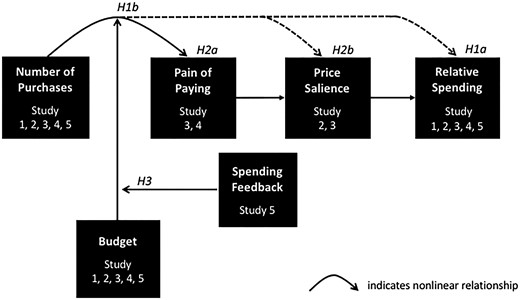
In-Store Spending Dynamics: How Budgets Invert Relative-Spending Patterns
Abstract The authors conduct four controlled lab experiments and one field study in a brick-and-mortar grocery store to demonstrate that relative spending—the price of the purchased item relative to the mean price of the product category—evolves nonlinearly and distinctly for budget and nonbudget shoppers. While the relative spending of budget shoppers evolves in a concave manner, the relative spending of nonbudget shoppers evolves inversely in a convex manner. Thus, budget (nonbudget) shoppers spend relatively more (less) in the middle than at the beginning and toward the end of their shopping trip. Mediation analyses confirm that the pain of paying experienced while shopping drives price salience, which then drives relative spending. Moreover, manipulating shoppers’ pain of paying, by altering the opportunity costs associated with their spending or drawing shoppers’ attention to their spending via real-time spending feedback, is shown to influence these spending patterns. The research offers theoretical contributions to the in-store decision-making, budgeting, and pain-of-paying literature and has important implications for marketing and promotion strategies in retail and mobile technology environments, as it suggests when a shopper may be more sensitive to price-related factors.
Demand characteristics in human–computer experiments
Demand characteristics refer to cues that can inform participants in experiments about the hypothesis and influence their behavior. They lead researchers to erroneously infer non-existing effects, undermining the experimental integrity of empirical studies. Despite a widespread acknowledgment of their confounding influence in experimental psychology, experiments involving humans and computers to a lesser extent consider effects of demand characteristics, as computerized protocols are thought to be immune to some experimenter biases. Furthermore, demand characteristics are considered to mainly effect subjective measures. As a result, demand characteristics often remain uncontrolled in studies involving computers, and in particular for objective measures such as performance. In this paper, we present two experiments that underline the importance of demand characteristics in human–computer interaction experiments. In a text-entry study, we made participants believe they were evaluating a research-based keyboard. This belief led to increased performance and self-reported user experience. In a second study, we conducted a thought experiment on the illusion of body ownership in virtual reality, where the experimental design indicated the study hypothesis. We found hypothesis-compliant responses from participants, even when they did not experience the illusion. We conclude that demand characteristics pose a significant challenge to the interpretation and validity of human–computer experiments, even when they are fully automated. We discuss the implications and offer guidelines to mitigate effects of demand characteristics.
Mis-Nudging Morality
Morals constrain self-serving behavior. Yet, self-regulation failures in the face of monetary temptation are common at the workplace. To limit such failures, organizations can design environments that limit the temptation to behave self-servingly, nudging workers to uphold their morals. In a series of experiments where participants may be tempted to take excessive pay after exerting effort, we study whether a simple intervention—asking individuals to state the wage they believe should be paid ex ante, before facing the temptation to take excessive compensation—prevents self-serving behavior. In contrast to lay beliefs and the predictions from prior work, we find that such an intervention is not effective, leading to self-serving behavior. However, a more realistic elicitation procedure of the appropriate wage mitigates this effect. These findings contribute to work on the malleability of moral behavior showing that simple interventions thought to effectively mitigate self-serving behavior can prompt individuals to stretch their moral boundaries. They also stress the importance of properly testing interventions that might seem intuitive. This paper was accepted by Yan Chen, behavioral economics and decision analysis. Funding: Financial support from the Israel Science Foundation [Grant 766/19] is gratefully acknowledged. Supplemental Material: The online appendix and data are available at https://doi.org/10.1287/mnsc.2022.4344 .
Participation governance in consumer and AI co-creation: Whether to intervene and how to design it
Artificial intelligence reshapes digital mass customization by altering the structure of consumer co-creation. When consumers start from a draft generated by artificial intelligence rather than a blank canvas, outcomes are jointly determined by two stages: whether consumers initiate co-creation and, conditional on participation, how much refinement effort they exert. This separation makes participation a governable design margin—an issue that is largely muted in traditional blank-canvas customization, where participation and effort are tightly bundled. Partnering with a leading United States online retailer of personalized photo products, we study whether and how firm interventions at the participation stage shape downstream purchase outcomes. We develop a two-stage model in which, relative to a baseline with organic participation, a nudge lowers start-up frictions and expands voluntary entry, whereas a mandate serves as a strong boundary-case intervention that guarantees entry but can weaken how participation translates into purchase, generating a reach–efficiency trade-off. We examine these predictions in two randomized experiments. In Study 1, a light-touch nudge increases participation by 5.98 percentage points and raises revenue and order frequency. The evidence is consistent with gains arising primarily through expanded entry into consumer co-creation with artificial intelligence. In Study 2, mandates increase participation relative to nudges, but we find no clear evidence of additional gains in purchase or revisit intentions. Instead, mandates increase low-value participation, in which consumers exert minimal effort and report low purchase intention. Together, these findings show that in mass customization enabled by artificial intelligence, participation governance is a consequential design choice: firms must consider not only how many consumers initiate co-creation, but also whether the participation they induce creates downstream value.
Behavioral Intervention Construal: A Framework for Understanding Inferences from Behavioral Interventions
Organizations frequently use behavioral interventions—including incentives, messaging campaigns, and modifications to choice architecture—to influence people’s behavior. However, recent evidence suggests that such interventions often have inconsistent effects across implementations. To understand this variability, we build on the idea that interventions are not simply levers for changing behavior, they also signal useful information to decision makers. For example, when an option is set as the default, people may infer that it is recommended by the organization—an inference that can increase the likelihood that people stick with that option. However, when people perceive that defaults benefit the organization, those defaults may be rejected. Here, we propose a framework to better understand the effects of behavioral interventions by identifying the inferences they prompt people to draw. In developing this framework, we first characterize the defining features of behavioral interventions that determine how they are psychologically experienced. These features implicate five fundamental needs, which guide decision makers’ information-seeking processes. From these needs, we derive a principled typology of inferences drawn by decision makers in response to behavioral interventions, bringing together scattered evidence for these inferences from across the behavioral sciences. The resulting framework entails predictions about when specific inferences will arise and how these inferences influence the overall effects of behavioral interventions. Utilizing the framework, we provide a tool for enhancing intervention design. Taken together, the current research offers an integrative framework for advancing theory on behavioral interventions while also outlining actionable insights for organizations hoping to promote behavior change at scale.

The Effects of Financial Incentives in Experiments: A Review and Capital-Labor-Production Framework
We review 74 experiments with no, low, or high performance-based financial incentives. The modal result has no effect on mean performance (though variance is usually reduced by higher payment). Higher incentive does improve performance often, typically judgment tasks that are responsive to better effort. Incentives also reduce “presentation” effects (e.g., generosity and risk-seeking). Incentive effects are comparable to effects of other variables, particularly “cognitive capital” and task “production” demands, and interact with those variables, so a narrow-minded focus on incentives alone is misguided. We also note that no replicated study has made rationality violations disappear purely by raising incentives.
Variety Effects in Mobile Advertising
Mobile app users are often exposed to a sequence of short-lived marketing interventions (e.g., ads) within each usage session. This study examines how an increase in the variety of ads shown in a session affects a user's response to the next ad. The authors leverage the quasi-experimental variation in ad assignment in their data and propose an empirical framework that accounts for different types of confounding to isolate the effects of a unit increase in variety. Across a series of models, the authors consistently show that an increase in ad variety in a session results in a higher response rate to the next ad: holding all else fixed, a unit increase in variety of the prior sequence of ads can increase the click-through rate on the next ad by approximately 13%. The authors then explore the underlying mechanism and document empirical evidence for an attention-based account. The article offers important managerial implications by identifying a source of interdependence across ad exposures that is often ignored in the design of advertising auctions. Furthermore, the attention-based mechanism suggests that platforms can incorporate real-time attention measures to help advertisers with targeting dynamics.
Unwillingness to pay for privacy: A field experiment
We measure willingness to pay for privacy in a field experiment. Participants bought at most one DVD from one of two competing online stores. One store consistently required more sensitive personal data than the other, but otherwise the stores were identical. In one treatment, DVDs were one Euro cheaper at the store requesting more personal information, and almost all buyers chose the cheaper store. Surprisingly, in the second treatment when prices were identical, participants bought from both shops equally often.