


A new model of consumer behavior is developed using a hybrid of cognitive psychology and microeconomics. The development of the model starts with the mental coding of combinations of gains and losses using the prospect theory value function. Then the evaluation of purchases is modeled using the new concept of “transaction utility.” The household budgeting process is also incorporated to complete the characterization of mental accounting. Several implications to marketing, particularly in the area of pricing, are developed.
A Structural Model of Mental Accounting
We construct and estimate a formal economic model of mental accounting where utility maximizing consumers facing rationality constraints infrequently update the

Effects of mental accounting on purchase decision processes: A systematic review and research agenda
Abstract This paper aims to systematically analyze and synthesize the existing research published on mental accounting and purchase decision processes by conducting a systematic literature review. Specifically, the paper aims to answer the question: “What are the effects of mental accounting on purchase decision processes?” Therefore, it identified 110 papers which contribute to achieving the research objective and which were selected using the same data collection, data analysis, and quality standards. After reviewing the identified publications, the paper finds that the existing literature can be structured along four main themes impacting purchase decision‐making processes: (1) source of funds, (2) intended use of funds, (3) pricing, and (4) payments. The paper shows that for each of the four themes there are multiple mental accounting effects with an impact on for example willingness to pay, the experienced pain of paying or the ultimate purchase decision. Further, the paper identifies potential directions for future research in mental accounting, including the influence of product categories on mental accounting, flexibility in budget setting and its impact on mental accounting behavior, long‐term effects of mental budgeting on financial wealth, integration–segregation behavior in the context of pricing, the role of consumer characteristics on mental accounting behavior, and the impact of increased financial transparency through technology on mental accounting.

A Model of Mental Accounting and Reference Price Adaptation
Consumers possess a mental account that stores the worth of items purchased and yet to be consumed. Reference prices act as the book values of these items. Movements in the account—the comparison between the reference price and the price paid at entry, and the comparison between the benefit of consumption and the reference price at exit—yield hedonic benefits. The reference price is determined by a psychological process of adaptation to the price evoked by the trade. The model is integrative in that it explains a wide array of observed anomalies such as sunk-cost effects, payment depreciation, reluctance to trade, preference for prepayment, and the flat-rate bias. The model also generates new testable implications. This paper was accepted by James Smith, decision analysis.

Perspectives on mental accounting: An exploration of budgeting and investing
This article provides an overview of recent advances in the literature on mental accounting within the context of consumer financial decision‐making. We first discuss the categorization process that underlies mental accounting and the methods people use to categorize funds. We then highlight some of the notable work that examines how mental accounting influences budgeting, spending, and investment decisions. The article concludes by proposing an agenda for future research, focusing on current gaps in our knowledge and promising areas to explore.

Mental Budgeting and Consumer Decisions
Abstract. Consumers often set budgets for categories of expenses (e.g., entertainment) and track expenses against their budget. Because budgets cannot perf
On the Mental Accounting of Restricted-Use Funds: How Gift Cards Change What People Purchase
Abstract. This article emphasizes the role of categorization in mental accounting and proposes that once a mental account is established, purchases that ar
Double Mental Discounting: When a Single Price Promotion Feels Twice as Nice
This research finds that when a single gain has strong associations with multiple costs, consumers often mentally deduct that gain from perceived costs multiple times. For example, with some price promotions (e.g., spend $200 now and receive a $50 gift card to spend in the future), consumers mentally deduct the value of the price promotion from the cost of the first purchase when they receive the promotion, as well as from the cost of the second purchase when they use the promotion. Multiple mental deductions based on a single gain result in consumers' perceptions that their costs are lower than they actually are, which can trigger higher expenditures. This mental accounting phenomenon, referred to as “double mental discounting,” is driven by the extent to which gains feel associated, or coupled, with multiple purchases. This article also documents methods to decouple promotional gains from purchases, thus mitigating double mental discounting.

Malleable Mental Accounting: The Effect of Flexibility on the Justification of Attractive Spending and Consumption Decisions
Mental accounts are often characterized as self‐control devices that consumers employ to prevent excess spending and consumption. However, under certain conditions of ambiguity, the mental accounting process is malleable; that is, consumers have flexibility in assigning expenses to different mental accounts. We demonstrate how consumers flexibly classify expenses, or construct accounts, to justify spending. An expense that can be assigned to more than one account (i.e., an ambiguous expense) is more likely to be incurred than an unambiguous expense that is constrained either by existing budgets or by previously constructed accounts. We explore the justification processes that underlie these results and their implications for mental accounts as self‐control devices.

Managing Mental Accounts: Payment Cards and Consumption Expenditures
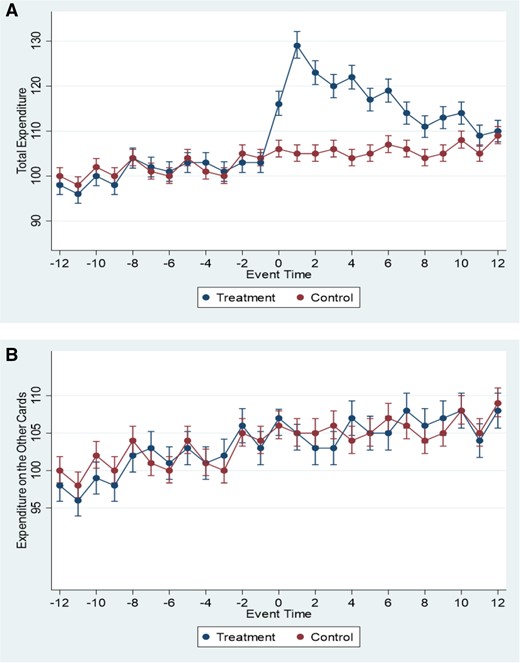
Does mental accounting matter for total consumption expenditures? We exploit a unique setting in which individuals exogenously received a new credit card, without requesting one. Using random variation in the time of receipt we show that individuals temporarily increase total consumption expenditure by making purchases with the new card without reducing spending on the others. We do not observe a corresponding increase in indebtedness. Total consumption expenditure rises even for the least liquidity-constrained individuals. The evidence is consistent with consumers treating methods of payment as nonfungible budget categories, as suggested by models of mental accounting and narrow bracketing.

Managing Mental Accounts: Payment Cards and Consumption Expenditures
Abstract Does mental accounting matter for total consumption expenditures? We exploit a unique setting in which individuals exogenously receive a new payment card, without requesting one. Using random variation in the time of receipt, we show that individuals temporarily increase total consumption expenditure by making purchases with the new card without reducing spending on the others. We do not observe a corresponding increase in indebtedness. Total consumption expenditure rises even for the least liquidity-constrained individuals. The evidence is consistent with consumers treating methods of payment as nonfungible budget categories, as suggested by models of mental accounting and narrow bracketing.
The Exception Is the Rule: Underestimating and Overspending on Exceptional Expenses
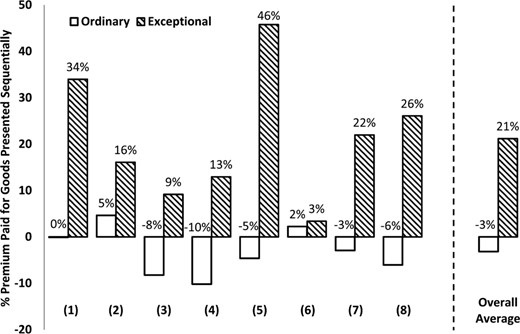
Abstract Purchases fall along a continuum from ordinary (common or frequent) to exceptional (unusual or infrequent), with many of the largest expenses (e.g., electronics, celebrations) being the most exceptional. Across seven studies, we show that, while people are fairly adept at budgeting and predicting how much they will spend on ordinary items, they both underestimate their spending on exceptional purchases overall and overspend on each individual purchase. Based on the principles of mental accounting and choice bracketing, we show that this discrepancy arises in part because consumers categorize exceptional expenses too narrowly, construing each as a unique occurrence and consequently overspending across a series of discretely exceptional expenses. We conclude by proposing an intervention that diminishes this tendency by helping consumers consider their spending on exceptional items as part of a larger set of purchases.
The Red and the Black: Mental Accounting of Savings and Debt
In the standard economic account of consumer behavior the cost of a purchase takes the form of a reduction in future utility when expenditures that otherwise could have been made are forgone. The reality of consumer hedonics is different. When people make purchases, they often experience an immediate pain of paying, which can undermine the pleasure derived from consumption. The ticking of the taxi meter, for example, reduces one's pleasure from the ride. We propose a “double-entry” mental accounting theory that describes the nature of these reciprocal interactions between the pleasure of consumption and the pain of paying and draws out their implications for consumer behavior and hedonics. A central assumption of the model, which we call prospective accounting, is that consumption that has already been paid for can be enjoyed as if it were free and that the pain associated with payments made prior to consumption (but not after) is buffered by thoughts of the benefits that the payments will finance. Another important concept is coupling, which refers to the degree to which consumption calls to mind thoughts of payment, and vice versa. Some financing methods, such as credit cards, tend to weaken coupling, whereas others, such as cash payment, produce tight coupling. Our model makes a variety of predictions that are at variance with economic formulations. Contrary to the standard prediction that people will finance purchases to minimize the present value of payments, our model predicts strong debt aversion—that they should prefer to prepay for consumption or to get paid for work after it is performed. Such pay-before sequences confer hedonic benefits because consumption can be enjoyed without thinking about the need to pay for it in the future. Likewise, when paying beforehand, the pain of paying is mitigated by thoughts of future consumption benefits. Contrary to the economic prediction that consumers should prefer to pay, at the margin, for what they consume, our model predicts that consumers will find it less painful to pay for, and hence will prefer, flat-rate pricing schemes such as unlimited Internet access at a fixed monthly price, even if it involves paying more for the same usage. Other predictions concern spending patterns with cash, charge, or credit cards, and preferences for the earmarking of purchases. We test these predictions in a series of surveys and in a conjoint-like analysis that pitted our double-entry mental accounting model against a standard discounting formulation and another benchmark that did not incorporate hedonic interactions between consumption and payments. Our model provides a better fit of the data for 60% of the subjects; the discounting formulation provides a better fit for only 29% of the subjects (even when allowing for positive and negative discount rates). The pain of paying, we argue, plays an important role in consumer self-regulation, but is hedonically costly. From a hedonic perspective the ideal situation is one in which payments are tightly coupled to consumption (so that paying evokes thoughts about the benefits being financed) but consumption is decoupled from payments (so that consumption does not evoke thoughts about payment). From an efficiency perspective, however, it is important for consumers to be aware of what they are paying for consumption. This creates a tension between hedonic efficiency and what we call decision efficiency. Various institutional arrangements, such as financing of public parks through taxes or usage fees, play into this tradeoff. A producer developing a pricing structure for their product or service should be aware of these two conflicting objectives, and should try to devise a structure that reconciles them.
Consumers’ Mental Representation of Expenditures: Implications for Spending and Saving Decisions
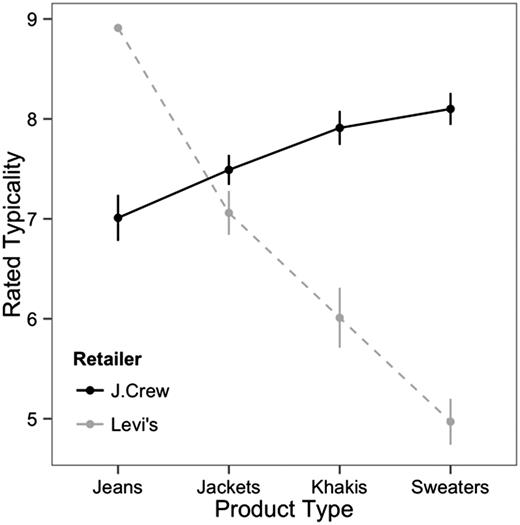
People’s mental representation of expenditures is crucial to how they budget. We propose that much like how people represent natural kinds (e.g., animals and pl
The Red, the Black, and the Plastic: Paying Down Credit Card Debt for Hotels, Not Sofas
Using transaction data from a sample of 1.8 million credit card accounts, we provide the first field test of a major prediction of Prelec and Loewenstein’s theory of mental accounting: that consumers will pay off expenditure on transient forms of consumption more quickly than expenditure on durables. According to the theory, this is because the pain of paying can be offset by the future anticipated pleasure of consumption only when money is spent on consumption that endures over time. Consistent with this prediction, we found that repayment of debt incurred for nondurable goods is an absolute 10% more likely than repayment of debt incurred for durable goods. The strength of this relationship is comparable to an increment in 15 percentage points in the credit card annualized percentage rate. Our results have not only managerial implications for the structuring of financial transactions (e.g., that credit card customers should be given the option of paying off specific purchases) but also more general implications for exploiting variations in the pain of paying in incentive schemes aimed at customers and employees. This paper was accepted by Yan Chen, behavioral economics.
Payment Depreciation: the Behavioral Effects of Temporally Separating Payments From Consumption
Abstract. Research suggests that individuals mentally track the costs and benefits of a consumer transaction for the purpose of reconciling those costs and
Pain of Paying? — A Metaphor Gone Literal: Evidence from Neural and Behavioral Science
How do individuals consider the price of a good when making purchase decisions? Standard economic theories assume an analytical process: Individuals consider th