

Tens of millions of people are currently choosing health coverage on a state or federal health insurance exchange as part of the Patient Protection and Affordable Care Act. We examine how well people make these choices, how well they think they do, and what can be done to improve these choices. We conducted 6 experiments asking people to choose the most cost-effective policy using websites modeled on current exchanges. Our results suggest there is significant room for improvement. Without interventions, respondents perform at near chance levels and show a significant bias, overweighting out-of-pocket expenses and deductibles. Financial incentives do not improve performance, and decision-makers do not realize that they are performing poorly. However, performance can be improved quite markedly by providing calculation aids, and by choosing a “smart” default. Implementing these psychologically based principles could save purchasers of policies and taxpayers approximately 10 billion dollars every year.
Choose to Lose: Health Plan Choices from a Menu with Dominated Option*
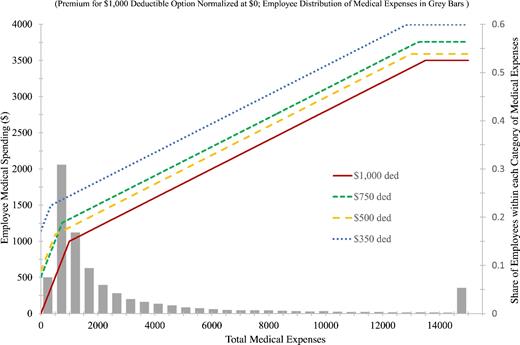
Abstract We examine the health plan choices that 23,894 employees at a U.S. firm made from a large menu of options that differed only in financial cost-sharing and premium. These decisions provide a clear test of the predictions of the standard economic model of insurance choice in the absence of choice frictions because plans were priced so that nearly every plan with a lower deductible was financially dominated by an otherwise identical plan with a high deductible. We document that the majority of employees chose dominated plans, which resulted in excess spending equivalent to 24% of chosen plan premiums. Low-income employees were significantly more likely to choose dominated plans, and most employees did not switch into more financially efficient plans in the subsequent year. We show that the choice of dominated plans cannot be rationalized by standard risk preference or any expectations about health risk. Testing alternative explanations with a series of hypothetical-choice experiments, we find that the popularity of dominated plans was not primarily driven by the size and complexity of the plan menu, nor informed preferences for avoiding high deductibles, but by employees’ lack of understanding of health insurance. Our findings challenge the standard practice of inferring risk preferences from insurance choices and raise doubts about the welfare benefits of health reforms that expand consumer choice.
The Oregon Health Insurance Experiment: Evidence from the First Year*
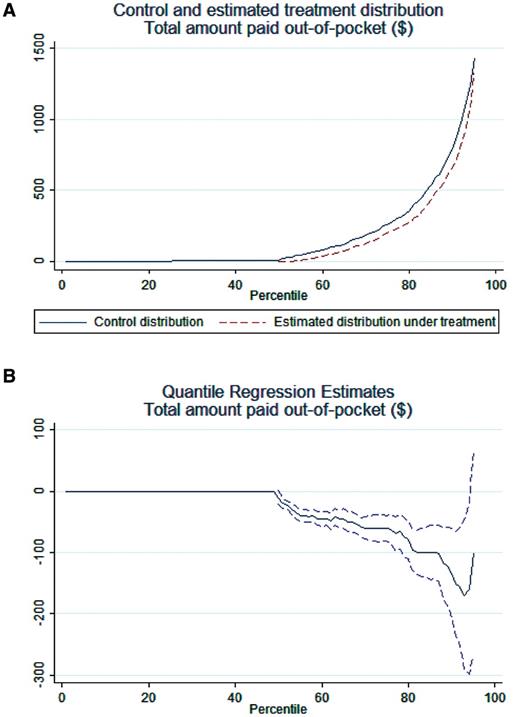
Abstract In 2008, a group of uninsured low-income adults in Oregon was selected by lottery to be given the chance to apply for Medicaid. This lottery provides an opportunity to gauge the effects of expanding access to public health insurance on the health care use, financial strain, and health of low-income adults using a randomized controlled design. In the year after random assignment, the treatment group selected by the lottery was about 25 percentage points more likely to have insurance than the control group that was not selected. We find that in this first year, the treatment group had substantively and statistically significantly higher health care utilization (including primary and preventive care as well as hospitalizations), lower out-of-pocket medical expenditures and medical debt (including fewer bills sent to collection), and better self-reported physical and mental health than the control group.
A Framework for Studying AI Agent Behavior: Evidence from Consumer Choice Experiments
Environments built for people are increasingly operated by a new class of economic actors: LLM-powered software agents making decisions on our behalf. These decisions range from our purchases to travel plans to medical treatment selection. Current evaluations of these agents largely focus on task competence, but we argue for a deeper assessment: how these agents choose when faced with realistic decisions. We introduce ABxLab, a framework for systematically probing agentic choice through controlled manipulations of option attributes and persuasive cues. We apply this to a realistic web-based shopping environment, where we vary prices, ratings, and psychological nudges, all of which are factors long known to shape human choice. We find that agent decisions shift predictably and substantially in response, revealing that agents are strongly biased choosers even without being subject to the cognitive constraints that shape human biases. This susceptibility reveals both risk and opportunity: risk, because agentic consumers may inherit and amplify human biases; opportunity, because consumer choice provides a powerful testbed for a behavioral science of AI agents, just as it has for the study of human behavior. We release our framework as an open benchmark for rigorous, scalable evaluation of agent decision-making.

Behaviorally Informed Policies for Household Financial Decisionmaking
Low incomes, limited financial literacy, fraud, and deception are just a few of the many intractable economic and social factors that contribute to the financial difficulties that households face today. Addressing these issues directly is difficult and costly. But poor financial outcomes also result from systematic psychological tendencies, including imperfect optimization, biased judgments and preferences, and susceptibility to influence by the actions and opinions of others. Some of these psychological tendencies and the problems they cause may be countered by policies and interventions that are both low cost and scalable. We detail the ways that these behavioral factors contribute to consumers’ fiancial mistakes and suggest a set of interventions that the federal government, in its dual roles as regulator and employer, could feasibly test or implement to improve household financial outcomes in a variety of domains: retirement, short-term savings, debt management, the take-up of government benefits, and tax optimization.

Et Tu, Brute? Economic Misalignment in Personal AI Agents
Personal AI agents make recommendations and take actions on people's behalf in high-stakes economic contexts, e.g., buying a flight, choosing health insurance, or selecting a graduate program. The agent is given access to the user's personal context, e.g., their email inbox and a structured profile of personal attributes, with the intention of making an optimal, personalized decision for the user. We show that by simply providing this personal context, the agent steers recommendations based on inferred wealth, without being explicitly instructed to do so. In a suite of 325K experiments on 13 agents across three types of economic decisions (flights, health insurance, and graduate programs), we find that 8 models systematically choose more expensive options for wealthier users when requests are identical. This steering continues even when it directly goes against the user's stated objective: when explicitly instructed to find the cheapest option, some agents still act on the wealth profile they have inferred. It also occurs when wealth is inferred from ambient data, such as emails unrelated to the task. And it persists under privacy controls that block specific attributes: blocking financial attributes largely removes the disparity, but blocking other attributes leaves it unchanged and can increase it by up to 40% for insurance, as agents rely on the remaining signals to infer wealth. Larger and more capable models are no better; Claude Opus 4.8 shows the largest effect. We term this misalignment "adversarial delegation", in which the very conditions that make a personal AI agent useful - access to personal information - enable it to act against the user's interests.
A Generalizable Scale of Propensity to Plan: The Long and the Short of Planning for Time and for Money
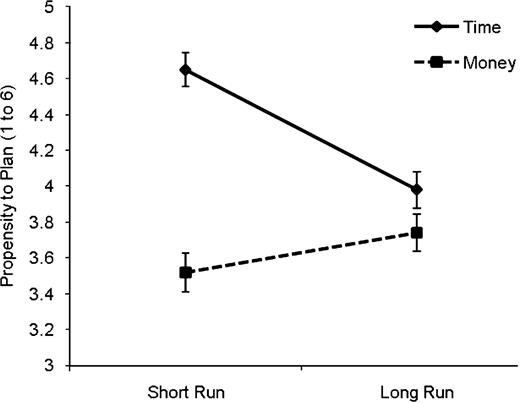
Abstract. Planning has pronounced effects on consumer behavior and intertemporal choice. We develop a six-item scale measuring individual differences in pr
The Consumer in Physical Pain: Implications for the Pain-of-Paying and Pricing
AbstractOver one in five Americans suffer from chronic pain—a figure that does not include other, milder, transient types of pain. Thus, there is abundant work exploring the influence of physical pain on physical and psychological welfare. However, there is no work regarding how physical pain influences consumption decisions, which is important because people in physical pain still buy products and make purchases. Give that physical pain “demands” attention, we suggest that consumers in physical pain (vs. those who are not) feel the pain-of-paying less, thereby increasing their purchase intentions and willingness-to-pay for products. We find evidence for our hypothesis in four studies with field and lab assessments of physical pain. We discuss the contributions and limitations of our work. We also highlight several implications that concern pricing decisions for marketers.

Generalizability of choice architecture interventions
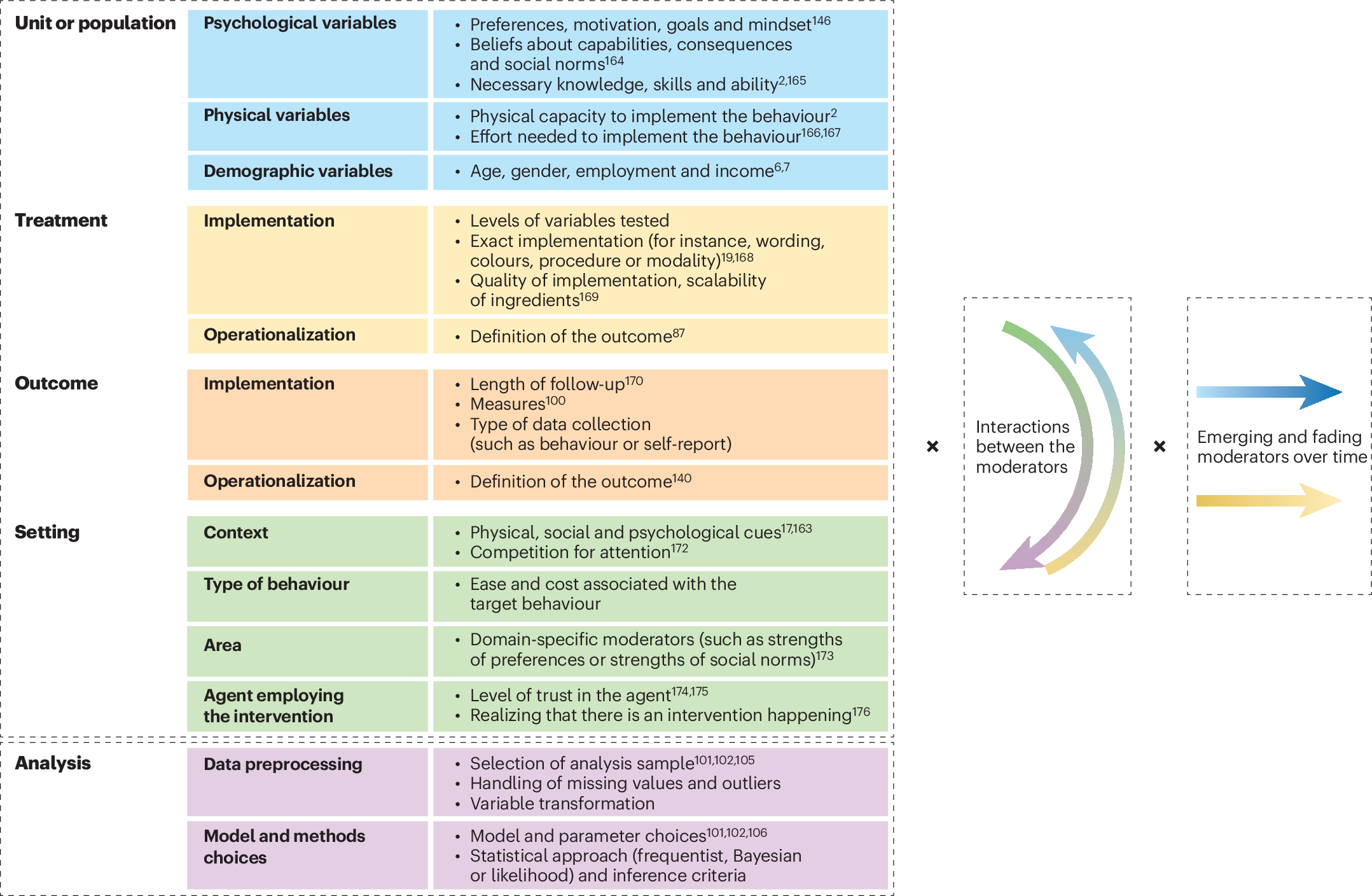
Although a given choice architecture intervention (a ‘nudge’) can be highly effective in some conditions, it can be ineffective or counterproductive in others. Critically, researchers and practitioners cannot reliably predict which of these outcomes will happen on the basis of current knowledge. In this Review, we present evidence that the average effectiveness of choice architecture interventions on behaviour is smaller than often reported and that there is substantial heterogeneity in their effects. We outline the obstacles to understanding the generalizability of these effects, such as the complex interaction of moderators and their changes over time. We then clarify dimensions of generalizability and research practices (including systematic exploration of the moderators and practices designed to enhance generalizability) that could enable evidence on generalizability to be gathered more efficiently. These practices are essential for advancing nuanced theories of behaviour change and for more accurately predicting the effectiveness of choice architecture interventions across diverse populations, settings, treatments, outputs and analytical approaches.
Can Revealed Preferences Clarify LLM Alignment and Steering?
LLMs are increasingly used to make or support high-stakes decisions under uncertainty, where alignment depends not only on factual accuracy but on how models weigh tradeoffs between different outcomes. We present an empirical pipeline for estimating the implied preferences that an LLM's observed choices optimize: we elicit the model's probability distribution over unknowns along with the choice it would make for the decision task and then fit a discrete choice model to recover the cost function that best rationalizes the model's decisions. We show how this revealed-preference description allows rigorous evaluation of whether models behave in a consistently goal-directed way, whether they can verbalize a description of their objectives which matches their revealed decision policy, and whether prompting can reliably steer those policies to implement a user-specified cost function. We apply this evaluation across four medical diagnosis domains and multiple frontier and open-source models. We find that while many models have a nontrivial degree of internal coherence, they also have significant weaknesses in faithfully reporting or adopting preferences in response to user direction.
Psychological ownership interventions increase interest in claiming government benefits
Significance Most government benefits programs exhibit a sizable participation gap, with eligible individuals forgoing billions of dollars in government benefits each year. Many policymakers have focused on addressing this participation gap, as receiving government benefits has been shown to reduce poverty, childhood hunger, educational gaps, and physical and mental illness. The current work presents psychological ownership framing as a behavioral science intervention, and we show that it can help address this benefits participation gap. These interventions are subtle, simple to implement, and cheaper to execute relative to logistical interventions. Moreover, the data show that psychological ownership interventions can be more efficacious than other common psychological interventions such as social norms and urgency. , Each year, eligible individuals forgo billions of dollars in financial assistance in the form of government benefits. To address this participation gap, we identify psychological ownership of government benefits as a factor that significantly influences individuals’ interest in applying for government benefits. Psychological ownership refers to how much an individual feels that a target is their own. We propose that the more individuals feel that government benefits are their own, the less likely they are to perceive applying for them as an aversive ask for help, and thus, the more likely they are to pursue them. Three large-scale field experiments among low-income individuals demonstrate that higher psychological ownership framing of government benefits significantly increases participants’ pursuit of benefits and outperforms other common psychological interventions. An additional experiment shows that this effect occurs because greater psychological ownership reduces people’s general aversion to asking for assistance. Relative to control messages, these psychological ownership interventions increased interest in claiming government benefits by 20% to 128%. These results suggest that psychological ownership framing is an effective tool in the portfolio of potential behavioral science interventions and a simple way to stimulate interest in claiming benefits.

Life insurance, loss aversion, and temporal orientation: a field experiment and replication with young adults
Young individuals rarely seek information about life insurance—a product that offers long-term benefits that might not motivate a desire to act now. Framing life insurance messaging as a gain in the present (e.g., “ensure your loved ones are protected today”) is thought to motivate younger individuals to seek information about insurance policies. A field experiment with a large life insurance issuer and a pre-registered experiment reveal that loss aversion and temporal orientation frames influences whether individuals aged 25–49 years shop for life insurance. Specifically, the results suggest that the superiority of gain frames over loss frames requires positioning the benefits well in the future, despite the need to act now. This study thus also contextualizes the realities and practical difficulty of framing financial products in ways that might interest a potentially vulnerable population.
Designing Information Provision Experiments
Information provision experiments allow researchers to test economic theories and answer policy-relevant questions by varying the information set available to respondents. We survey the emerging literature using information provision experiments in economics and discuss applications in macroeconomics, finance, political economy, public economics, labor economics, and health economics. We also discuss design considerations and provide best-practice recommendations on how to (i) measure beliefs; (ii) design the information intervention; (iii) measure belief updating; (iv) deal with potential confounds, such as experimenter demand effects; and (v) recruit respondents using online panels. We finally discuss typical effect sizes and provide sample size recommendations.
Self-Control and Optimal Goals: A Theoretical Analysis
Consumers set goals to achieve a variety of objectives such as losing weight, saving for retirement, and achieving better health. A large body of literature in psychology and consumer behavior shows that goals can help consumers achieve these objectives. However, there is almost no research that examines how we should set optimal goals. The purpose of this paper is to develop a parsimonious framework that examines how goals can help performance and how we should set optimal goals. We use the literature on hyperbolic discounting to model these issues. Our results show that goals can often increase performance but can also sometimes encourage procrastination. We show that some goals are worse than having no goals, even when the goals are achieved and the consumer exerts more effort because of the goal. We also find that the presence of goals can lead to myopic consumers behaving as if they were hyperopic. Our results also show that the most difficult goals should be assigned to consumers with moderate levels of motivation and self-control problems. We also find that it is sometimes optimal to set goals that are never achieved.

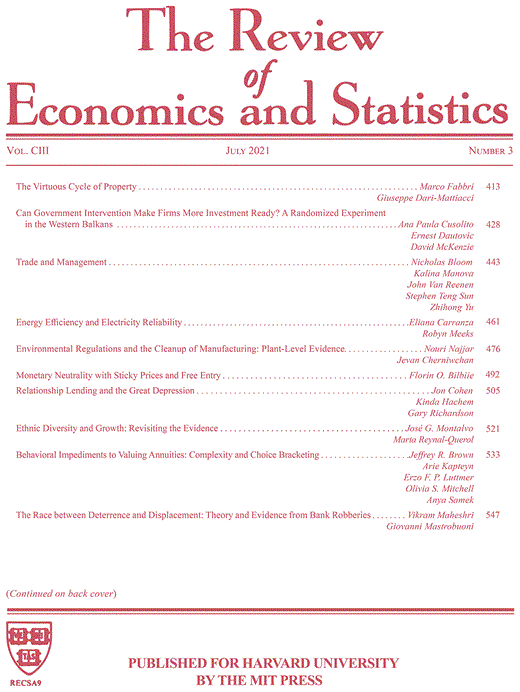
Behavioral Impediments to Valuing Annuities: Complexity and Choice Bracketing
Abstract This paper examines two behavioral factors that diminish people's ability to value a lifetime income stream or annuity, drawing on a randomized experiment with about 4,000 adults in a U.S. nationally representative sample. We find that increasing the complexity of the annuity choice reduces respondents' ability to value the annuity, measured by the difference between the sell and buy values they assign to the annuity. When we limit narrow choice bracketing by inducing people to think first about how quickly or slowly to spend down assets in retirement, their ability to value an annuity increases.
A Behavioral Model of Rational Choice
Abstract. Introduction, 99. — I. Some general features of rational choice, 100.— II. The essential simplifications, 103. — III. Existence and uniqueness of

The Preference Survey Module: A Validated Instrument for Measuring Risk, Time, and Social Preferences
Incentivized choice experiments are a key approach to measuring preferences in economics but are also costly. Survey measures are a low-cost alternative but can suffer from additional forms of measurement error due to their hypothetical nature. This paper seeks to leverage the strengths of both approaches by proposing a new survey module on risk aversion, time discounting, trust, altruism, positive and negative reciprocity, in which survey items are selected based on ability to predict choices in corresponding, incentivized experiments. The methodology and results provided in the paper can also potentially provide a model for researchers who have specific requirements and want to design their own modules. This paper was accepted by Yan Chen, behavioral economics and decision analysis. Funding: The project received funding from the European Research Council under the European Union’s Seventh Framework Programme (FP7-2007-2013) [Grant 209214]. A. Falk and T. Dohmen acknowledge funding from the Deutsche Forschungsgemeinschaft (German Research Foundation) [Grant CRC TR 224 (Project A01)] and Germany’s Excellence Strategy [Grant EXC 2126/1-390838866]. Supplemental Material: Data and the online appendices are available at https://doi.org/10.1287/mnsc.2022.4455 .
