

Numerous studies have reported an increase in hate speech on X (formerly Twitter) in the months immediately following Elon Musk’s acquisition of the platform on October 27th, 2022; relatedly, despite Musk’s pledge to “defeat the spam bots,” a recent study reported no substantial change in the concentration of inauthentic accounts. However, it is not known whether any of these trends endured. We address this by examining material posted on X from the beginning of 2022 through June 2023, the period that includes Musk’s full tenure as CEO. We find that the increase in hate speech just before Musk bought X persisted until at least May of 2023, with the weekly rate of hate speech being approximately 50% higher than the months preceding his purchase, although this increase cannot be directly attributed to any policy at X. The increase is seen across multiple dimensions of hate, including racism, homophobia, and transphobia. Moreover, there is a doubling of hate post “likes,” indicating increased engagement with hate posts. In addition to measuring hate speech, we also measure the presence of inauthentic accounts on the platform; these accounts are often used in spam and malicious information campaigns. We find no reduction (and a possible increase) in activity by these users after Musk purchased X, which could point to further negative outcomes, such as the potential for scams, interference in elections, or harm to public health campaigns. Overall, the long-term increase in hate speech, and the prevalence of potentially inauthentic accounts, are concerning, as these factors can undermine safe and democratic online environments, and increase the risk of offline harms.
X under Musk’s leadership: Substantial hate and no reduction in inauthentic activity
Numerous studies have reported an increase in hate speech on X (formerly Twitter) in the months immediately following Elon Musk’s acquisition of the platform on October 27th, 2022; relatedly, despite Musk’s pledge to “defeat the spam bots,” a recent study reported no substantial change in the concentration of inauthentic accounts. However, it is not known whether any of these trends endured. We address this by examining material posted on X from the beginning of 2022 through June 2023, the period that includes Musk’s full tenure as CEO. We find that the increase in hate speech just before Musk bought X persisted until at least May of 2023, with the weekly rate of hate speech being approximately 50% higher than the months preceding his purchase, although this increase cannot be directly attributed to any policy at X. The increase is seen across multiple dimensions of hate, including racism, homophobia, and transphobia. Moreover, there is a doubling of hate post “likes,” indicating increased engagement with hate posts. In addition to measuring hate speech, we also measure the presence of inauthentic accounts on the platform; these accounts are often used in spam and malicious information campaigns. We find no reduction (and a possible increase) in activity by these users after Musk purchased X, which could point to further negative outcomes, such as the potential for scams, interference in elections, or harm to public health campaigns. Overall, the long-term increase in hate speech, and the prevalence of potentially inauthentic accounts, are concerning, as these factors can undermine safe and democratic online environments, and increase the risk of offline harms.
Study finds persistent spike in hate speech on X - Berkeley News
The new analysis contradicts the social media platform’s claims that exposure to hate speech and bot-like activity decreased during Elon Musk’s tenure.
The Musk Bump: Quantifying the rise in hate speech under Elon Musk
Since his takeover of Twitter Elon Musk has repeatedly promised to clamp down on hate speech while taking unilateral policy decisions, such as reinstating abusive accounts, that encourage the spread of hate speech on his platforms.

Report: Tweets with racial slurs soar since Musk takeover
Instances of racial slurs have soared on Twitter since Elon Musk purchased the influential platform, despite assurances from the platform that it had reduced hateful activity, a digital civil rights group reported Thursday.

Auditing Political Exposure Bias: Algorithmic Amplification on Twitter/X During the 2024 U.S. Presidential Election
Approximately 50% of tweets in X's user timelines are personalized recommendations from accounts they do not follow. This raises a critical question: What political content are users exposed to beyond their established networks, and what implications does this have for democratic discourse online? In this paper, we present a six-week audit of X's algorithmic content recommendations during the 2024 U.S. Presidential Election by deploying 120 sock-puppet monitoring accounts to capture tweets from their personalized "For You" timelines. Our objective is to quantify out-of-network content exposure for right- and left-leaning user profiles and assess any potential inequalities and biases in political exposure. Our findings indicate that X's algorithm skews exposure toward a few high-popularity accounts across all users, with right-leaning users experiencing the highest level of exposure inequality. Both left- and right-leaning users encounter amplified exposure to accounts aligned with their own political views and reduced exposure to opposing viewpoints. Additionally, we observe that new accounts experience a right-leaning bias in exposure within their default timelines. Our work contributes to understanding how content recommendation systems may induce and reinforce biases while exacerbating vulnerabilities among politically polarized user groups. We underscore the importance of transparency-aware algorithms in addressing critical issues such as safeguarding election integrity and fostering a more informed digital public sphere.

The political effects of X’s feed algorithm
Feed algorithms are widely suspected to influence political attitudes. However, previous evidence from switching off the algorithm on Meta platforms found no political effects1. Here we present results from a 2023 field experiment on Elon Musk’s platform X shedding light on this puzzle. We assigned active US-based users randomly to either an algorithmic or a chronological feed for 7 weeks, measuring political attitudes and online behaviour. Switching from a chronological to an algorithmic feed increased engagement and shifted political opinion towards more conservative positions, particularly regarding policy priorities, perceptions of criminal investigations into Donald Trump and views on the war in Ukraine. In contrast, switching from the algorithmic to the chronological feed had no comparable effects. Neither switching the algorithm on nor switching it off significantly affected affective polarization or self-reported partisanship. To investigate the mechanism, we analysed users’ feed content and behaviour. We found that the algorithm promotes conservative content and demotes posts by traditional media. Exposure to algorithmic content leads users to follow conservative political activist accounts, which they continue to follow even after switching off the algorithm, helping explain the asymmetry in effects. These results suggest that initial exposure to X’s algorithm has persistent effects on users’ current political attitudes and account-following behaviour, even in the absence of a detectable effect on partisanship.
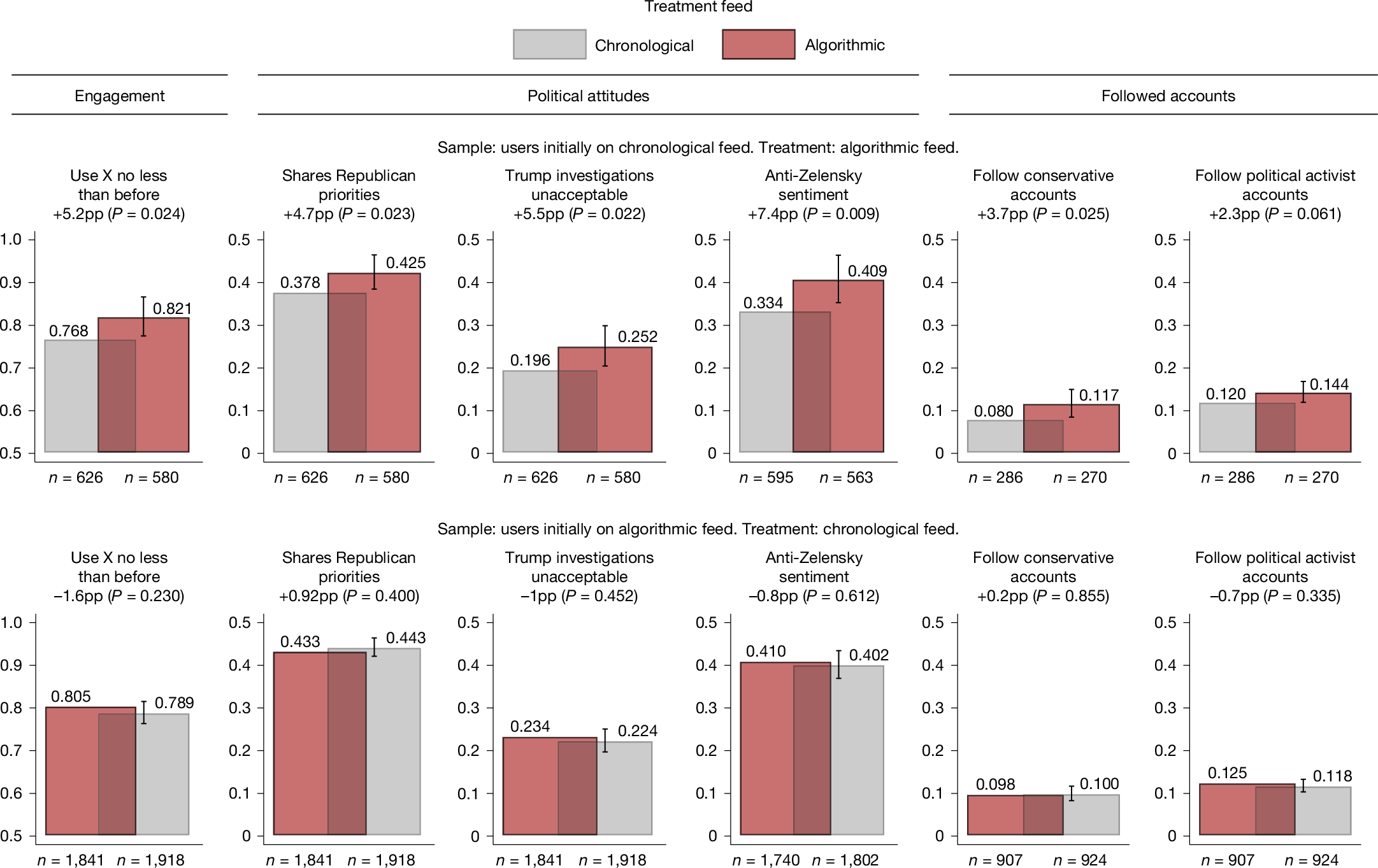
The political effects of X’s feed algorithm
Feed algorithms are widely suspected to influence political attitudes. However, previous evidence from switching off the algorithm on Meta platforms found no political effects1. Here we present results from a 2023 field experiment on Elon Musk’s platform X shedding light on this puzzle. We assigned active US-based users randomly to either an algorithmic or a chronological feed for 7 weeks, measuring political attitudes and online behaviour. Switching from a chronological to an algorithmic feed increased engagement and shifted political opinion towards more conservative positions, particularly regarding policy priorities, perceptions of criminal investigations into Donald Trump and views on the war in Ukraine. In contrast, switching from the algorithmic to the chronological feed had no comparable effects. Neither switching the algorithm on nor switching it off significantly affected affective polarization or self-reported partisanship. To investigate the mechanism, we analysed users’ feed content and behaviour. We found that the algorithm promotes conservative content and demotes posts by traditional media. Exposure to algorithmic content leads users to follow conservative political activist accounts, which they continue to follow even after switching off the algorithm, helping explain the asymmetry in effects. These results suggest that initial exposure to X’s algorithm has persistent effects on users’ current political attitudes and account-following behaviour, even in the absence of a detectable effect on partisanship.
Grok Becomes ‘MechaHitler,’ Twitter Becomes X: How Centralized Tech Is Prone To Fascist Manipulation
This week, Elon Musk’s Grok AI started spewing extreme antisemitism, responding with conspiracy theories about Jewish people, and for a brief period telling people to call it “MechaHitl…

AI-powered hate content is on the rise, experts say | CBC News
Experts say that artificial intelligence technology is allowing for a rapid increase in the amount of hateful content and misinformation online.

How Elon Musk’s Own Account Dominates X (Published 2024)
The billionaire has effectively become the star of his social media platform, transforming X into a reflection of his personal views before the election.

The sanewashing of Elon Musk - Lawyers, Guns & Money
As Jamelle Bouie points out, Elon Musk spends a great deal of time on the social media site he owns both personally pushing and amplifying themes directly derived from prominent works of violent white supremacy, attracting very little attention from the mainstream press: Over the past month in particular, he has adopted the imagery of […]
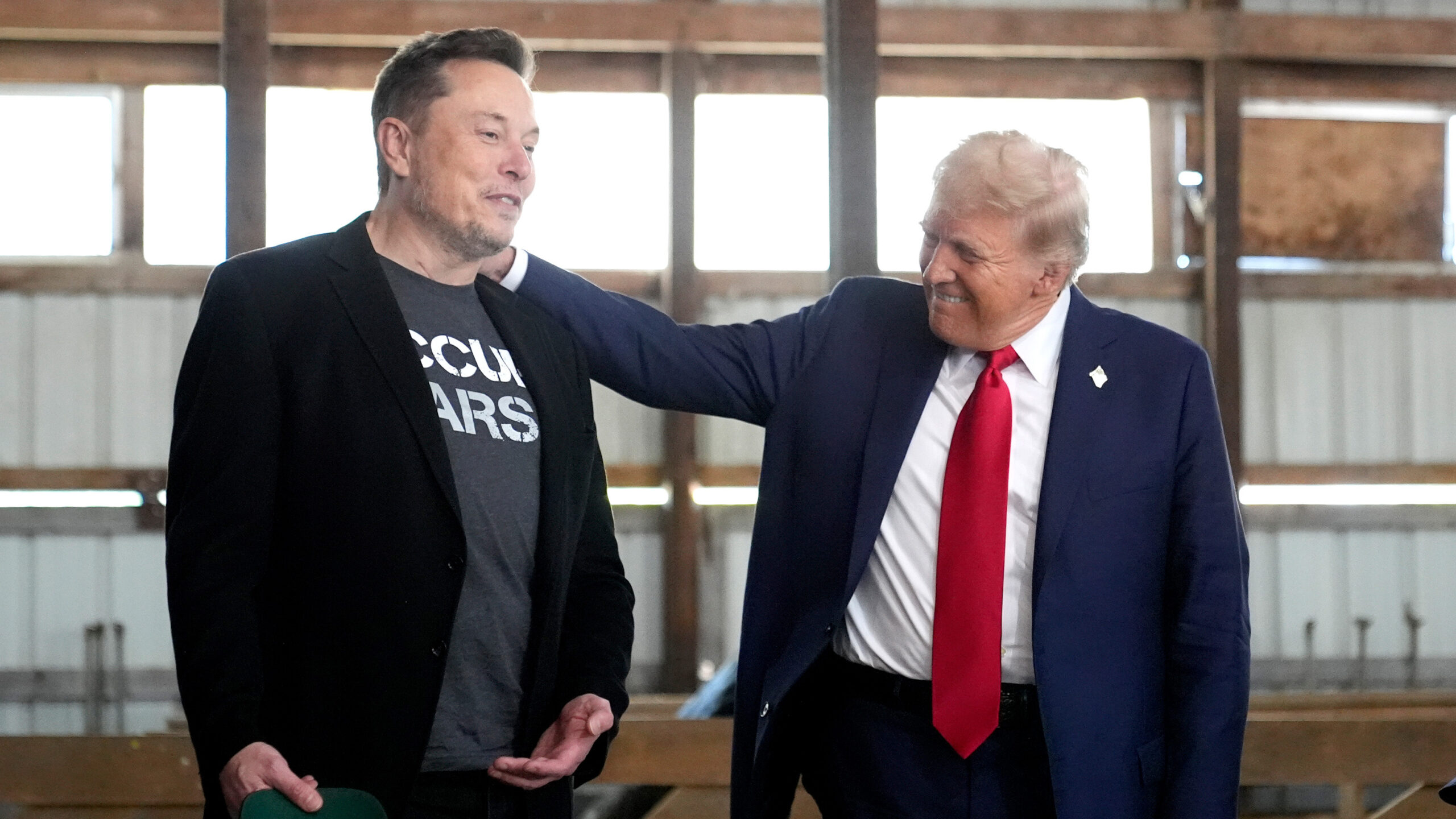
How Elon Musk uses his X social media platform to amplify right-wing views
As X’s owner and most followed user, Elon Musk has increasingly used it as a microphone to amplify his political views and those of the often right-wing figures he’s aligned with.

A few weeks of X’s algorithm can make you more right-wing – and it doesn’t wear off quickly
Elon Musk’s social media platform is boosting conservative content – and it’s having long-lasting effects on how users see the world.

A few weeks of X’s algorithm can make you more right-wing – and it doesn’t wear off quickly
Elon Musk’s social media platform is boosting conservative content – and it’s having long-lasting effects on how users see the world.
Twitter Is Dead, X Is Elon’s Personal Propaganda Platform, Where Grok Checks His Feed Before Answering
Last week, Elon Musk’s Grok AI started spewing extreme antisemitism, calling itself “MechaHitler” and pushing conspiracy theories about Jewish people. But that wasn’t the mo…
Online anonymity/pseudonymity

“There's plenty of research in this topic area that shows hate speech doesn't decline when real-name policies are in effect, in fact usually the inverse, and the diversity of people contributing to conversations decreases” — bsky.app/profile/did:plc:5w4eqcxzw5jv5…
Research - Disqus
What’s in a name? A forward view of anonymity online

Anonymity and Online Commenting: The Broken Windows Effect and the End of Drive-by Commenting

Anonymity, Pseudonymity, and Deliberation: Why Not Everything Should Be Connected

Online anonymity: study found ‘stable pseudonyms’ created a more civil environment than real user names

Real-Name Policies: The War Against Pseudonymity