The authors explore product category and customer characteristics that affect consumers’ likelihood of engaging in unplanned purchases. In addition, they examine consumer activities that can exacerbate or limit these effects. The authors employ a hierarchical modeling approach to test their hypotheses using a data set of in-store intercept interviews conducted with 2300 consumers across 28 stores. The results show that category characteristics, such as purchase frequency and displays, and customer characteristics, such as household size and gender, affect in-store decision making. Moreover, although the analysis reveals that the baseline probability of an unplanned purchase is 46%, the contextual factors can drive this probability as high as 93%. The results support the predictions that list use, more frequent trips, limiting the aisles visited, limiting time spent in the store, and paying by cash are effective strategies for decreasing the likelihood of making unplanned purchases.
In-Store Spending Dynamics: How Budgets Invert Relative-Spending Patterns
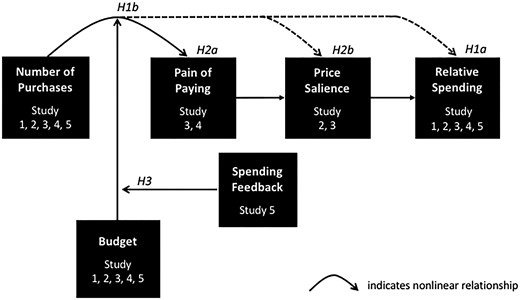
Abstract The authors conduct four controlled lab experiments and one field study in a brick-and-mortar grocery store to demonstrate that relative spending—the price of the purchased item relative to the mean price of the product category—evolves nonlinearly and distinctly for budget and nonbudget shoppers. While the relative spending of budget shoppers evolves in a concave manner, the relative spending of nonbudget shoppers evolves inversely in a convex manner. Thus, budget (nonbudget) shoppers spend relatively more (less) in the middle than at the beginning and toward the end of their shopping trip. Mediation analyses confirm that the pain of paying experienced while shopping drives price salience, which then drives relative spending. Moreover, manipulating shoppers’ pain of paying, by altering the opportunity costs associated with their spending or drawing shoppers’ attention to their spending via real-time spending feedback, is shown to influence these spending patterns. The research offers theoretical contributions to the in-store decision-making, budgeting, and pain-of-paying literature and has important implications for marketing and promotion strategies in retail and mobile technology environments, as it suggests when a shopper may be more sensitive to price-related factors.
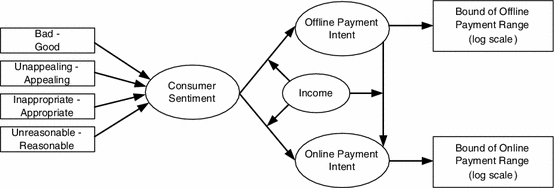
The moderating role of income on consumers’ preferences and usage for online and offline payment methods
In this paper we examine consumer attitudes towards a payment method, which is a key factor affecting the probability of completing a transaction offline and online. More specifically, we constructed a model that surveyed the offline and online usage of prepaid e-cash, debit cards, credit cards and cash. User perceptions of the attractiveness of e-cash and various traditional payment means were also empirically assessed. Consumer attitudes towards a payment technology were found to be influential on users’ perceptions in both online and offline environments. User perceptions of offline purchases with a payment technology had significant and positive effects on the corresponding online usage perceptions. The effects of our research model are contingent on the income level of users. Our findings have significant implications, as they could help shed light on why consumers abandon their shopping carts and do not complete their transactions, which could potentially play a significant role when it comes to designing applications targeting sspecific consumer segments.
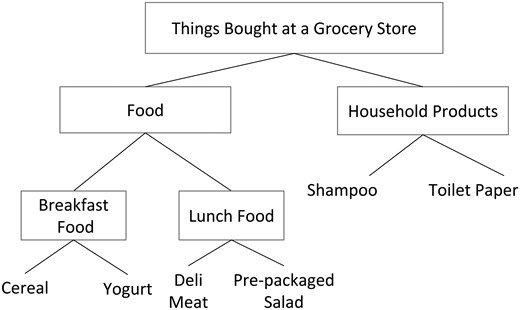
Consumers’ Mental Representation of Expenditures: Implications for Spending and Savings Decisions
Abstract People’s mental representation of expenditures is crucial to their budgeting. This article proposes that much like how they represent natural kinds (e.g., animals and plants), people represent expenditures in a hierarchical taxonomy. Seven studies, supported by six norming studies and three pilots, revealed that expenditures are represented hierarchically. We first recover people’s mental representations using a successive pile-sort method that asks people to form hierarchies of categories with common expenditures (e.g., rent, dining out, etc.). The pile-sort reveals consensus in people’s representations of expenditures and that these representations are relatively stable over time. Further, people’s adjustment in their spending behavior can be predicted by the distance between items in their representation. Specifically, when people overspent on an item, they spontaneously adjust spending more on taxonomically closer items. We examine this spontaneous adjustment behavior using both laboratory studies and field data with 6.5 million grocery shopping trips over 12 years. The findings highlight the connection between mental representation and consumer behavior, and they emphasize the importance of studying concepts and categories in the context of consumption.
The Exception Is the Rule: Underestimating and Overspending on Exceptional Expenses
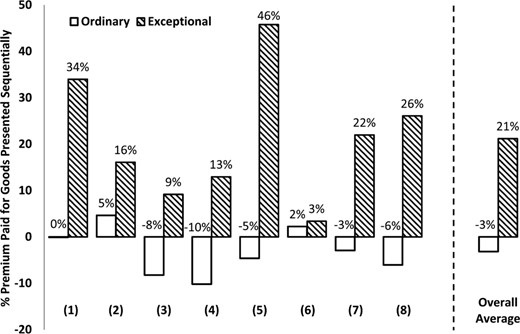
Abstract Purchases fall along a continuum from ordinary (common or frequent) to exceptional (unusual or infrequent), with many of the largest expenses (e.g., electronics, celebrations) being the most exceptional. Across seven studies, we show that, while people are fairly adept at budgeting and predicting how much they will spend on ordinary items, they both underestimate their spending on exceptional purchases overall and overspend on each individual purchase. Based on the principles of mental accounting and choice bracketing, we show that this discrepancy arises in part because consumers categorize exceptional expenses too narrowly, construing each as a unique occurrence and consequently overspending across a series of discretely exceptional expenses. We conclude by proposing an intervention that diminishes this tendency by helping consumers consider their spending on exceptional items as part of a larger set of purchases.
“Repayment-by-Purchase” Increases Consumer Debt Repayment
This article tests the effect of a novel credit card payment format—repayment-by-purchase—on consumers’ payments toward credit card debt. In contrast to typical balance repayment, where consumers make repayments relative to a total amount owed, repayment-by-purchase prompts consumers to select items (e.g., a Starbucks coffee) or categories of purchase (e.g., restaurant and café purchases) and to make payments toward their related debt. A field experiment first suggests that customers who opted into repayment-by-purchase paid 12.18% more toward their statement balance than a control group. Subsequently, five lab experiments show that consumers repaying-by-purchase increase repayment by an average of 22.47% over typical balance repayment. Process evidence suggests that these differences may be driven by repayment-by-purchase's power to increase purchase salience, which in turns increases perceptions of progress toward reducing debt. Consistent with this theory, the effect of repayment-by-purchase on bill repayment emerges regardless of whether consumers repay durable versus nondurable goods, and for specific items or categories of purchases, as long as the bill uses labels that are concrete enough to raise past purchase salience.
A Generalizable Scale of Propensity to Plan: The Long and the Short of Planning for Time and for Money
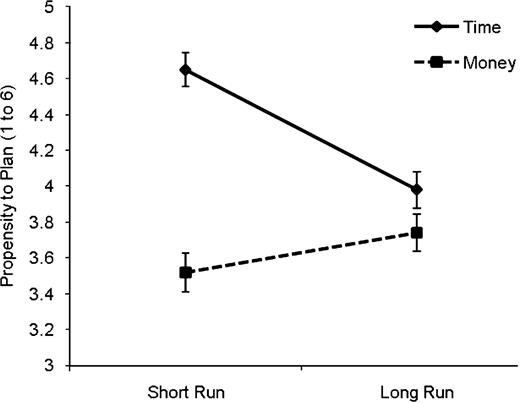
Abstract. Planning has pronounced effects on consumer behavior and intertemporal choice. We develop a six-item scale measuring individual differences in pr
Why Do Shoppers Use Cash? Evidence from Shopping Diary Data
Recent studies find that cash remains the dominant payment choice for small‐value transactions despite the prevalence of alternative payment methods such as debit and credit cards. An important policy question is whether consumers truly prefer using cash or merchants restrict card usage. Using unique shopping diary data, we estimate a payment choice model with individual heterogeneity, controlling for merchants' acceptance of cards. Based on a policy simulation imposing universal card acceptance among merchants, we find that overall cash usage would decrease by only 8.0 percentage points, implying that cash usage in small‐value transactions is driven mainly by consumer preferences.

Differences in Consumer Purchase Behavior by Credit Card Payment System
Abstract. A conceptualization of the relationships between alternative payment systems and various environmental and behavioral variables, which may serve
How Targeting Affects Customer Search: A Field Experiment
It has become common practice for retailers to personalize direct marketing efforts based on customer transaction histories as a tactic to increase sales. Targeted email offers featuring products in the same category as a customer’s previous purchases generate higher purchase rates. However, a targeted offer emphasizing familiar products could result in curtailed search for unadvertised products, as a closely matched offer weakens a customer’s incentives to search beyond the targeted items. In a field experiment using email offers sent by an online wine retailer, targeted offers resulted in decreased search activity on the retailer’s website. This effect is driven by a lower rate of search by customers who visit the site, rather than a lower incidence of search. There are several ways this could potentially hurt retailers and consumers, such as reduced cross-selling and fewer opportunities for customers to explore new products. This paper was accepted by Pradeep Chintagunta, marketing.

Measuring the Hedonic and Utilitarian Dimensions of Consumer Attitude
This article reports the development and validation of a parsimonious, generalizable scale that measures the hedonic and utilitarian dimensions of consumer attitudes toward product categories and different brands within categories. The hedonic/utilitarian (HED/UT) scale includes ten semantic differential response items, five of which refer to the hedonic dimension and five of which refer to the utilitarian dimension of consumer attitudes. The authors conducted six studies to establish the unidimensionality, reliability, and validity of the two HED/UT subscales. In reaching the final scale, the authors also develop and implement a unique process of paring down a psychometrically sound but otherwise too large set of items. Nomological validity is established by replacing a typical, one-dimensional attitude toward the brand measure with the hedonic and utilitarian dimensions in a central route processing model. Results suggest that the hedonic and utilitarian constructs are two distinct dimensions of brand attitude and are reliably and validly measured by the HED/UT scale.
The Impact of Payment Frequency on Consumer Spending and Subjective Wealth Perceptions
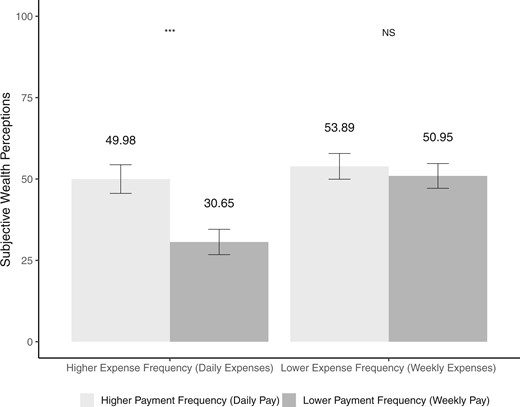
Abstract Payment frequency is a fundamental yet underexplored feature of consumers’ finances. As higher payment frequencies are becoming more prevalent, consumers are receiving more frequent yet smaller paychecks. An analysis of income and expenditure data of over 30,000 consumers from a financial services provider demonstrates a naturally occurring relationship between higher payment frequencies and increased spending. A series of lab studies support this finding, providing causal evidence that higher (vs. lower) payment frequencies increase spending. The effect of payment frequency on spending is driven by changes in consumers’ subjective wealth perceptions. Specifically, higher payment frequencies reduce consumers’ uncertainty in predicting whether they will have enough resources throughout a period, increasing their subjective wealth perceptions. As such, situational factors that reduce prediction uncertainty for those paid less frequently (e.g., the timing of consumers’ expenses, income levels) moderate the impact of payment frequency. The effects of payment frequency on subjective wealth and spending can occur even when objective wealth favors those with lower payment frequencies. More broadly, the current work underscores a need to understand how timing variations in consumers’ income impact their perceptions, behaviors, and general well-being.
Do Customers Learn from Experience? Evidence from Retail Banking
We study customers' adoption and subsequent switching decisions with regard to a menu of three-part tariff plans offered by a commercial bank. Using a rich panel data set covering 70,510 fee-based checking accounts over 30 months, before and after the introduction of the plans, we find that most customers adopt non-cost-minimizing plans, preferring plans with large monthly allowances and high fixed payments. Furthermore, after adoption, customers who exceed their allowances and consequently pay overage fees are more likely to switch to plans with larger allowances than customers who do not experience such fees. Notably, after switching, these overage-paying customers pay higher monthly payments than before. In contrast, switching customers who did not pay overage payments before switching pay less after switching. Our findings, unlike those of previous research on experience-based learning, suggest that the behavior of experienced customers does not converge to the predictions of neoclassical models. We propose that “overage aversion,” which is closely related to loss aversion and mental accounting, is the most plausible explanation for our findings. This paper was accepted by John List, behavioral economics.
Mental accounting of product returns
Abstract Product returns incur a substantial financial loss for retailers. We demonstrate how, when, and why cross‐selling during the product returns process can reduce this loss in revenue. We find consumers more readily spend money refunded from product returns than unspent money. We theorize that this refund effect occurs because consumers psychologically realize the loss of money when purchasing products and earmark that money for spending. Thus, consumers feel a smaller psychological loss when spending refunded money than unspent money on a subsequent purchase. In six experiments, we find consumers spend refunded money more freely than unspent money, even more than windfall gains like lottery winnings, on products in similar and different product categories (e.g., groceries vs. apparel). However, the refund effect only holds when consumers do not expect to return products at the point of purchase and before refunded money is commingled with money in other accounts. Our findings identify a new fungibility violation due to mental accounting (i.e., a new source effect), and illustrate its value for generating, validating, and explaining revenue retention strategies.

A Model of Mental Accounting and Reference Price Adaptation
Consumers possess a mental account that stores the worth of items purchased and yet to be consumed. Reference prices act as the book values of these items. Movements in the account—the comparison between the reference price and the price paid at entry, and the comparison between the benefit of consumption and the reference price at exit—yield hedonic benefits. The reference price is determined by a psychological process of adaptation to the price evoked by the trade. The model is integrative in that it explains a wide array of observed anomalies such as sunk-cost effects, payment depreciation, reluctance to trade, preference for prepayment, and the flat-rate bias. The model also generates new testable implications. This paper was accepted by James Smith, decision analysis.
Context-Dependent Drivers of Discretionary Debt Decisions: Explaining Willingness to Borrow for Experiential Purchases
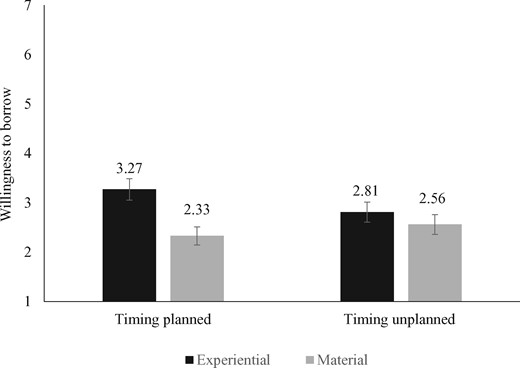
Abstract Mental accounting research suggests that consumers prefer borrowing for longer-lasting purchases in order to receive benefits from the purchases as they pay for them. In contrast, two sets of archival data and five lab studies show that consumers are more willing to borrow for experiential versus material purchases, even though experiential purchases tend to have a shorter physical duration. Further, framing the same purchase as more experiential than material increases willingness to borrow. This effect occurs because purchase timing is more important for experiential purchases—a function of consumers’ aversion to missing out on planned consumption. Thus, we moderate the proposed effect by varying whether the borrowing decision impacts planned consumption. Other differences between material and experiential purchases, such as scarcity or expected happiness, cannot similarly explain our results. Moreover, our conceptualization allows us to reconcile the apparent contradiction between the previous and current research by examining the relative impact of purchase-timing importance and payment-benefit duration matching in different contexts (i.e., “purchasing” and “source-of-funding” decisions).
Yielding to Temptation: Self‐Control Failure, Impulsive Purchasing, and Consumer Behavior
Abstract. Self-control is a promising concept for consumer research, and self-control failure may be an important cause of impulsive purchasing. Three caus