


This article considers several aspects of the economic decision making of the poor from the perspective of behavioral economics, and it focuses on potential contributions from marketing. Among other things, the authors consider some relevant facets of the social and institutional environments in which the poor interact, and they review some behavioral patterns that are likely to arise in these contexts. A behaviorally more informed perspective can help make sense of what might otherwise be considered “puzzles” in the economic comportment of the poor. A behavioral analysis suggests that substantial welfare changes could result from relatively minor policy interventions, and insightful marketing may provide much needed help in the design of such interventions.
Behavioural economics, consumer behaviour and consumer policy: state of the art
Counter to the traditional assumption of neoclassical economics that individuals are rational Homo oeconomici that always seek to maximize their utility and follow their ‘true’ preferences, research in behavioural economics has demonstrated that people's judgements and decisions are often subject to systematic biases and heuristics, and are strongly dependent on the context of the decision. In this article, we briefly review the transition of research from neoclassical economics to behavioural economics, and discuss how the latter has influenced research in consumer behaviour and consumer policy. In particular, we discuss the impacts of key principles such as status quo bias, the endowment effect, mental accounting and the sunk-cost effect, other heuristics and biases related to availability, salience, the anchoring effect and simplicity rules, as well as the effects of other supposedly irrelevant factors such as music, temperature and physical markers on consumers’ decisions. These principles not only add significantly to research on consumer behaviour – they also offer readily available practical implications for consumer policy to nudge behaviour in beneficial directions in consumption domains including financial decision making, product choice, healthy eating and sustainable consumption.
The persistence of cognitive biases in financial decisions across economic groups
While economic inequality continues to rise within countries, efforts to address it have been largely ineffective, particularly those involving behavioral approaches. It is often implied but not tested that choice patterns among low-income individuals may be a factor impeding behavioral interventions aimed at improving upward economic mobility. To test this, we assessed rates of ten cognitive biases across nearly 5000 participants from 27 countries. Our analyses were primarily focused on 1458 individuals that were either low-income adults or individuals who grew up in disadvantaged households but had above-average financial well-being as adults, known as positive deviants. Using discrete and complex models, we find evidence of no differences within or between groups or countries. We therefore conclude that choices impeded by cognitive biases alone cannot explain why some individuals do not experience upward economic mobility. Policies must combine both behavioral and structural interventions to improve financial well-being across populations.

Behaviorally Informed Policies for Household Financial Decisionmaking
Low incomes, limited financial literacy, fraud, and deception are just a few of the many intractable economic and social factors that contribute to the financial difficulties that households face today. Addressing these issues directly is difficult and costly. But poor financial outcomes also result from systematic psychological tendencies, including imperfect optimization, biased judgments and preferences, and susceptibility to influence by the actions and opinions of others. Some of these psychological tendencies and the problems they cause may be countered by policies and interventions that are both low cost and scalable. We detail the ways that these behavioral factors contribute to consumers’ fiancial mistakes and suggest a set of interventions that the federal government, in its dual roles as regulator and employer, could feasibly test or implement to improve household financial outcomes in a variety of domains: retirement, short-term savings, debt management, the take-up of government benefits, and tax optimization.
The Consumer in Physical Pain: Implications for the Pain-of-Paying and Pricing
AbstractOver one in five Americans suffer from chronic pain—a figure that does not include other, milder, transient types of pain. Thus, there is abundant work exploring the influence of physical pain on physical and psychological welfare. However, there is no work regarding how physical pain influences consumption decisions, which is important because people in physical pain still buy products and make purchases. Give that physical pain “demands” attention, we suggest that consumers in physical pain (vs. those who are not) feel the pain-of-paying less, thereby increasing their purchase intentions and willingness-to-pay for products. We find evidence for our hypothesis in four studies with field and lab assessments of physical pain. We discuss the contributions and limitations of our work. We also highlight several implications that concern pricing decisions for marketers.

Pain of Paying? — A Metaphor Gone Literal: Evidence from Neural and Behavioral Science
How do individuals consider the price of a good when making purchase decisions? Standard economic theories assume an analytical process: Individuals consider th

Can Consumers Make Affordable Care Affordable? The Value of Choice Architecture
Tens of millions of people are currently choosing health coverage on a state or federal health insurance exchange as part of the Patient Protection and Affordable Care Act. We examine how well people make these choices, how well they think they do, and what can be done to improve these choices. We conducted 6 experiments asking people to choose the most cost-effective policy using websites modeled on current exchanges. Our results suggest there is significant room for improvement. Without interventions, respondents perform at near chance levels and show a significant bias, overweighting out-of-pocket expenses and deductibles. Financial incentives do not improve performance, and decision-makers do not realize that they are performing poorly. However, performance can be improved quite markedly by providing calculation aids, and by choosing a “smart” default. Implementing these psychologically based principles could save purchasers of policies and taxpayers approximately 10 billion dollars every year.
A Behavioral Model of Rational Choice
Abstract. Introduction, 99. — I. Some general features of rational choice, 100.— II. The essential simplifications, 103. — III. Existence and uniqueness of

“You Will:” A Macroeconomic Analysis of Digital Advertising
Abstract. An information-based model is developed where traditional and digital advertising finance the provision of free media goods and affect price comp

Putting nudges in perspective
Conventional economic policy focuses on ‘economic’ solutions (e.g. taxes, incentives, regulation) to problems caused by market-level factors such as externalities, misaligned incentives and information asymmetries. By contrast, ‘nudges’ provide behavioural solutions to problems that have generally been assumed to originate from limitations in human decision making, such as present bias. While policy-makers have good reason for exploiting the power of nudges, we argue that these extremes leave open a large space of policy options that have received less attention in the academic literature. First, there is no reason that solution and problem need have the same theoretical basis: there are promising behavioural solutions to problems that have causes that are well explained by traditional economics, and conventional economic solutions often offer the best line of attack on problems of behavioural origin. Second, there is a wide range of hybrid policy actions with both economic and behavioural components (e.g. framing a tax or incentive in a specific way), and there exist many societal problems – perhaps the majority – that arise from both economic and behavioural factors (e.g. firms’ exploitation of consumers’ behavioural biases). This paper aims to remind policy-makers that behavioural economics can influence policy in a variety of ways, of which nudges are the most prominent but not necessarily the most powerful.
AIDA model | Marketing | Research Starters | EBSCO Research
<p>The AIDA model is a marketing framework that outlines the stages consumers typically go through when making a purchasing decision: Attention, Interest, Desire, and Action. Developed in the late 19th century by American marketer Elias St. Elmo Lewis and later refined by Edward Strong in the 1920s, this model aims to guide marketers in capturing potential buyers' attention and leading them toward a purchase. </p> <p>In the Attention stage, marketers employ engaging strategies to attract consumers, often using eye-catching visuals or intriguing information. Next, the Interest stage focuses on maintaining that attention through memorable content or relatable messaging. The Desire stage demonstrates how a product or service fulfills the consumer's needs, often using persuasive techniques like testimonials or demonstrations. Finally, the Action stage prompts the consumer to make a purchase, providing clear instructions on how to proceed.</p> <p>While the AIDA model remains relevant, marketers today may adapt it to incorporate new elements, such as Retention or Satisfaction, reflecting the evolving digital landscape and consumer behavior. Overall, the AIDA model serves as a foundational tool for understanding consumer engagement and facilitating effective marketing strategies.</p>

The marketplace of rationalizations
Recent work in economics has rediscovered the importance of belief-based utility for understanding human behaviour. Belief ‘choice’ is subject to an important constraint, however: people can only bring themselves to believe things for which they can find rationalizations. When preferences for similar beliefs are widespread, this constraint generates rationalization markets, social structures in which agents compete to produce rationalizations in exchange for money and social rewards. I explore the nature of such markets, I draw on political media to illustrate their characteristics and behaviour, and I highlight their implications for understanding motivated cognition and misinformation.

Mental Accounting and Consumer Choice
A new model of consumer behavior is developed using a hybrid of cognitive psychology and microeconomics. The development of the model starts with the mental coding of combinations of gains and losses using the prospect theory value function. Then the evaluation of purchases is modeled using the new concept of “transaction utility.” The household budgeting process is also incorporated to complete the characterization of mental accounting. Several implications to marketing, particularly in the area of pricing, are developed.

Unconditional cash transfers reduce homelessness
Homelessness is an economic and social crisis. In a cluster-randomized controlled trial, we address a core cause of homelessness—lack of money—by providing a one-time unconditional cash transfer of CAD$7,500 to each of 50 individuals experiencing homelessness, with another 65 as controls in Vancouver, BC. Exploratory analyses showed that over 1 y, cash recipients spent fewer days homeless, increased savings and spending with no increase in temptation goods spending, and generated societal net savings of $777 per recipient via reduced time in shelters. Additional experiments revealed public mistrust toward the ability of homeless individuals to manage money and demonstrated interventions to increase public support for a cash transfer policy using counter-stereotypical or utilitarian messaging. Together, this research offers a new approach to address homelessness and provides insights into homelessness reduction policies.

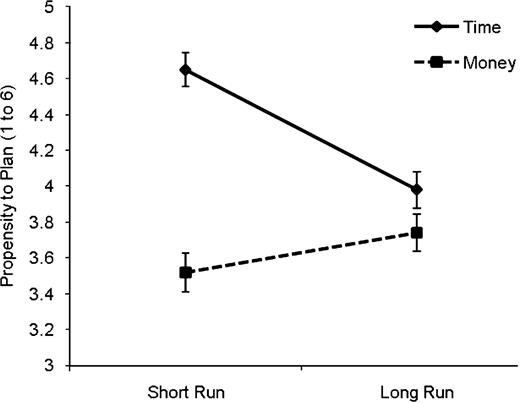
A Generalizable Scale of Propensity to Plan: The Long and the Short of Planning for Time and for Money
Abstract. Planning has pronounced effects on consumer behavior and intertemporal choice. We develop a six-item scale measuring individual differences in pr
013 - Olivier De Schutter on Why the Economy Creates Poverty – and How To Fix It