


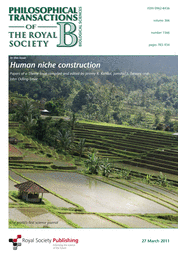
Bali has figured prominently in debates on the question of whether irrigation centralizes state power. New evidence shows that irrigation is actually organized by networks of “water temples” that constitute an institutional system separate from the state. Earlier attempts to identify a discrete system of irrigation management misconceived the problem. For most crops, irrigation simply provides water for the plant's roots. But in a Balinese rice terrace, water is used to construct a complex, pulsed artificial ecosystem. Water temples manipulate the states of the system, at ascending levels in regional hierarchies. The permanence of water temple networks contrasts sharply with the instability of the traditional Balinese states. Since the water temples are real, perhaps it is the Balinese “state” that is chimerical.
Emergent Properties of Balinese Water Temple Networks: Coadaptation on a Rugged Fitness Landscape
For over a thousand years, generations of Balinese farmers have gradually transformed the landscape of their island, clearing forests, digging irrigation canals, and terracing hillsides to enable themselves and their descendants to grow irrigated rice. Paralleling the physical system of terraces and irrigation works, the Balinese have also constructed intricate networks of shrines and temples dedicated to agricultural deities. Ecological modeling shows that water temple networks can have macroscopic effects on the topography of the adaptive landscape, and may be representative of a class of complex adaptive systems that have evolved to manage agroecosystems.

Niche construction on Bali: the gods of the countryside
Human niche construction encompasses both purely biological phenomena, such as the evolution of lactose tolerance, and dual inheritance theory, which investigates the transmission of cultural information. But does niche construction help to explain phenomena in which conscious intention also plays a role? The creation of the engineered landscape of Balinese rice terraces offers a test case. Population genetic analysis and archaeological evidence are used to investigate whether this phenomenon emerged historically from trial and error by generations of farmers, or alternatively was designed by Bali's rulers. In light of strong support for the former hypothesis, two models are developed to explore the emergence of functional structure at both local and global scales. As time goes forward and selected patterns of irrigation schedules are implemented, local variation in rice harvests influences future decisions by the farmers, creating a coupled human–natural system governed by feedback from the environment. This mathematical analysis received a measure of empirical support when government agricultural policies severed the local feedback channels, resulting in the almost instantaneous collapse of rice harvests. The historical process of niche construction may also have included an evolution of religious consciousness, reflected in the beliefs and practices of the water temple cult.
Replication Data for: Sociodemographic Factors are Associated with the Abundance of PFAS Sources and Detection in U.S. Community Water Systems
This repository holds two replication datasets for the study titled, "Sociodemographic Factors are Associated with the Abundance of PFAS Sources and Detection in U.S. Community Water Systems." Additional information is available in the readme file for download.
Did Singapore go wrong in its quest for food security? | Aeon Essays
The nation’s water is secure, but its food is another matter: lessons from the city-state in efficiency versus self-sufficiency

Chinese dams hold billions of people to ransom
Could desalination make them irrelevant?

State of the Water Industry
What topics and trends are driving the water community forward? Read the AWWA State of the Water Industry Report for data-driven insights into key issues.
Governing The Commons: The Evolution of Institutions for Collective Action
The governance of natural resources used by many individuals in common is an issue of increasing concern to policy analysts. Both state control and privatization of resources have been advocated, but neither the state nor the market has been uniformly successful in solving common-pool resource problems. After critiquing the foundations of pol icy analysis as applied to natural resources, Elinor Ostrom here provides a unique body of empirical data to explore the conditions under which common-pool resource problems have been satisfactorily or unsatisfactorily solved. Dr. Ostrom first describes three models most frequently used as the foundation for recommending state or market solutions. She then outlines theoretical and empirical alternatives to these models in order to illustrate the diversity of possible solutions. In the following chapters she uses institutional analysis to examine different ways - both successful and unsuccessful - of governing the commons. In contrast to the propositions of the " tragedy of the commons" argument. common-pool problems sometimes are solved by voluntary organizations rather than by a coercive state. Among the cases considered are communal tenure in meadows and forest, irrigation communities and other water rights. and fisheries. Governing the Commons makes a major contribution to the analytical literature on institutions and to our understanding of human cooperation. Elinor Ostrom is co-director of the Workshop in Political Theory and Policy Analysis and professor of political science at Indiana University.

The Organization of Government in Metropolitan Areas: A Theoretical Inquiry
Allusions to the “problem of metropolitan government” are often made in characterizing the difficulties supposed to arise because a metropolitan region is a legal non-entity. From this point of view, the people of a metropolitan region have no general instrumentality of government available to deal directly with the range of problems which they share in common. Rather there is a multiplicity of federal and state governmental agencies, counties, cities, and special districts that govern within a metropolitan region.This view assumes that the multiplicity of political units in a metropolitan area is essentially a pathological phenomenon. The diagnosis asserts that there are too many governments and not enough government. The symptoms are described as “duplication of functions” and “overlapping jurisdictions.” Autonomous units of government, acting in their own behalf, are considered incapable of resolving the diverse problems of the wider metropolitan community. The political topography of the metropolis is called a “crazy-quilt pattern” and its organization is said to be an “organized chaos.” The prescription is reorganization into larger units—to provide “a general metropolitan framework” for gathering up the various functions of government. A political system with a single dominant center for making decisions is viewed as the ideal model for the organization of metropolitan government. “Gargantua” is one name for it.

The SAGE Community Coordinator: A Demonstration
Sustainable polyculture gardens thrive more effectively when they are designed with an awareness of other gardens in the community, as opposed to as individual gardens. However, the complex characteristics of plants, and their relations to other plant species in terms of needs and capacities, require a complex knowledge base not easily acquired by novice gardeners. We contribute a demonstration of our project, called the Software for Agricultural Ecosystems (SAGE) Community Coordinator, that helps manage the complexities of plant relationships and provides planting suggestions based on existing plants in adjacent garden sites. The research team collected the requirements and developed a preliminary demonstration of this system. This demonstration shows the feasibility of the idea and lays the foundation for a more comprehensive implementation of the SAGE Community Coordinator. By doing so, this paper explores the use of technology to foster the establishment of complex plant assemblages in urban and suburban areas to address the current and future limits of material resources derived from plants.
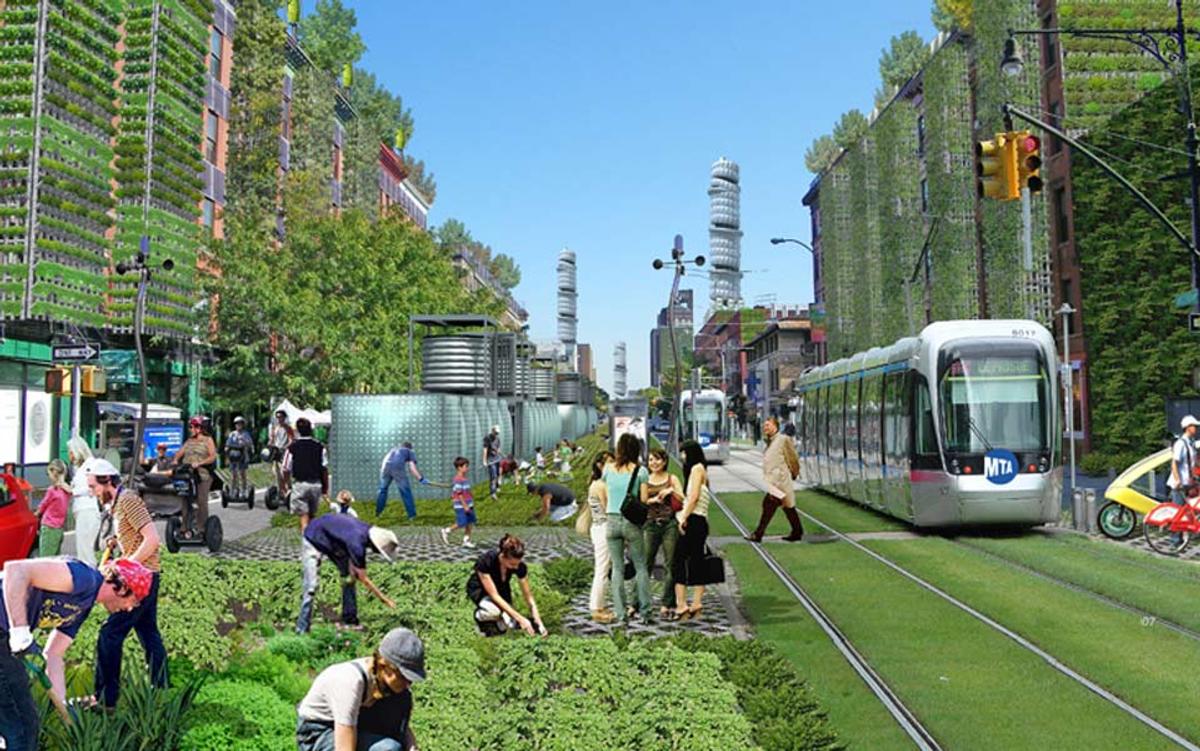
NYC: can this city-state be completely self-reliant? | Aeon Essays
Green living in NYC need not be simple living – think skyscraper farms, meat-production towers and revamped aqueducts
EPA Launches Initiative to Strengthen Support for Water Systems, Maximize Impact to Ensure Clean, Safe Water for All | US EPA
EPA launched the Real Water Technical Assistance (RealWaterTA) initiative, a back-to-basics approach to support drinking water and wastewater systems using proven, best-practice approaches that will most effectively address local needs.

Sᴜɴʀɪsᴇ Oᴀᴛʜ on Twitter / X
Something I started noticing is that while stable institutions build on top of those things that last, the very top level of those ideals are often things which seem fleeting but point beyond themselves.A civilization does not stand on flowers, but crowns itself in them. https://t.co/HdooOEMs6X— Sᴜɴʀɪsᴇ Oᴀᴛʜ (@sunriseoath) November 8, 2025
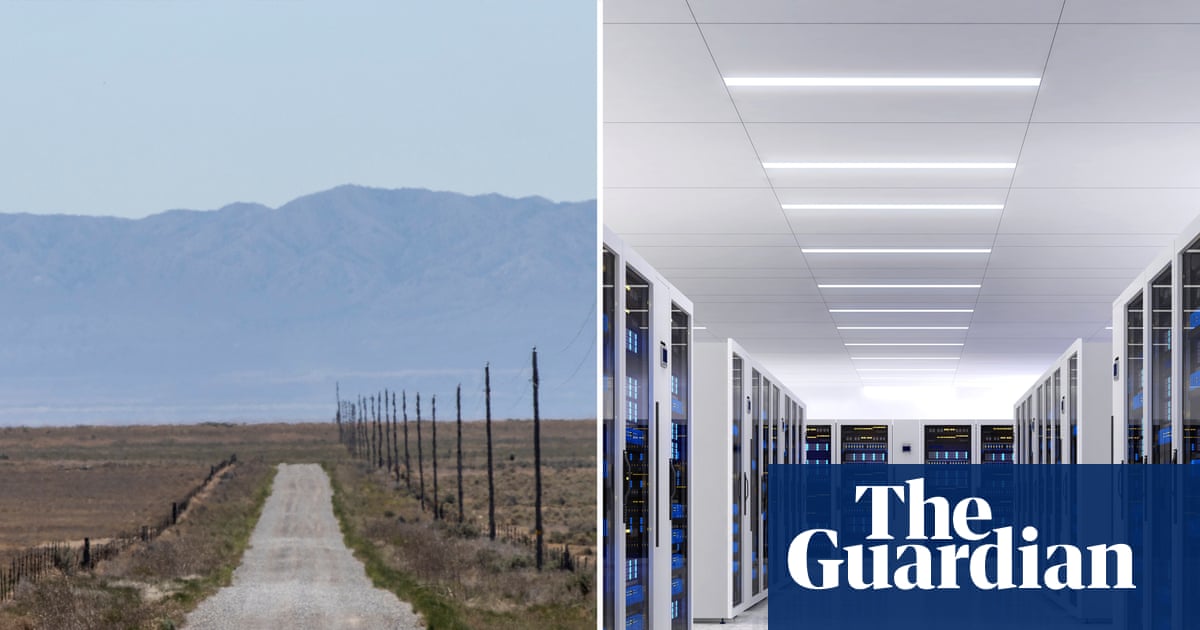
Majority of US’s new AI datacenters to be built on drought-hit land
Guardian analysis finds facilities to be built in some of the driest areas as outcry grows over water needed to power AI
A social-ecological framework for analyzing and designing integrated crop–livestock systems from farm to territory levels
Integrated crop–livestock systems are often considered a promising way to address agricultural sustainability issues. Many authors claim that complementarities and synergies between crops and livestock can improve nutrient cycling and delivery of ecosystem services (ES) in agricultural systems. They have analyzed effects of interactions at the farm level and affirmed the potential advantage of developing crop–livestock interactions at the territory level. However, potential benefits of developing synergies beyond the farm level have not been clearly identified. Thus, we developed a conceptual framework that can be used to analyze, design and perform integrated assessment of crop–livestock systems at the territory level. To address crop–livestock interaction issues, we define it as a social-ecological system called the territorial crop–livestock system (TCLS). The ecological system is represented as three interacting components, crops, grasslands and animals, allowing description of various land uses and their potential effects on nutrient cycling and ES. The social system, represented as farmers interacting with natural-resource managers and agro-food chain actors, determines land use and the nature and intensity of ES delivered. We highlight the importance of coordination and learning among actors to support implementation of complex adaptive systems such as TCLSs. We illustrate the expressive power of our conceptual framework through development of a generic typology of crop–livestock systems. Then we show how our conceptual framework can be used as an intermediary object with stakeholders in participatory design approaches. We illustrate this process by representing four archetypal TCLSs. We provide an example of the design approach implemented in Southwestern France to address severe recurrent water shortages, which includes analysis of land use in the current crop–livestock system and the associated key metabolic and ES issues, identification of options for change and multi-criteria analysis of these options. We conclude that this framework shows great potential to support development of sustainable farming systems at the territory level.
Focusing on community technology A waterwheel, a protocol, and the case for technology that communities can own.
Focusing on community technology
eskahlay.comWhy is a Nubian waterwheel a perfect metaphor for building sustainable community technology? @kandake.africa has the answer. atproto.com/off-protocol/2026-08-17-water…

Waterwheel Logic - AT Protocol
atproto.com
