

<p>Harmful lies are nothing new. But the ability to distort reality has taken an exponential leap forward with “deep fake” technology. This capability makes it possible to create audio and video of real people saying and doing things they never said or did. Machine learning techniques are escalating the technology’s sophistication, making deep fakes ever more realistic and increasingly resistant to detection. Deep-fake technology has characteristics that enable rapid and widespread diffusion, putting it into the hands of both sophisticated and unsophisticated actors.</p><p>While deep-fake technology will bring certain benefits, it also will introduce many harms. The marketplace of ideas already suffers from truth decay as our networked information environment interacts in toxic ways with our cognitive biases. Deep fakes will exacerbate this problem significantly. Individuals and businesses will face novel forms of exploitation, intimidation, and personal sabotage. The risks to our democracy and to national security are profound as well.</p><p>Our aim is to provide the first in-depth assessment of the causes and consequences of this disruptive technological change, and to explore the existing and potential tools for responding to it. We survey a broad array of responses, including: the role of technological solutions; criminal penalties, civil liability, and regulatory action; military and covert-action responses; economic sanctions; and market developments. We cover the waterfront from immunities to immutable authentication trails, offering recommendations to improve law and policy and anticipating the pitfalls embedded in various solutions.</p>
Deep Fakes: A Looming Challenge for Privacy
<p>Harmful lies are nothing new. But the ability to distort reality has taken an exponential leap forward with “deep fake” technology. This capability makes it possible to create audio and video of real people saying and doing things they never said or did. Machine learning techniques are escalating the technology’s sophistication, making deep fakes ever more realistic and increasingly resistant to detection. Deep-fake technology has characteristics that enable rapid and widespread diffusion, putting it into the hands of both sophisticated and unsophisticated actors.</p><p>While deep-fake technology will bring certain benefits, it also will introduce many harms. The marketplace of ideas already suffers from truth decay as our networked information environment interacts in toxic ways with our cognitive biases. Deep fakes will exacerbate this problem significantly. Individuals and businesses will face novel forms of exploitation, intimidation, and personal sabotage. The risks to our democracy and to national security are profound as well.</p><p>Our aim is to provide the first in-depth assessment of the causes and consequences of this disruptive technological change, and to explore the existing and potential tools for responding to it. We survey a broad array of responses, including: the role of technological solutions; criminal penalties, civil liability, and regulatory action; military and covert-action responses; economic sanctions; and market developments. We cover the waterfront from immunities to immutable authentication trails, offering recommendations to improve law and policy and anticipating the pitfalls embedded in various solutions.</p>
Deep Fakes: A Looming Challenge for Privacy, Democracy, and National Security — California Law Review
Harmful lies are nothing new. But the ability to distort reality has taken an exponential leap forward with “deep fake” technology. This capability makes it possible to create audio and video of real people saying and doing things they never said or did. Machine learning techniques are escalating th

Deepfakes, Scams, and the Age of Paranoia
As AI-driven fraud becomes increasingly common, more people feel the need to verify every interaction they have online.

Deepfakes, Elections, and Shrinking the Liar’s Dividend
Heightened public awareness of the power of generative AI could give politicians an incentive to lie about the authenticity of real content.
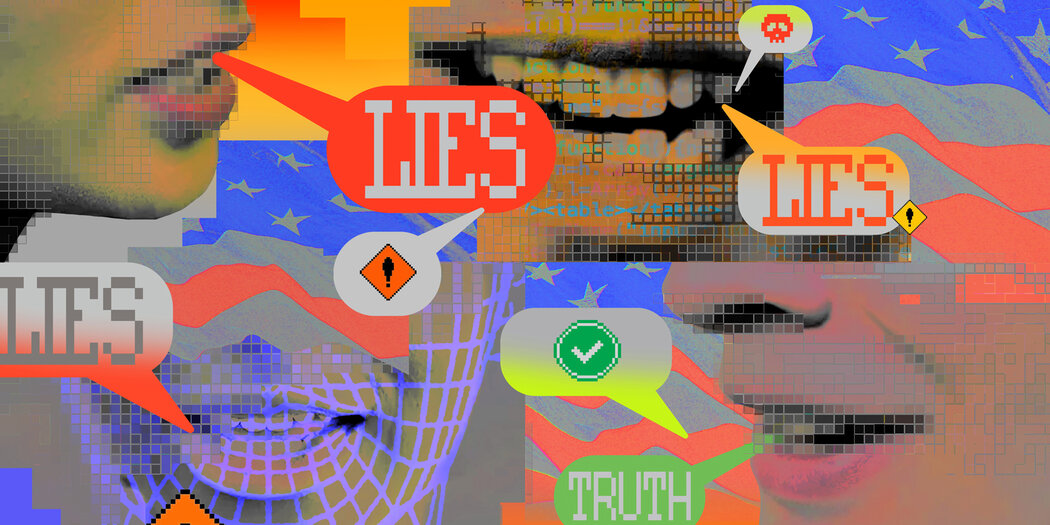
People are trying to claim real videos are deepfakes. The courts are not amused
The unleashing of powerful, generative AI on the public is raising concerns that as the technology becomes more prevalent, it will become easier to claim that anything is fake.
Deepfake detection by human crowds, machines, and machine-informed crowds
Significance The recent emergence of deepfake videos raises theoretical and practical questions. Are humans or the leading machine learning model more capable of detecting algorithmic visual manipulations of videos? How should content moderation systems be designed to detect and flag video-based misinformation? We present data showing that ordinary humans perform in the range of the leading machine learning model on a large set of minimal context videos. While we find that a system integrating human and model predictions is more accurate than either humans or the model alone, we show inaccurate model predictions often lead humans to incorrectly update their responses. Finally, we demonstrate that specialized face processing and the ability to consider context may specially equip humans for deepfake detection. , The recent emergence of machine-manipulated media raises an important societal question: How can we know whether a video that we watch is real or fake? In two online studies with 15,016 participants, we present authentic videos and deepfakes and ask participants to identify which is which. We compare the performance of ordinary human observers with the leading computer vision deepfake detection model and find them similarly accurate, while making different kinds of mistakes. Together, participants with access to the model’s prediction are more accurate than either alone, but inaccurate model predictions often decrease participants’ accuracy. To probe the relative strengths and weaknesses of humans and machines as detectors of deepfakes, we examine human and machine performance across video-level features, and we evaluate the impact of preregistered randomized interventions on deepfake detection. We find that manipulations designed to disrupt visual processing of faces hinder human participants’ performance while mostly not affecting the model’s performance, suggesting a role for specialized cognitive capacities in explaining human deepfake detection performance.

Deepfake detection by human crowds, machines, and machine-informed crowds
Significance The recent emergence of deepfake videos raises theoretical and practical questions. Are humans or the leading machine learning model more capable of detecting algorithmic visual manipulations of videos? How should content moderation systems be designed to detect and flag video-based misinformation? We present data showing that ordinary humans perform in the range of the leading machine learning model on a large set of minimal context videos. While we find that a system integrating human and model predictions is more accurate than either humans or the model alone, we show inaccurate model predictions often lead humans to incorrectly update their responses. Finally, we demonstrate that specialized face processing and the ability to consider context may specially equip humans for deepfake detection. , The recent emergence of machine-manipulated media raises an important societal question: How can we know whether a video that we watch is real or fake? In two online studies with 15,016 participants, we present authentic videos and deepfakes and ask participants to identify which is which. We compare the performance of ordinary human observers with the leading computer vision deepfake detection model and find them similarly accurate, while making different kinds of mistakes. Together, participants with access to the model’s prediction are more accurate than either alone, but inaccurate model predictions often decrease participants’ accuracy. To probe the relative strengths and weaknesses of humans and machines as detectors of deepfakes, we examine human and machine performance across video-level features, and we evaluate the impact of preregistered randomized interventions on deepfake detection. We find that manipulations designed to disrupt visual processing of faces hinder human participants’ performance while mostly not affecting the model’s performance, suggesting a role for specialized cognitive capacities in explaining human deepfake detection performance.
Detection of Deepfake Videos and Audios on Social Media Platforms
Deepfake technology, a rapidly evolving application of artificial intelligence, has enabled the creation of highly realistic yet synthetic multimedia content. While this innovation offers potential benefits in areas such as entertainment and education, its misuse has raised significant ethical and security concerns, including misinformation and financial fraud. This study evaluates the effectiveness of current deepfake detection methods, focusing on the Xception model for video detection and the LCNN model for audio detection, using a dataset composed of real-life and deepfake content. The dataset includes deepfakes generated by tools such as the Deepfake Offensive Toolkit and Haotian AI, a cutting-edge provider known for its high-quality outputs. Our findings reveal that the Xception model, while achieving 89.1% accuracy on control datasets, struggled to detect Haotian AI-generated deepfakes, misclassifying nearly all samples as authentic. This performance gap highlights the need for more diverse training datasets and advanced detection frameworks capable of addressing the nuances of emerging deepfake tools. Additionally, metadata changes caused by uploading and downloading content on social media platforms were found to have minimal impact on detection accuracy, challenging the feasibility of metadata-based detection approaches. This research underscores the limitations of current deepfake detection models and emphasizes the necessity for multimodal approaches and broader datasets to enhance robustness. The study’s implications call for continued advancements in detection methods to keep pace with the growing sophistication of deepfake technologies.
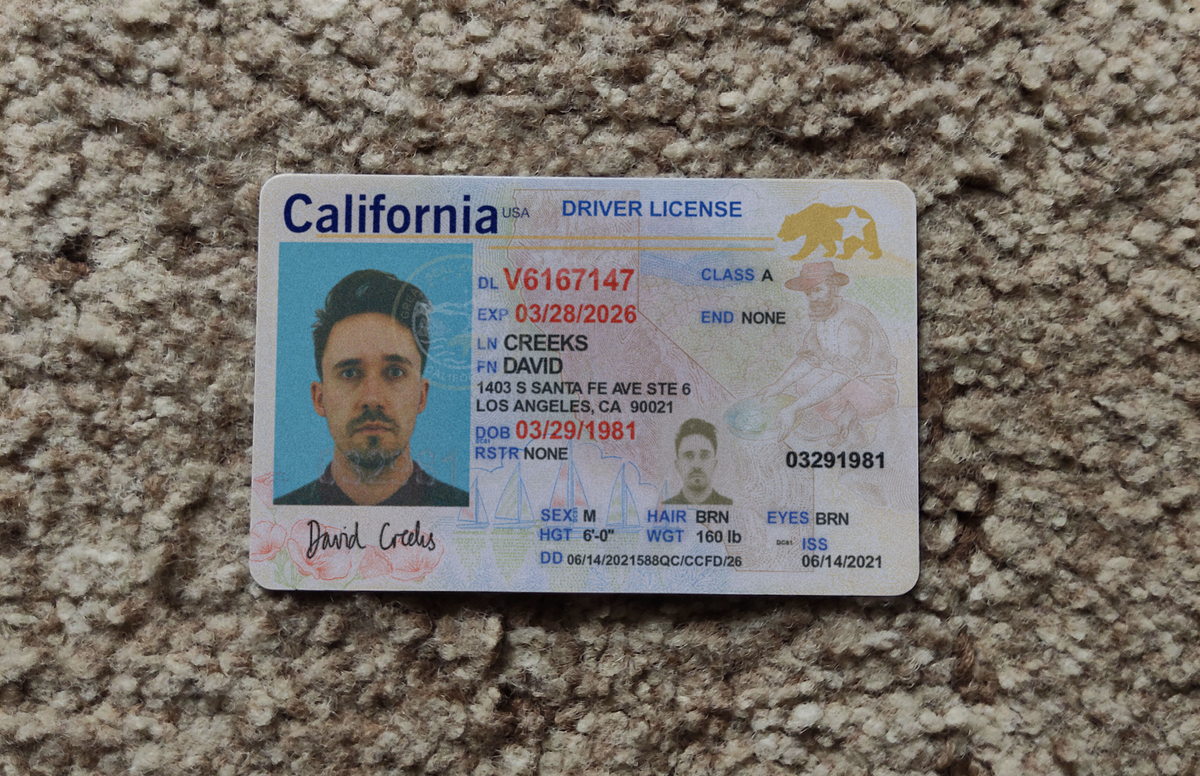
Inside the Underground Site Where ‘Neural Networks’ Churn Out Fake IDs
The site, called OnlyFake, threatens to streamline everything from bank fraud to money laundering, and has implications for cybersecurity writ large.
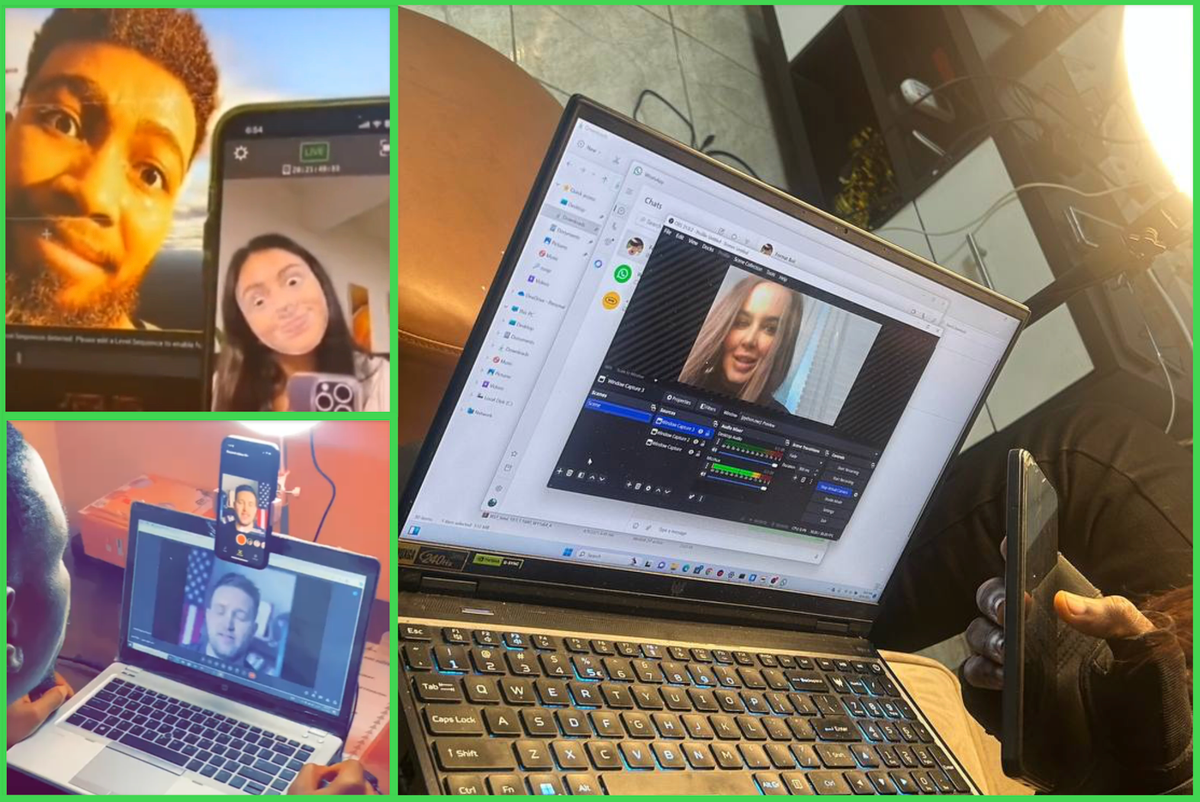
The Age of Realtime Deepfake Fraud Is Here
Fraudsters are able to change their race, facial hair, voice, and more during live video calls with very little effort. Scammers are already fooling the elderly and verification systems.
Google research shows the fast rise of AI-generated misinformation | CBC News
From fake images of war to celebrity hoaxes, AI technology has spawned new forms of reality-warping misinformation online. New analysis co-authored by Google researchers shows just how quickly the problem has grown.

BadNets: Identifying Vulnerabilities in the Machine Learning Model Supply Chain
Deep learning-based techniques have achieved state-of-the-art performance on a wide variety of recognition and classification tasks. However, these networks are typically computationally expensive to train, requiring weeks of computation on many GPUs; as a result, many users outsource the training procedure to the cloud or rely on pre-trained models that are then fine-tuned for a specific task. In this paper we show that outsourced training introduces new security risks: an adversary can create a maliciously trained network (a backdoored neural network, or a \emph{BadNet}) that has state-of-the-art performance on the user's training and validation samples, but behaves badly on specific attacker-chosen inputs. We first explore the properties of BadNets in a toy example, by creating a backdoored handwritten digit classifier. Next, we demonstrate backdoors in a more realistic scenario by creating a U.S. street sign classifier that identifies stop signs as speed limits when a special sticker is added to the stop sign; we then show in addition that the backdoor in our US street sign detector can persist even if the network is later retrained for another task and cause a drop in accuracy of {25}\% on average when the backdoor trigger is present. These results demonstrate that backdoors in neural networks are both powerful and---because the behavior of neural networks is difficult to explicate---stealthy. This work provides motivation for further research into techniques for verifying and inspecting neural networks, just as we have developed tools for verifying and debugging software.

What AI can't fake about the real world (yet)
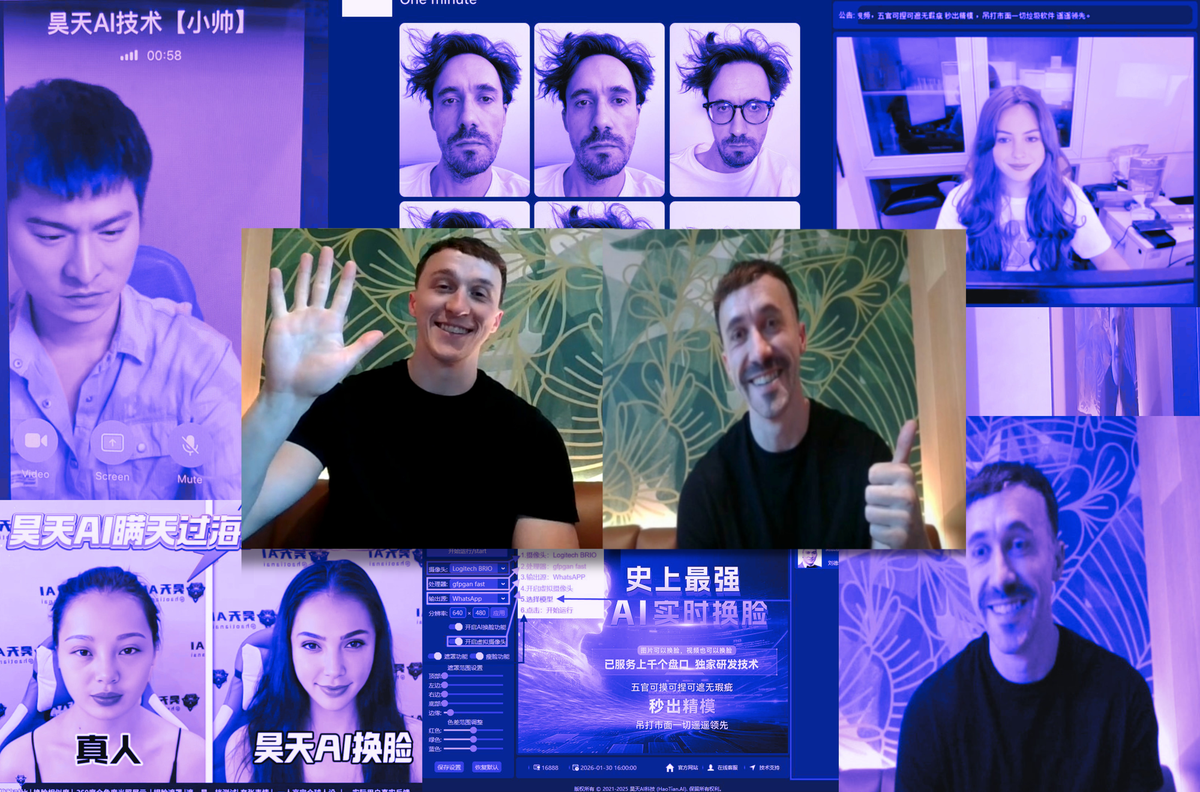
‘HELLO BOSS’: Inside the Chinese Realtime Deepfake Software Powering Scams Around the World
404 Media has obtained a copy of ‘Haotian AI’, a popular piece of realtime deepfake software marketed to scammers. It can turn a fraudster's face into anyone else's on WhatsApp, Zoom, and Teams.
Targeted Backdoor Attacks on Deep Learning Systems Using Data Poisoning
Deep learning models have achieved high performance on many tasks, and thus have been applied to many security-critical scenarios. For example, deep learning-based face recognition systems have been used to authenticate users to access many security-sensitive applications like payment apps. Such usages of deep learning systems provide the adversaries with sufficient incentives to perform attacks against these systems for their adversarial purposes. In this work, we consider a new type of attacks, called backdoor attacks, where the attacker's goal is to create a backdoor into a learning-based authentication system, so that he can easily circumvent the system by leveraging the backdoor. Specifically, the adversary aims at creating backdoor instances, so that the victim learning system will be misled to classify the backdoor instances as a target label specified by the adversary. In particular, we study backdoor poisoning attacks, which achieve backdoor attacks using poisoning strategies. Different from all existing work, our studied poisoning strategies can apply under a very weak threat model: (1) the adversary has no knowledge of the model and the training set used by the victim system; (2) the attacker is allowed to inject only a small amount of poisoning samples; (3) the backdoor key is hard to notice even by human beings to achieve stealthiness. We conduct evaluation to demonstrate that a backdoor adversary can inject only around 50 poisoning samples, while achieving an attack success rate of above 90%. We are also the first work to show that a data poisoning attack can create physically implementable backdoors without touching the training process. Our work demonstrates that backdoor poisoning attacks pose real threats to a learning system, and thus highlights the importance of further investigation and proposing defense strategies against them.
AI Fakes Spread Disinformation. Is the Distrust They Create Even Worse?
Manipulated images undermine our shared reality—and the democracy built upon it.
