

Sponges (Porifera) represent an important component of the Mediterranean sessile benthic community. They are present both in shallow and deeper waters, on soft and hard bottoms and some species, namely the bath sponges, has an application in human life since a long time. In the last few decades, they also assumed an importance among the organisms producing bioactive compounds which application goes from the homeopathy to the classical medicine to the industry. The study of the taxonomy, ecology and biology of sponges has an history hundreds years old. Now, due to the new findings that render sponges an exploitable marine resource, a coupling of the traditional sciences with the new emerging applications (biotechnology) is urgently needed. The Northern Adriatic Sea was the craddle of the sponge science hosting 36% of the sponge species present in the whole Mediterranean Sea. For the present work, the sponge fauna of a channel-like bay called Limski kanal (Croatia) has been intensively studied for the first time and a list of sponges, including species new for this area, is the result of a series of surveys in twelve sampling sites along the channel. As an introduction to the classification of sponges, a guide to the identification of the most common Mediterranean species has been written and included. A study on the temporal dynamic of a sponge community (Limski kanal, Croatia) was made by using fixed frames that have been photographed along a period of two years. Either seasonality, morphological variability, growth and degeneration phenomena have been observed, providing one more evidence of the incredible plasticity of the Porifera. Among the species in the Limski kanal, Chondrilla nucula (Porifera, Demospongiae) has been chosen as model organism. Firstly, its distribution, abundance and average coverage have been studied, showing that this species is very common along the channel, also in areas with a high sedimentation. Its distribution pattern depends mainly on light availability and kind of substrate. C. nucula is known as a very plastic species: here some macromorphological aspects related to the locomotion, the fragmentation events, the elimination of the sediment and the epibiosis are described in the attempt to give an overview on the successful life strategies of this sponge. Up to now only morphological studies on the oogenesis and spermatogenesis are available but the complete life cycle is unknown. In this study, macromorphological variations in specimens of C. nucula in reproduction and the first stages of embryogenesis have been described for the first time. Finally, in view of a biotechnological use of sponges as bioremediator organisms, the filtration and the bacterial retention rates of C. nucula have been investigated using clearance tests. In spite of a low filtration rate, the sponge showed high bacterial retention rates. This, together with the easy techniques required to farm it, makes of this sponge an eligible candidate for bioremediation. To achieve an effective conservation management plan and a sustainable exploitation of the marine resources, the knowledge on the biological and ecological characteristics of the benthic community and of the single species is absolutely necessary.
Reciprocal nutritional benefits in a Mediterranean seagrass-sponge association
Sponges commonly form associations within seagrass meadows, but their potential impact on seagrass productivity and nutrient cycles remains poorly understood. This study investigates the association between the demosponge Chondrilla nucula and the Mediterranean seagrass Posidonia oceanica in two sampling occasions during the plant growth (spring) and senescence (autumn) seasons at a small inlet near Naples, Italy, where the sponge grows conspicuously within the seagrass bed. We found a non-linear relationship between the benthic cover of the sponge and the seagrass, with higher C. nucula cover linked to intermediate P. oceanica cover, suggesting spatial dependence. Posidonia oceanica showed higher net primary production (NPP) in spring, while C. nucula was net heterotrophic in spring but exhibited near zero metabolic balance in autumn. NPP remained stable when the two organisms were associated, regardless of the season. Chondrilla nucula consistently contributed inorganic nutrients to the association in the form of phosphate, ammonium, and substantial nitrate, recycling nutrients that potentially benefited P. oceanica in its growth season. In return, the seagrass released dissolved organic carbon in spring, which is consistent with supporting sponge heterotrophic nutrition. These findings suggest reciprocal benefits in the interaction between C. nucula and P. oceanica , with nutrient exchange facilitating a facultative mutualism that potentially supports and stabilizes the productivity of the seagrass ecosystem.
Reciprocal nutritional benefits in a sponge-seagrass association
Sponges commonly form associations within seagrass meadows, but their potential impact on seagrass productivity and nutrient cycles remains poorly understood. This study investigates the association between the demosponge Chondrilla nucula and the Mediterranean seagrass Posidonia oceanica in two sampling occasions during the plant growth (spring) and senescence (autumn) seasons at a small inlet near Naples, Italy, where the sponge grows conspicuously within the seagrass bed. We found a non-linear relationship between the benthic cover of the sponge and the seagrass, with higher C. nucula cover linked to intermediate P. oceanica cover, suggesting spatial dependence. P. oceanica showed higher net primary production (NPP) in spring, while C. nucula was net heterotrophic in spring but exhibited slightly positive NPP in autumn. NPP remained stable when the two organisms were associated, regardless of the season. C. nucula consistently contributed inorganic nutrients to the association in the form of phosphate, ammonium, and substantial nitrate, recycling nutrients that potentially benefited P. oceanica in its growth season. In return, the seagrass consistently provided dissolved organic carbon, which aided sponge nutrition in spring. These findings suggest reciprocal benefits in the interaction between C. nucula and P. oceanica, with nutrient exchange facilitating a facultative mutualism that potentially supports and stabilizes the productivity of the seagrass ecosystem. SIGNIFICANCE STATEMENT This study provides a novel exploration of the reciprocal interactions between the demosponge Chondrilla nucula and the Mediterranean seagrass Posidonia oceanica, revealing a facultative mutualism mediated by nutrient exchange. Our findings show a non-linear spatial dependence between sponge and seagrass cover and demonstrate the sponge’s substantial contributions of inorganic nutrients (phosphate, ammonium and conspicuous nitrate) to the seagrass, particularly during its productive spring season. In return, P. oceanica supplies dissolved organic matter, aiding sponge nutrition. This study uniquely quantifies these reciprocal nutrient exchanges across the plant growth and senescence seasons, demonstrating how such interactions stabilize net primary production and support ecosystem functioning. These insights address a critical gap in understanding the role of sponge-seagrass associations in nutrient cycling, highlighting their significance for the resilience, productivity, and metabolic balance of coastal ecosystems under changing environmental conditions.

Whale Baleen To Monitor Per- and Polyfluoroalkyl Substances (PFAS) in Marine Environments
Abstract. Per- and polyfluoroalkyl substances (PFAS) comprise >10 000 synthetic compounds that are globally distributed and highly persistent but remain
The invasive soft coral Xenia umbellata has been confirmed in Cuban waters
Octocoral colonies with unusual morphology were detected in September 2022 and October 2023 in two coastal areas east of Havana, Cuba, and tentatively identified as Unomia stolonifera. U. stolonifera is an invasive octocoral from the Indo-Pacific that was first reported in the Caribbean off Venezuela in the 2000s, where it has spread rapidly, smothering coral reefs and substantially altering benthic communities. After obtaining tissue samples from a Cuban octocoral colony, we re-examined the specimen using molecular barcoding of three mitochondrial regions (16S/ND2, mtMutS, COI) and the nuclear large ribosomal subunit (28S rRNA), and we unequivocally identified it as Xenia umbellata. X. umbellata, a native of the Red Sea, was first identified in southern Puerto Rico in October 2023 and has since been found in various marine ecosystems along the southern coast of the island. The presence of either invasive octocoral species in Cuba or elsewhere in the Caribbean would be of a serious environmental concern due to their documented tolerance, totipotentiality, propagation capacity and significant negative interactions with local benthic fauna. Attempts to eradicate the invasive soft coral colonies from Cuban waters have been initiated with apparent success, helping to control further expansion. The most likely introduction pathway is the accidental or intentional releases from the aquarium trade but transport via ballast water cannot be ruled out. We cannot discount the possibility of independent invasion events from different routes to Puerto Rico and Cuba occurring within a year of each other. Propagation from Cuba to Puerto Rico, or vice versa, which we consider highly improbable, would likely imply that soft coral populations may also have been established on Hispaniola but have remained undetected in the Dominican Republic and Haiti to date.
Poly- and Perfluoroalkyl Substances in Seawater and Plankton from the Northwestern Atlantic Margin
Abstract. The ocean is thought to be the terminal sink for poly- and perfluoroalkyl substances (PFAS) that have been produced and released in large quantit
Whales' Bubble Net Fishing | Nature's Great Events | BBC Earth
Holobiont
A holobiont is an assemblage of a host and the many other species living in or around it, which together form a discrete ecological unit through symbiosis, though there is controversy over this discreteness. The components of a holobiont are individual species or bionts, while the combined genome of all bionts is the hologenome. The holobiont concept was initially introduced by the German theoretical biologist Adolf Meyer-Abich in 1943, and then apparently independently by Dr. Lynn Margulis in her 1991 book Symbiosis as a Source of Evolutionary Innovation. The concept has evolved since the original formulations. Holobionts include the host, virome, microbiome, and any other organisms which contribute in some way to the functioning of the whole. Well-studied holobionts include reef-building corals and humans.

Termite Ecology in the First Two Decades of the 21st Century: A Review of Reviews
Termite ecology came of age in 1978 with the seminal review of Wood and Sands which by considering the quantitative contributions made by termites to the carbon cycle at the landscape level concluded that they were major players in tropical ecosystems. Subsequent field work in the succeeding two decades was summarised in 2000 by Bignell and Eggleton, the most recent review which attempted to cover the entire topic in detail, which included 188 listed references and has been extensively cited for almost 20 years. Subsequent summaries more narrowly defined or in some cases more superficial are listed in the bibliography. In this overview, the main and subsidiary headings in Bignell and Eggleton are revisited and reclassified in the light of 186 selected articles added to the relevant literature since 2000, and some earlier work. While the literature on termite ecology remains buoyant, it has declined relative to publications on other aspects of termite biology. Overall, the thesis that termites have a major impact on, and are major indicators of soil health and landscape integrity in the tropics and sub-tropics is maintained, but the drivers of local diversity, abundance and biomass remain complex, with many biographical, edaphic and optimum sampling issues not completely resolved. The large increase in diversity and abundance data from Neotropical biomes can also be noted.
Ein Preis kann nur der Anfang sein
Nachschlag zum Alternativen Medienpreis 2026 und ein kurzes Interview zu „Fundamente aus Sand”

Pacific kelp forests are far older than we thought - Berkeley News
The unique underwater kelp forests that line the Pacific Coast support a varied ecosystem that was thought to have evolved along with the kelp over the past 14 million years. But a new study shows that kelp flourished off the Northwest Coast more than 32 million years ago, long before the appearance of modern groups […]
Flukebook
Flukebook helps you study, identify and protect marine mammal populations!
Pluralistic: Technocarcinization (01 Jul 2026) – Pluralistic: Daily links from Cory Doctorow
"Carcinization" is a curious biological phenomenon: given enough time, across many environments, many species will evolve into crabs. The body-type of a crab, with its low center of gravity, sideways gait (useful for evading predators), ease of concealment and protected organs is suitable to many different environments:
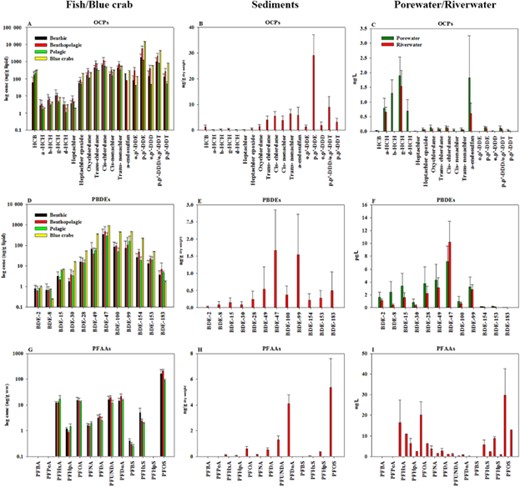
Uptake of hydrophobic organic compounds, including organochlorine pesticides, polybrominated diphenyl ethers, and perfluoroalkyl acids in fish and blue crabs of the lower Passaic River, New Jersey, USA
Abstract . The bioavailability and bioaccumulation of sedimentary hydrophobic organic compounds (HOCs) is of concern at contaminated sites. Passive sampler
SOLU / Bioart Society
SOLU / Bioart Society Panimokatu 1, 3rd floor 00580 Helsinki Finland info@bioartsociety.fi
Marine Biodiversity Observation Network
A global collaborative initiative contributing to the effective management of marine biodiversity and ecosystem services. A thematic node of GEO BON.