


Recent sociological studies of power in organizations, although oriented toward practical ends, offer promise for a general sociological theory of power. Empirically grounded organizational studies examine social life as practiced by actors and preserve the tension between structure and action. Exchange theory and structural theories of power, in contrast, are abstract and theoretical; by asserting the primacy of structures (structural theories) or action (exchange theory), they cannot account well for the dialectic of human agency and structural constraint. We suggest the theoretical implications of organizational analysis and compare this perspective with traditional sociological approaches to power.
The Psychology of Legitimacy: A Relational Perspective on Voluntary Deference to Authorities
People within organized groups often internalize their feelings of obligation to obey group rules and the decisions of group authorities. They believe that group authorities and rules are legitimate and, hence, entitled to be obeyed. Because of this belief, group members voluntarily accept and obey rules and decisions from group authorities. This review draws on evidence from studies of authorities in political, legal, managerial, educational, and family settings to explore why people view as legitimate and voluntarily defer to group authorities. Two theories about legitimacy are contrasted: resource-based theories, represented by instrumental models, and identification based theories, represented by the relational model. The findings provide strong support for the existence of a relational component of legitimacy, suggesting that authorities draw an important part of their legitimacy from their social relationship with group members. The findings also show that there is an instrumental component to legitimacy. Hence, the psychology of legitimacy involves both instrumental and relational elements.
Opinion | The New Power Structure (Published 2018)
New organizations are forming and succeeding in an age of distrust.

Legitimacy as a Social Process
To gain an in-depth understanding of legitimacy as a general social process, we review contemporary approaches to legitimacy within two areas of sociology: social psychology and organizations. A comparison of these distinct approaches allows us to explain the process, both in implicit and explicit ways at different levels of analysis, through which a social object is construed as legitimate. This comparison also suggests four stages in the process by which new social objects, both individual (worthy/unworthy individuals) and collective (organizational forms), gain legitimation: innovation, local validation, diffusion, and general validation. We then show how legitimation of the status quo—that is, the acceptance of widespread consensual schemas/beliefs in the larger society—often fosters the stability of nonoptimal actions and practices that are created as a result of these new individual and collective social objects. Finally, we discuss how consensual beliefs such as status beliefs and cultural capital fuel the reproduction of inefficiency and inequality in groups and organizations.

The Technological Construction of Social Power
This essay presents a theory of the role of technology in the distribution and exercise of social power. The paper studies how technical artefacts and systems are used to construct, maintain or st...

Norms: An Integrated Framework
Norms are a foundational concept in sociology. Following a period of skepticism about norms as overly deterministic and as paying too little attention to social conflict, inequalities, and agency, the past 20 years have seen a proliferation of norms research across the social sciences. Here we focus on the burgeoning research in sociology to answer questions about where norms come from, why people enforce them, and how they are applied. To do so, we rely on three key theoretical approaches in the literature—consequentialist, relational, and agentic. As we apply these approaches, we explore their implications for what are arguably the two most fundamental issues in sociology—social order and inequality. We conclude by synthesizing and building on existing norms research to produce an integrated theoretical framework that can shed light on aspects of norms that are currently not well understood—in particular, their change and erosion.
The Relational Origins of Rules in Online Communities
Where do rules come from in online communities? This study investigates how and why online communities adopt and change their rules. We conducted a grounded theory-based analysis of 40 in-depth interviews with community leaders from subreddits, Fandom wikis, and Fediverse servers, and identified seven processes involved in the adoption of online community rules. Our findings reveal that, beyond operational reasons like regulating behavior and solving problems, rules are also adopted and changed for relational reasons, such as signaling or reinforcing community legitimacy and identity to other communities. While rule change was often prompted by challenges during community growth or decline, change also depended on volunteer leaders’ work capacity, the presence of member feedback mechanisms, and relational dynamics between leaders and members. Our findings extend prior theories from social computing and organizational research, illustrating how institutionalist and ecological explanations of the relational origins of rules complement operational accounts. Finally, we build on these explanations to offer a set of design propositions that reflect the relational aspects of rules and rulemaking across communities’ lifecycles.

Organization | A Modern Anarchism (Part 4) | Anark
A complete theory of horizontal organization, applying all of the methodology we have developed in the previous parts and introducing Viable Systems Theory.

The Physics and Metaphysics of Social Powers: Bridging Cognitive Processing and Social Dynamics, a New Perspective on Power through Active Inference
The Relational Origins of Rules in Online Communities
Where do rules come from in online communities? This study investigates how and why online communities adopt and change their rules. We conducted a grounded theory-based analysis of 40 in-depth interviews with community leaders from subreddits, Fandom wikis, and Fediverse servers, and identified seven processes involved in the adoption of online community rules. Our findings reveal that, beyond operational reasons like regulating behavior and solving problems, rules are also adopted and changed for relational reasons, such as signaling or reinforcing community legitimacy and identity to other communities. While rule change was often prompted by challenges during community growth or decline, change also depended on volunteer leaders' work capacity, the presence of member feedback mechanisms, and relational dynamics between leaders and members. Our findings extend prior theories from social computing and organizational research, illustrating how institutionalist and ecological explanations of the relational origins of rules complement operational accounts. Finally, we build on these explanations to offer a set of design propositions that reflect the relational aspects of rules and rulemaking across communities' lifecycles.

Digital Strategy for Organisations
Digital power is created through the interplay of mobilizing and organizing. Open Social protocols bridge the gap.

How social norms emerge: The interindividual actor–critic.
Psychological Perspectives on Legitimacy and Legitimation
Legitimacy is a psychological property of an authority, institution, or social arrangement that leads those connected to it to believe that it is appropriate, proper, and just. Because of legitimacy, people feel that they ought to defer to decisions and rules, following them voluntarily out of obligation rather than out of fear of punishment or anticipation of reward. Being legitimate is important to the success of authorities, institutions, and institutional arrangements since it is difficult to exert influence over others based solely upon the possession and use of power. Being able to gain voluntary acquiescence from most people, most of the time, due to their sense of obligation increases effectiveness during periods of scarcity, crisis, and conflict. The concept of legitimacy has a long history within social thought and social psychology, and it has emerged as increasingly important within recent research on the dynamics of political, legal, and social systems.

Here Comes Everybody (book)
Here Comes Everybody: The Power of Organizing Without Organizations is a book by Clay Shirky published by Penguin Press in 2008 on the effect of the Internet on modern group dynamics and organization. The author considers examples such as Wikipedia, MySpace, and other social media in his analysis. According to Shirky, the book is about "what happens when people are given the tools to do things together, without needing traditional organizational structures". The title of the work alludes to HCE, a recurring and central figure in James Joyce's Finnegans Wake and considers the impacts of self-organizing movements on culture, politics, and business.

The most powerful institution in most people’s lives is their workplace. We care deeply about governmental democracy but accept dictatorships where we spend most of our waking hours. The cooperative movement has proven it doesn’t have to be this way.
Social Influence and the Logic of Collective Action
An integrated quantitative framework for understanding the dynamics of collective action

Relationship Anarchy

The principles of Anarchism, applied to our relationships. Will also discuss amatonormativity, which tends to also pull in acespec.

A love story

Be jealous. Make demands. Want more.
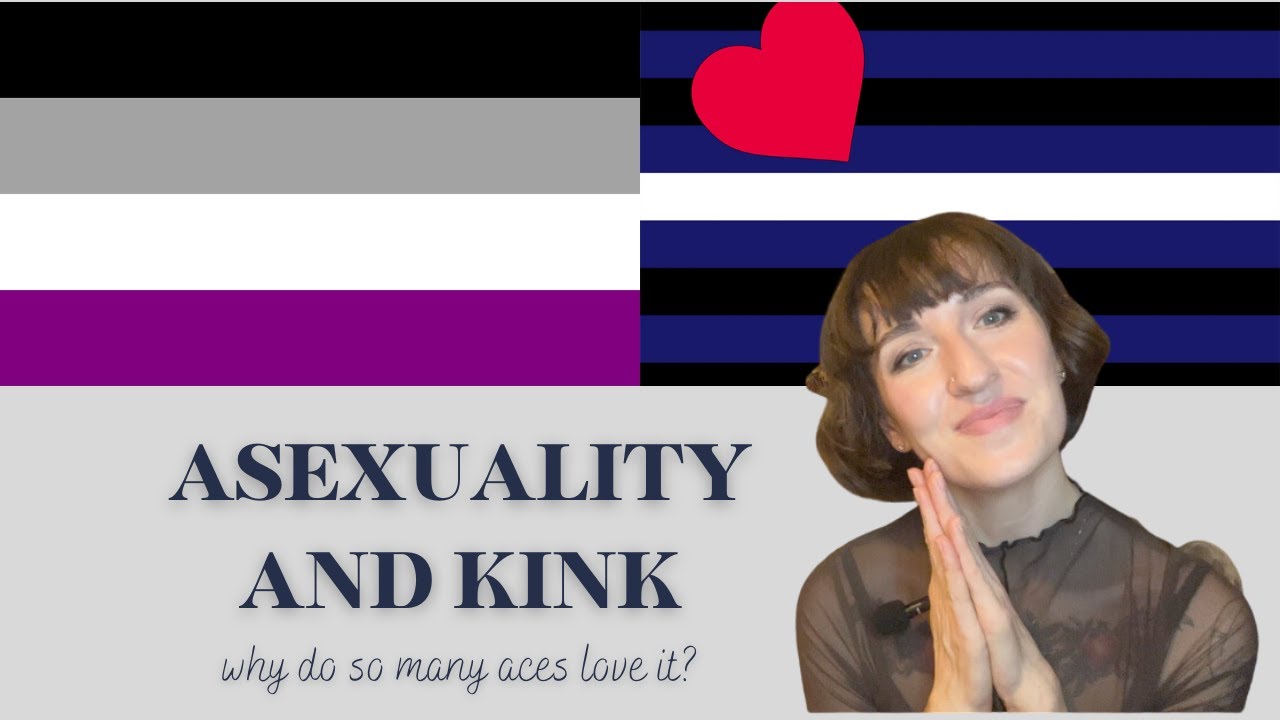
Asexuality and Kink: Why Do So Many Aces Love It?

A Theory of Messaging Styles & Ghosting.
Relationship Design

A Typology of Insecurities in Non-monogamy