


Abstract. Introduction, 99. — I. Some general features of rational choice, 100.— II. The essential simplifications, 103. — III. Existence and uniqueness of
The marketplace of rationalizations
Recent work in economics has rediscovered the importance of belief-based utility for understanding human behaviour. Belief ‘choice’ is subject to an important constraint, however: people can only bring themselves to believe things for which they can find rationalizations. When preferences for similar beliefs are widespread, this constraint generates rationalization markets, social structures in which agents compete to produce rationalizations in exchange for money and social rewards. I explore the nature of such markets, I draw on political media to illustrate their characteristics and behaviour, and I highlight their implications for understanding motivated cognition and misinformation.

Characterizing the causes, dynamics, and consequences of choice deferral
The fact that people often avoid making decisions is well known, and past research has helped to identify some of the conditions and reasons for doing so. For instance, people may forgo choices between bad options because they prefer not to end up with one of those options. It is much less clear when and why people avoid choosing in cases where they eventually will have to make a given decision. To study such instances of choice deferral, we presented participants with a series of choices, and for each choice they were allowed to either choose immediately or defer the decision until later in the experiment. Across six experiments and three choice domains (choices among consumer goods, artwork, and political candidates), we find that the strongest predictor of choice deferral is the overall value of a given set of options, with relative value (i.e., how hard it is to identify the best option) counterintuitively playing a smaller role. We show that the influence of overall value on choice deferral can be accounted for by a dynamic decision model according to which participants appraise the option set relative to a criterion before deciding whether to choose or defer, comparing this to a previous model whereby participants make such a decision based on a predetermined decision time limit. We further reveal that the influence of overall value on choice deferral is determined by how congruent options are with a given choice goal (choose-best or choose-worst) rather than simply how bad those options are. Collectively, our findings shed new light on how people decide to put off the inevitable.
Choice Bracketing
When making many choices, a person can broadly bracket them by assessing the consequences of all of them taken together, or narrowly bracket them by making each choice in isolation. We integrate research conducted in a wide range of decision contexts which shows that choice bracketing is an important determinant of behavior. Because broad bracketing allows people to take into account all the consequences of their actions, it generally leads to choices that yield higher utility. The evidence that we review, however, shows that people often fail to bracket broadly when it would be feasible for them to do so. In addition to documenting the diverse effects of bracketing, we also discuss factors that determine whether people bracket narrowly or broadly. We conclude with a discussion of normative aspects of bracketing and argue that there are some situations in which narrower bracketing results in superior decision making.

Rational Inattention: A Review
We review the recent literature on rational inattention, identify the main theoretical mechanisms, and explain how it helps us understand a variety of phenomena across fields of economics. The theory of rational inattention assumes that agents cannot process all available information, but they can choose which exact pieces of information to attend to. Several important results in economics have been built around imperfect information. Nowadays, many more forms of information than ever before are available due to new technologies, and yet we are able to digest little of it. Which form of imperfect information we possess and act upon is thus largely determined by which information we choose to pay attention to. These choices are driven by current economic conditions and imply behavior that features numerous empirically supported departures from standard models. Combining these insights about human limitations with the optimizing approach of neoclassical economics yields a new, generally applicable model.
Behavioural economics, consumer behaviour and consumer policy: state of the art
Counter to the traditional assumption of neoclassical economics that individuals are rational Homo oeconomici that always seek to maximize their utility and follow their ‘true’ preferences, research in behavioural economics has demonstrated that people's judgements and decisions are often subject to systematic biases and heuristics, and are strongly dependent on the context of the decision. In this article, we briefly review the transition of research from neoclassical economics to behavioural economics, and discuss how the latter has influenced research in consumer behaviour and consumer policy. In particular, we discuss the impacts of key principles such as status quo bias, the endowment effect, mental accounting and the sunk-cost effect, other heuristics and biases related to availability, salience, the anchoring effect and simplicity rules, as well as the effects of other supposedly irrelevant factors such as music, temperature and physical markers on consumers’ decisions. These principles not only add significantly to research on consumer behaviour – they also offer readily available practical implications for consumer policy to nudge behaviour in beneficial directions in consumption domains including financial decision making, product choice, healthy eating and sustainable consumption.

We don’t have a hundred biases, we have the wrong model
Behavioral economics has identified dozens of cognitive biases that stop us from acting 'rationally'. But instead of building up a messier and messier picture of human behavior, we need a new model.

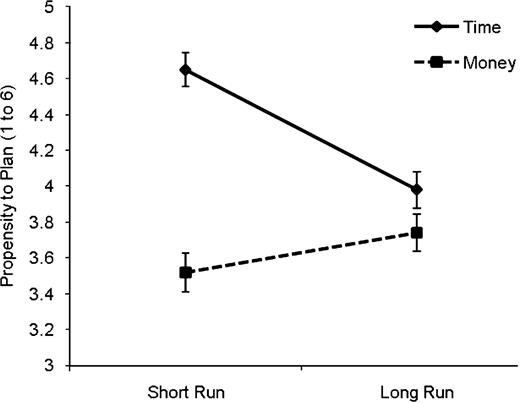
A Generalizable Scale of Propensity to Plan: The Long and the Short of Planning for Time and for Money
Abstract. Planning has pronounced effects on consumer behavior and intertemporal choice. We develop a six-item scale measuring individual differences in pr
A rational analysis of the selection task as optimal data selection.
A rational analysis of the selection task as optimal data selection.
Pain of Paying? — A Metaphor Gone Literal: Evidence from Neural and Behavioral Science
How do individuals consider the price of a good when making purchase decisions? Standard economic theories assume an analytical process: Individuals consider th

Self-Control and the Theory of Consumption
To study the behavior of agents who are susceptible to temptation in infinite horizon consumption problems under uncertainty, we define and characterize dynamic self-control (DSC) preferences. DSC pr...

Complexity and biases
We examine experimentally how complexity affects decision-making, when individuals choose among different products with varying benefits and costs. We find that complexity in costs leads to choosing a high-benefit product, with high costs and overall lower payoffs. In contrast, when complexity is in the benefits of the product, we cannot reject the hypothesis of random mistakes. We also examine the role of heterogeneous complexity. We find that individuals still (mistakenly) choose the high-benefit but costly product, even if cheaper and simple products are available. Our results suggest that salience is a main driver of choices under different forms of complexity.

Choosing Less‐Preferred Experiences For the Sake of Variety
Abstract. Data from several experiments show that, contrary to traditional models of variety seeking, individuals choose to switch to less-preferred option
Mental Accounting and Consumer Choice
A new model of consumer behavior is developed using a hybrid of cognitive psychology and microeconomics. The development of the model starts with the mental coding of combinations of gains and losses using the prospect theory value function. Then the evaluation of purchases is modeled using the new concept of “transaction utility.” The household budgeting process is also incorporated to complete the characterization of mental accounting. Several implications to marketing, particularly in the area of pricing, are developed.

A Structural Model of Mental Accounting
We construct and estimate a formal economic model of mental accounting where utility maximizing consumers facing rationality constraints infrequently update the