


The summer of 2026 was characterised by a series of extreme heatwaves across Western Europe, with both monthly and annual temperature records broken repeatedly across many countries from May onwards. Several government agencies took the unprecedented step of issuing near-real-time estimates of the mortality associated with the most intense heat events, reflecting the severity of the threat to public health. In this study we combine probabilistic climate attribution with city- and age-specific temperature–mortality relationships to estimate heat-related mortality in 854 European cities during the summer months (June-August) and compare with counterfactual climate conditions representing a world without human-caused warming. We estimate 50,391 heat-related excess deaths across the 854 cities during the summer, with around two thirds of these attributable to anthropogenic climate change. These results highlight the threat from human-caused warming and the need for rapid emissions reductions alongside preparation and adaptation measures.
Heat-related urban mortality attributable to human-induced climate change in Europe in summer 2026
The summer of 2026 was characterised by a series of extreme heatwaves across Western Europe, with both monthly and annual temperature records broken repeatedly across many countries from May onwards. Several government agencies took the unprecedented step of issuing near-real-time estimates of the mortality associated with the most intense heat events, reflecting the severity of the threat to public health. In this study we combine probabilistic climate attribution with city- and age-specific temperature–mortality relationships to estimate heat-related mortality in 854 European cities during the summer months (June-August) and compare with counterfactual climate conditions representing a world without human-caused warming. We estimate 50,391 heat-related excess deaths across the 854 cities during the summer, with around two thirds of these attributable to anthropogenic climate change. These results highlight the threat from human-caused warming and the need for rapid emissions reductions alongside preparation and adaptation measures.
High heat killed 50,000 Europeans this summer.
Scientists are blaming climate breakdown for that record figure, which is almost double 2025’s, and only covers city areas — meaning the real number of deaths is likely higher. According to this new mortality report, Malta, Italy, and Hungary had the hightest rates of people succumbing to the heat. [Link: Heat killed ‘staggering’ 50,000 people in Europe’s cities this summer, scientists warn | https://www.theguardian.com/environment/2026/oct/23/heat-killed-staggering-50000-people-european-cities-this-summer-experts | The Guardian]

Heat killed ‘staggering’ 50,000 people in Europe’s cities this summer, scientists warn
People succumbed to heat at highest rates in Malta, Italy and Hungary, with health issues, loneliness and poverty exacerbating toll

Brutal June heat wave killed as many as 14,000 Europeans
POLITICO calculations show thousands of excess deaths across six worst-hit countries.

We’re the mayors of Paris, Milan and Phoenix. The heat crisis has us all facing the same question | Emmanuel Grégoire, Giuseppe Sala and Kate Gallego
Our three cities are learning from each other about how to protect residents. These climate policies are also public health measures

A Blackened Ecology for the End of the Summer
Every summer in the past 16 years Europe and North America—and not only—is affected by global warming evident through the heat waves and wildfires they experience while research from the past decad…

Improving and Expanding Estimates of the Global Burden of Disease Due to Environmental Health Risk Factors
Abstract Background: The Global Burden of Disease (GBD) study, coordinated by the Institute for Health Metrics and Evaluation (IHME), produces influential, data-driven estimates of the burden of disease and premature death due to major risk factors. Expanded quantification of disease due to environmental health (EH) risk factors, including climate change, will enhance accuracy of GBD estimates, which will contribute to developing cost-effective policies that promote prevention and achieving Sustainable Development Goals. Objectives: We review key aspects of the GBD for the EH community and introduce the Global Burden of Disease–Pollution and Health Initiative (GBD-PHI), which aims to work with IHME and the GBD study to improve estimates of disease burden attributable to EH risk factors and to develop an innovative approach to estimating climate-related disease burden—both current and projected. Methods: We discuss strategies for improving GBD quantification of specific EH risk factors, including air pollution, lead, and climate change. We highlight key methodological challenges, including new EH risk factors, notably evidence rating and global exposure assessment. Discussion: A number of issues present challenges to the scope and accuracy of current GBD estimates for EH risk factors. For air pollution, minimal data exist on the exposure–risk relationships associated with high levels of pollution; epidemiological studies in high pollution regions should be a research priority. For lead, the GBD’s current methods do not fully account for lead’s impact on neurodevelopment; innovative methods to account for subclinical effects are needed. Decisions on inclusion of additional EH risk–outcome pairs need to be guided by findings of systematic reviews, the size of exposed populations, feasibility of global exposure estimates, and predicted trends in exposures and diseases. Neurotoxicants, endocrine-disrupting chemicals, and climate-related factors should be high priorities for incorporation into upcoming iterations of the GBD study. Enhancing the scope and methods will improve the GBD’s estimates and better guide prevention policy. https://doi.org/10.1289/EHP5496
Belgium had the highest excess mortality rate in Europe during June heatwave
People living in poorer regions were hit hardest by the extreme heat.
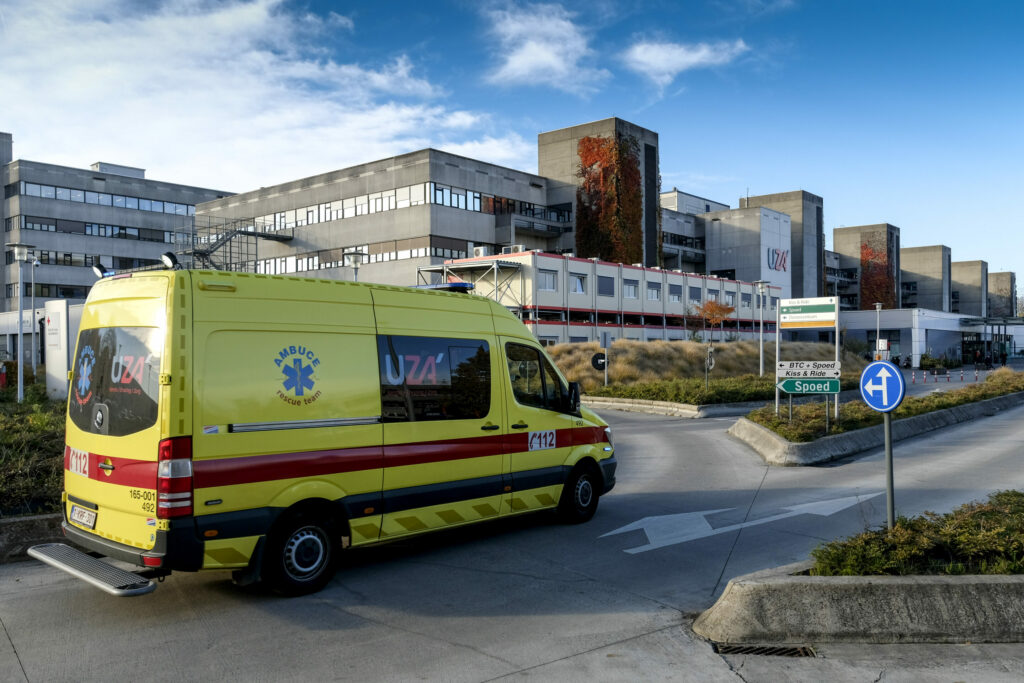
'Hotter and hotter and hotter' - Europe's new climate in seven charts
Temperature records were smashed in June - and scientists warn this is a sign of things to come.

RETRACTED ARTICLE: The economic commitment of climate change
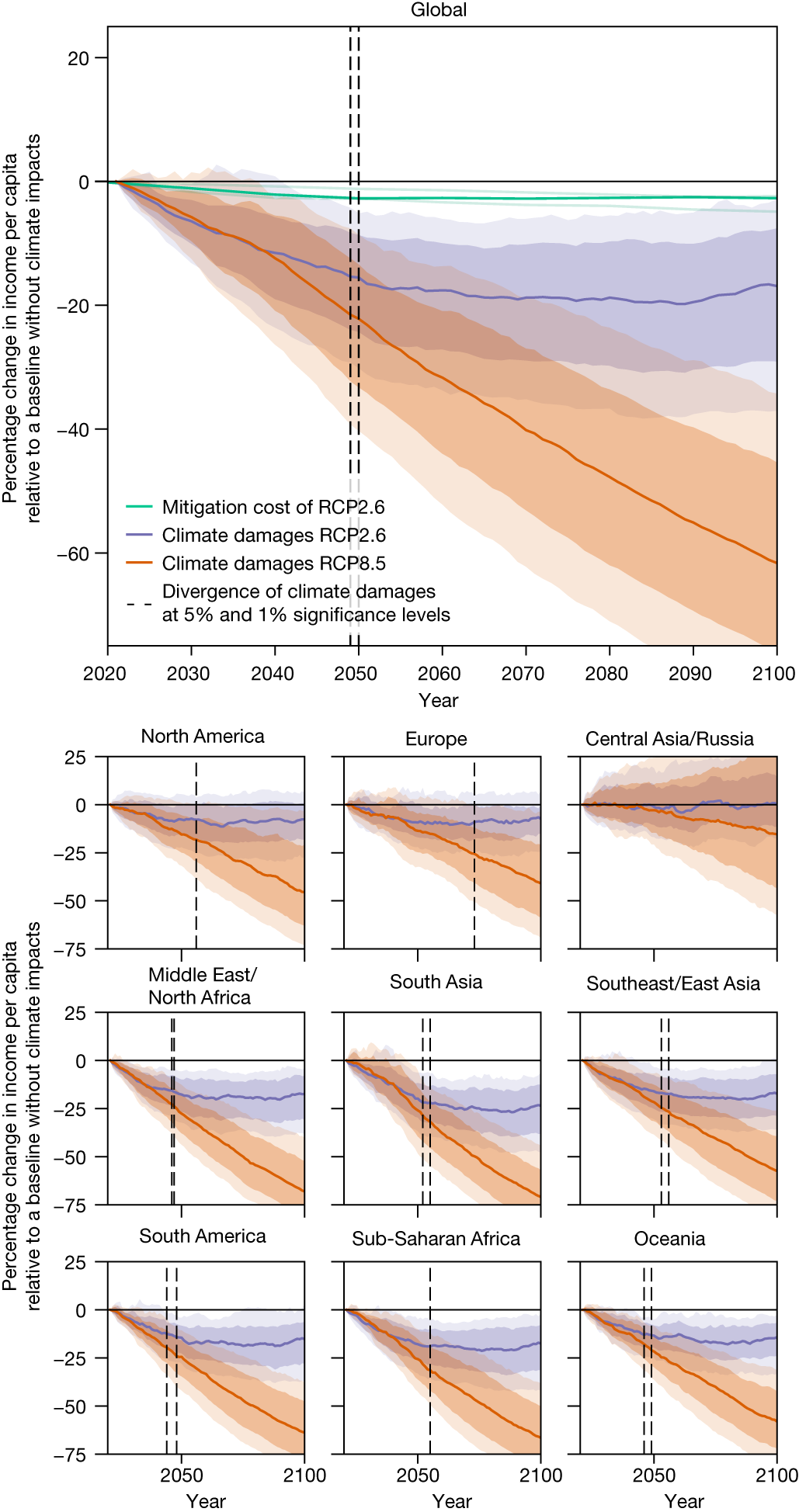
Global projections of macroeconomic climate-change damages typically consider impacts from average annual and national temperatures over long time horizons1–6. Here we use recent empirical findings from more than 1,600 regions worldwide over the past 40 years to project sub-national damages from temperature and precipitation, including daily variability and extremes7,8. Using an empirical approach that provides a robust lower bound on the persistence of impacts on economic growth, we find that the world economy is committed to an income reduction of 19% within the next 26 years independent of future emission choices (relative to a baseline without climate impacts, likely range of 11–29% accounting for physical climate and empirical uncertainty). These damages already outweigh the mitigation costs required to limit global warming to 2 °C by sixfold over this near-term time frame and thereafter diverge strongly dependent on emission choices. Committed damages arise predominantly through changes in average temperature, but accounting for further climatic components raises estimates by approximately 50% and leads to stronger regional heterogeneity. Committed losses are projected for all regions except those at very high latitudes, at which reductions in temperature variability bring benefits. The largest losses are committed at lower latitudes in regions with lower cumulative historical emissions and lower present-day income.
Did the hot summer make more people worry about climate change? Here’s what the latest indications show
Around 65% of the British public are now concerned about climate change.

Summer’s new normal is a hazard that’s testing Europe’s climate resilience
As people across Europe are having to acclimatise to an unprecedented heatwave, coordinated responses for tackling extreme heat need to come from the top, and there’s no time to lose.

Europe is BURNING - why are politicians not acting?
Environmental epidemiology in a crossfire
Two tendencies have emerged in environmental epidemiology that hamper the translation of research findings into prevention of environmental hazards. One is the increased focus on highlighting weaknesses of epidemiology research that is clearly meant to explain away the research conclusions and weaken their possible implications for interventions to control environmental hazards. Another is the voluminous amount of information sharing that involves a substantial amount of misinformation, as part of the ongoing infodemic. In this light, the appearance of the catalogue of doubt-raising strategies, indeed the worst practices of scientific inference, is good news. Collected under the auspices of the International Network for Epidemiology in Policy, it serves to illustrate the range of possible (and impossible) forms of critique that may be raised on behalf of vested interests or other groups who for some reason disagree with the epidemiological conclusions. We believe that this systematic list will be useful in our field and help to identify critiques of policy options that are hidden and sometimes suppressed in weighing the epidemiological evidence.

Natasha Walter: We’ve gone from climate denial to something worse – climate fatalism
The message in the western media, as global heating becomes undeniable, seems now to be that nothing can be done. That is unacceptable – especially for those in developing countries who are suffering so greatly from the crisis we created
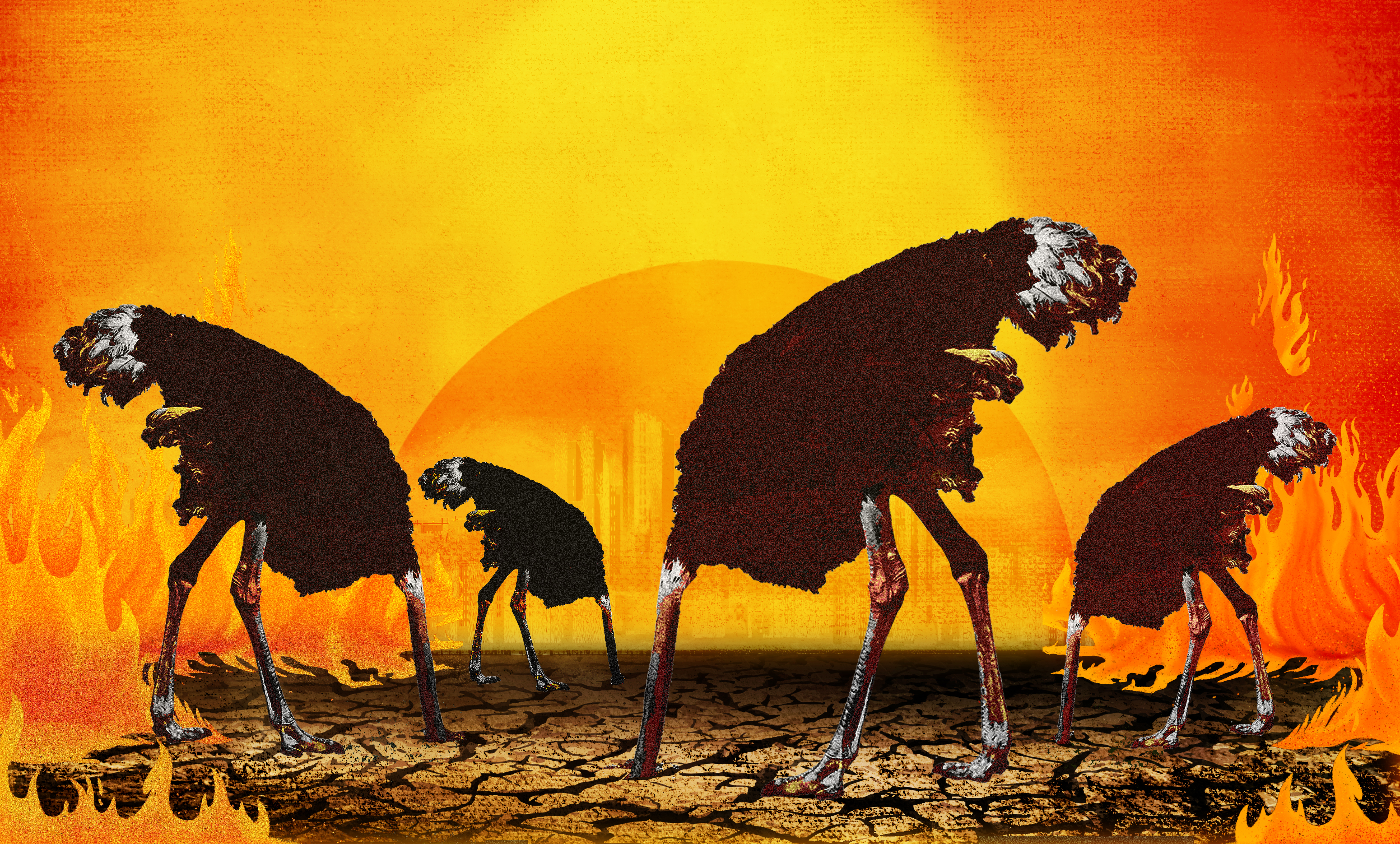
🌡️🔥Climate change isn't a distant threat—it's a public health crisis now. Our study shows heat-related deaths in many cities could surpass annual COVID-19 deaths in just 5–10 years at 3°C warming. Urgent action is needed! 👉 rdcu.be/d5rnL @natureportfolio.bsky.social #scientificreports

Rapid climate action is needed: comparing heat vs. COVID-19-related mortality
rdcu.be