


In the midst of discussions about improving education, teacher education, equity, and diversity, little has been done to make pedagogy a central area of investigation. This article attempts to challenge notions about the intersection of culture and teaching that rely solely on microanalytic or macroanalytic perspectives. Rather, the article attempts to build on the work done in both of these areas and proposes a culturally relevant theory of education. By raising questions about the location of the researcher in pedagogical research, the article attempts to explicate the theoretical framework of the author in the nexus of collaborative and reflexive research. The pedagogical practices of eight exemplary teachers of African-American students serve as the investigative “site.” Their practices and reflections on those practices provide a way to define and recognize culturally relevant pedagogy.
Toward an Anti-Racist Music Education: A Critical Pedagogy of Popular Music Teacher Education
In this article, we propose a framework for a critical pedagogy of popular music for teacher education to better prepare music teachers to enact anti-racist praxis within their classrooms. Although a growing body of literature in music education addresses issues of racism within the field, fewer scholars have studied this within teacher education. Drawing from critical pedagogy, our framework centers popular music as a means for music teacher educators to interrogate issues of identity and power and (re)contextualize pedagogy, considering the socio-political contexts and communities from which music practices originate. These processes facilitate reflection on how racisms shape taken-for-granted practices within music education by centering the socio-political contexts of popular music. Through our framework, music teacher educators could prompt pre-service music educators to consider the multiple racialized epistemologies of musical value students and teachers bring to the classroom, working toward the possibility of enacting a multicentric approach to music education.
Reflexive discourse analysis: A methodology for the practice of reflexivity
How to implement reflexivity in practice? Can the knowledge we produce be emancipatory when our discourses recursively originate in the world we aim to challenge? Critical International Relations (IR) scholars have successfully put reflexivity on the agenda based on the theoretical premise that discourse and knowledge play a socio-political role. However, academics often find themselves at a loss when it comes to implementing reflexivity due to the lack of adapted methodological and pedagogical material. This article shifts reflexivity from meta-reflections on the situatedness of research into a distinctive practice of research and writing that can be learned and taught alongside other research practices. To do so, I develop a methodology based on discourse: reflexive discourse analysis (RDA). Based on the discourse analysis of our own discourse and self-resocialisation, RDA aims to reflexively assess and transform our socio-discursive engagement with the world, so as to render it consistent with our intentional socio-political objectives. RDA builds upon a theoretical framework integrating discourse theory to Bourdieu’s conceptual apparatus for reflexivity and practices illustrated in the works of Comte and La Boétie. To illustrate this methodology, I used this very article as a recursive performance. I show how RDA enabled me to identify implicit discriminative mechanisms within my discourse and transform them into an alternative based on love, to produce an article more in line with my socio-political objectives. Overall, this article turns reflexivity into a critical methodology for social change and demonstrates how to integrate criticality methodologically into research and writing.
Southland Institute
Through engaging questions of how approaches of progressive, critical, queer, and antiracist pedagogical traditions might be applied to interdisciplinary programming in typography, graphic design, and critical art-making, we are working to assemble a growing toolkit of pedagogies -- all of which are intended to be used, shared, recombined, interpreted, and questioned -- as part of the perpetual project of exploring approaches to sharing and transmitting knowledge.
Intersections in Music Education: Implications of Universal Design for Learning, Culturally Responsive Education, and Trauma-Informed Education for P–12 Praxis
To increase equity in music education, teachers can strive to know each student as a whole child, proactively remove barriers to learning, and seek to honor students’ multifaceted and intersectional identities. In this article, we first define intersectionality and examine demographics in music education. Then, we summarize three asset-based pedagogical approaches (Universal Design for Learning, Culturally Responsive Education, and Trauma-Informed Education) and synthesize their similarities. Finally, we present implications in the form of generative ideas for music educator praxis, or values-guided action. We hope our suggestions help music educators create music experiences where students (and families) feel seen, safe, welcomed, and valued as musicians and people. We also hope our suggestions can contribute to music teacher collegiality and collaboration by providing educators with tools to develop positive relationships with colleagues who are different from themselves.
Culture & truth : the remaking of social analysis
xii, 253 pages ; 22 cm; Argues for a new approach to thinking and writing about culture. Exposing old conceptions, the book argues that new ethnographic writing must come to terms with the dynamic nature of social reality - with history, spontaneity, and human emotions; Originally published: Boston: Beacon, 1989; Includes index; Self-Renewing 2017; Includes index

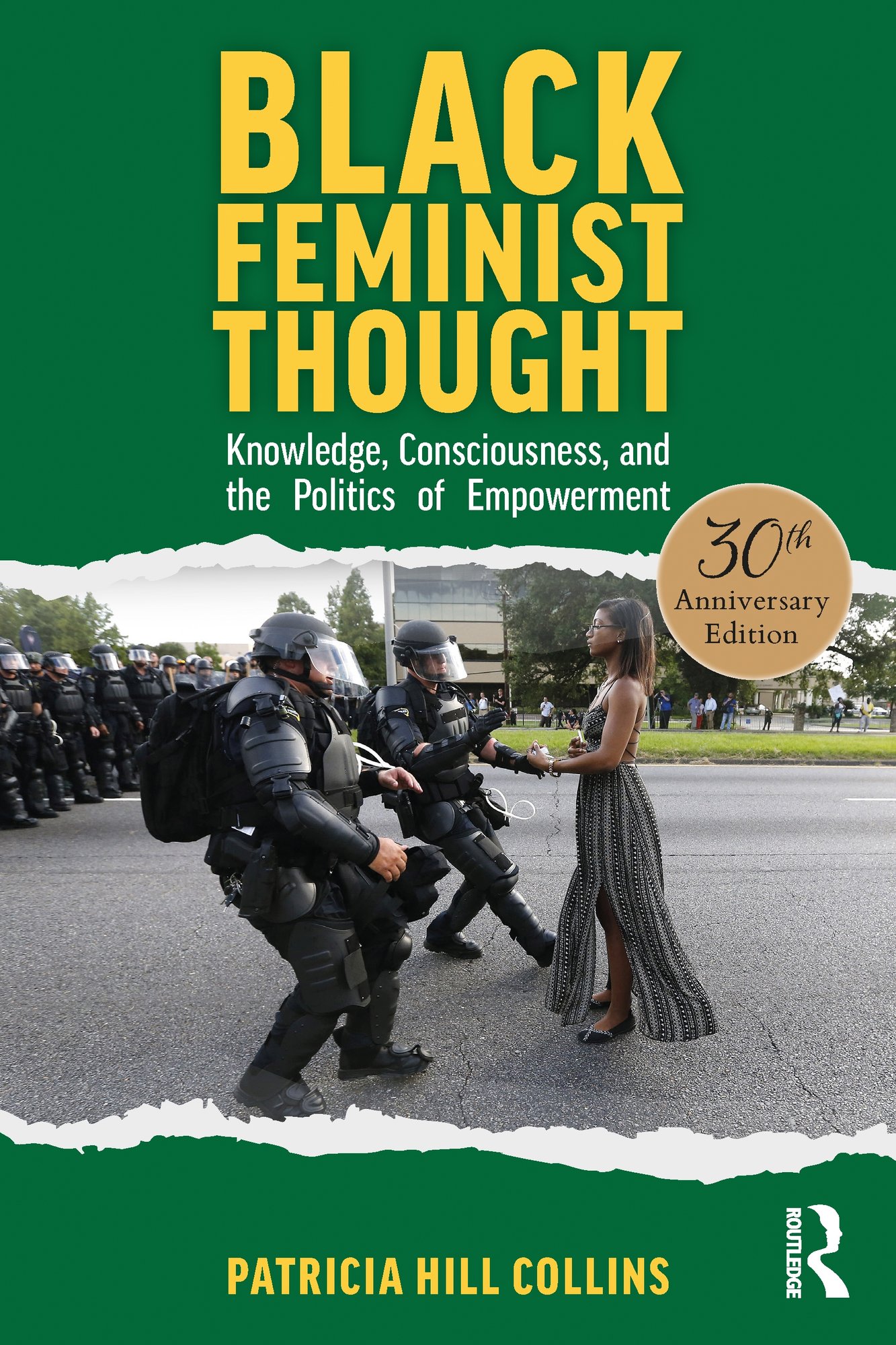
Black Feminist Thought, 30th Anniversary Edition: Knowledge, Consciousness, and the Politics of Empowerment
Knowledge, Consciousness, and the Politics of Empowerment
Divining an Afrofuturist Music Education – ACT
Published in Action, Criticism, and Theory for Music Education 22 (4): 131–58. [pdf] https://doi.org/10.22176/act22.4.131
Anarchism and Education
Judith Suissa Anarchism and Education A Philosophical Perspective 2006

Situated Knowledges: The Science Question in Feminism and the Privilege of Partial Perspective
Donna Haraway, Situated Knowledges: The Science Question in Feminism and the Privilege of Partial Perspective, Feminist Studies, Vol. 14, No. 3, Autumn, 1988
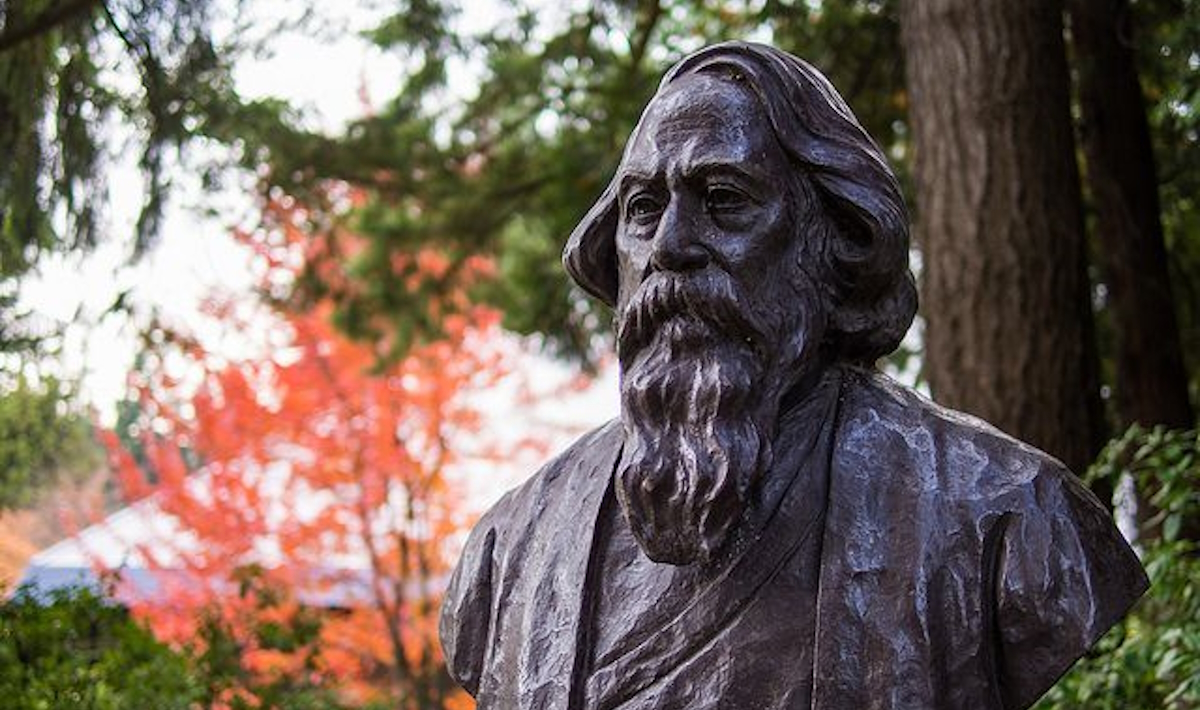
Rabindranath Tagore on education - infed.org
Rabindranath Tagore on education. As one of the earliest educators to think in terms of the global village, Rabindranath Tagore’s educational model has a unique sensitivity and aptness for education within multi-racial, multi-lingual and multi-cultural situations, amidst conditions of acknowledged economic discrepancy and political imbalance. Kathleen M. O’Connell explores Rabindranath Tagore’s contribution. contents: background · ... Read more
Standardized Education | The Paper Pilot
The Paper Pilot's digital garden of thoughts on philosophy, politics, and sociology
REIMAGINING INCLUSIVE MUSIC EDUCATION: REFLECTIONS FROM A BLACK MUSIC EDUCATOR - ProQuest
Explore millions of resources from scholarly journals, books, newspapers, videos and more, on the ProQuest Platform.
Episode #210 ... The Pedagogy of the Oppressed (Paulo Freire, Education)
The Concept of Cultural Humility as It Relates to Instructional Practices in the General Music Classroom
A framework of cultural humility includes three main tenets: (a) commitment to lifelong, critical self-reflection; (b) recognition and mitigation of power imbalances; and (c) accountability to individuals and institutions. In this article, I aim at applying the concept of cultural humility to frame my analysis of musical diversity in music education. Through a cultural humility lens, music teachers may acknowledge their own beliefs, values, biases, and prejudices in relation to diverse musics. A commitment to lifelong introspection through self-reflection and critique may help teachers continue to investigate new ways to redress power imbalances inherent in music education, as well as build their relationships with students and communities bidirectionally.
Rethinking the Large Ensemble Paradigm: Moving Toward Epistemic Justice
In this paper, I center the epistemic dimensions of musics and musicking to consider the ways in which the band/orchestra/choir paradigm of music education prevalent in the U.S. and Canada may be implicated in epistemic injustice. Drawing in particular on the work of Fricker (Epistemic injustice: power and the ethics of knowing, Oxford University Press, New York, 2007), Dotson (Hypatia 26(2):236–257, 2011), and The Routledge Handbook of Epistemic Injustice (Kidd et al., The Routledge handbook of epistemic injustice, Routledge, New York, 2017), I explore facets of epistemic injustice and apply these ideas to music education school contexts in Canada and the U.S. I further explore aspects of school music that may amount to “testimonial smothering” (Dotson 2011) and “cognitive imperialism” (Battiste in Can J Native Educ 22:16–27, 1998). Ultimately, building on existing literature on epistemic justice (Kidd et al. 2017; Fricker 2007), I theorize an epistemically just music education for school music in alignment with culturally responsive, anti-racist, and anti-colonial teaching.
Eyes on the Prize - Chicago Reader
Over more than two decades, Haki and Safisha Madhubuti have proved that African-centered education can amount to more than a black version of history. It can also be a springboard to a bright future.